8+ Kitchen Cabinet Ideas That Add Style & Smart Storage
The kitchen is the heart of every home — a space where function meets creativity, and where daily rituals become moments of joy. Among all the design decisions that shape a kitchen’s personality, none carries more visual weight than the choice of cabinetry. Kitchen cabinets define the architectural rhythm of the room, set the color story, and determine how efficiently the space works for the people who use it. Whether you lean toward timeless traditional styles, sleek modern minimalism, or bold eclectic character, the right cabinet design can elevate an ordinary kitchen into something truly extraordinary. In this article, we explore ten distinct kitchen cabinet ideas — each with its own personality, material palette, and design philosophy — to inspire your next kitchen refresh or full remodel.
1. Bright and Classic: Modern White Shaker Kitchen Cabinets
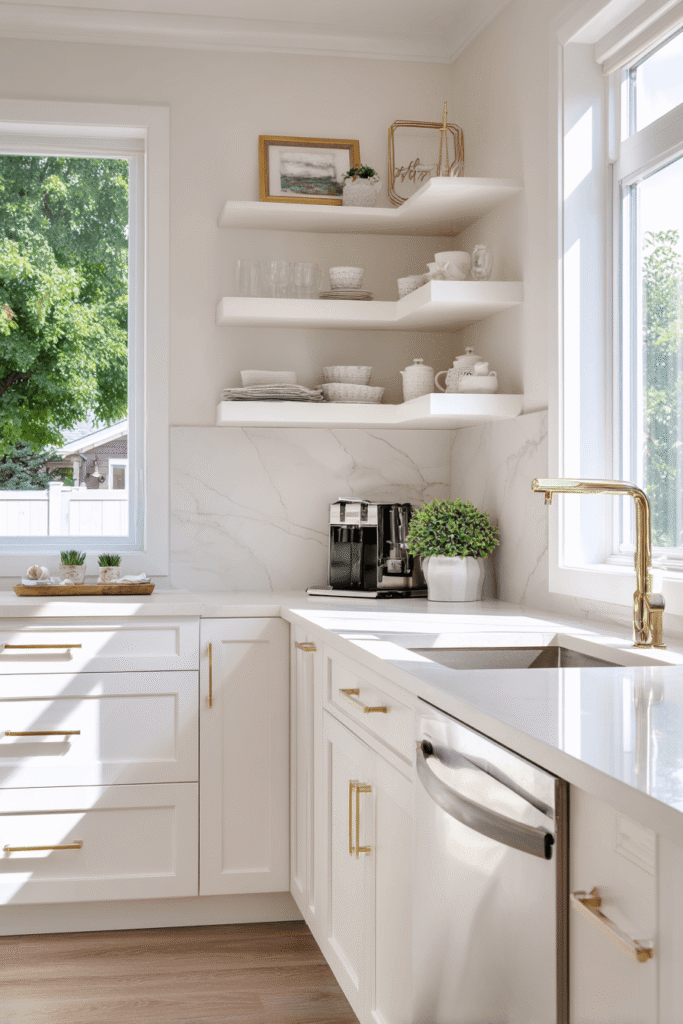
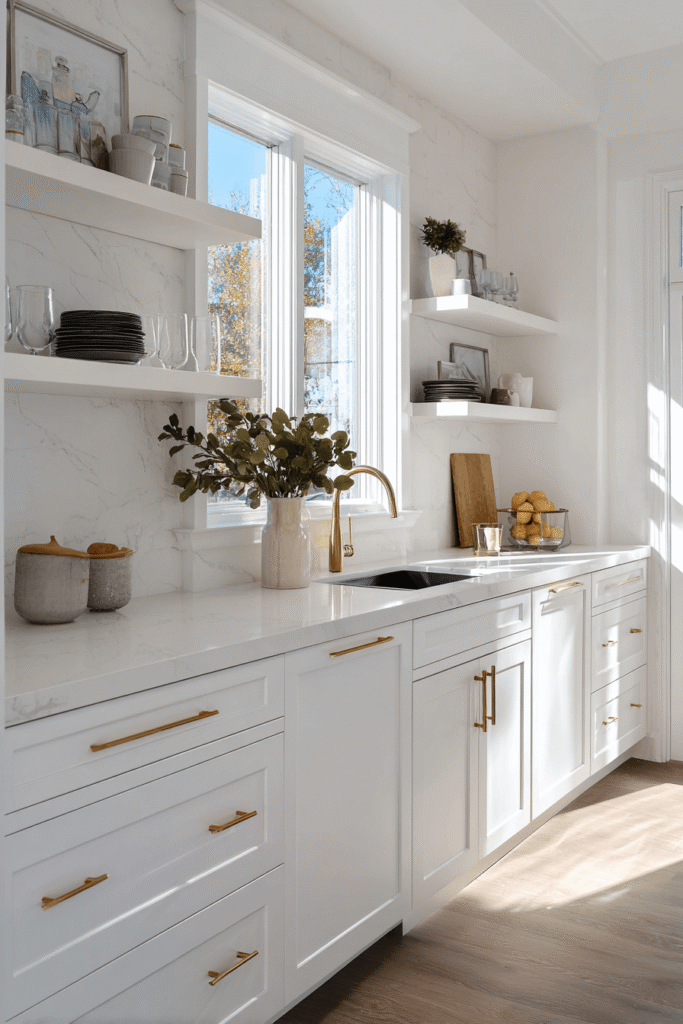
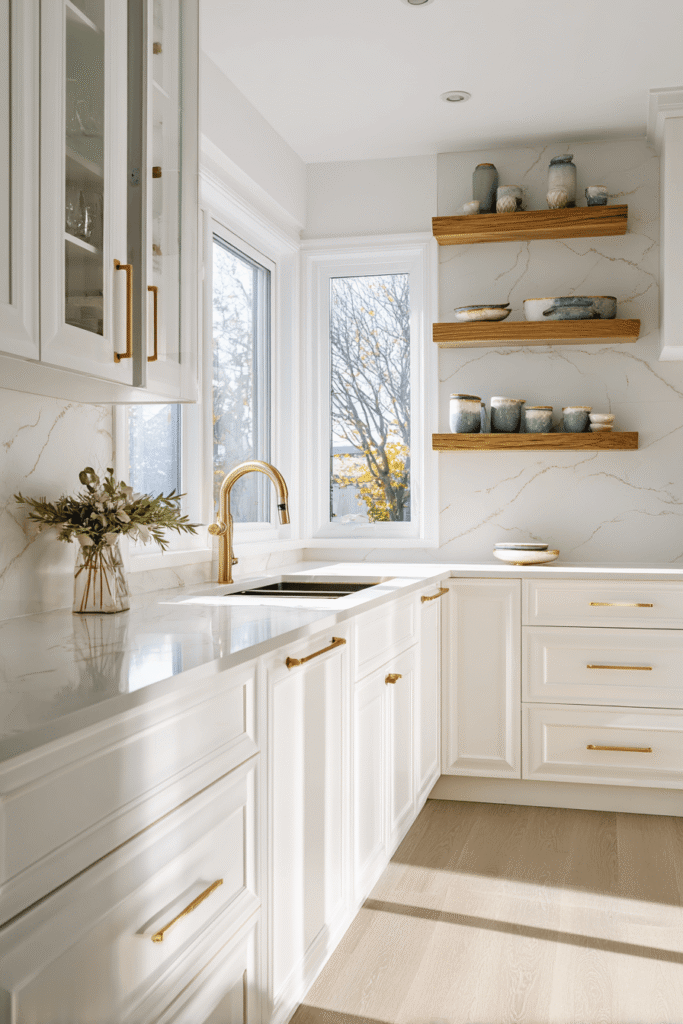
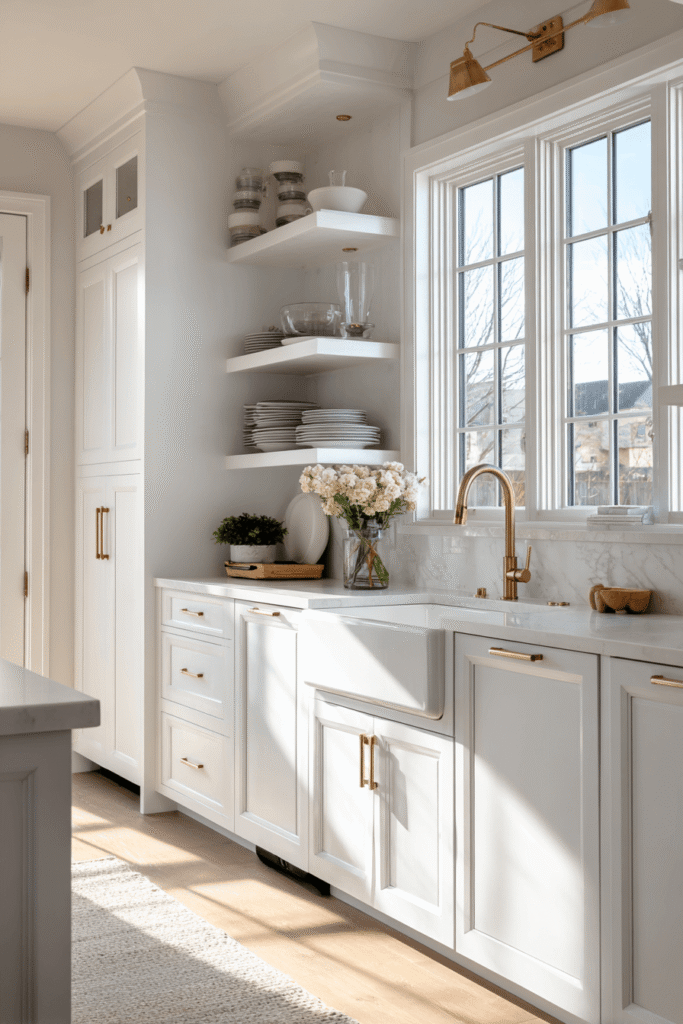
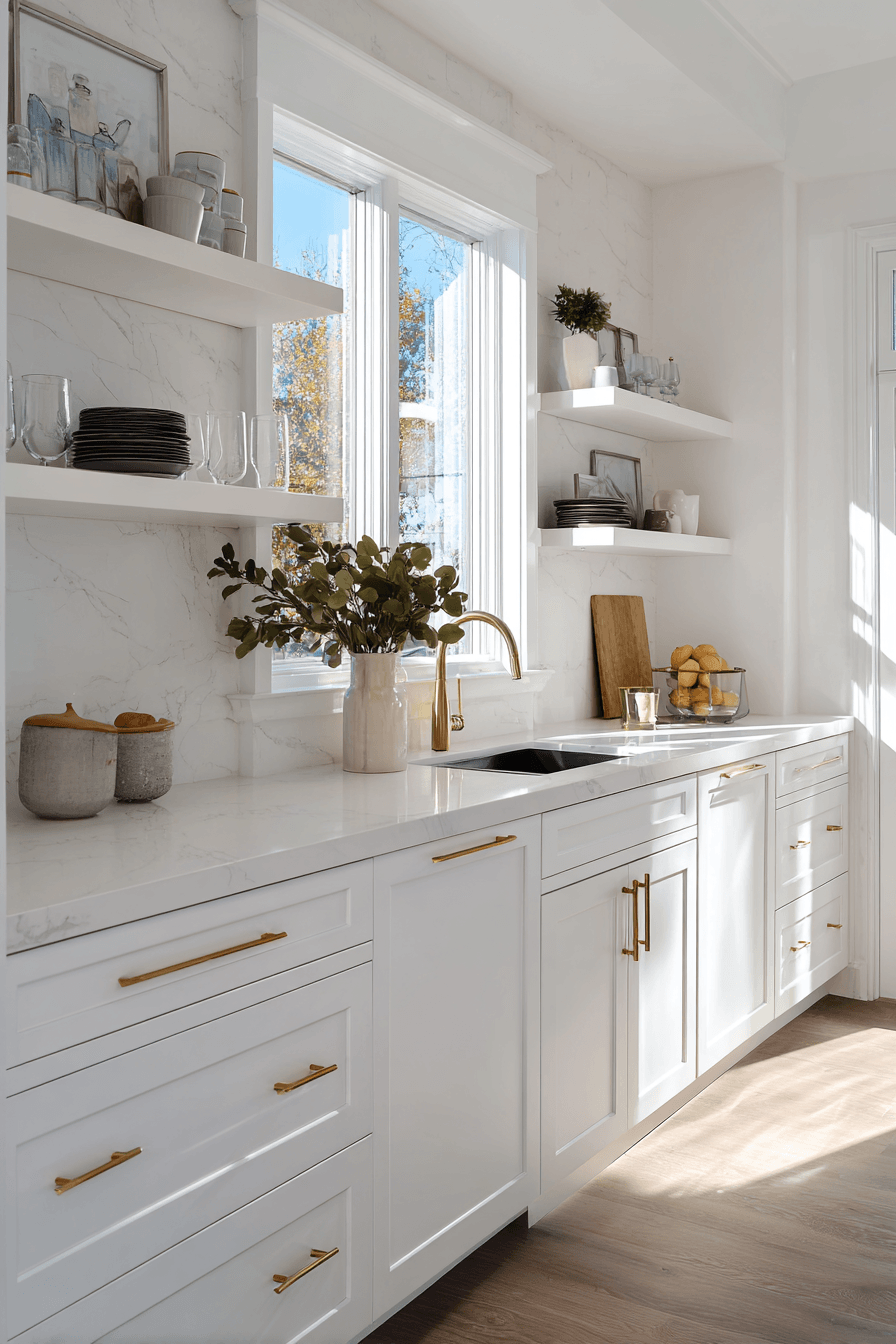
There is a reason white shaker-style kitchen cabinets have remained one of the most popular cabinet choices for decades — they balance timeless elegance with everyday practicality in a way few other styles can. Picture a bright suburban kitchen where clean-lined upper and lower shaker cabinets with soft-close doors and brushed brass hardware set a refined, welcoming tone. Open shelving inserts break the upper cabinet run, offering a curated display of ceramics and glassware that adds personality without clutter. Warm white quartz countertops with subtle grey veining complement the cabinetry beautifully, while natural daylight streams through a window above the sink, casting soft shadows that highlight the panel detailing. This is a kitchen that feels both polished and lived-in — the kind of space that makes morning coffee feel like a luxury.
Key Design Tips:
- Pair white shaker cabinets with brushed brass or matte gold hardware for warmth without going trendy.
- Incorporate open shelving inserts in the upper cabinet run to break visual monotony and add display space.
- Choose quartz countertops with subtle veining — they’re durable, low-maintenance, and visually sophisticated.
- Maximize natural light by keeping window treatments minimal above the sink area.
- Use soft-close hinges throughout for a quieter, more premium kitchen experience.
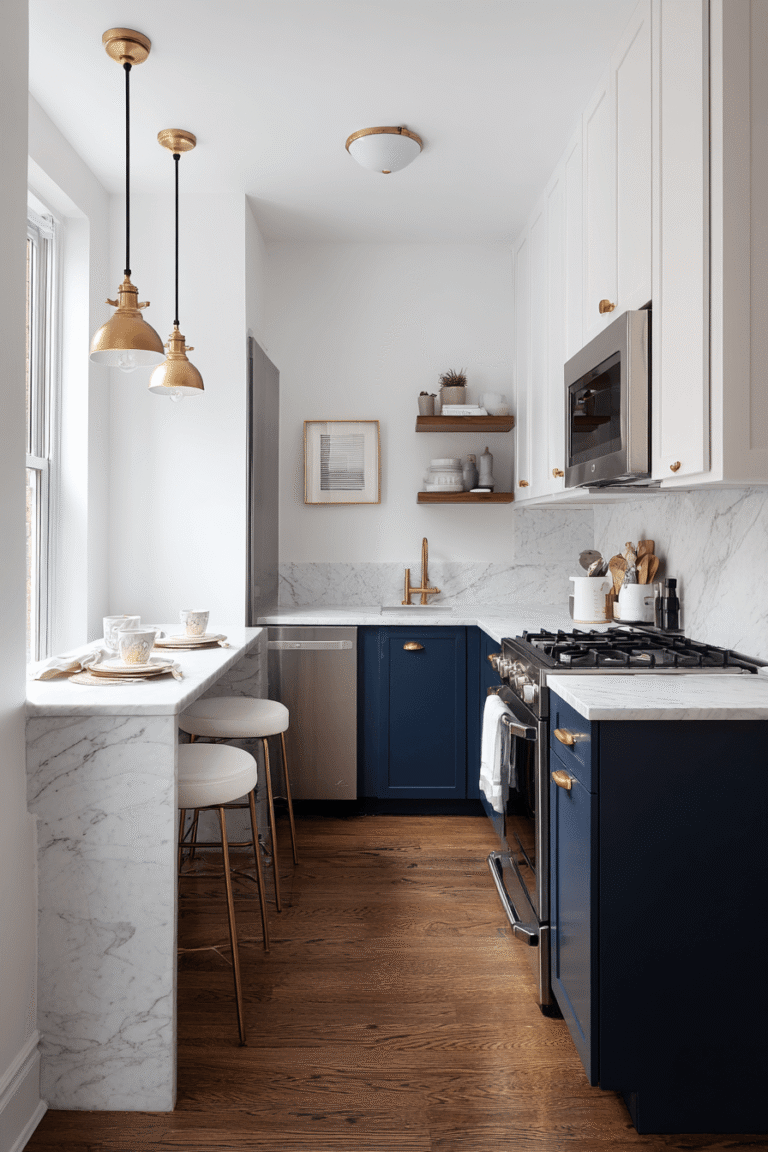
2. Bold Contrast: Two-Tone Navy and White Kitchen Cabinets
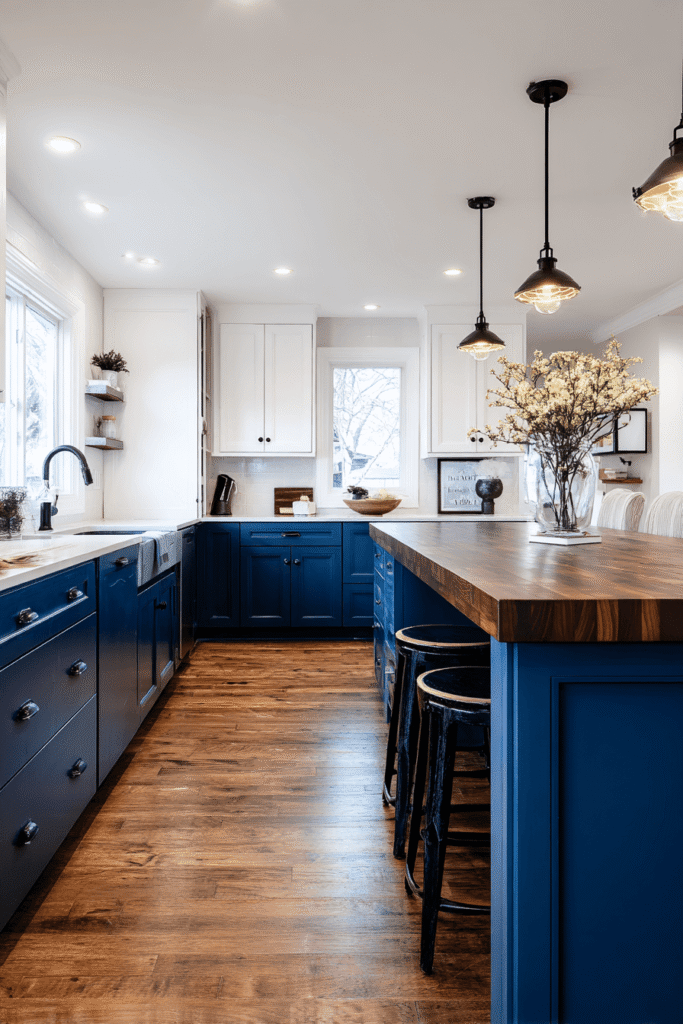
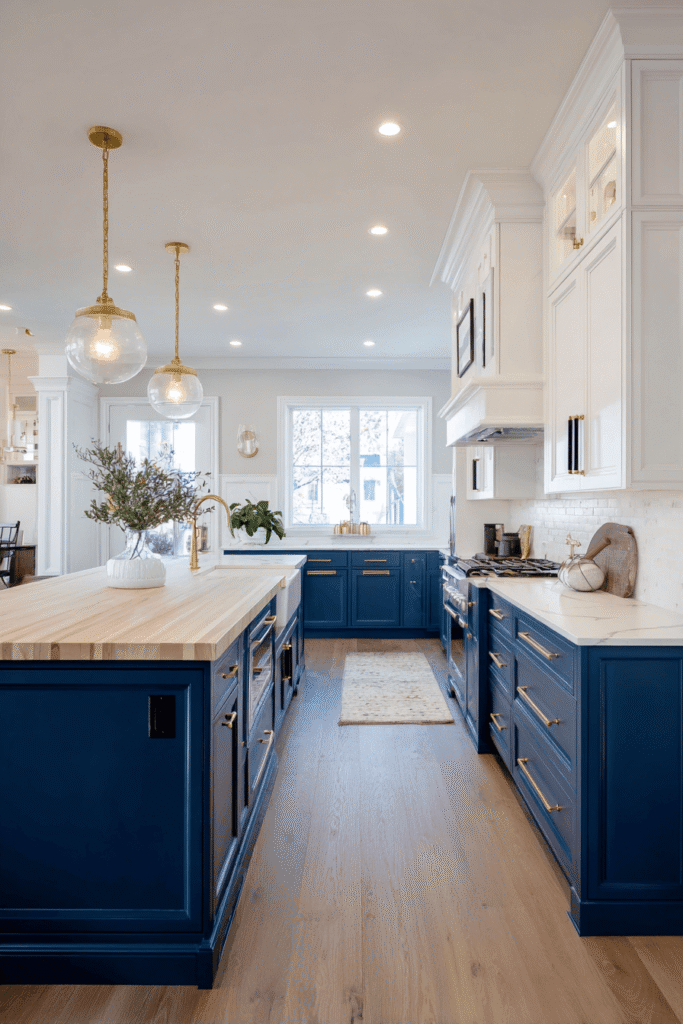
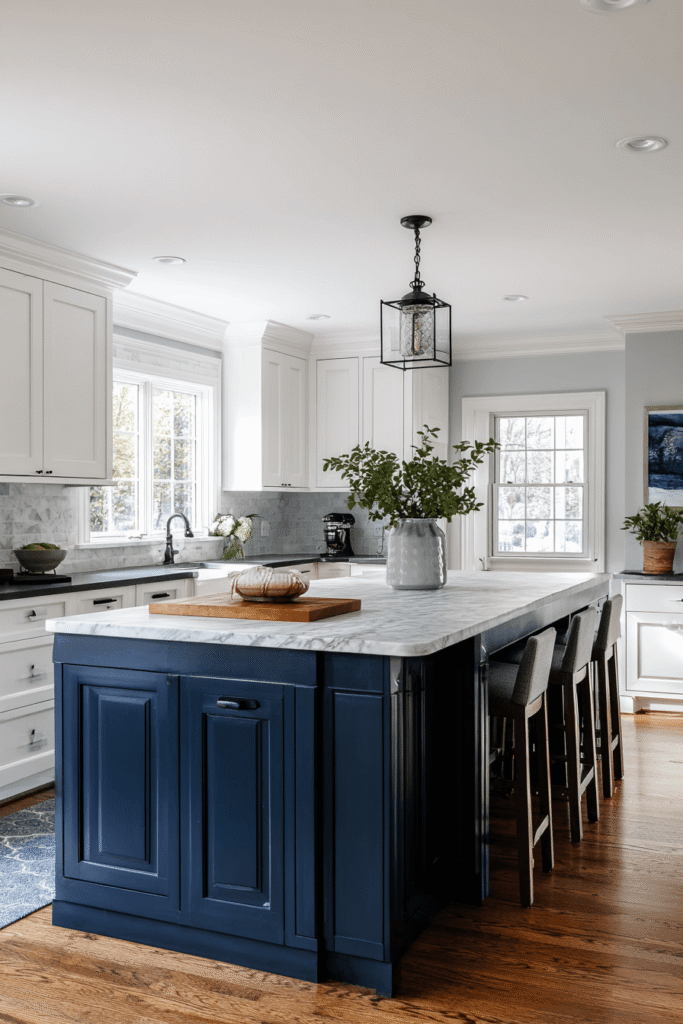
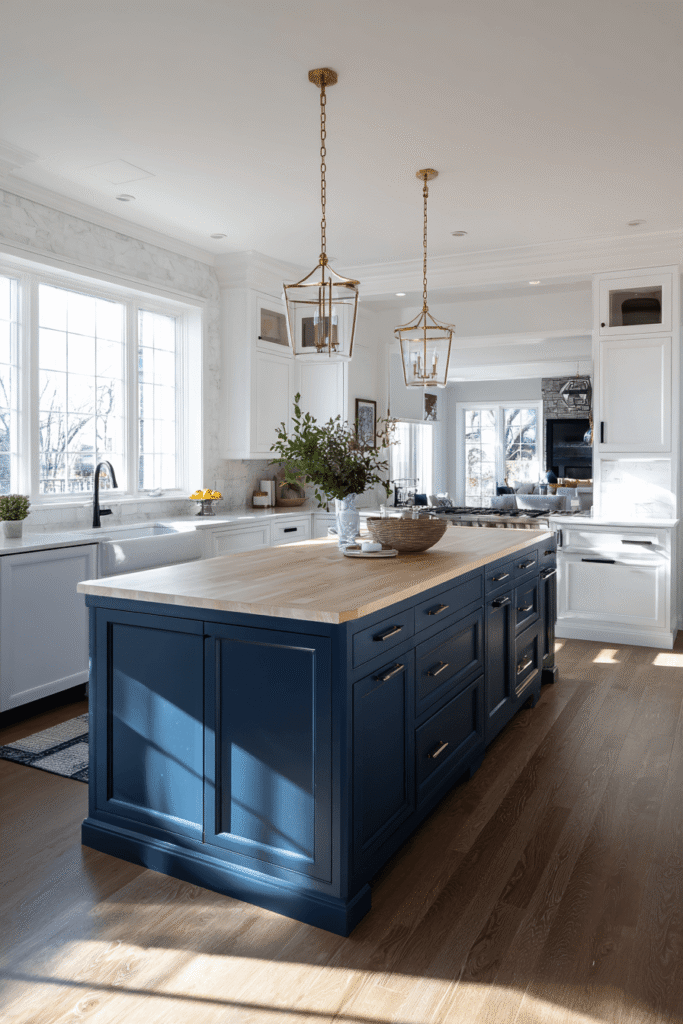
Two-tone kitchen cabinets have become a defining trend in transitional kitchen design, and for good reason — the contrast between deep and light tones creates visual drama while maintaining a cohesive, sophisticated look. In this layout, deep navy lower cabinets ground the space with confidence while crisp white upper kitchen cabinets draw the eye upward, making the ceiling feel taller and the room feel larger. Matte black cabinet hardware threads through both tones, lending a contemporary edge that keeps the design firmly modern. A large kitchen island in matching navy with a thick butcher block countertop anchors the center of the room, and warm pendant lighting above it plays beautifully against the natural light filtering in from nearby windows.
Key Design Tips:
- Use dark tones on lower cabinets only — this grounds the space without making it feel heavy or closed-in.
- Choose matte black hardware to bridge the gap between navy and white tones cohesively.
- A butcher block island countertop introduces warmth and organic texture to a bold color scheme.
- Warm pendant lighting above the island creates an intimate focal point in a high-contrast kitchen.
- Keep backsplash materials neutral to let the cabinet color story take center stage.
3. Warm and Textured: Rustic Farmhouse Reclaimed Oak Cabinets
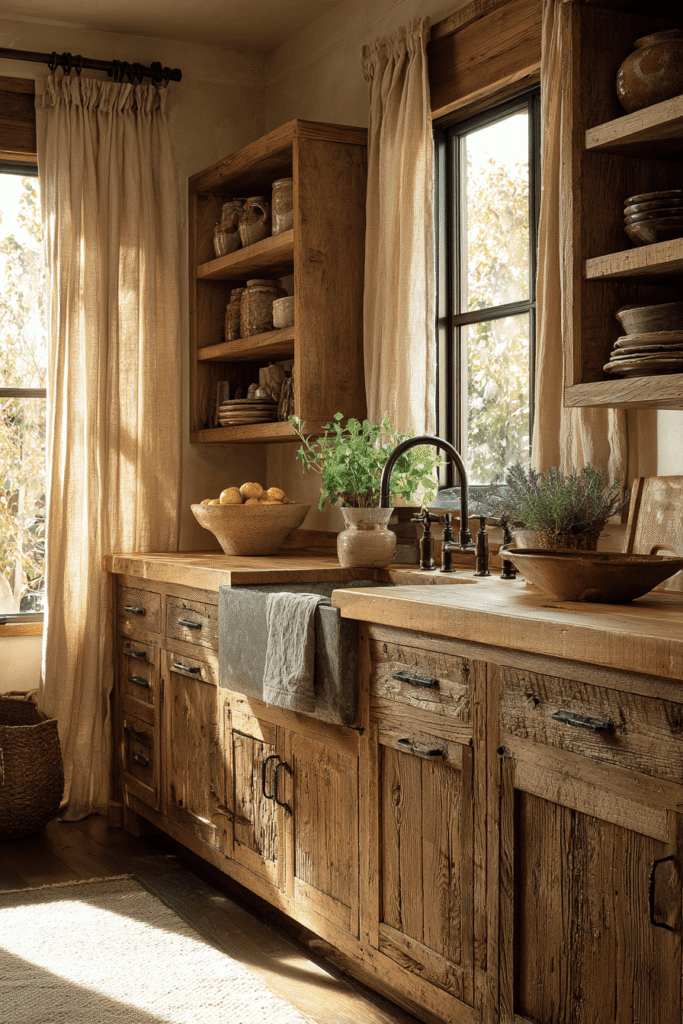
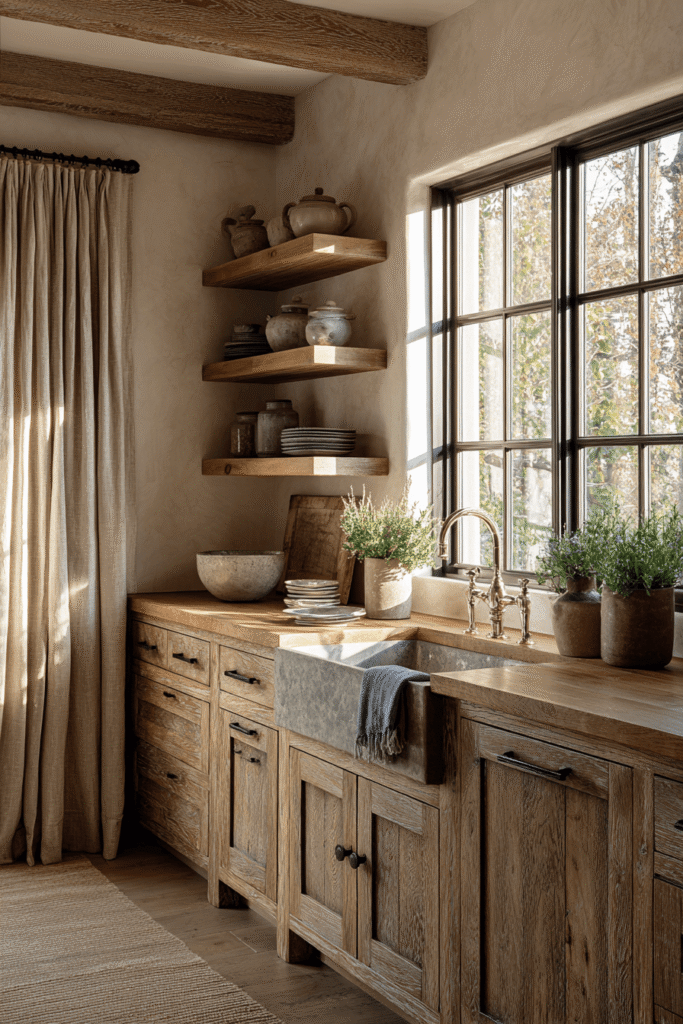
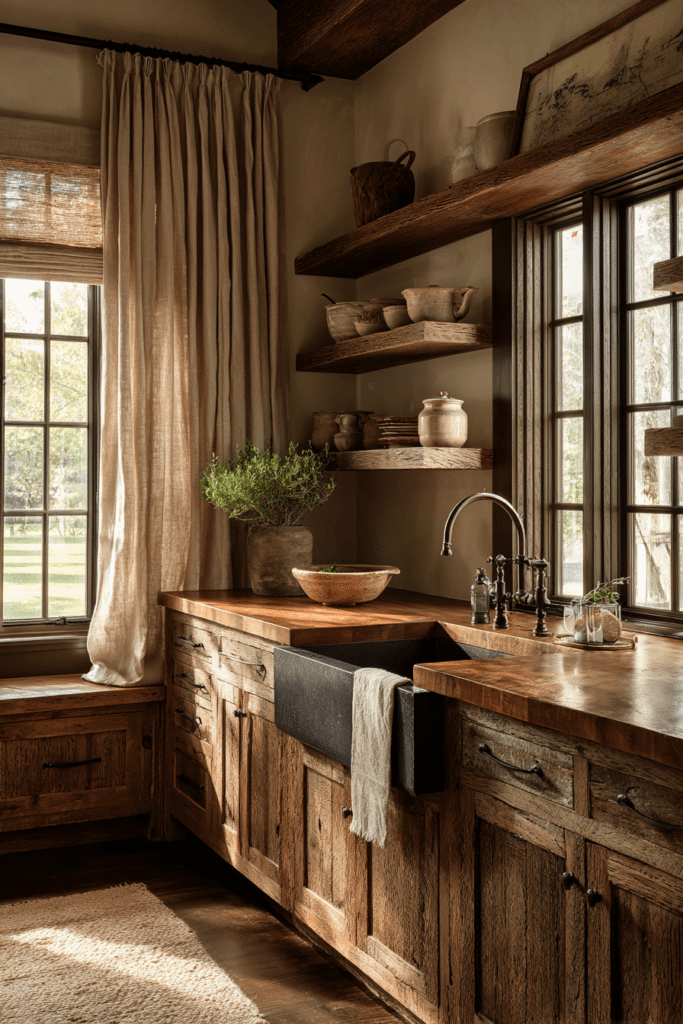
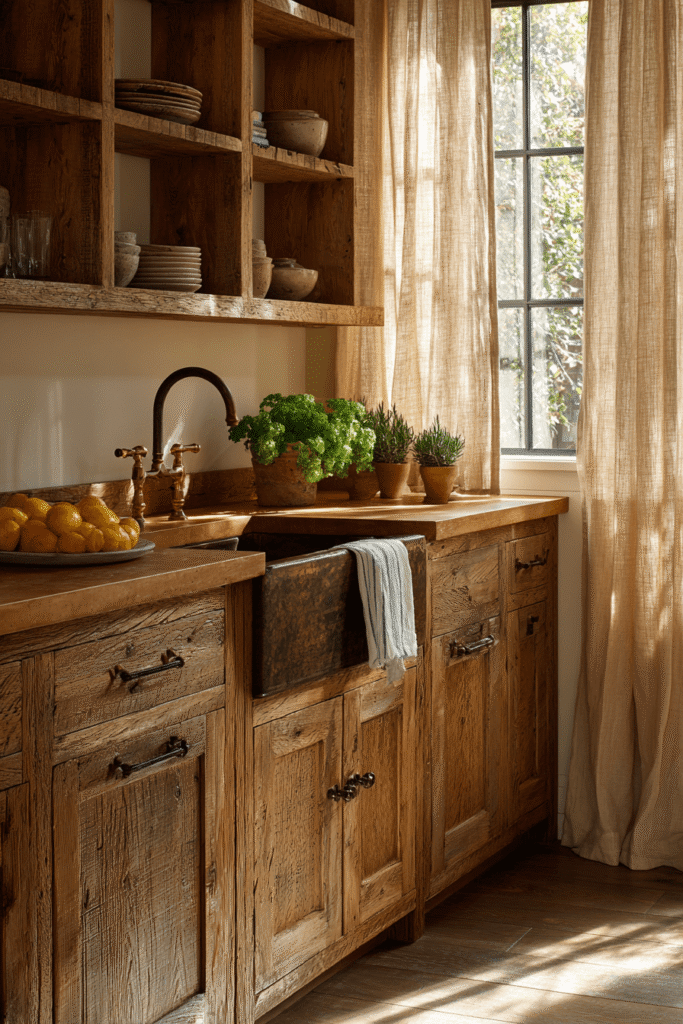
For those drawn to kitchens that feel rooted in history and craftsmanship, reclaimed oak farmhouse kitchen cabinets offer an unmatched depth of character. Visible wood grain and subtle natural color variation across each cabinet door tell the story of the timber’s past life, while oil-rubbed bronze bin-pull hardware reinforces the rustic, handcrafted aesthetic. Open upper shelving sections alternating with closed cabinets are styled with stoneware and potted herbs, creating a kitchen that feels genuinely lived-in and welcoming. A farmhouse apron sink set into aged butcher block countertops completes the tableau, and warm afternoon light filtering through linen curtains casts golden tones across the wood surfaces that no artificial lighting can replicate.
Key Design Tips:
- Source reclaimed wood cabinets from reputable suppliers to ensure structural integrity alongside visual character.
- Alternate open and closed upper cabinet sections to balance display styling with practical hidden storage.
- Oil-rubbed bronze hardware is the ideal companion to warm wood tones — avoid chrome or polished nickel here.
- Style open shelves with a mix of stoneware, plants, and textiles to reinforce the farmhouse aesthetic authentically.
- Linen window treatments diffuse light beautifully and complement natural wood tones without competing with them.
4. Smart Storage: Floor-to-Ceiling Sage Green Galley Cabinets
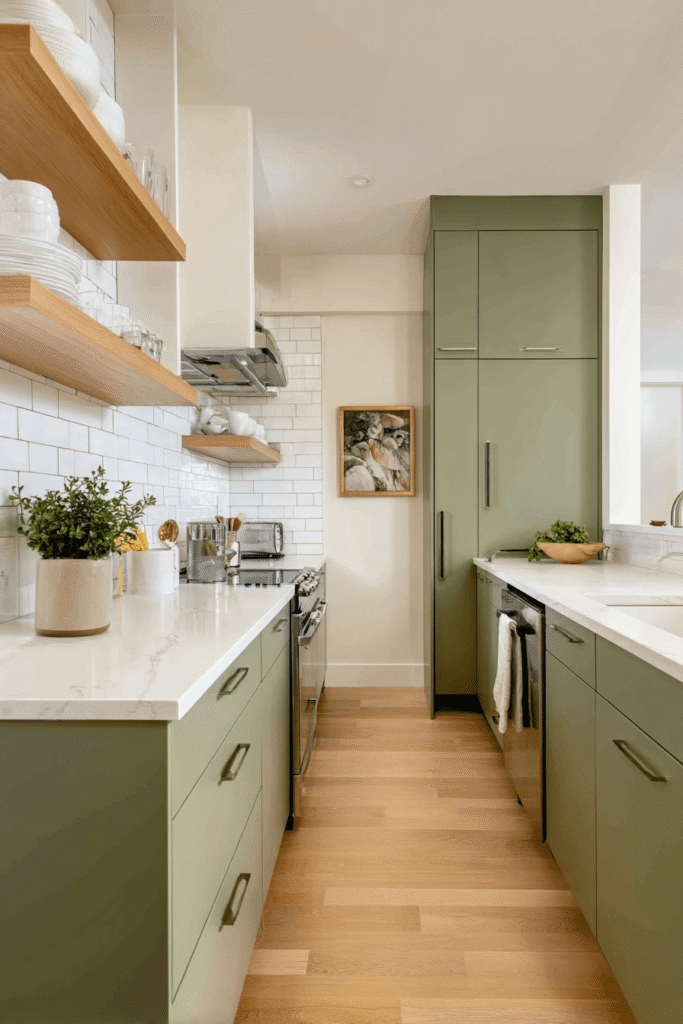
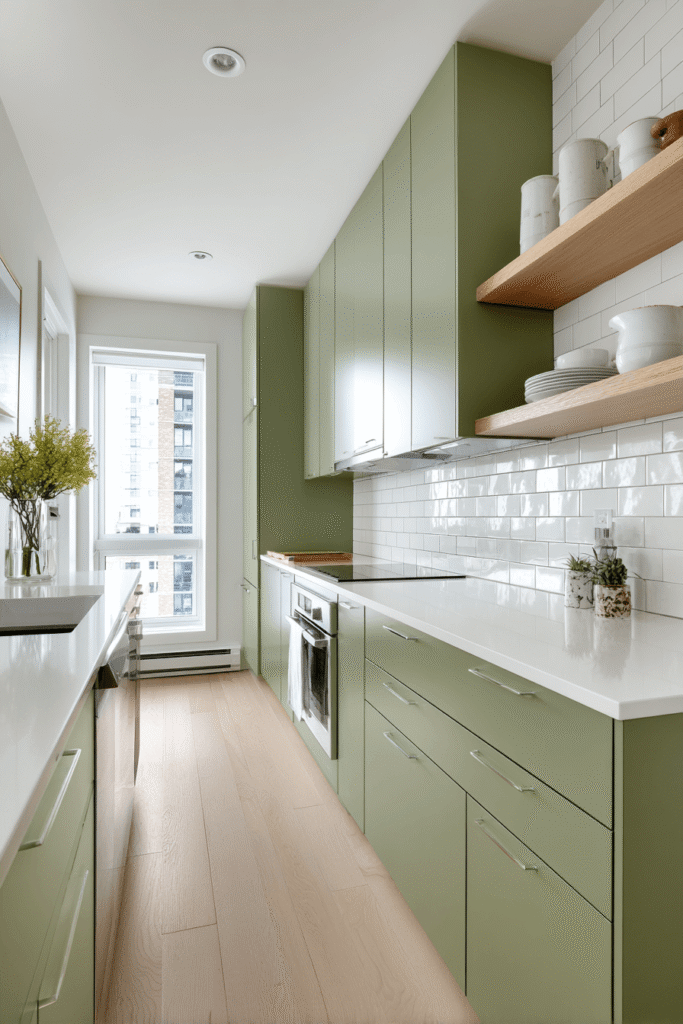
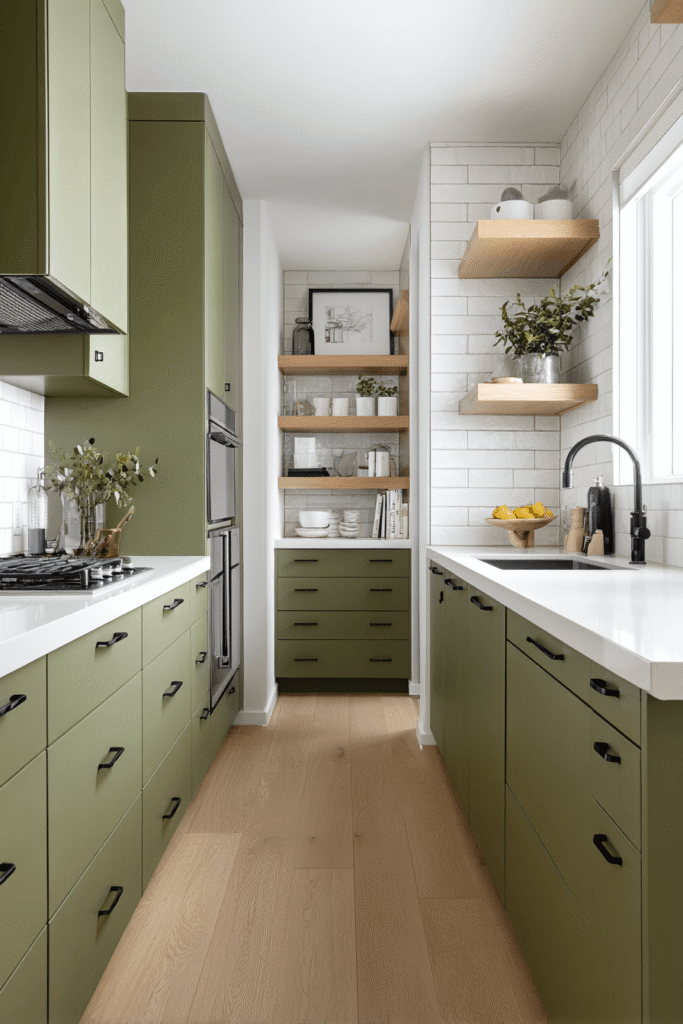
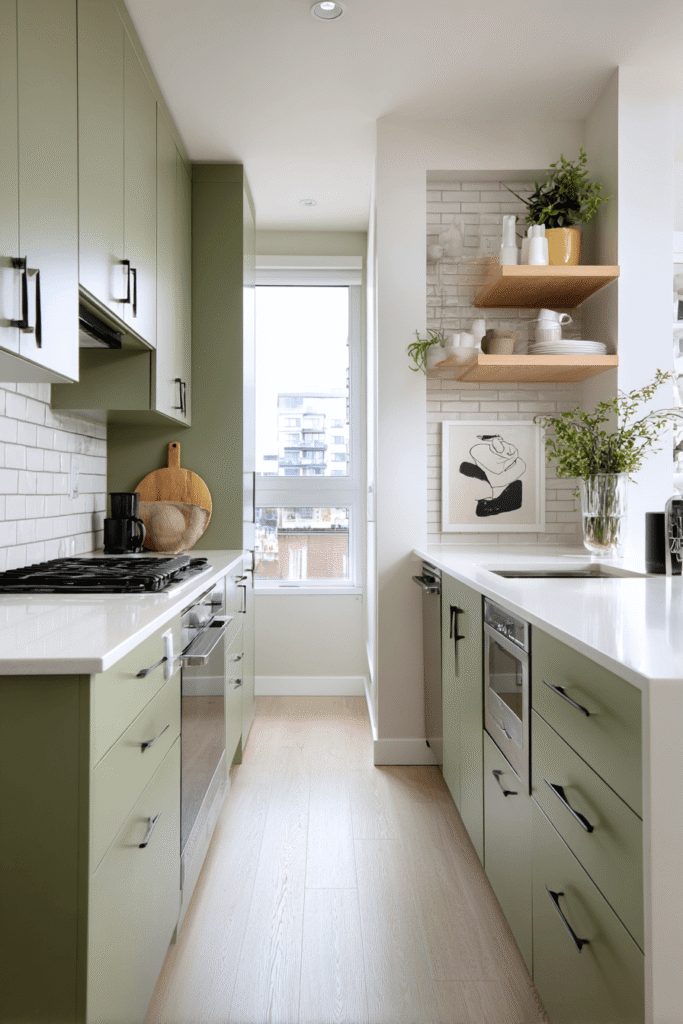
Small kitchens demand smart thinking, and a floor-to-ceiling sage green cabinet system in a galley layout proves that compact spaces can be just as beautiful as expansive ones. Slim profile cabinet doors with integrated finger-pull recesses keep the design clean and streamlined — no protruding hardware to interrupt the flow of the narrow corridor. Light oak floating shelves at the end of the cabinet run introduce warmth and a valuable display surface, while white subway tile backsplash and white quartz countertops reflect available light to brighten what could otherwise feel like a tunnel. The matte sage green finish is the true star here — earthy, sophisticated, and remarkably versatile.
Key Design Tips:
- Extend cabinets all the way to the ceiling in galley kitchens — every cubic inch of vertical storage counts.
- Integrated finger-pull recesses eliminate hardware clutter and make narrow corridors feel wider.
- End a galley cabinet run with floating shelves to soften the enclosed feeling and add display personality.
- White subway tile is a timeless backsplash choice that maximizes light reflection in tight spaces.
- Sage green pairs beautifully with light oak, warm white, and both brass and matte black hardware accents.
5. Seamless Minimalism: Handleless Greige Lacquer Floor-to-Ceiling Cabinets
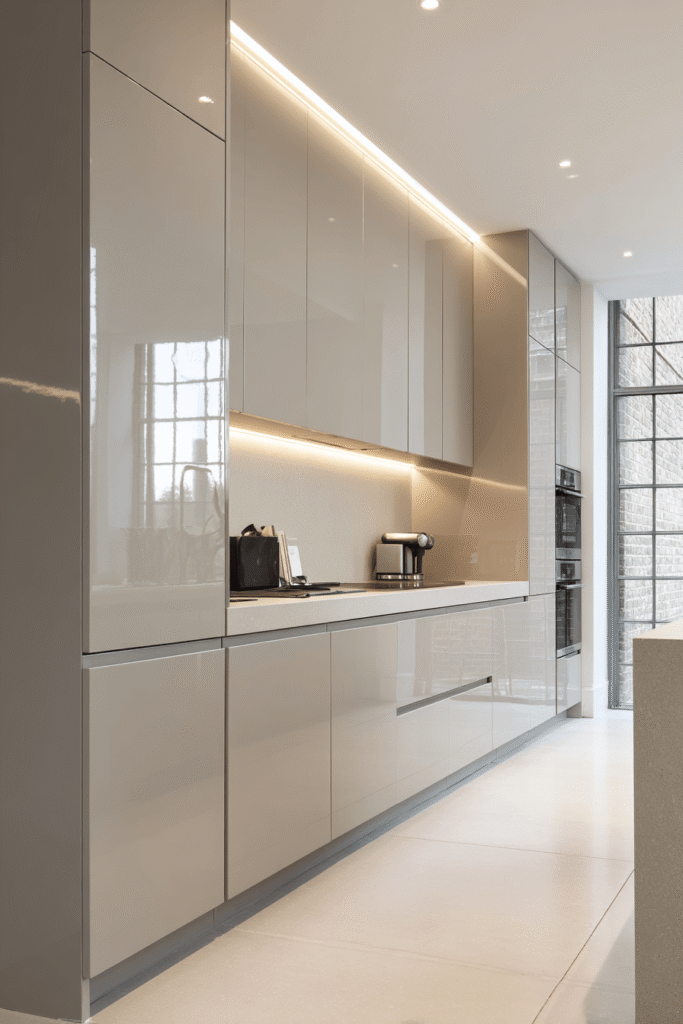
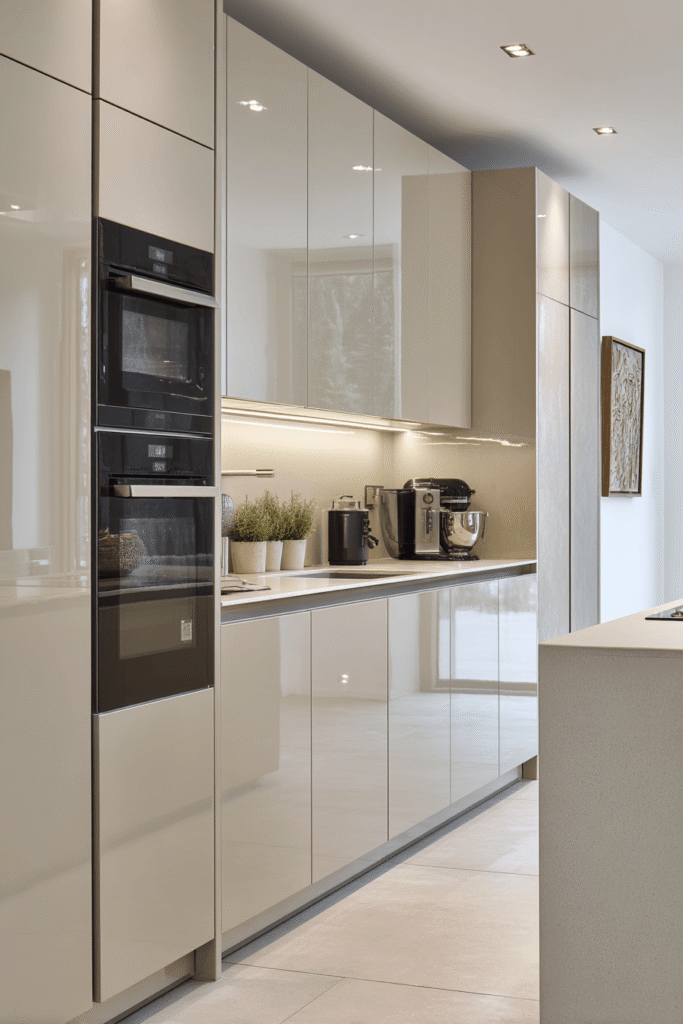

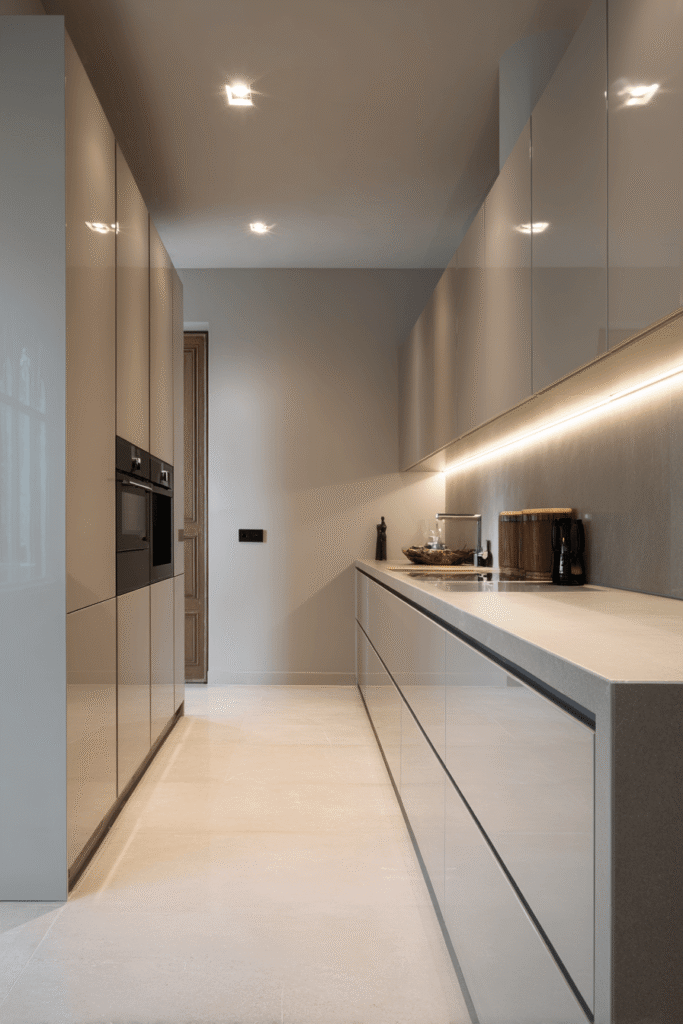
The pursuit of visual calm reaches its apex in a handleless greige lacquer kitchen where flat-front cabinets extend seamlessly from floor to ceiling in a contemporary open-plan home. Integrated appliances concealed behind matching cabinet panels maintain the uninterrupted surface — the entire kitchen reads as one continuous, serene composition. A thin LED strip beneath the upper cabinets delivers precise task lighting over a pale concrete countertop, while large-format porcelain floor tiles in light beige anchor the space with understated elegance. This is a kitchen designed for those who believe that restraint is the highest form of sophistication.
Key Design Tips:
- Greige lacquer — a blend of grey and beige — is warmer than pure grey and more contemporary than cream.
- Invest in integrated appliance panels to maintain the seamless, uninterrupted cabinet facade.
- Under-cabinet LED strips are both functional and atmospheric — use warm-white LEDs (2700–3000K) for a cozy effect.
- Large-format floor tiles with minimal grout lines reinforce the minimalist aesthetic underfoot.
- In handleless kitchens, ensure soft-close push-to-open mechanisms are high quality — they’ll be used constantly.
6. Moody Sophistication: Dark Charcoal Grey Shaker Cabinets with Marble
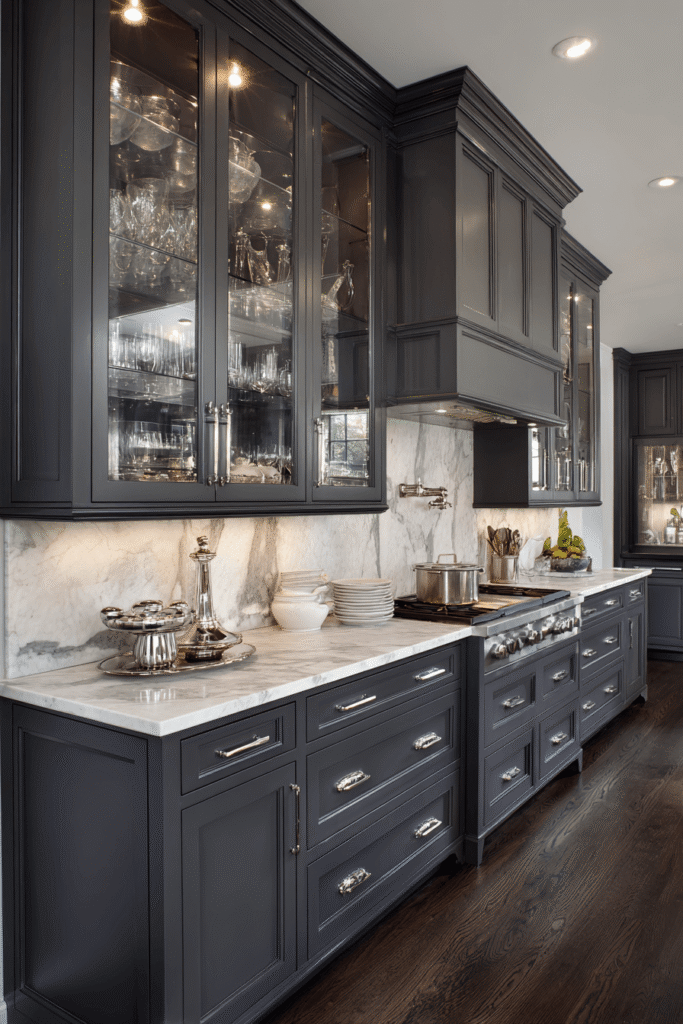
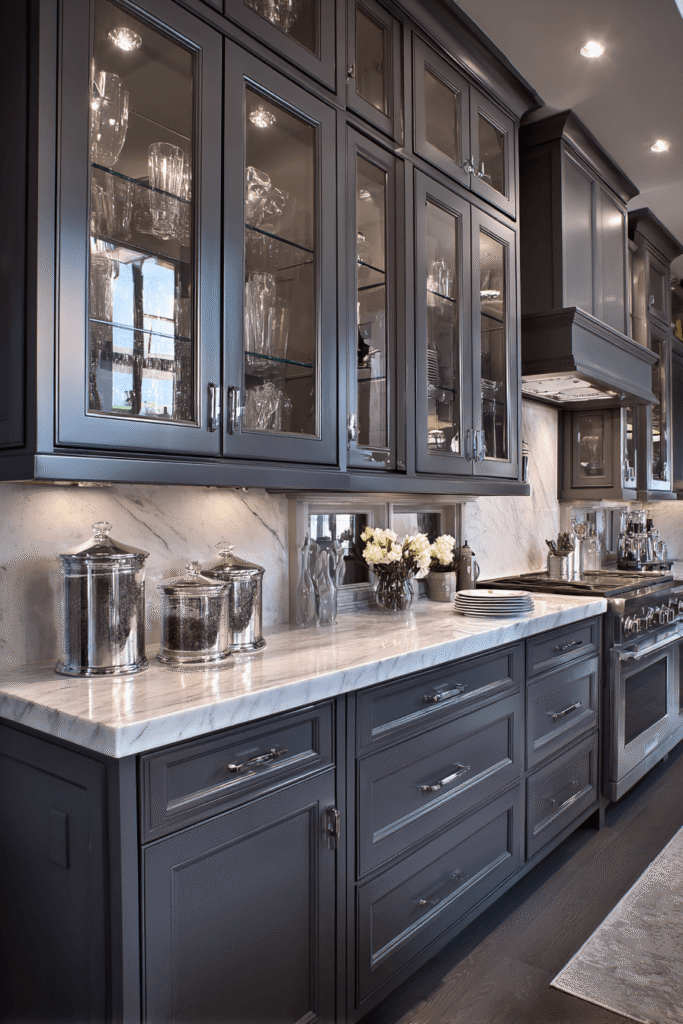
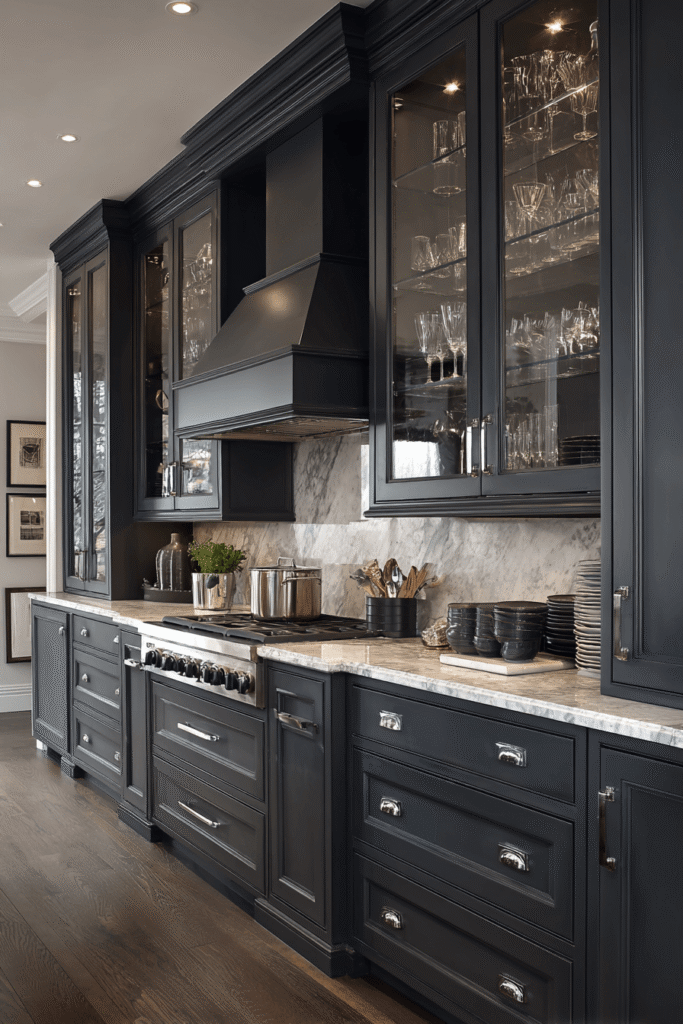
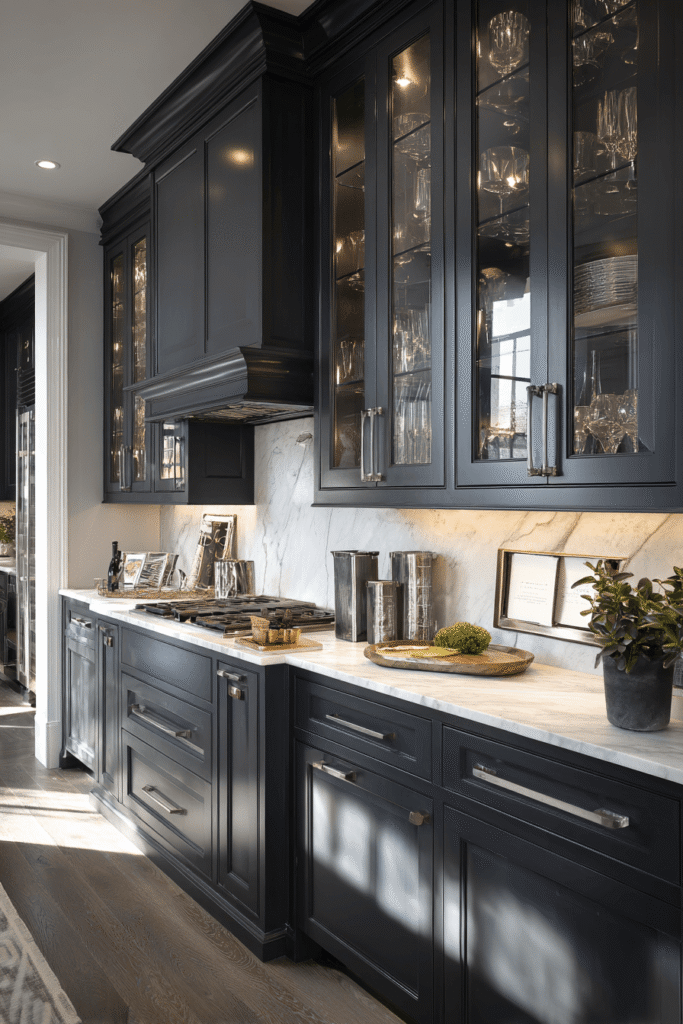
Dark charcoal grey kitchen cabinets make a bold architectural statement, and when paired with Calacatta marble countertops and backsplash, the result is nothing short of breathtaking. Shaker-style doors with polished nickel hardware and glass-front upper cabinets displaying curated glassware add layered interest to the moody palette. A statement hood in matching charcoal anchors the cooking zone, flanked by full-height cabinetry with pull-out pantry storage. Under-cabinet lighting warms the workspace and prevents the dark cabinetry from feeling oppressive. This kitchen is a masterclass in using depth and contrast to create a space that feels both dramatic and deeply livable.
Key Design Tips:
- Balance dark lower and upper cabinets with luminous marble surfaces to prevent the kitchen from feeling too heavy.
- Glass-front upper cabinet doors in a dark kitchen add depth and prevent the upper section from becoming a visual wall.
- A statement range hood in matching cabinetry color creates a powerful, unified cooking zone focal point.
- Pull-out pantry storage in full-height cabinets maximizes function while maintaining the streamlined facade.
- Under-cabinet lighting is non-negotiable in dark kitchens — layer it with pendant lights for a warm, balanced result.
7. Nordic Calm: Handleless White Cabinets with Birch Accents
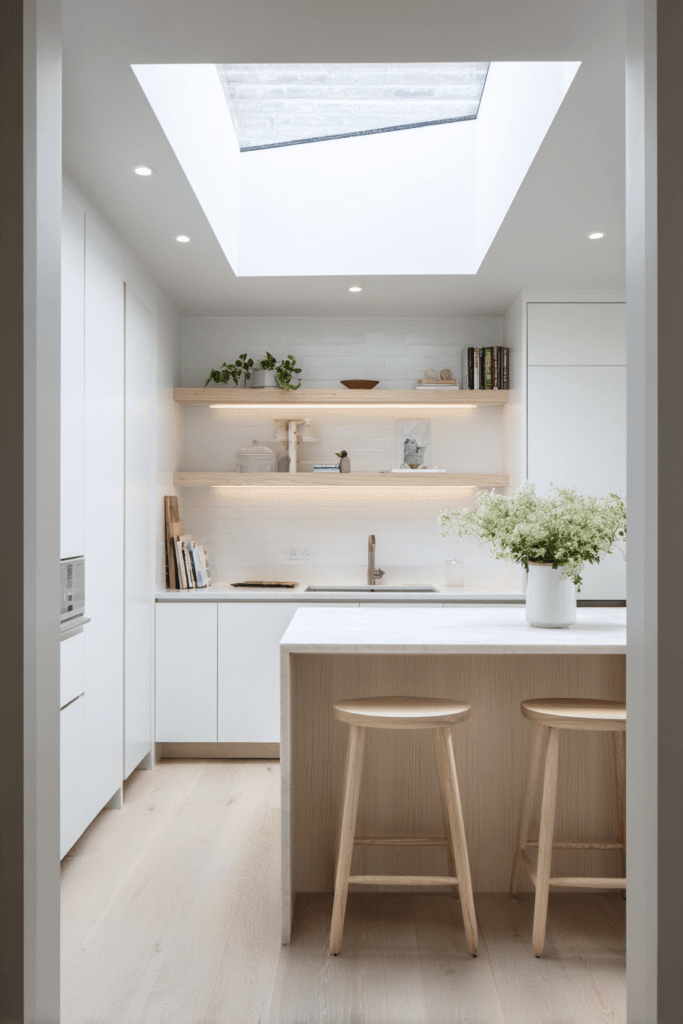
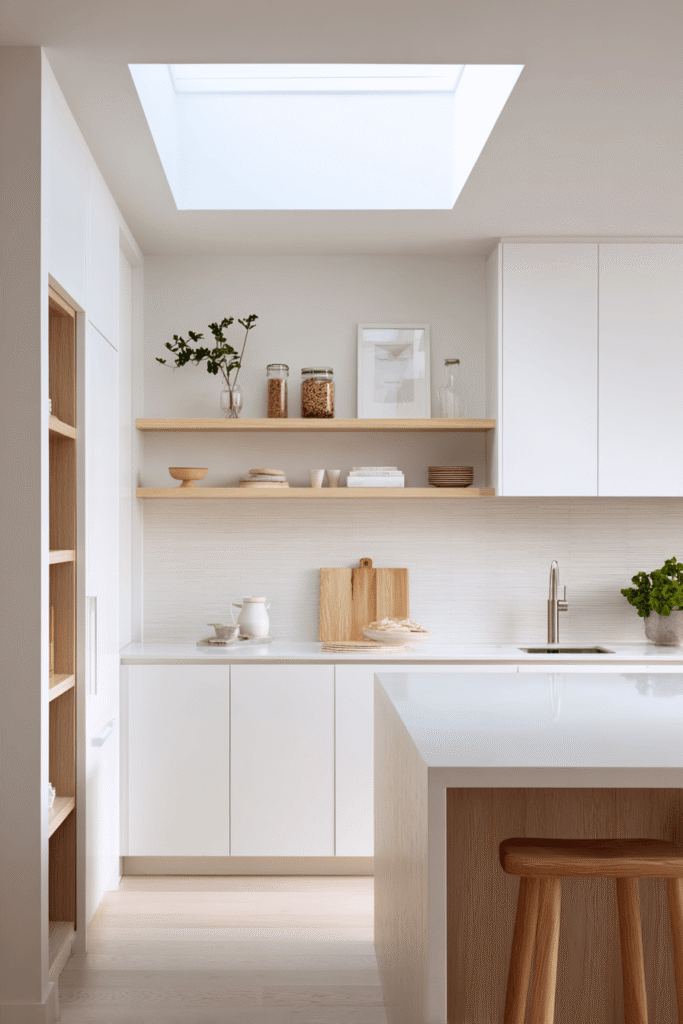
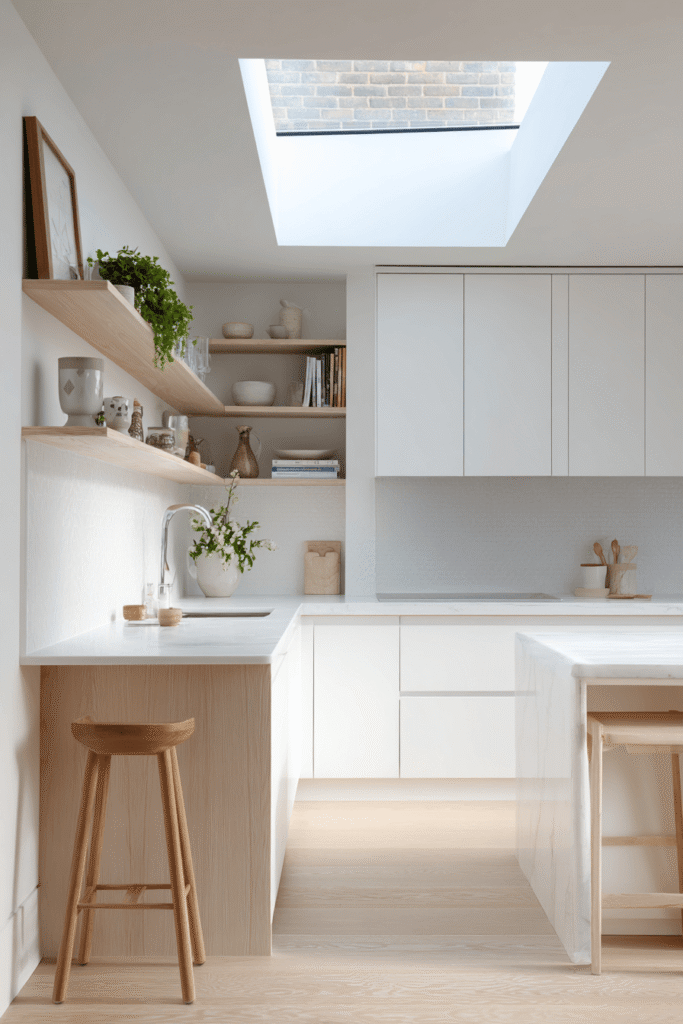
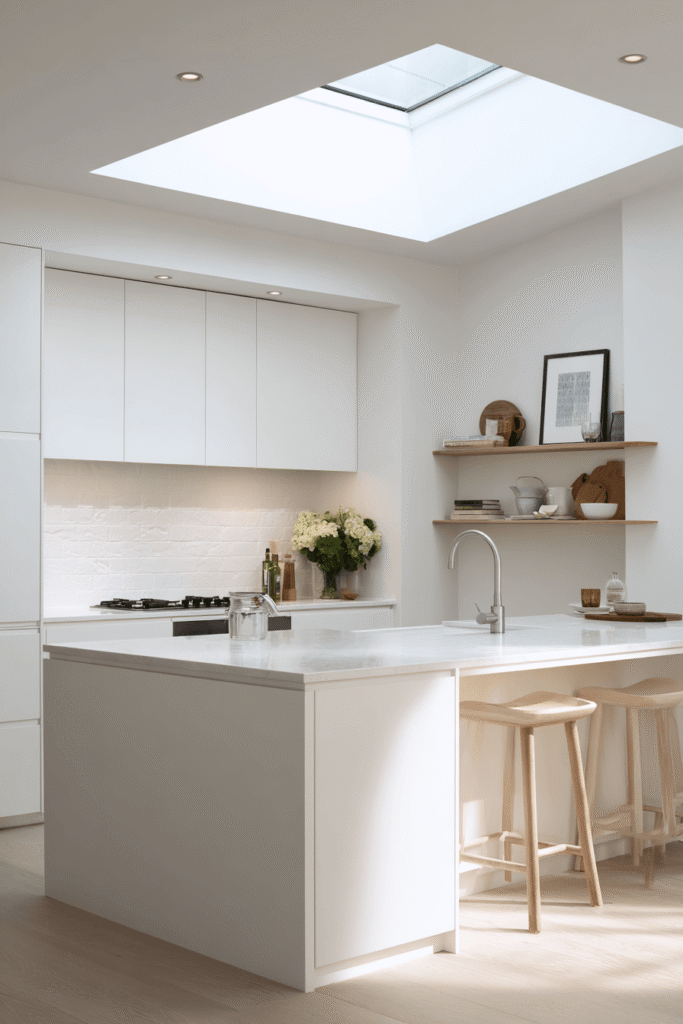
Scandinavian kitchen design philosophy — functionality without sacrifice of beauty — finds its purest expression in a handleless flat-front white cabinet kitchen integrated seamlessly with a white composite sink and white laminate countertops. The monolithic all-white palette creates an almost architectural purity, while light birch wood accents on open shelving and a breakfast bar stool rail introduce just enough warmth to keep the space from feeling clinical. A large skylight above floods the kitchen with even, diffused daylight that makes the white surfaces glow softly throughout the day. This is a kitchen that breathes.
Key Design Tips:
- A monolithic white-on-white palette — cabinets, sink, countertops — creates a powerful sense of calm and space.
- Introduce birch or light oak wood accents sparingly to add warmth without disrupting the minimal composition.
- Skylights are the ultimate upgrade in a white kitchen — diffused daylight eliminates shadows and unifies surfaces.
- Breakfast bar rail details in warm wood provide both function and a subtle design accent in an otherwise pared-back scheme.
- Keep accessory styling minimal — a few ceramics and a single plant are all this kitchen needs.
8. Classic Grandeur: Georgian-Style Cream Cabinets with Crown Molding
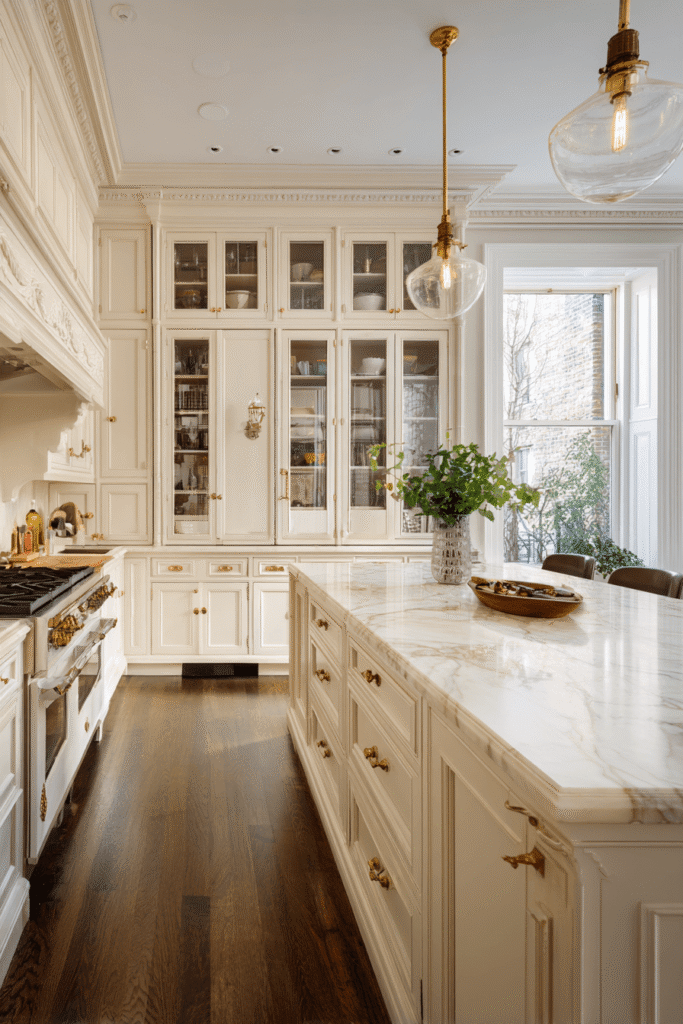
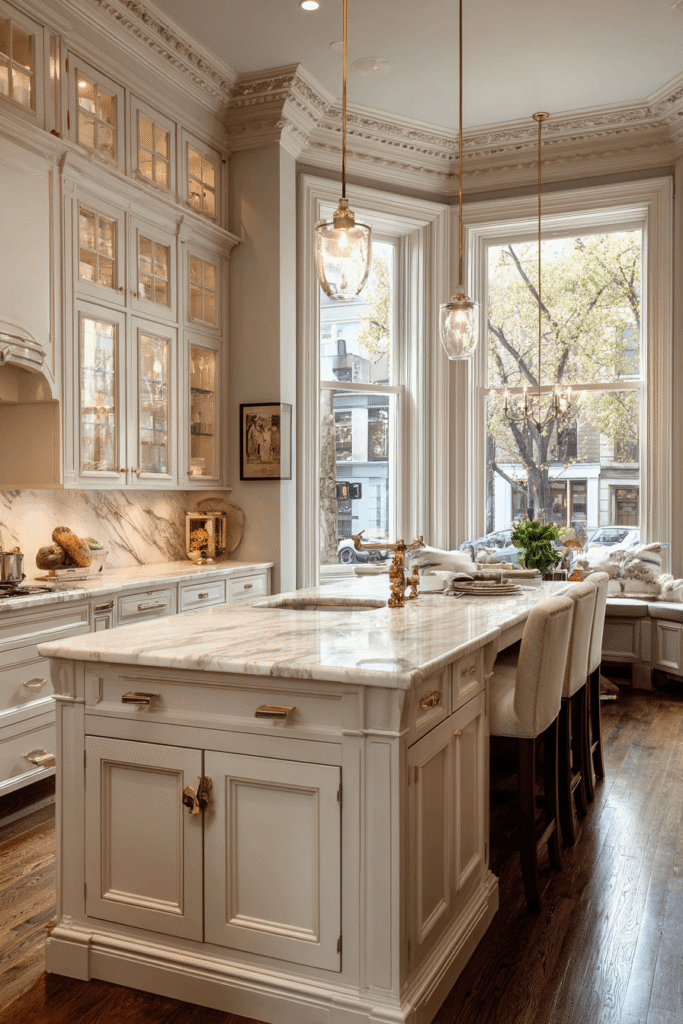
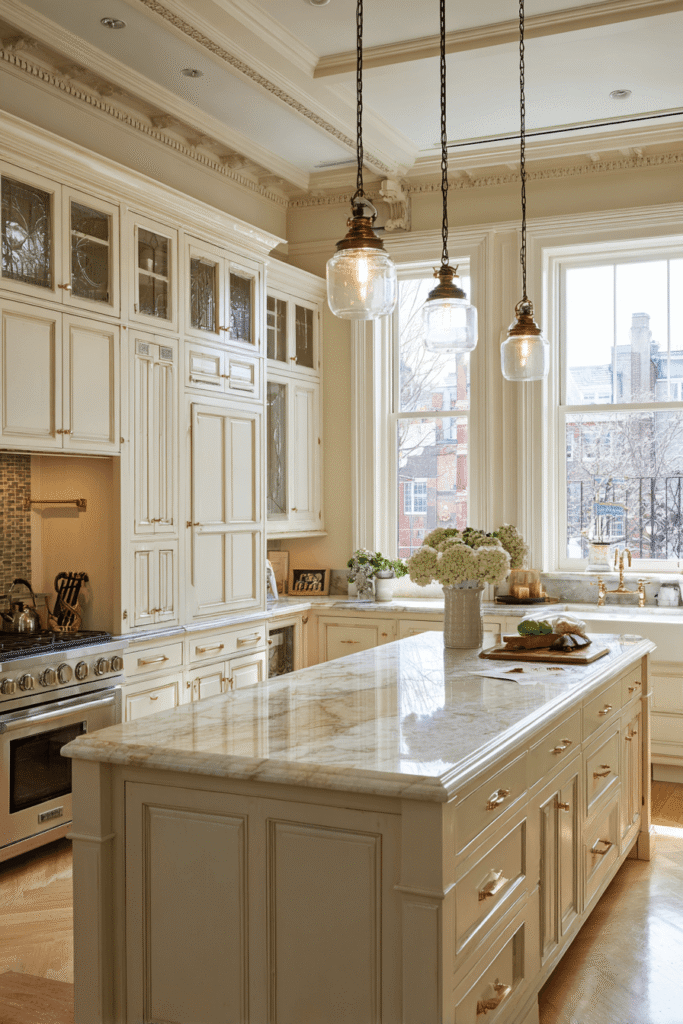
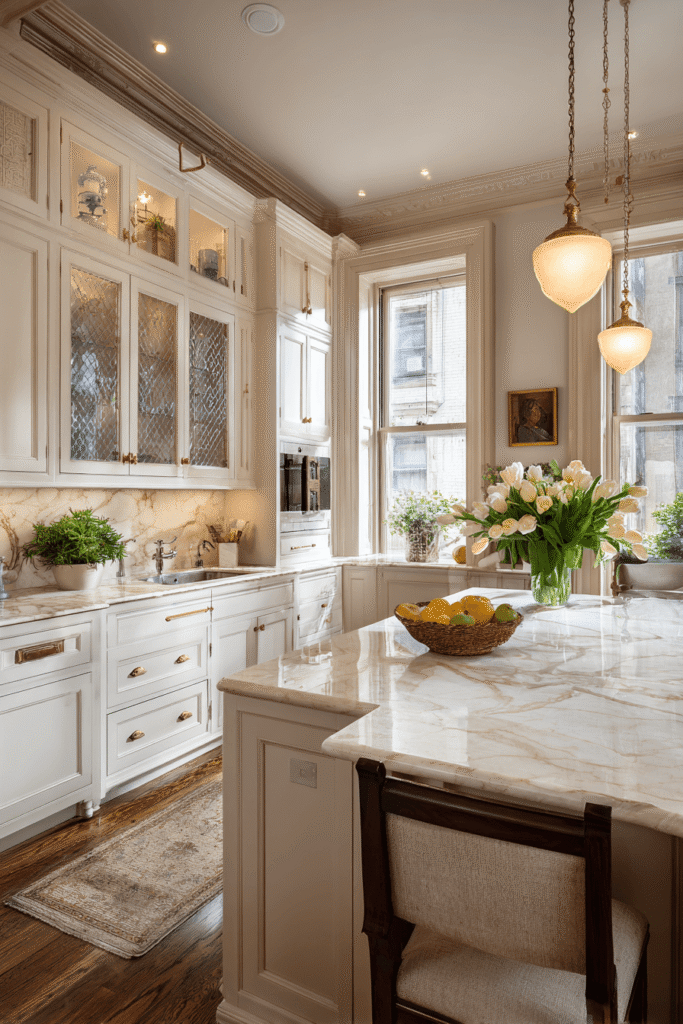
For those who find beauty in tradition, custom cream kitchen cabinets with detailed crown molding, glass-front upper cabinets with divided lights, and antique brass bin-pull hardware represent the pinnacle of classical kitchen design. The cream paintwork is warm and inviting, avoiding the starkness of pure white while maintaining an elegant lightness. A large central island with a marble top and matching cabinetry provides generous prep space and casual seating, while warm incandescent pendant lights above the island complement natural light from a large sash window. Every detail in this kitchen speaks of considered craftsmanship and enduring style.
Key Design Tips:
- Crown molding on upper cabinets is the single most impactful detail upgrade in a traditional kitchen — don’t skip it.
- Glass-front cabinets with divided lights add architectural authenticity to Georgian and colonial-style kitchens.
- Antique brass hardware is the ideal complement to cream cabinetry — it reads as warm, aged, and deeply classic.
- A marble island countertop anchors the kitchen as a functional centerpiece and a genuine statement surface.
- Warm-toned incandescent or Edison bulb pendant lights reinforce the traditional, welcoming atmosphere.
9. Raw and Urban: Industrial Steel-Frame and Matte Black Loft Cabinets
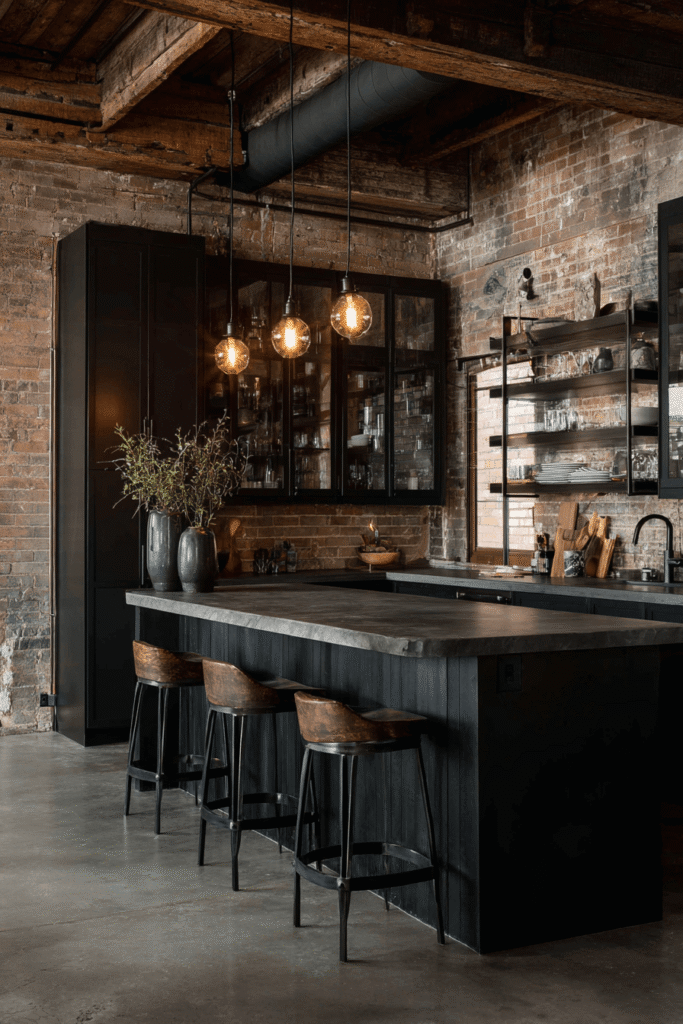
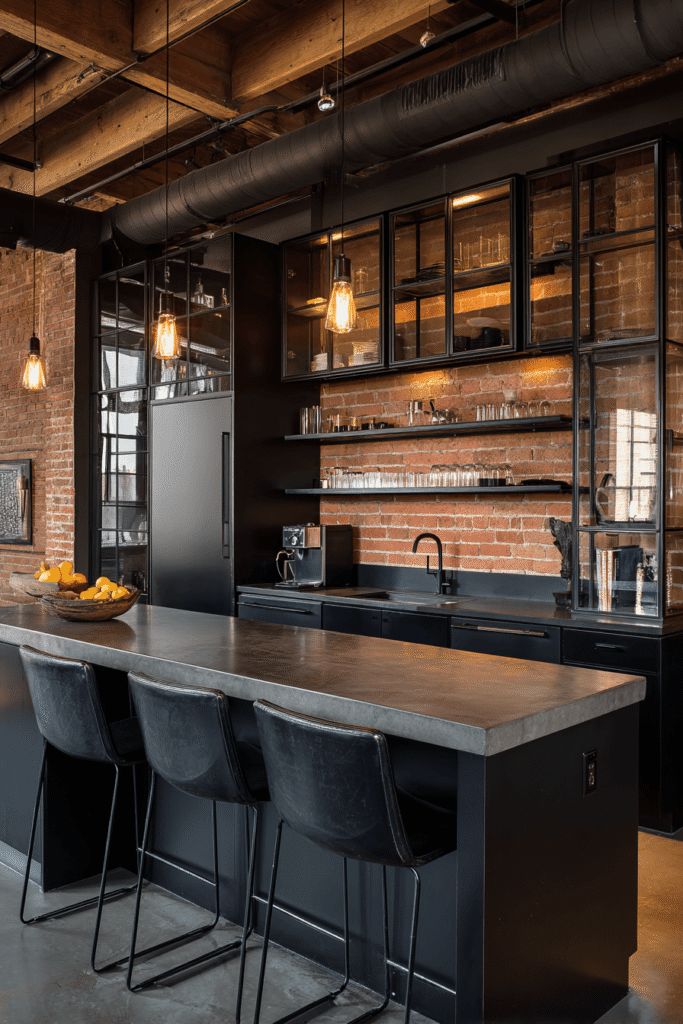
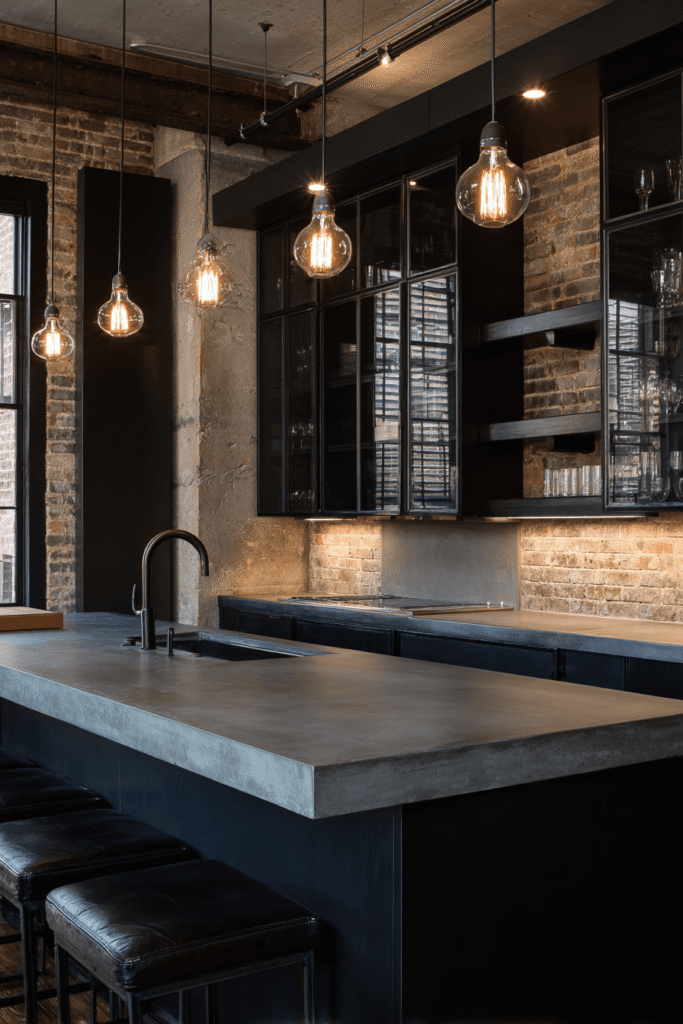
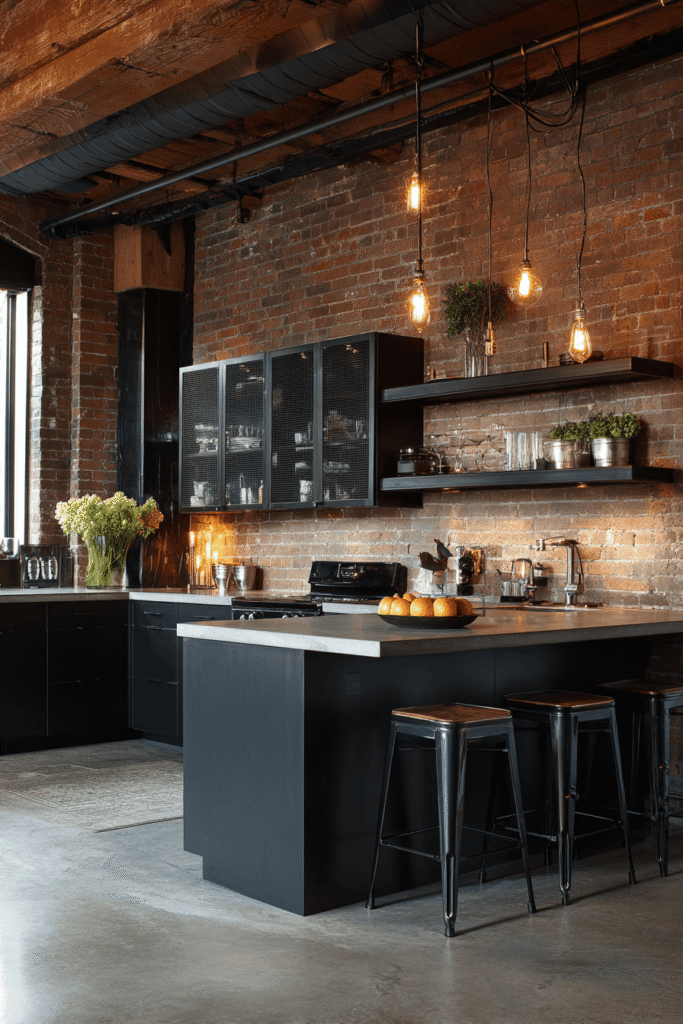
In a loft kitchen where exposed brick walls and poured concrete countertops set the material tone, flat steel-framed glass upper cabinet doors and matte black painted lower cabinetry feel perfectly at home. Open steel shelving brackets support display sections alongside closed lower storage, creating a practical hierarchy of visible and concealed organization. Edison bulb pendant lights hang from an exposed beam above the peninsula, casting warm pools of light across the raw, industrial surfaces. This is a kitchen with an unapologetic point of view — one that celebrates honesty of materials and the beauty of the unconventional.
Key Design Tips:
- Steel-framed glass cabinet doors are a defining feature of industrial kitchen design — source them from specialist joinery suppliers.
- Matte black lower cabinetry against exposed brick creates a powerful material dialogue without feeling forced.
- Open steel shelving adds industrial character while keeping the visual weight of the upper zone light and airy.
- Poured concrete countertops are durable, unique, and perfectly suited to the industrial aesthetic — seal them properly.
- Edison bulb pendants over a peninsula or island are the finishing touch that brings warmth to an otherwise cool palette.
10. Vertical Genius: Dusty Blue Cabinets to Ceiling in a Small Apartment Kitchen

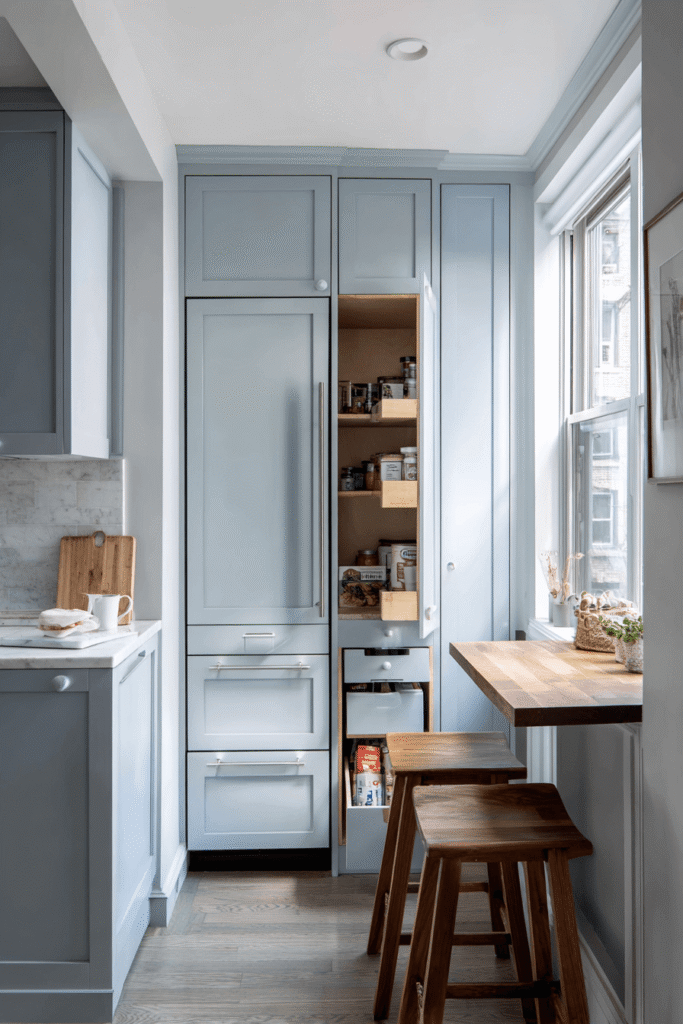

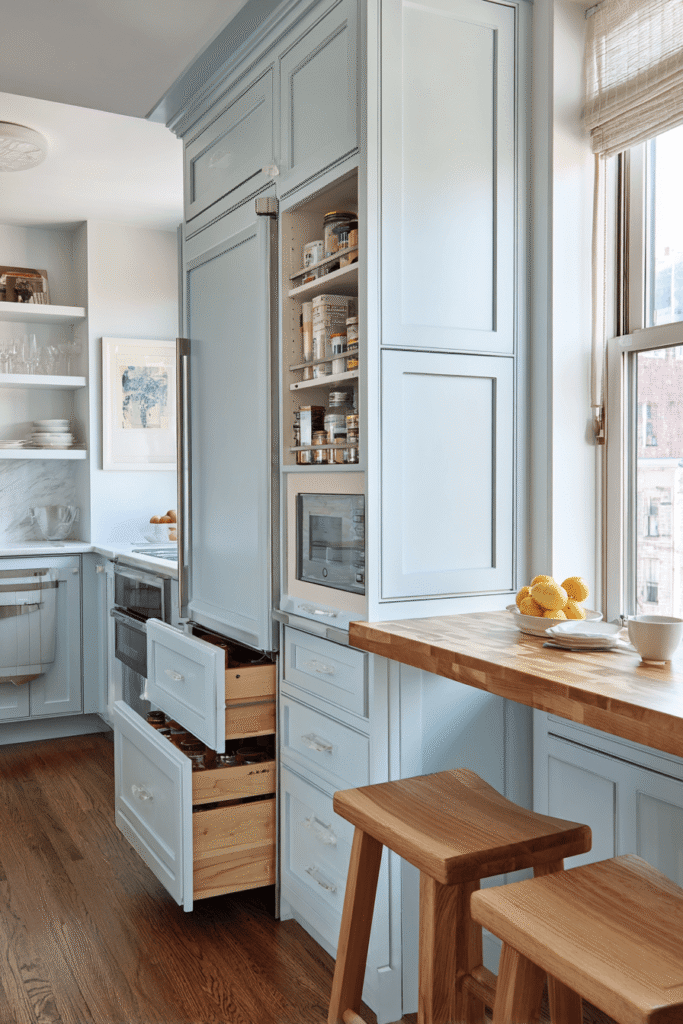
A small kitchen remodel reaches its full potential when vertical cabinet storage extends all the way to the ceiling, and this dusty blue kitchen demonstrates exactly how transformative that decision can be. Matte white ceramic knob hardware adds a charming, handcrafted touch against the soft blue finish. Pull-out drawer inserts visible through an open lower cabinet door reveal the thoughtful interior organization that makes small-space living genuinely comfortable. A compact butcher block peninsula doubles as a dining surface with two wooden stools tucked beneath, and natural morning light from a nearby window warms the blue finish into something almost dreamy.
Key Design Tips:
- Always extend cabinets to the ceiling in small kitchens — the storage gain is significant and the visual effect makes rooms feel taller.
- Dusty blue is one of the most flattering cabinet colors for small spaces — it recedes slightly while adding personality.
- Ceramic knob hardware in matte white is an affordable, high-impact detail that adds artisan character.
- Pull-out drawer inserts and interior organizers are essential investments in compact kitchen cabinetry.
- A peninsula that doubles as a dining surface is the most space-efficient layout solution for apartment kitchens.
Why These Kitchen Cabinet Styles Are the Best Choices for Your Home
The ten kitchen cabinet ideas explored in this article represent the full spectrum of contemporary and classic kitchen design thinking. From white shaker kitchen cabinets and two-tone transitional cabinetry to handleless minimalist lacquer systems and rustic reclaimed wood farmhouse cabinets, each style addresses a different set of priorities — aesthetic, functional, spatial, and budgetary. Dark kitchen cabinets like charcoal grey and navy bring drama and depth to larger spaces, while sage green, dusty blue, and greige lacquer cabinets offer sophisticated color without overwhelming a room. Custom built-in cabinetry with crown molding and antique brass hardware satisfies those who value timeless craftsmanship, while industrial steel-frame glass cabinets and handleless Scandinavian designs appeal to those drawn to architectural purity. Vertical cabinet storage, pull-out drawer organization, integrated appliance panels, and open shelving inserts address the functional side of kitchen cabinet design — proving that smart storage and beautiful aesthetics are never mutually exclusive. Whatever your kitchen’s size, style, or budget, the right cabinet choice is the single most powerful transformation you can make to the space.
Conclusion
Kitchen cabinets are far more than storage solutions — they are the defining architectural element of your kitchen, the foundation upon which every other design decision rests. The ten ideas in this article demonstrate that extraordinary kitchen design is possible in every size, style, and budget category. Whether you are drawn to the timeless appeal of cream Georgian cabinetry, the Nordic calm of an all-white handleless system, or the bold drama of dark charcoal with marble, the key is to choose cabinets that reflect your personality and serve your daily life. Use the design tips in each section as your starting framework, then layer in your own material choices, lighting preferences, and styling instincts. The best kitchen is always the one that feels unmistakably, beautifully yours.