10 Stunning Kitchen Theme Ideas to Transform Your Cooking Space
The kitchen is more than a place to cook — it’s the soul of the home, where morning rituals begin, conversations linger over coffee, and family memories are made between meals. A thoughtfully designed kitchen doesn’t just function well; it feels right. Whether you’re drawn to the warmth of rustic farmhouse charm, the quiet restraint of Scandinavian minimalism, or the dramatic flair of a maximalist palette, the theme you choose becomes a direct expression of your personality and lifestyle. In this article, we explore 10 distinctive kitchen theme ideas — from moody Japandi interiors to bold coastal retreats — each offering a unique visual language and a set of actionable design principles to help you shape a space that is as beautiful as it is practical.
1. Modern Farmhouse Kitchen
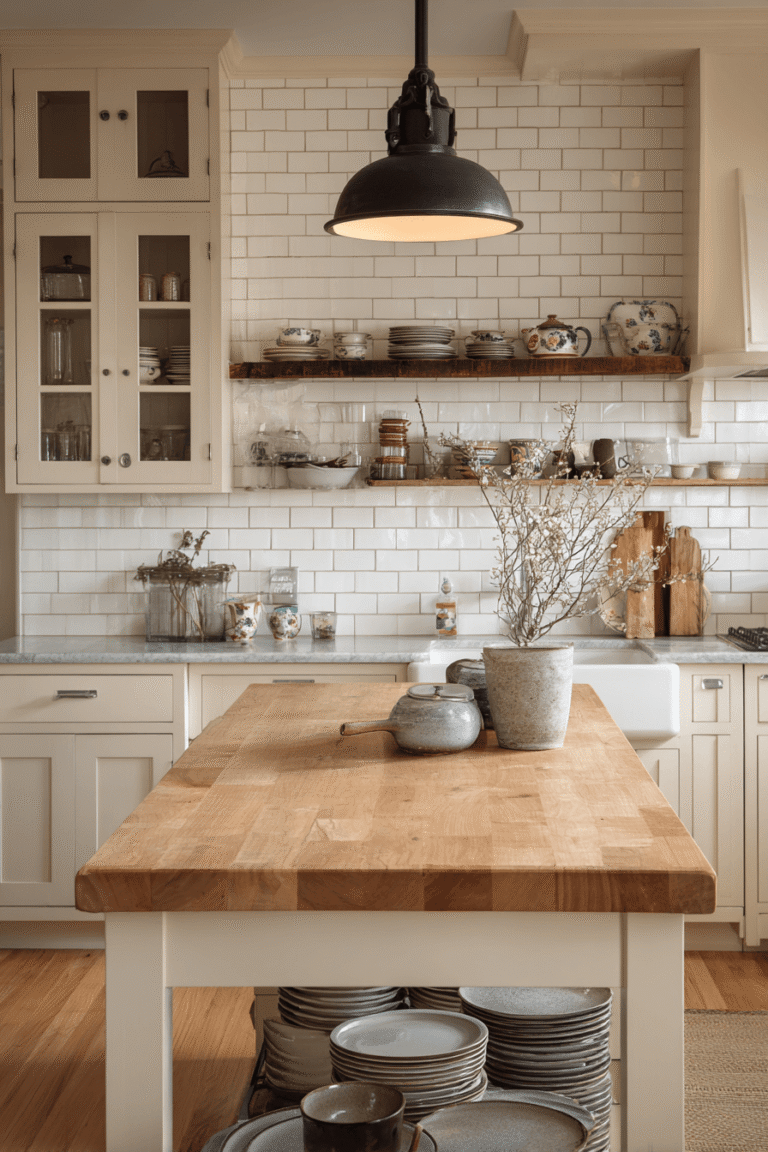
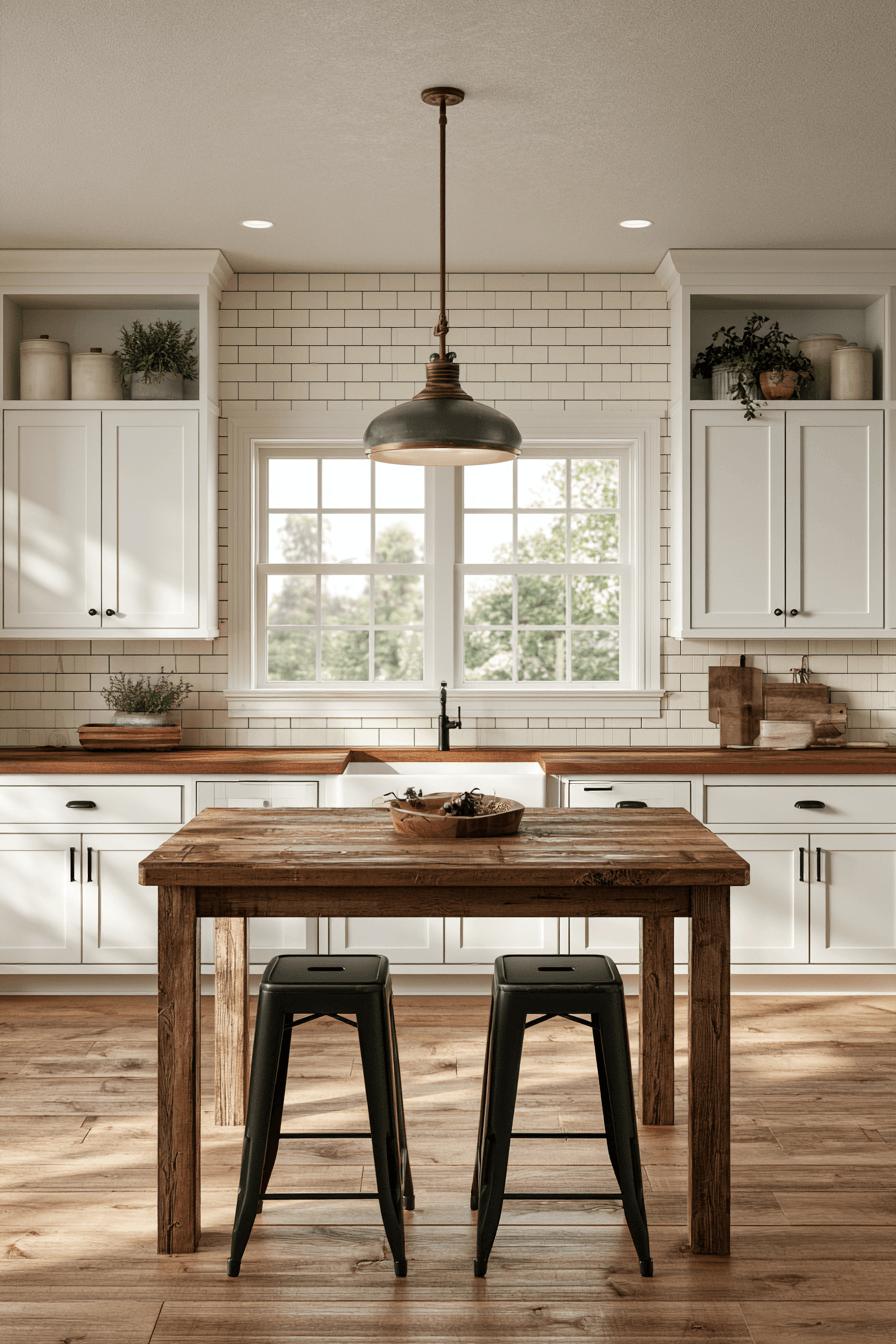
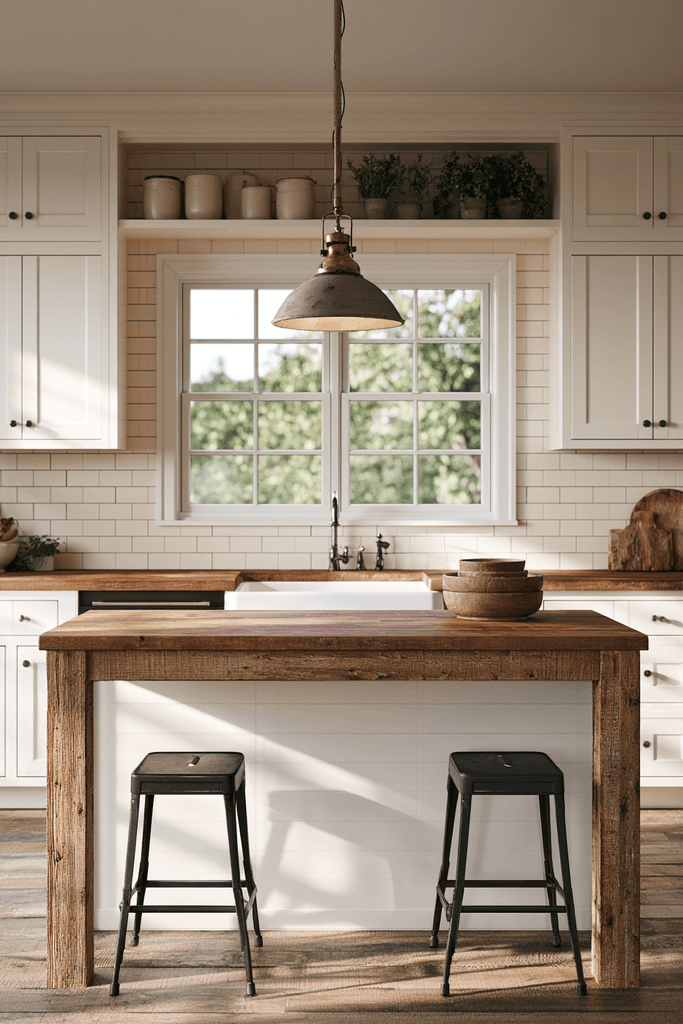
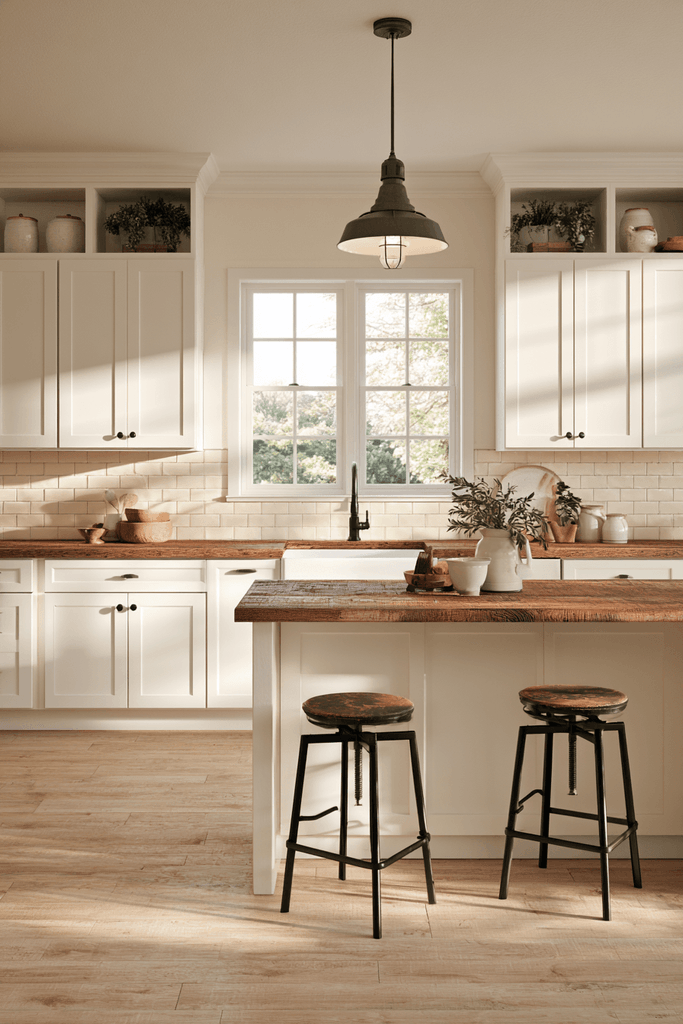
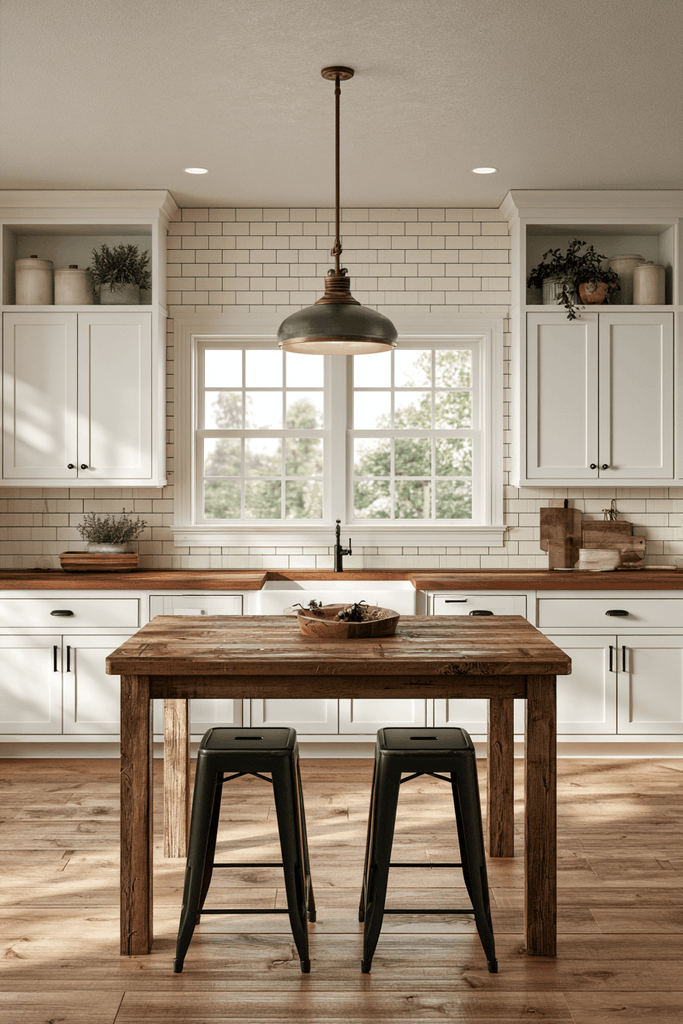
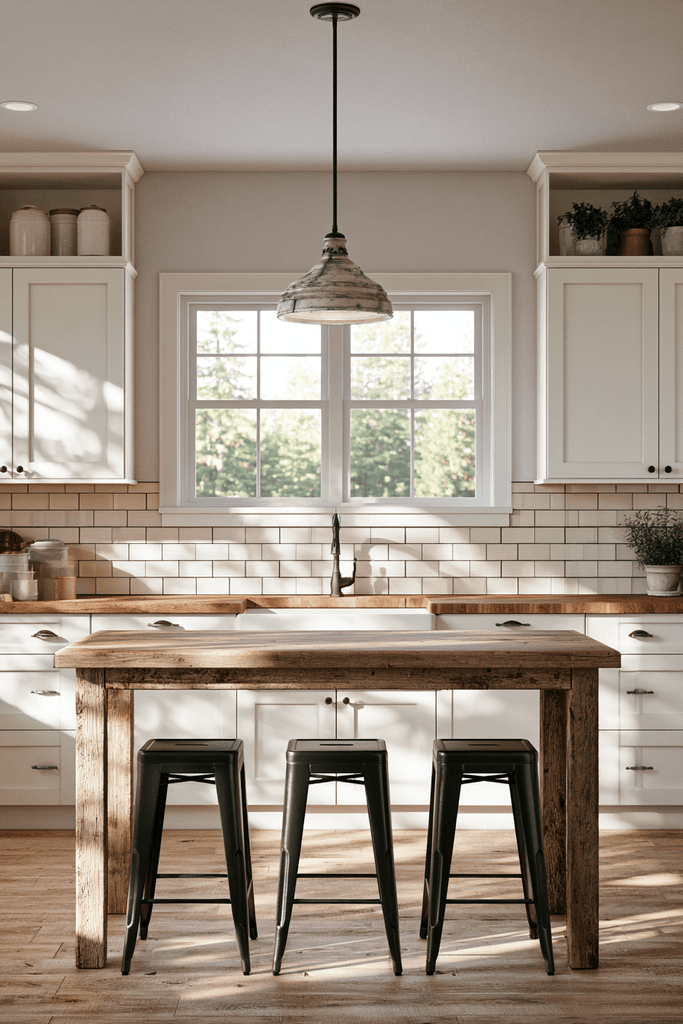
Step into a modern farmhouse kitchen and you’re immediately greeted by a sense of relaxed elegance. Shaker-style white cabinetry lines the walls, paired with open upper shelving styled with ceramic canisters and potted herbs that bring organic life into the room. Butcher block countertops offer a warm, tactile surface that contrasts beautifully with a classic subway tile backsplash in soft cream — a timeless combination that never feels overdone. A vintage-inspired pendant light hangs above a central island finished in worn oak, flanked by black metal bar stools that ground the palette. Natural morning light streams through a double window above the farmhouse sink, casting soft, dappled shadows that animate every textured surface throughout the day.
Key Design Tips:
- Choose shaker-style cabinetry in white or off-white to anchor the farmhouse aesthetic without overwhelming the space.
- Mix open shelving with closed cabinetry to balance visual weight and provide accessible display areas for everyday essentials.
- Use a butcher block island as a functional centerpiece that adds warmth and character.
- Select vintage-inspired pendant lights in aged brass or matte black to reinforce the farmhouse narrative.
- Incorporate live herbs or potted plants on open shelves to bring natural texture and freshness into the kitchen.
2. Moody Japandi Kitchen
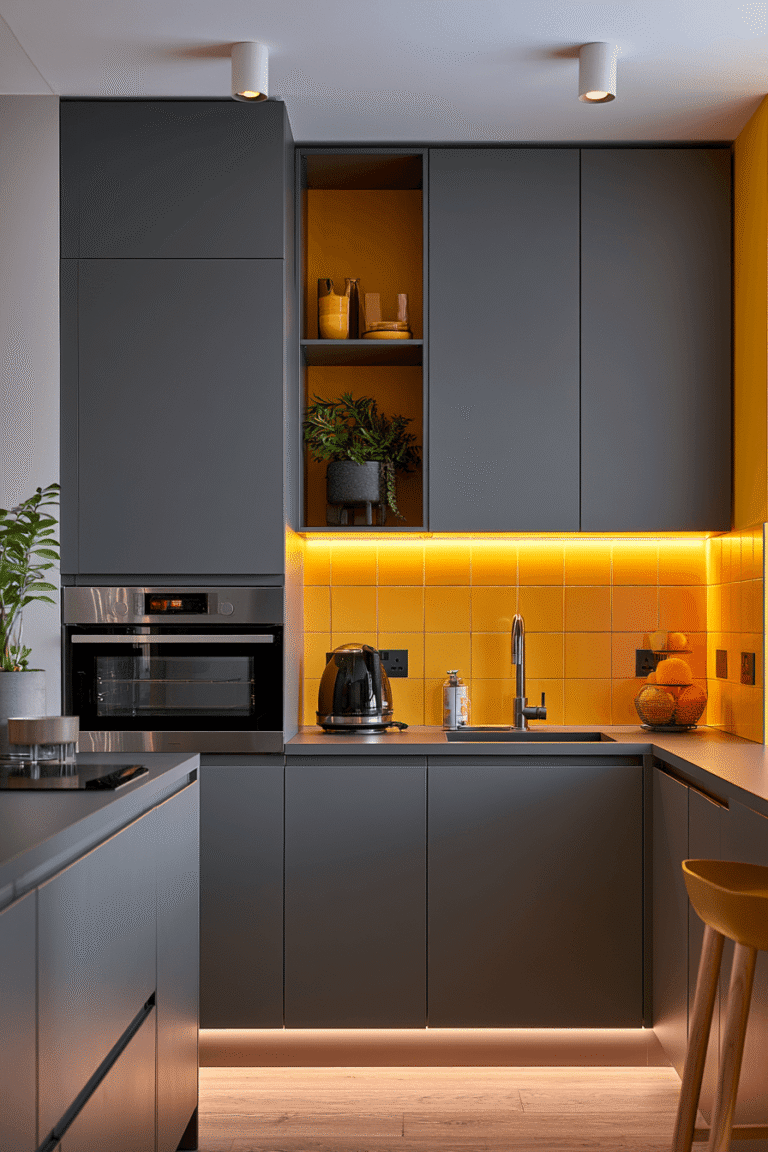
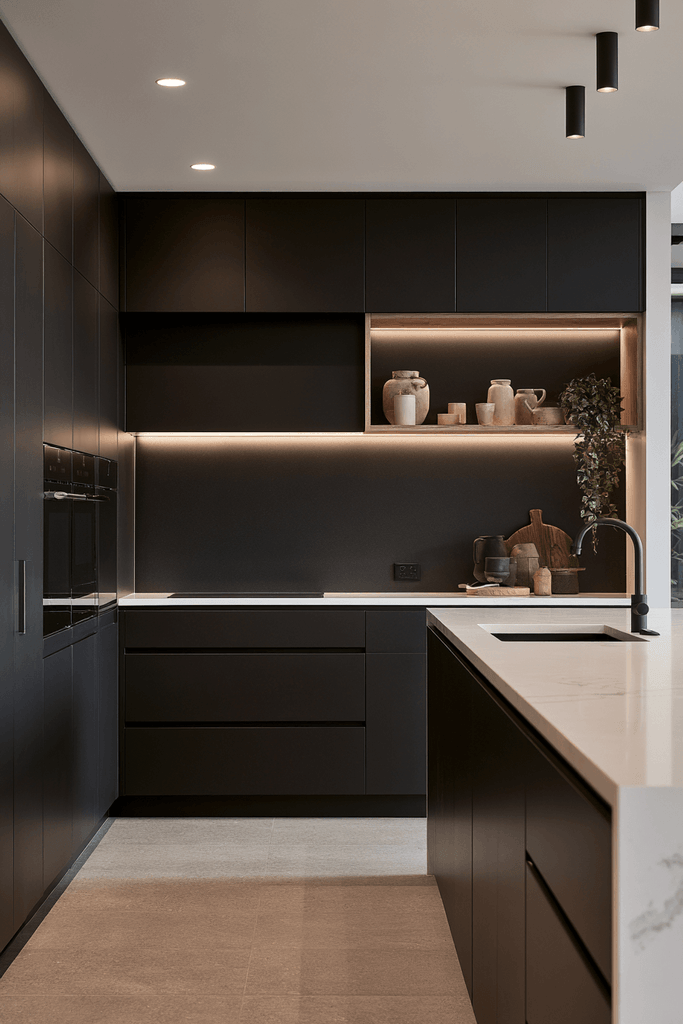
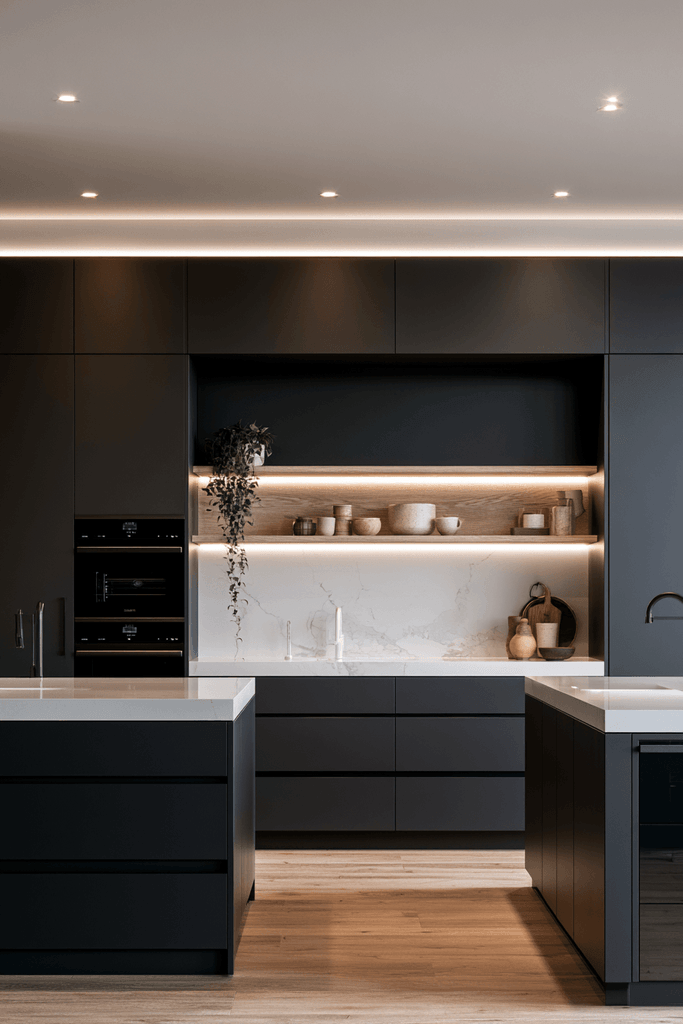
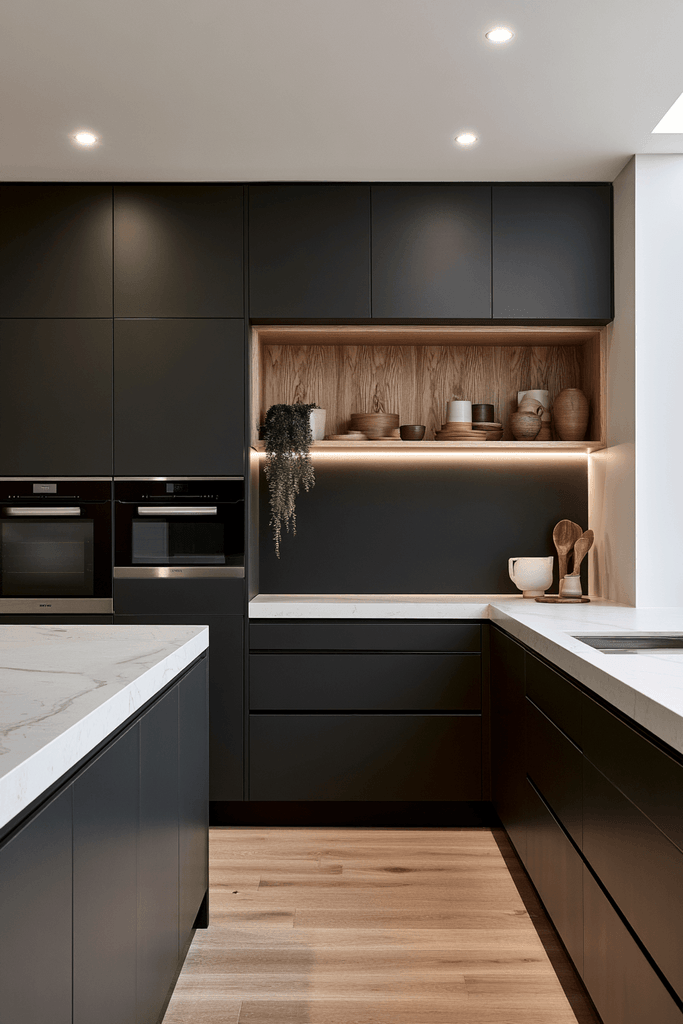
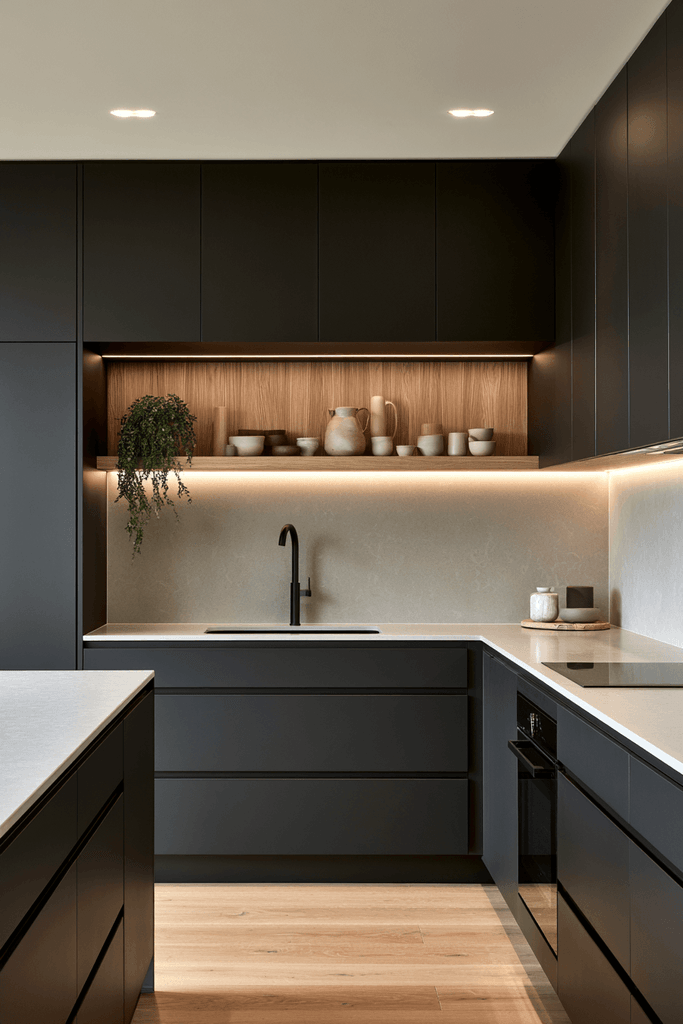
The Japandi kitchen is a study in intentional restraint — and it’s precisely this restraint that makes it so compelling. Flat-panel matte charcoal cabinetry creates a seamless, uncluttered silhouette across the room, with appliances fully integrated to preserve the clean lines that define this aesthetic. A continuous quartz countertop in warm white with subtle grey veining anchors the dark cabinetry without competing with it, offering a grounding contrast that feels effortless. Minimalist open shelving in natural ash wood holds a curated selection of handmade pottery and a single trailing plant — the only organic notes in an otherwise architectural composition. Recessed ceiling lighting combined with under-cabinet LED strips highlight each material with surgical precision, creating an atmosphere of serene, contemplative calm.
Key Design Tips:
- Invest in integrated appliances — concealed refrigerators and dishwashers are essential to achieving the Japandi silhouette.
- Limit your palette to two or three materials: matte charcoal, natural wood, and warm white or greige stone.
- Style open shelves with handmade ceramics and a single trailing plant — avoid over-styling.
- Use layered lighting (recessed overhead and under-cabinet LEDs) to eliminate harsh shadows and highlight material texture.
- Resist the urge to display too much; negative space is a deliberate design element in this aesthetic.
3. Mediterranean-Inspired Kitchen
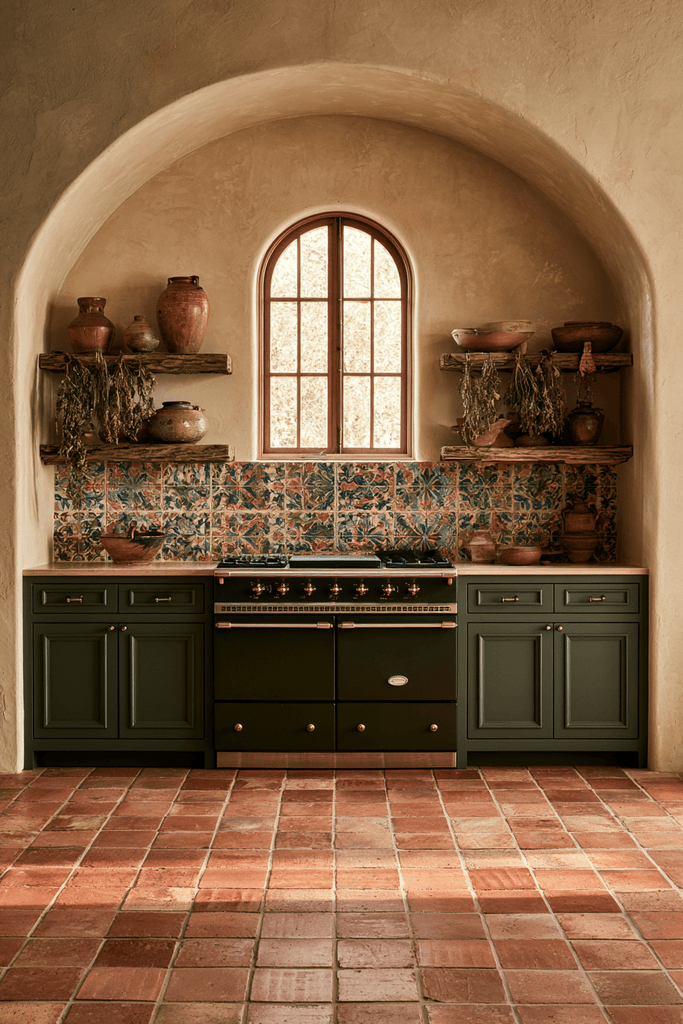
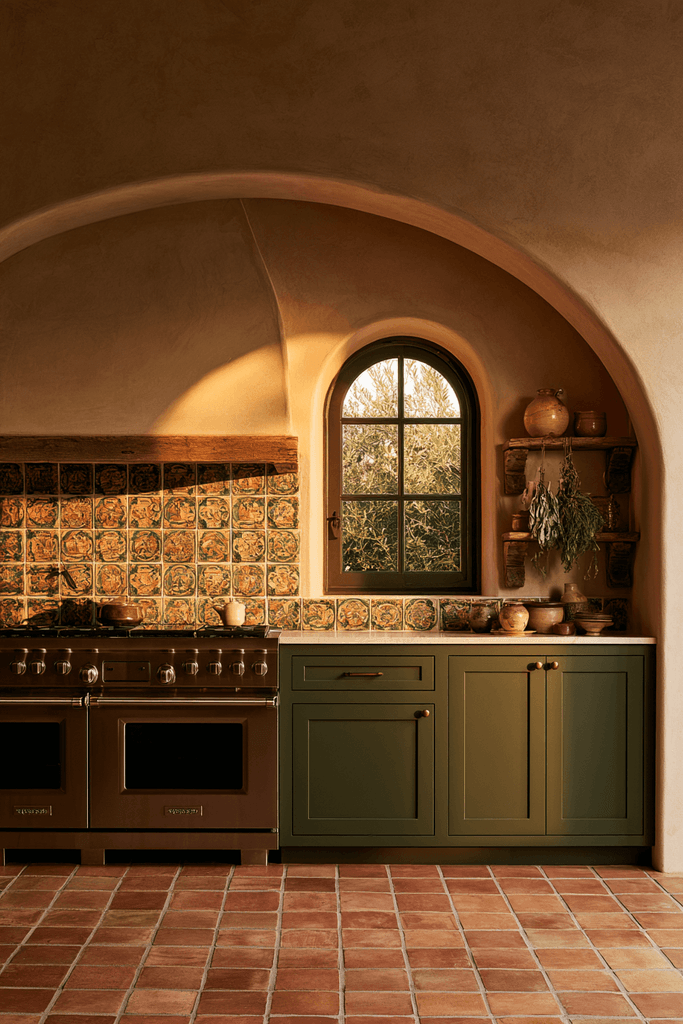
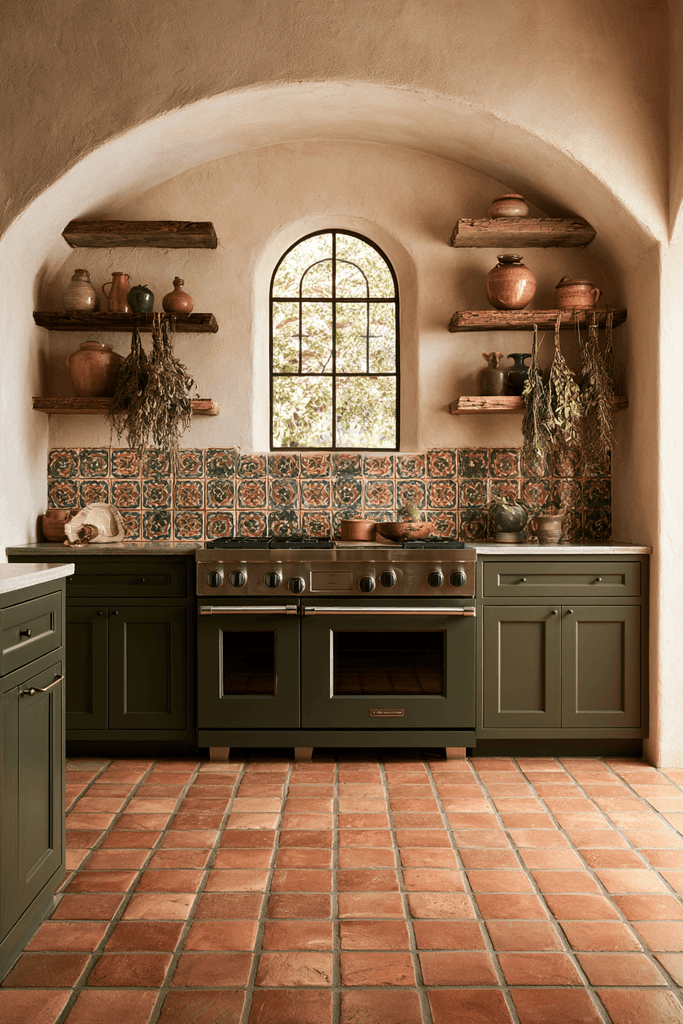
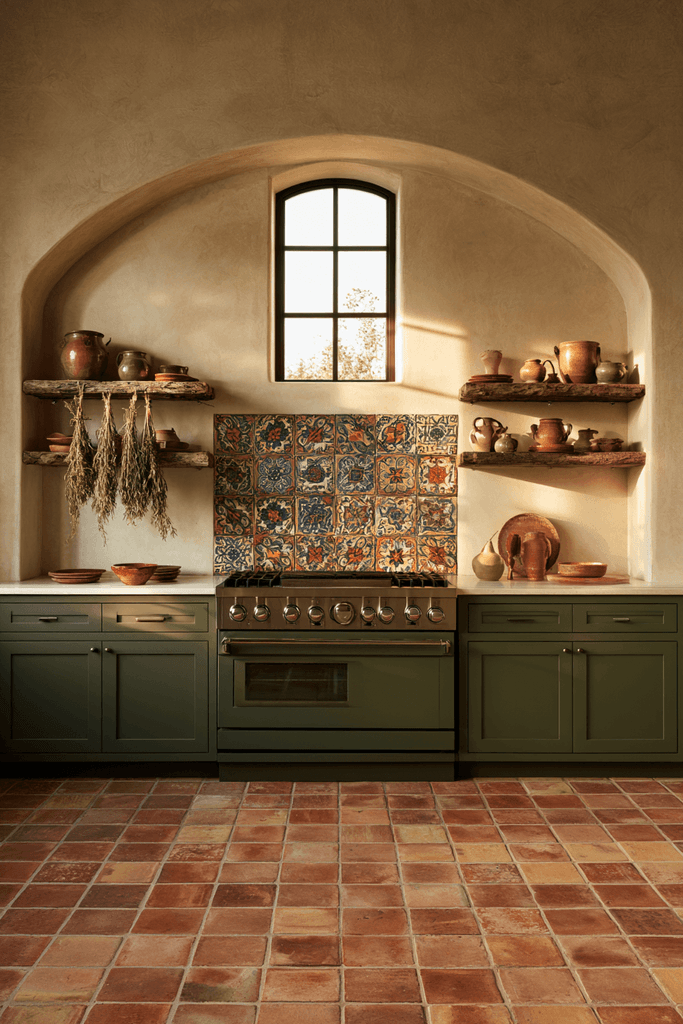
Few kitchen themes evoke a sense of place as powerfully as the Mediterranean. Terracotta floor tiles in varying amber and rust tones set a sun-drenched foundation beneath deep olive green lower cabinets — a color pairing that feels both ancient and entirely fresh. Behind a professional-grade range, hand-painted decorative ceramic tiles form a vivid backsplash that serves as the room’s focal artwork, their intricate patterns drawing the eye immediately. Rough-hewn wooden open shelves display glazed pottery and hanging dried herbs, filling the kitchen with the visual texture of a Southern European market. Warm afternoon light filters through an arched window, casting golden tones across the textured plaster walls and burnishing every surface with an atmospheric, almost painterly warmth.
Key Design Tips:
- Source terracotta floor tiles in mixed tones rather than uniform color for an authentic, aged quality.
- Use hand-painted or imported ceramic tiles for the backsplash as a statement element around the range.
- Choose olive green, burnt sienna, or deep ochre for cabinetry to anchor the Mediterranean palette.
- Display dried herbs, glazed pottery, and woven baskets on open wooden shelves for textural richness.
- If possible, incorporate an arched architectural detail — a window, niche, or doorway — to reinforce the regional character.
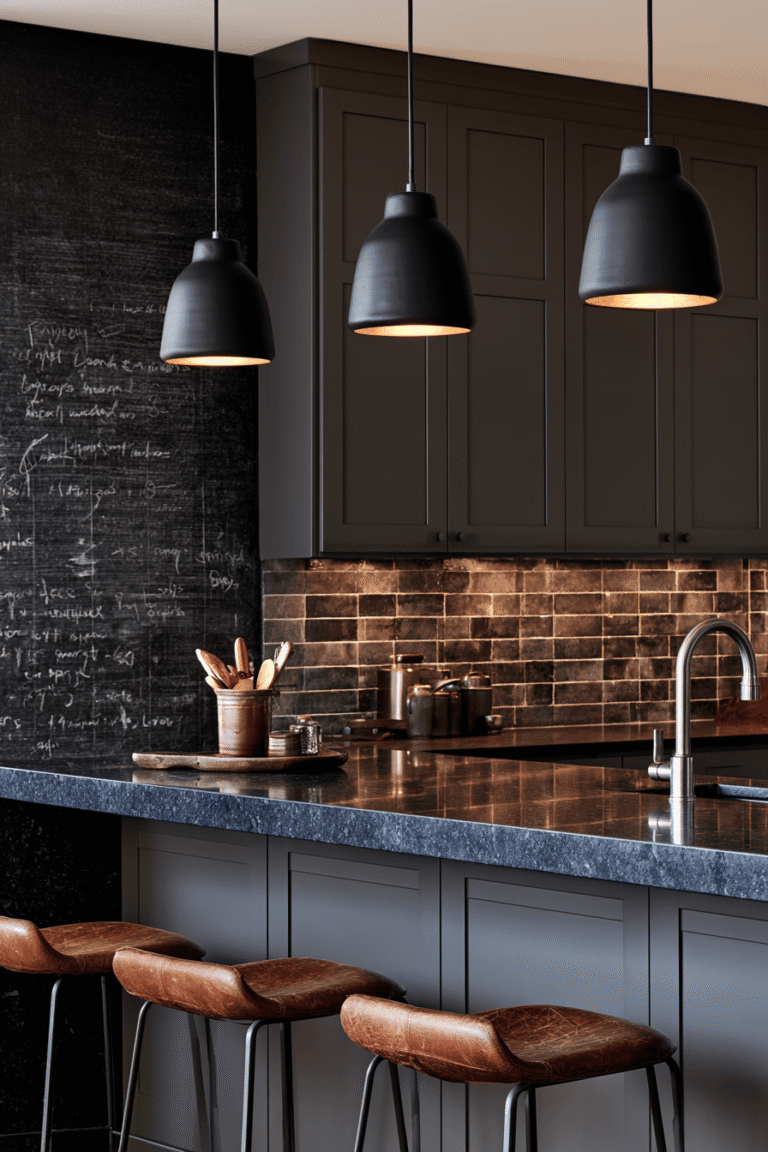
4. Sleek Industrial Kitchen
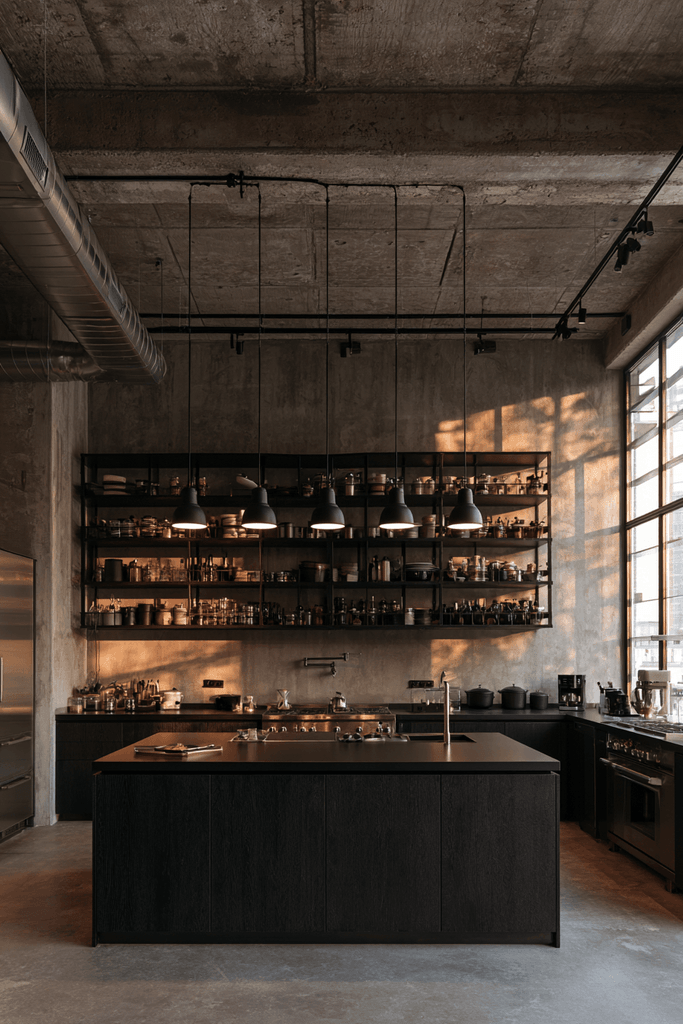
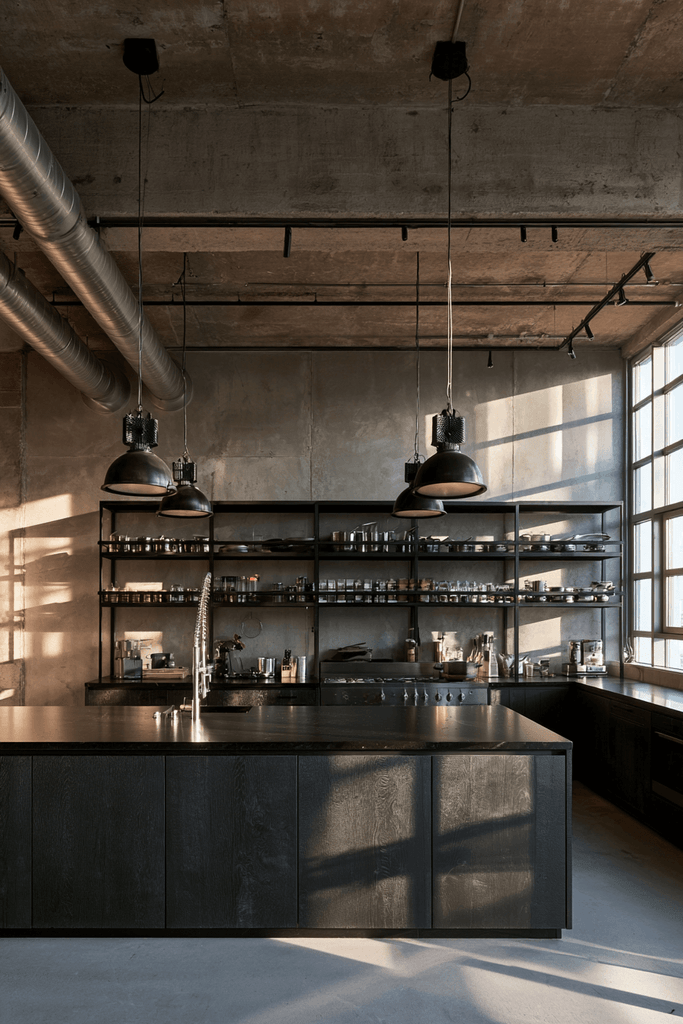
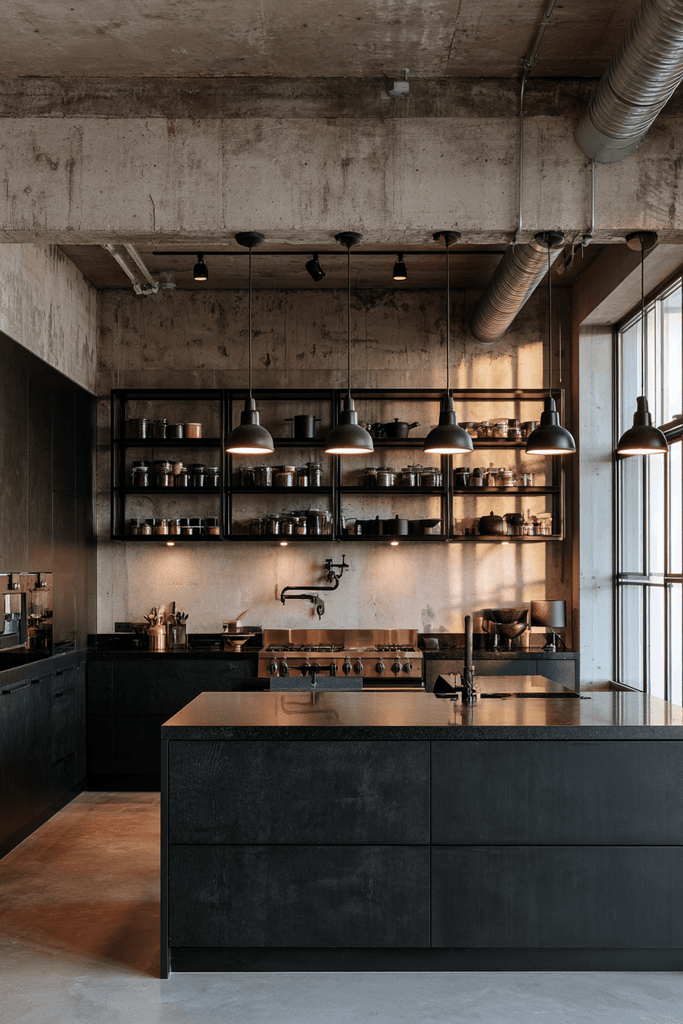
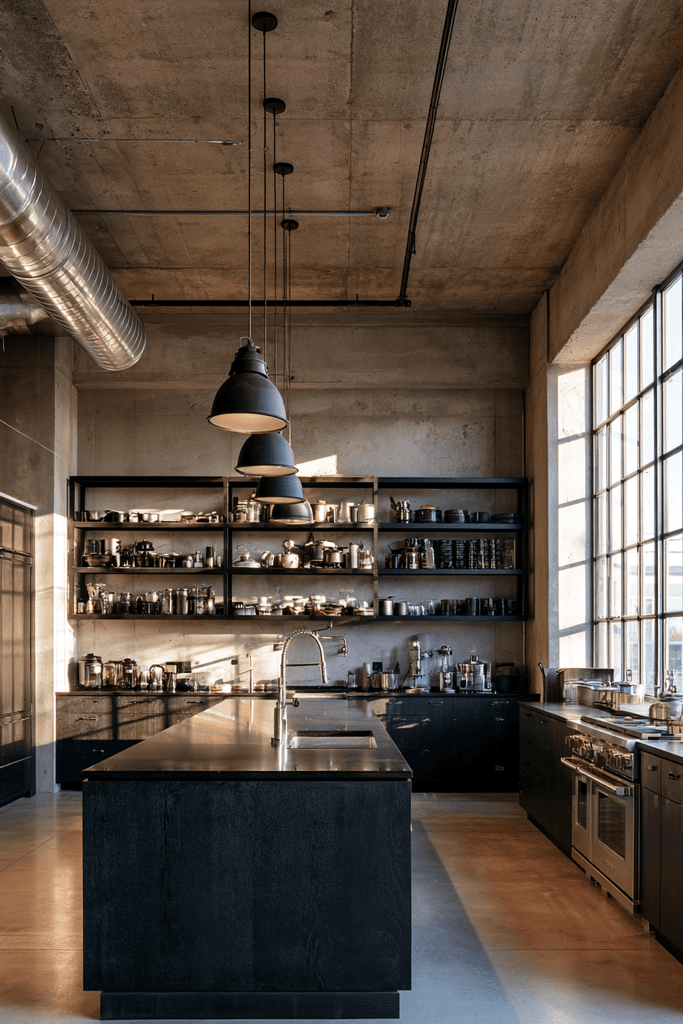
The industrial kitchen doesn’t apologize for its origins — it celebrates them. Exposed concrete ceilings with visible ductwork make an immediate architectural statement, while charcoal-stained lower cabinets and a central island topped in honed black granite reinforce the utilitarian commitment. Matte black open metal shelving organizes cooking essentials with the precision of a working kitchen, while factory-style pendant lights hang in a disciplined row above the island, their bare bulbs casting a warm, directional glow. Stainless steel appliances and a pot-filler faucet speak to professional function, and oversized factory-style windows provide soft, diffused daylight that creates dramatic side lighting across the raw concrete and metal surfaces.
Key Design Tips:
- Embrace exposed infrastructure — visible pipes, ductwork, and concrete are design features, not flaws.
- Use honed or leathered stone rather than polished surfaces to maintain the raw, tactile quality of the industrial aesthetic.
- Choose matte black for hardware, shelving, and fixtures consistently throughout the space.
- Install a pot-filler faucet above the range for both authentic functionality and visual impact.
- Balance the hardness of the materials with warm Edison-bulb lighting to prevent the space from feeling cold.
5. Bright Coastal Kitchen
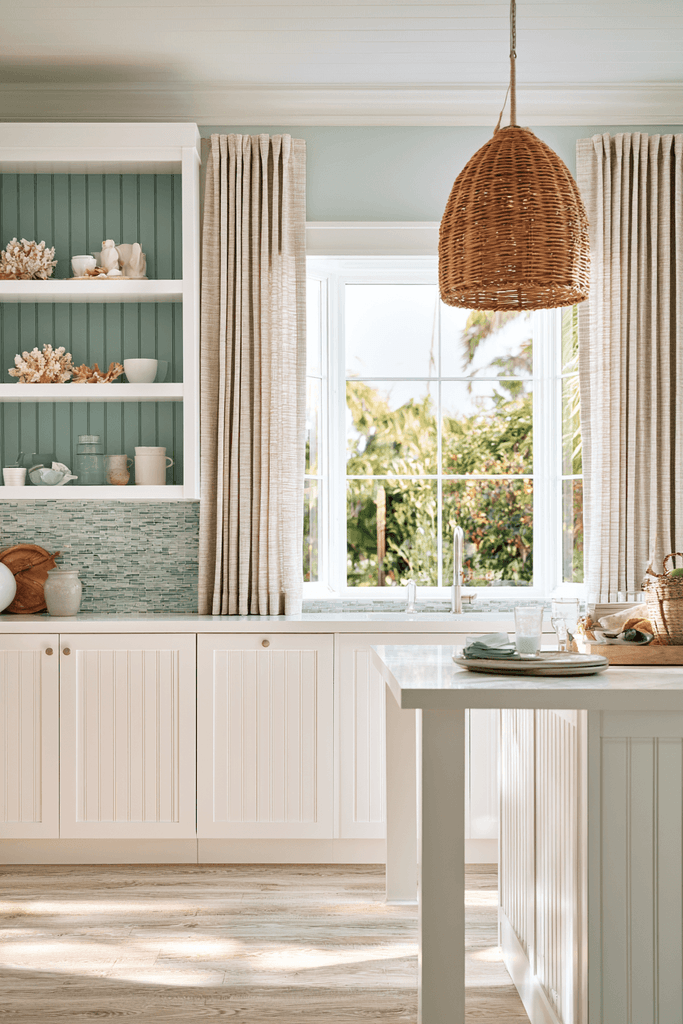
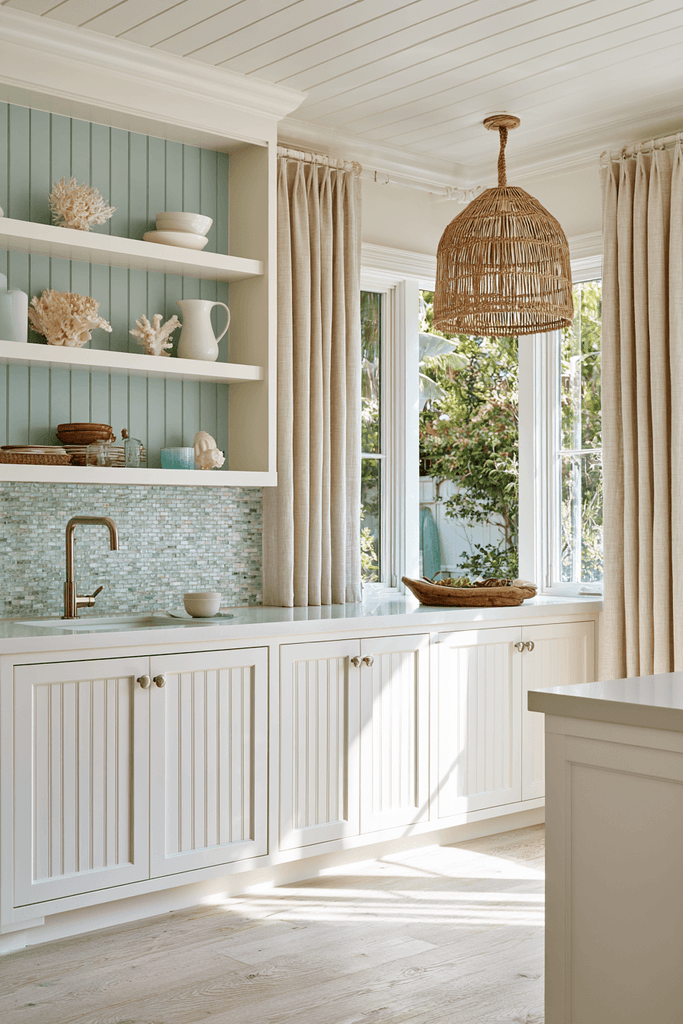
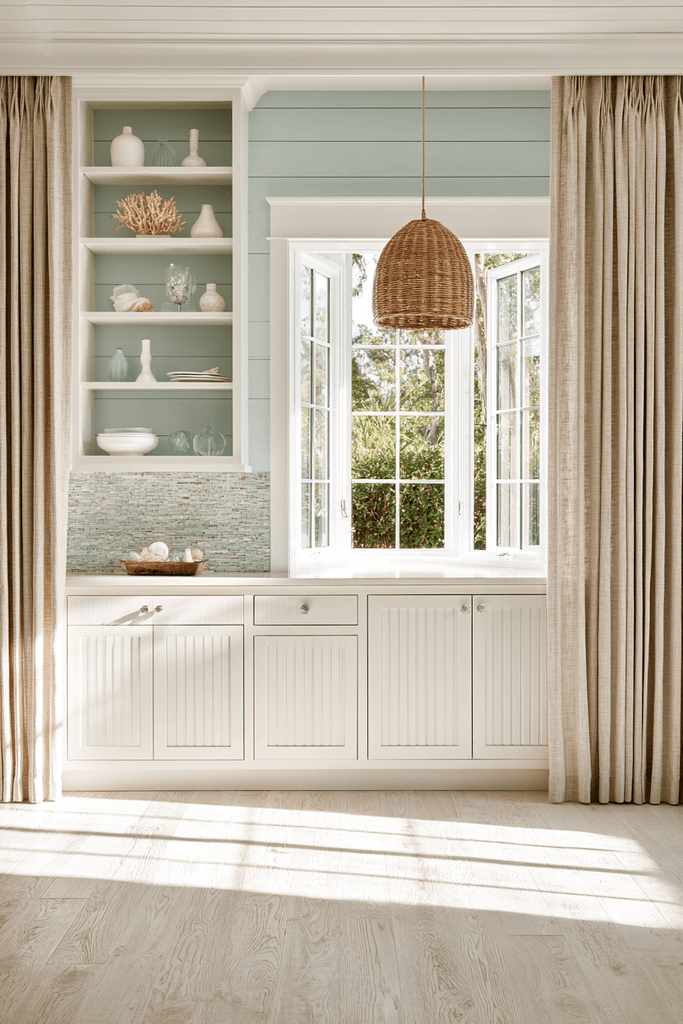
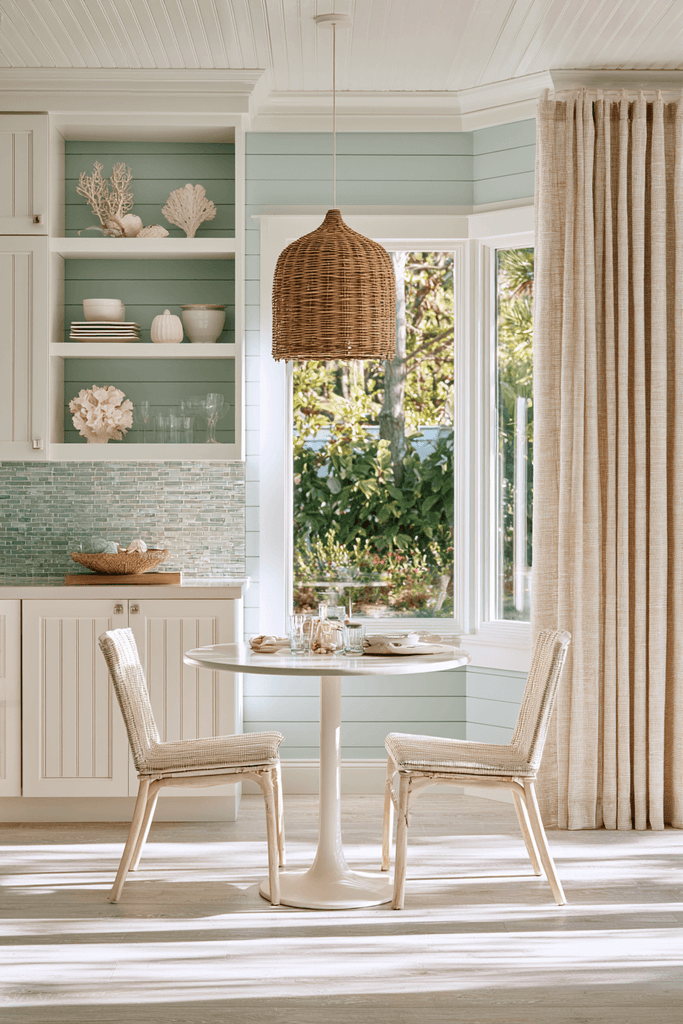
The coastal kitchen is an exercise in effortless lightness. A pale aqua blue shiplap accent wall anchors one end of the space behind white open shelving styled with coral, sea glass, and ocean-inspired accessories. White beadboard cabinet fronts and a natural rattan pendant light reinforce the relaxed beach-house sensibility — materials that feel unhurried and unpretentious. A sea-glass mosaic tile backsplash catches light from a large bay window, scattering soft iridescent tones across the room at different times of day. Sandy-toned linen curtains frame the window and filter warm midday light across whitewashed oak flooring, completing a palette that feels genuinely sun-drenched and salt-kissed.
Key Design Tips:
- Anchor the coastal palette with soft aqua, seafoam, or pale blue used on one feature wall or island.
- Incorporate natural rattan, wicker, or jute in pendant lights or bar stools to reinforce the relaxed beachy aesthetic.
- Choose sea-glass mosaic or subway tile in soft iridescent tones for a backsplash that catches light beautifully.
- Use whitewashed or bleached oak flooring to evoke the look of sun-faded driftwood underfoot.
- Style open shelving with collected objects — coral pieces, white ceramics, sea glass — rather than uniform kitchen accessories.
6. Rich Maximalist Kitchen
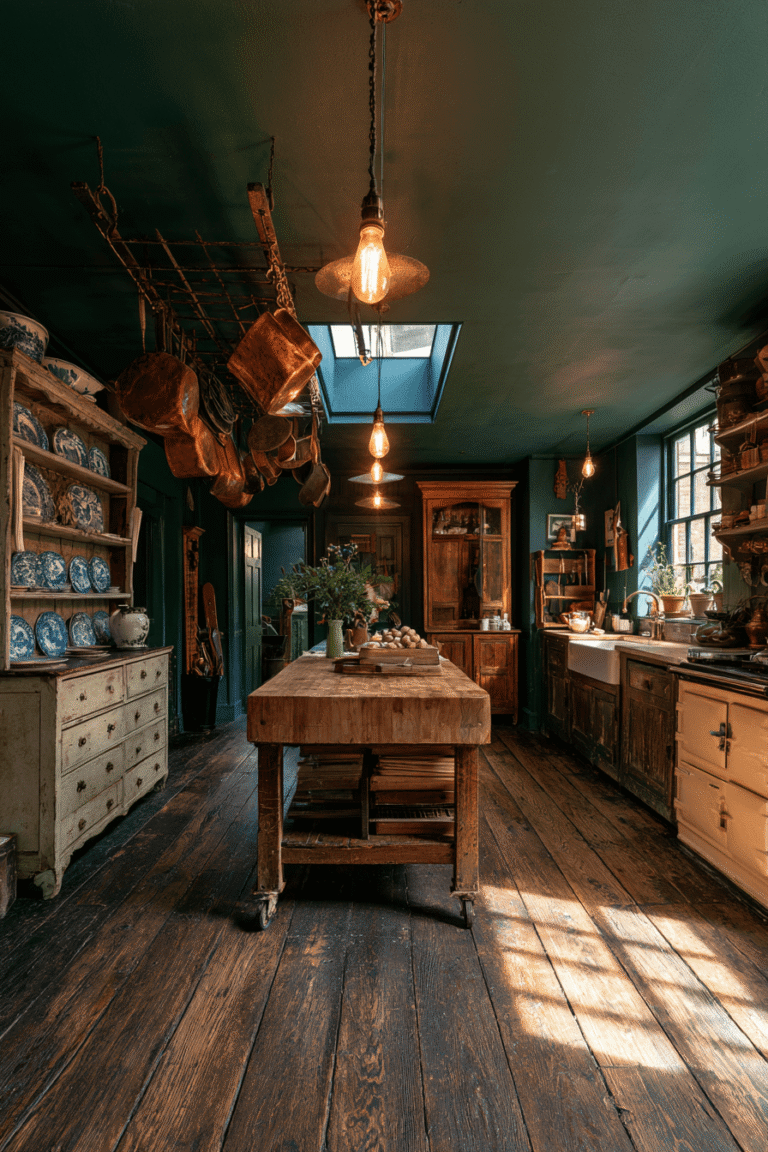
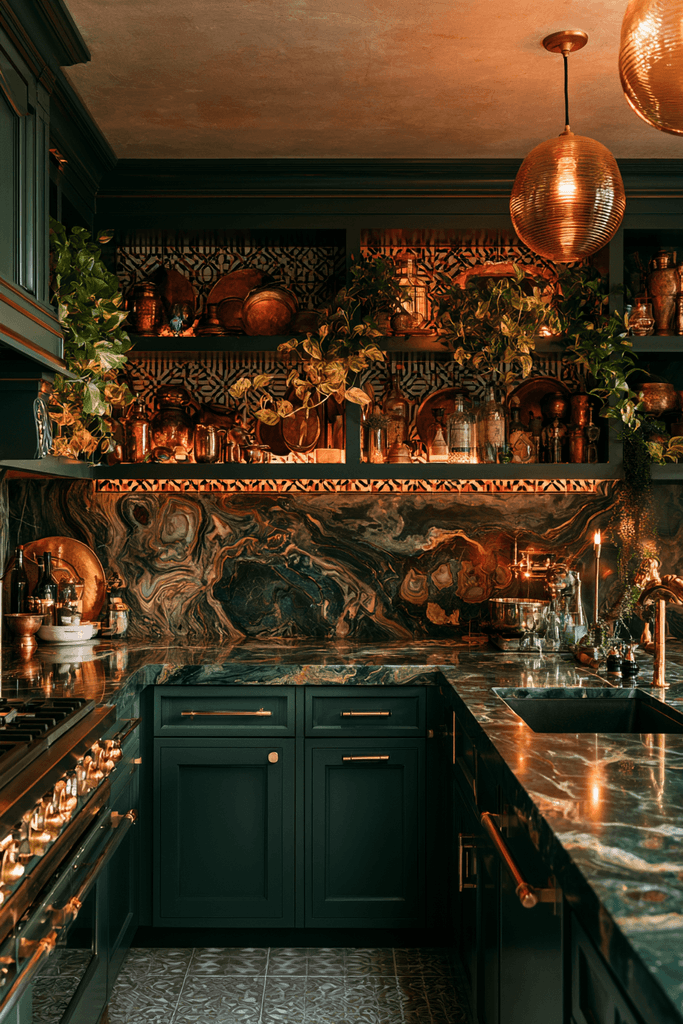
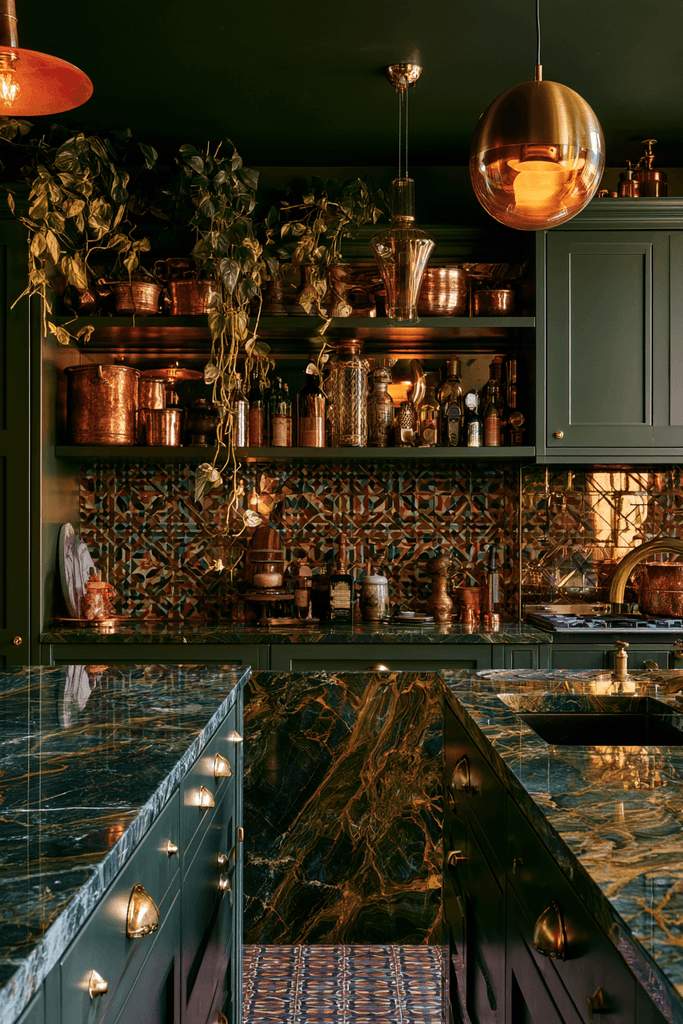
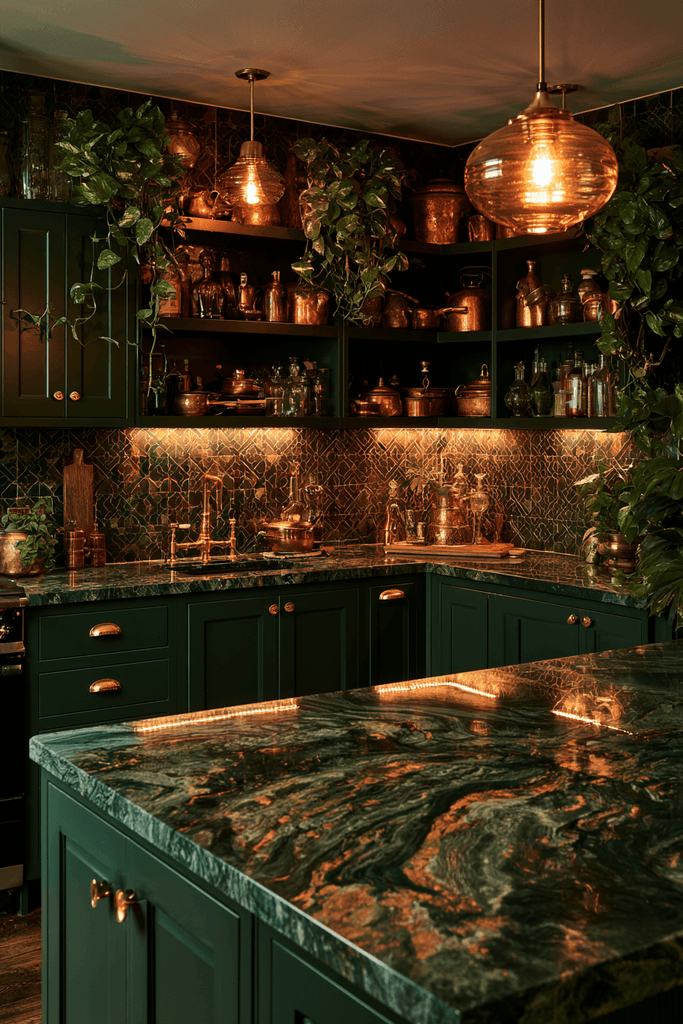
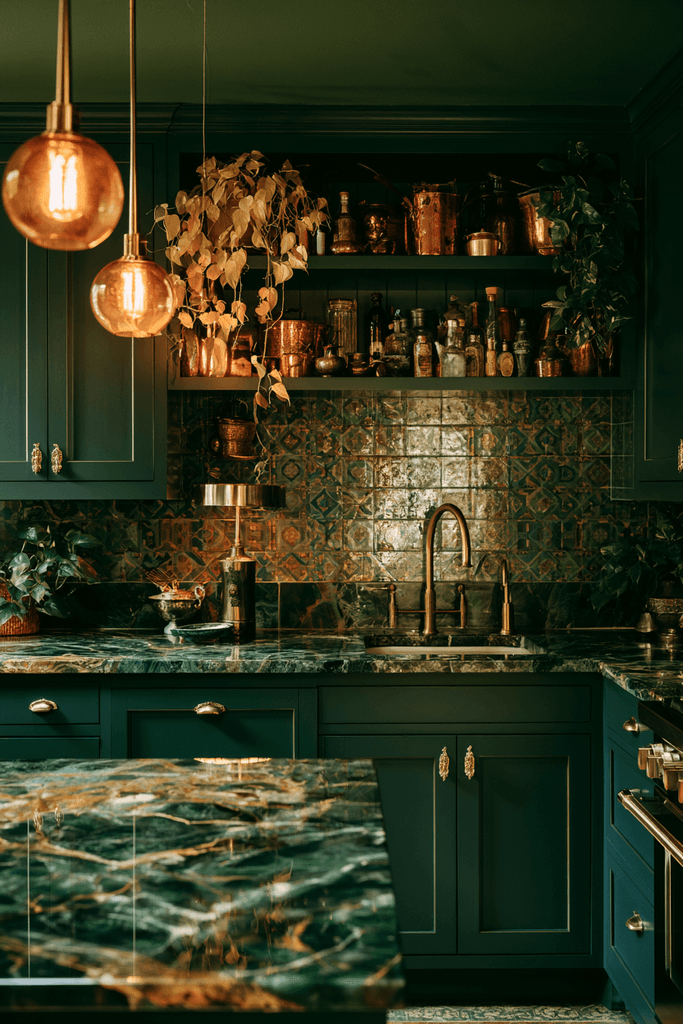
The maximalist kitchen is an unapologetic celebration of abundance and personality. Deep forest green cabinetry trimmed in unlacquered brass hardware sets a jewel-toned foundation, while a dramatically veined emerald and gold marble countertop commands attention as the centerpiece of the space. Open upper shelves display an eclectic collection of vintage copper cookware, antique glass bottles, and trailing golden pothos — a living, layered still life that grows and evolves over time. A geometric Moroccan tile backsplash in jewel tones adds an intricate pattern layer that rewards close inspection, while statement brass pendant lights fill the evening kitchen with a warm, amber-tinted glow that makes every surface come alive.
Key Design Tips:
- Commit fully to the maximalist approach — pattern mixing works when each element belongs to a shared color family.
- Choose unlacquered brass hardware that will patina naturally over time, adding character and authenticity.
- Use open shelving specifically to display collected objects: vintage copper, antique glass, trailing plants.
- Select a bold marble or quartzite countertop with dramatic veining as the room’s centerpiece material.
- Layer lighting: combine statement pendants with under-cabinet lighting to illuminate the full depth of the palette.
7. Scandinavian Minimalist Kitchen
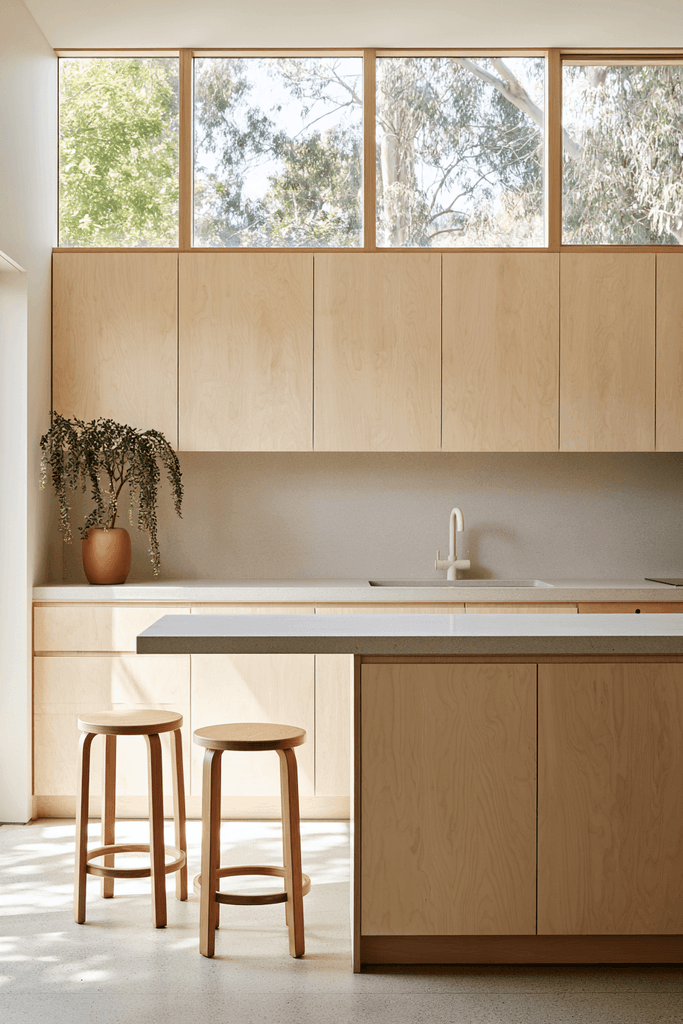
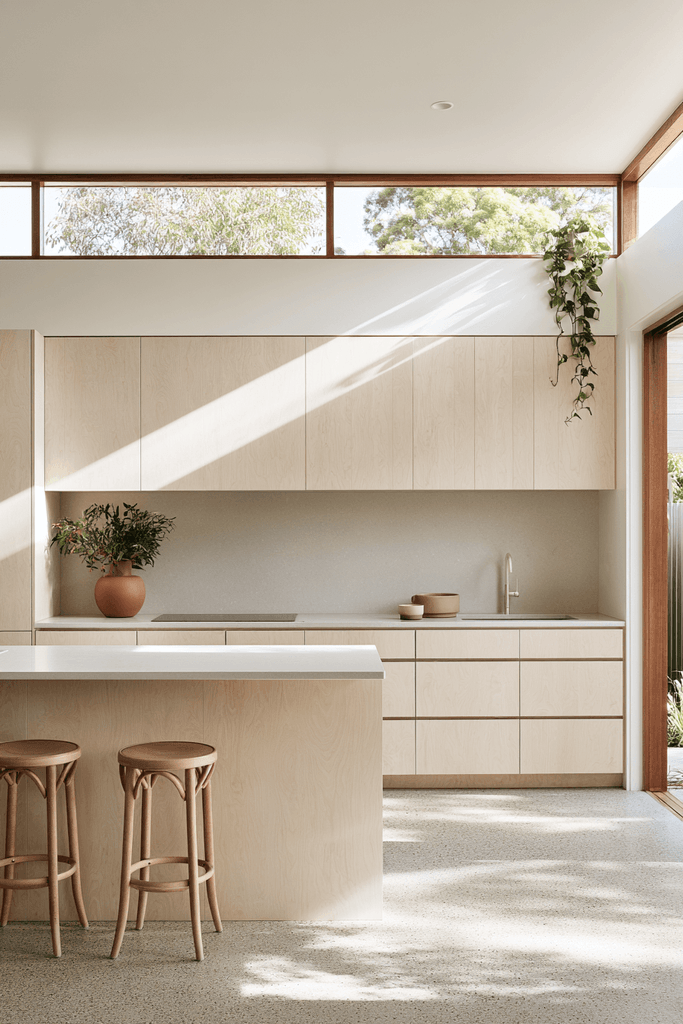
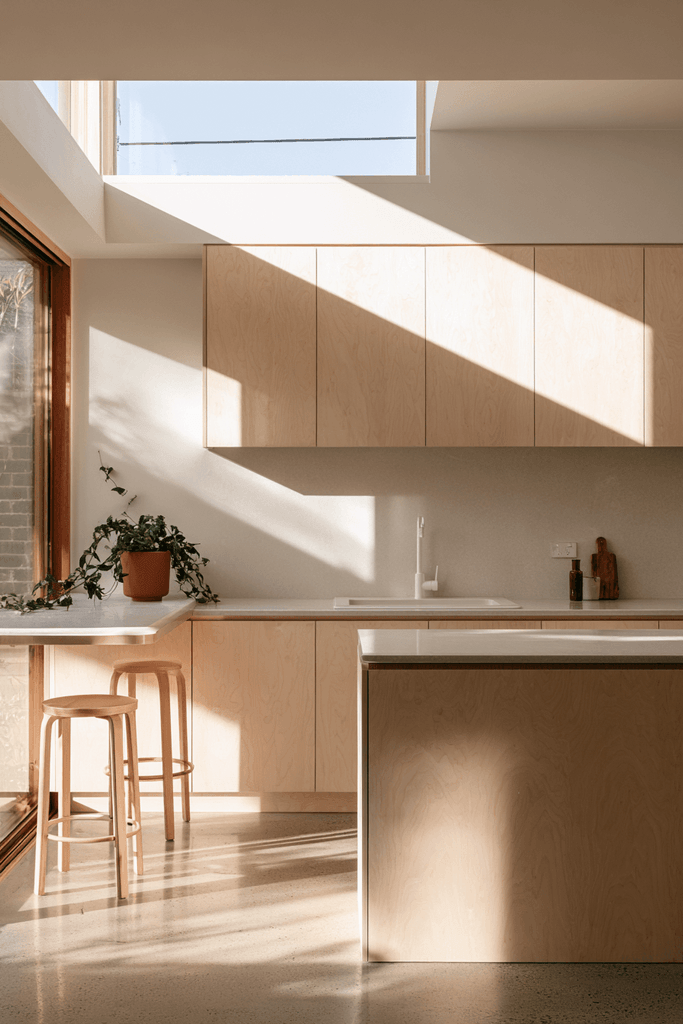
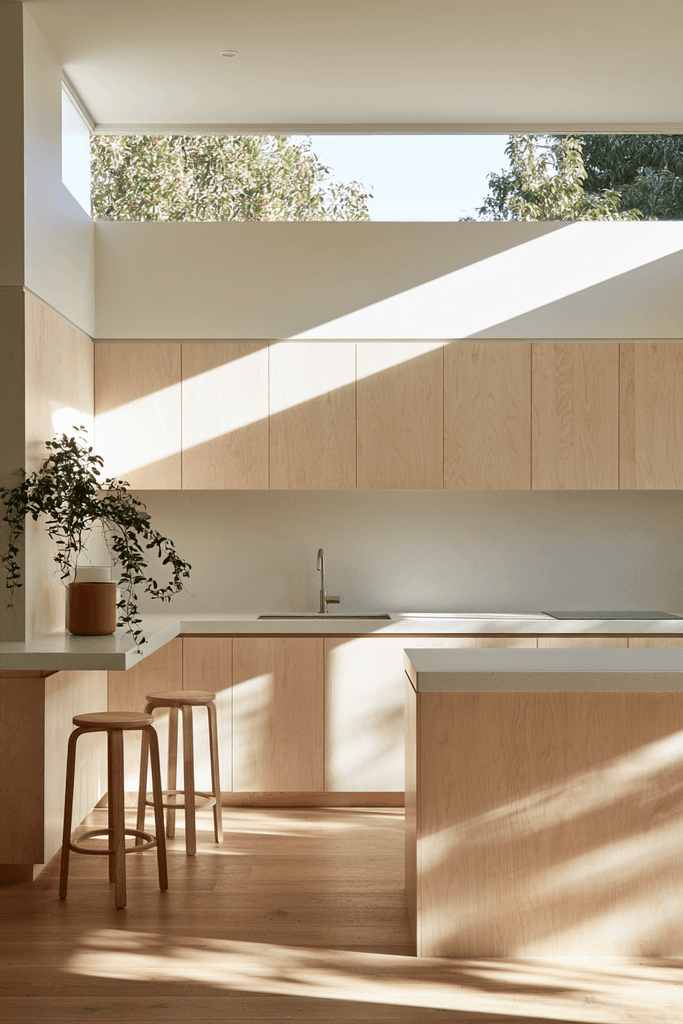
Scandinavian design philosophy holds that beauty and function are inseparable — and this kitchen makes that case elegantly. Handleless flat-panel birch veneer cabinetry in a soft warm white creates a seamlessly clean facade, paired with a pale grey quartz countertop and a single-basin undermount ceramic sink of quiet refinement. A compact breakfast bar extends from the island with two simple bentwood stools, providing an informal dining option without disrupting the architectural flow. Clerestory windows flood the room with cool northern daylight that highlights the fine, consistent grain of the birch wood surfaces throughout the day. A single trailing plant in a matte terracotta pot provides the only organic counterpoint — a perfectly calibrated gesture.
Key Design Tips:
- Specify handleless cabinetry with push-to-open mechanisms to maintain the clean, uninterrupted facade.
- Choose birch, beech, or ash veneer in its natural tone — avoid staining these woods, which undermines the Scandinavian aesthetic.
- Maximize natural light through clerestory or large windows; the quality of light is central to this design language.
- Limit decorative objects to one or two intentional pieces — a single plant, a ceramic bowl, a stack of books.
- Use pale grey or warm white stone for countertops; avoid patterns or dramatic veining.
8. Bold Black and White Kitchen
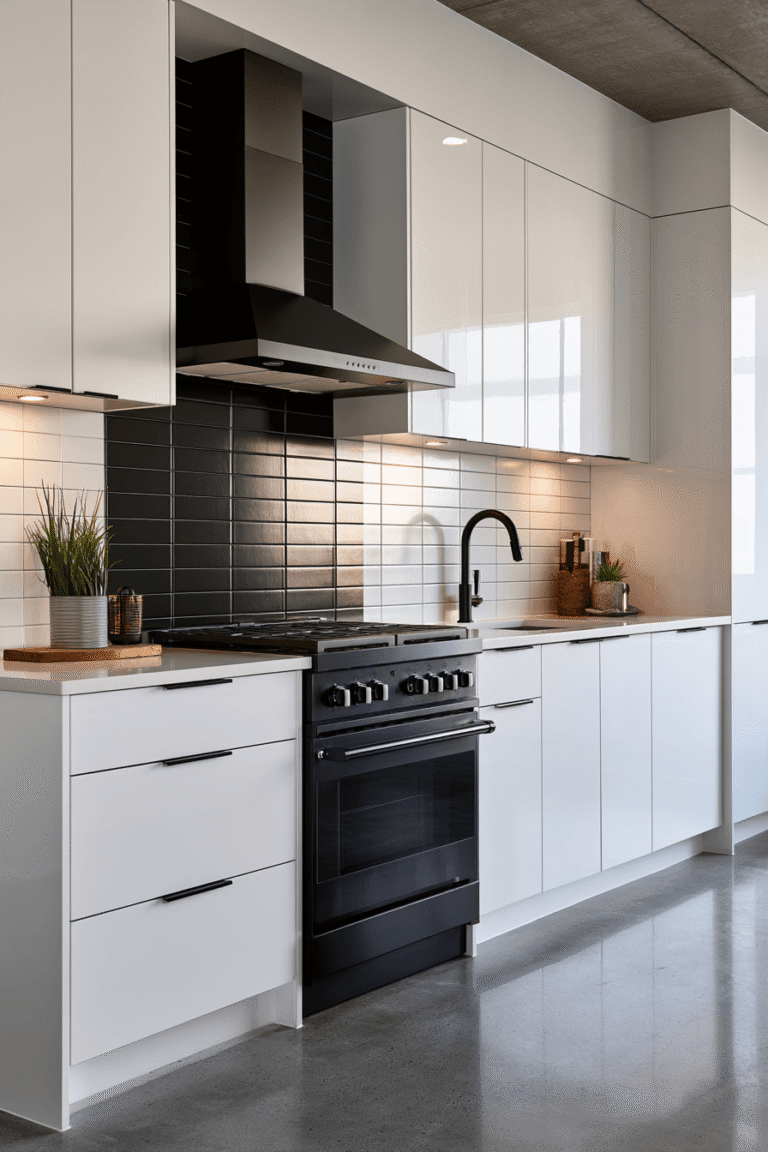
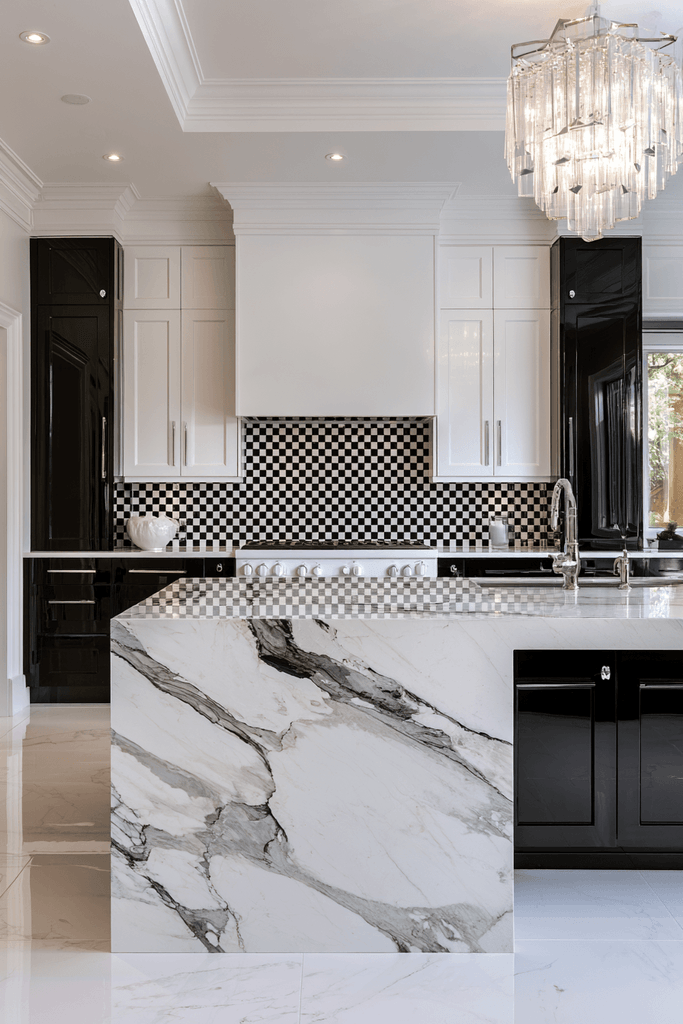
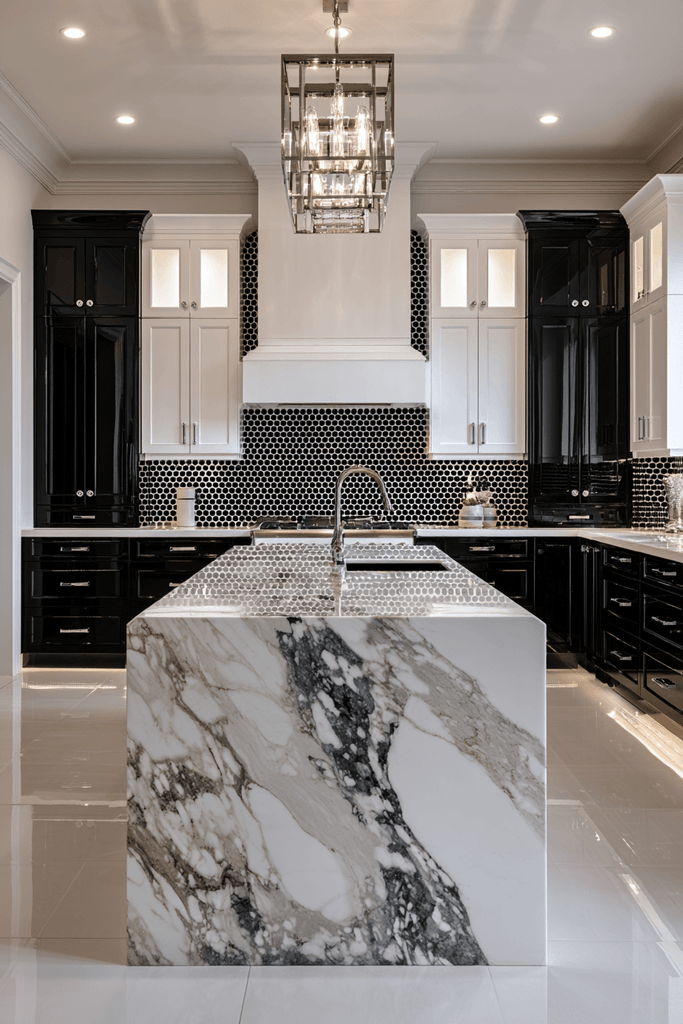
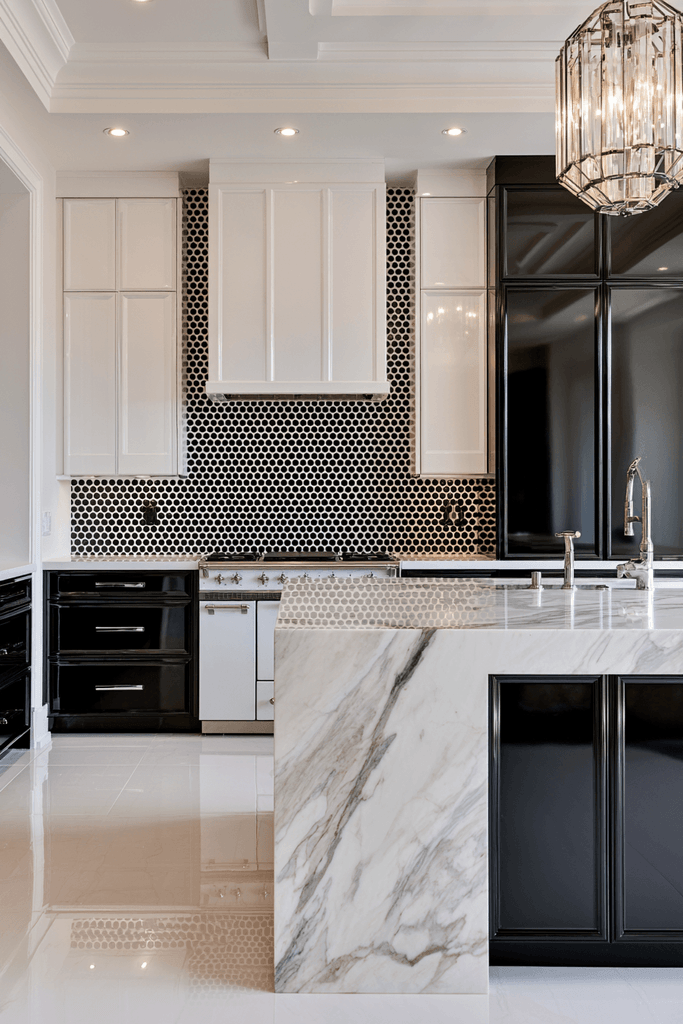
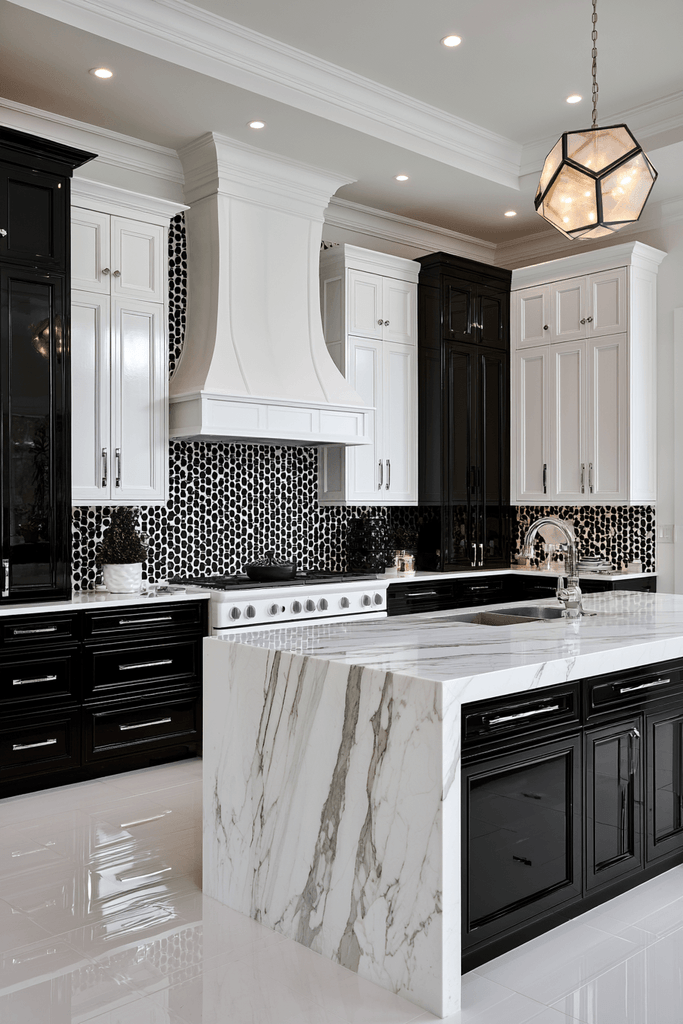
Few design decisions are as confident as committing entirely to a black and white palette — and this kitchen proves it pays off. High-gloss black lower cabinets are paired with crisp white upper cabinets, creating a dynamic vertical contrast that makes the room feel simultaneously dramatic and disciplined. A striking Calacatta marble waterfall island anchors the center of the space with natural veining that bridges both tones. A graphic black and white penny tile backsplash behind the matte white range provides strong visual contrast at eye level, while chrome hardware and a polished nickel faucet introduce refined metallic accents. A statement geometric chandelier above the island completes the composition with architectural punctuation.
Key Design Tips:
- Balance high-gloss black lower cabinets with matte white uppers to avoid visual heaviness.
- Use a waterfall marble island as the room’s centrepiece — the natural veining bridges the monochromatic palette organically.
- Choose graphic tile patterns — penny tile, checkerboard, or geometric — for the backsplash to introduce visual rhythm.
- Select chrome or polished nickel hardware rather than brass, which can disrupt the monochromatic discipline.
- Use statement lighting — a geometric chandelier or clustered pendants — to add sculptural interest within the tonal restraint.
9. Warm Rustic Spanish Colonial Kitchen
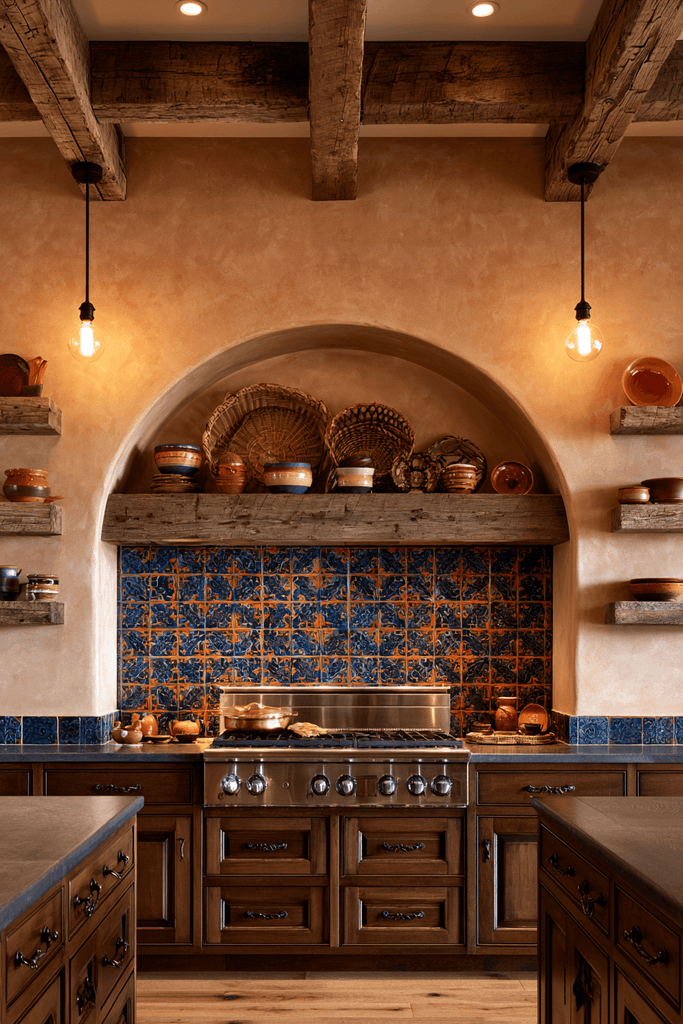
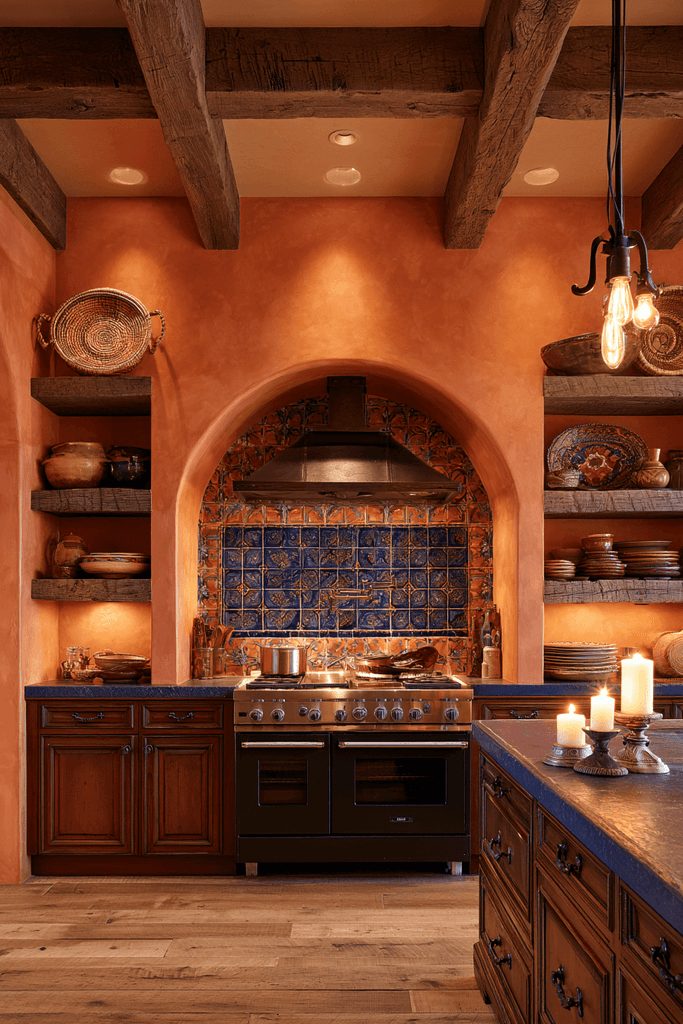
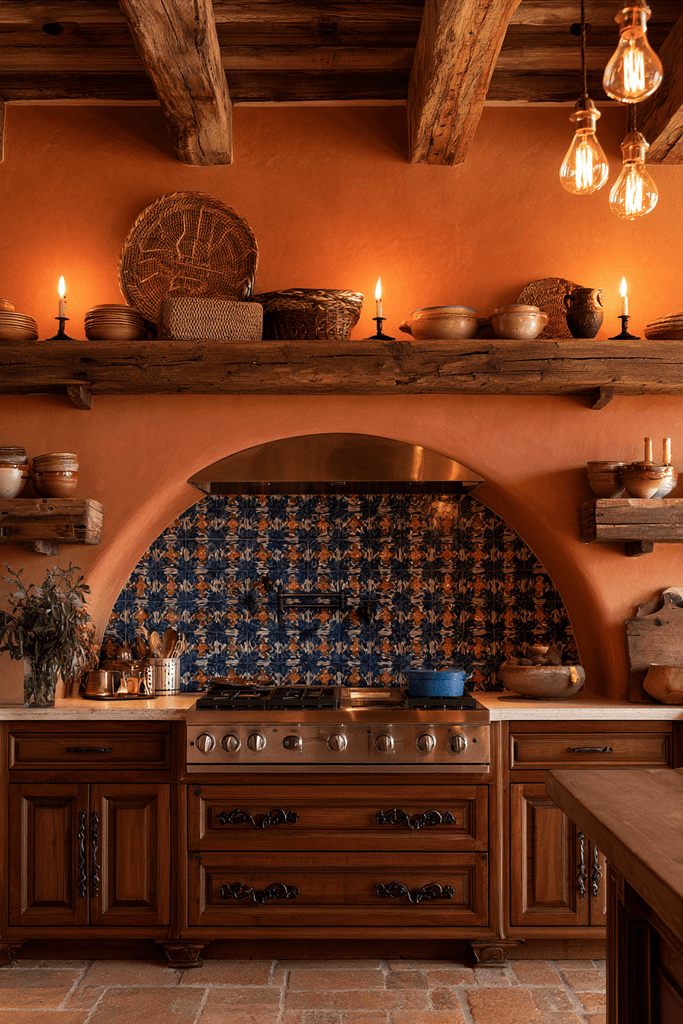
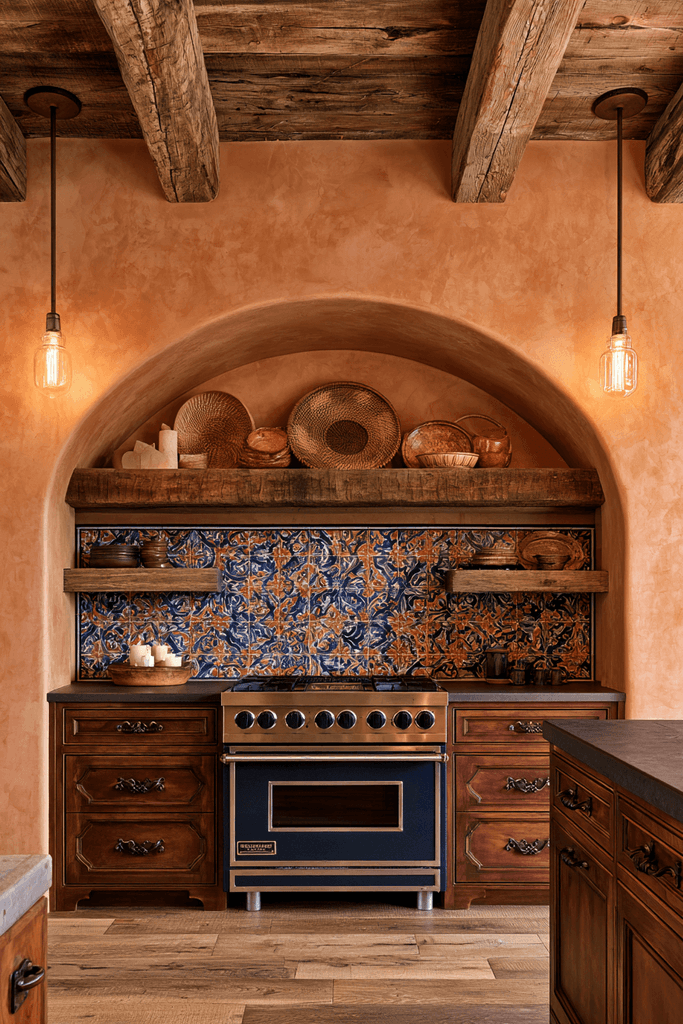
This kitchen feels like it was assembled over generations rather than designed in a single moment — and that is precisely its power. Exposed rough-hewn wooden ceiling beams and terracotta-stuccoed walls establish an architectural foundation of deep historical character, while dark mahogany lower cabinetry with wrought iron hardware reinforces the Spanish Colonial lineage. A wide arched niche houses a commercial-style range with a hand-painted talavera tile surround in cobalt blue and terracotta — a decorative centrepiece that reads as art as much as architecture. Woven rattan baskets and hand-thrown ceramic dishes occupy thick plank open shelving, and warm Edison bulb pendants cast a golden glow that makes every earthy surface glow with evening warmth.
Key Design Tips:
- Source genuine rough-hewn wooden beams — their irregular profiles and saw marks are essential to the Colonial authenticity.
- Commission or source hand-painted talavera tiles for the range surround; this is the room’s defining artistic statement.
- Use wrought iron hardware consistently on cabinetry, light fixtures, and curtain rods.
- Choose terracotta or limewash plaster for walls rather than smooth paint to capture the aged, artisanal quality.
- Warm Edison bulb lighting is non-negotiable — it is the finishing layer that unifies the earthy palette at night.
10. Contemporary Two-Tone Kitchen
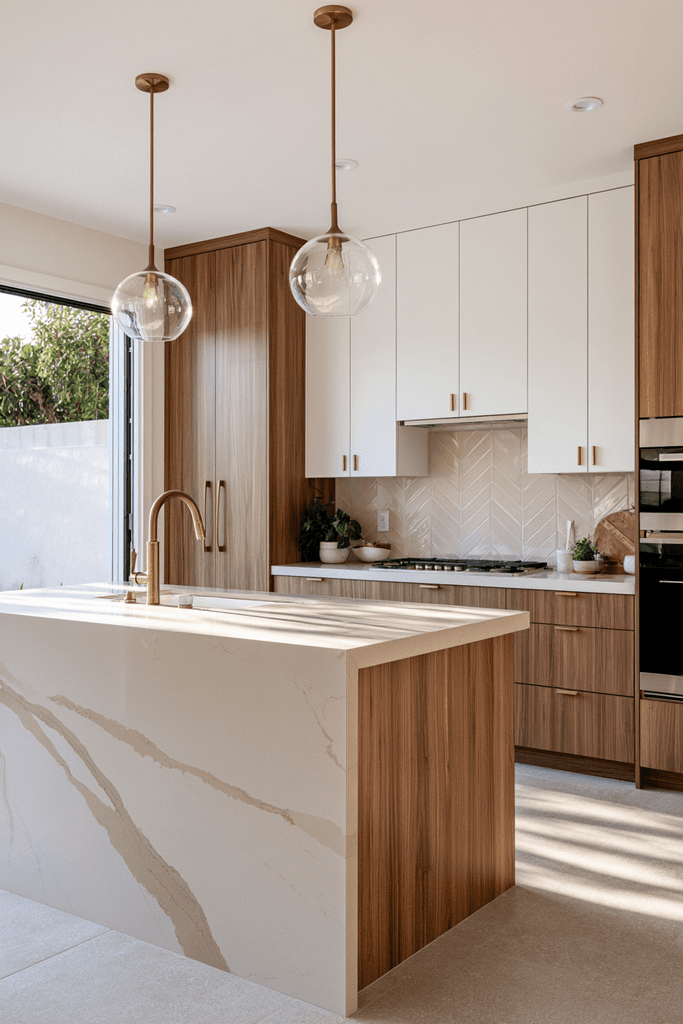
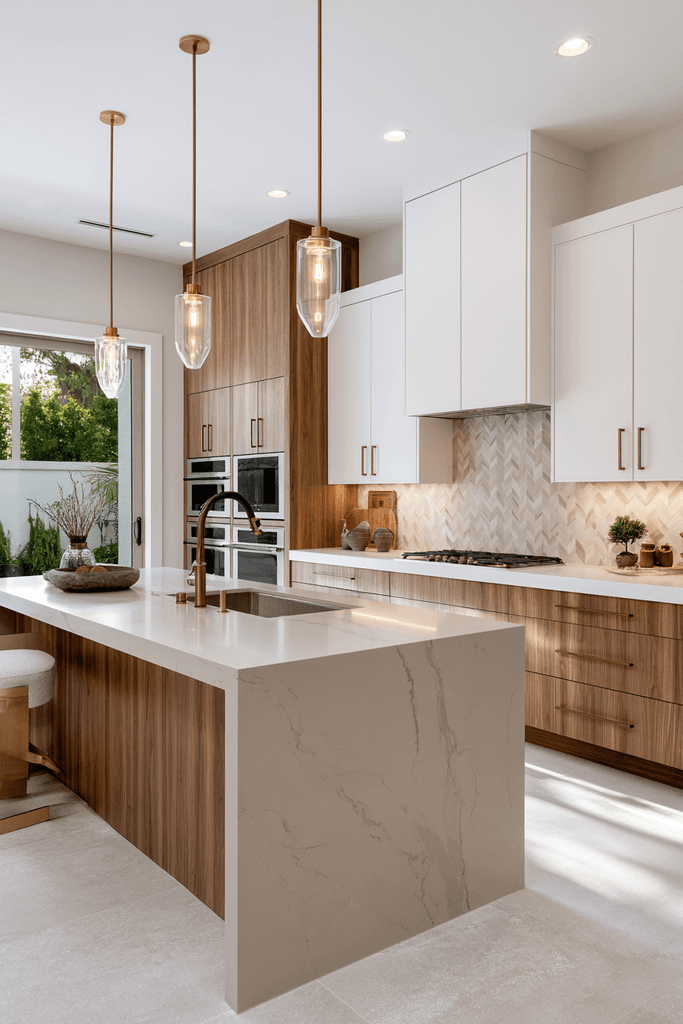
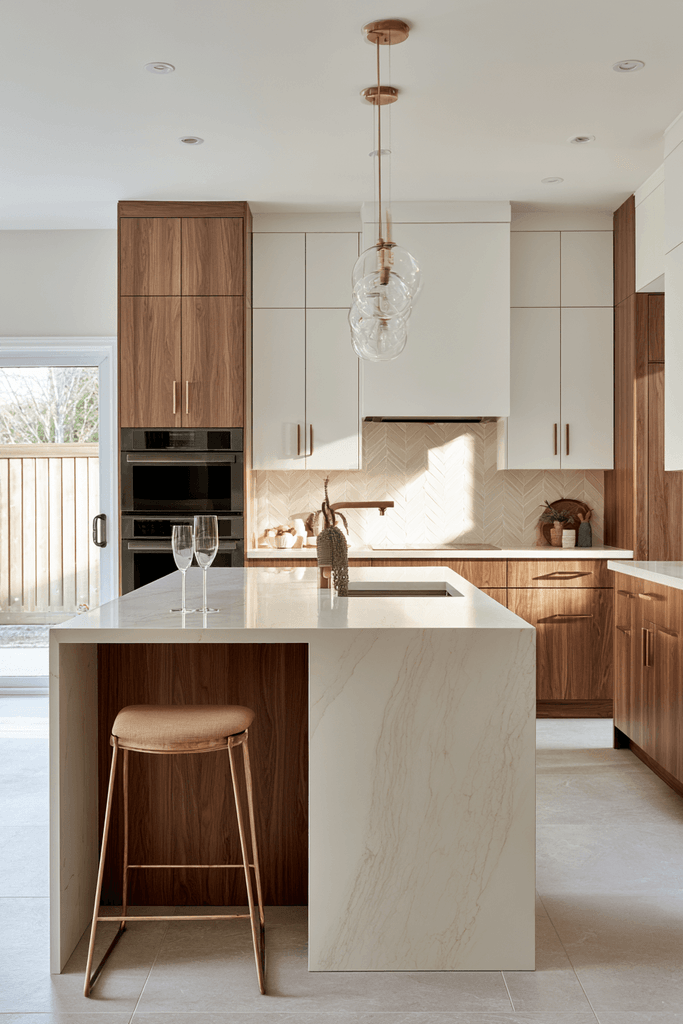
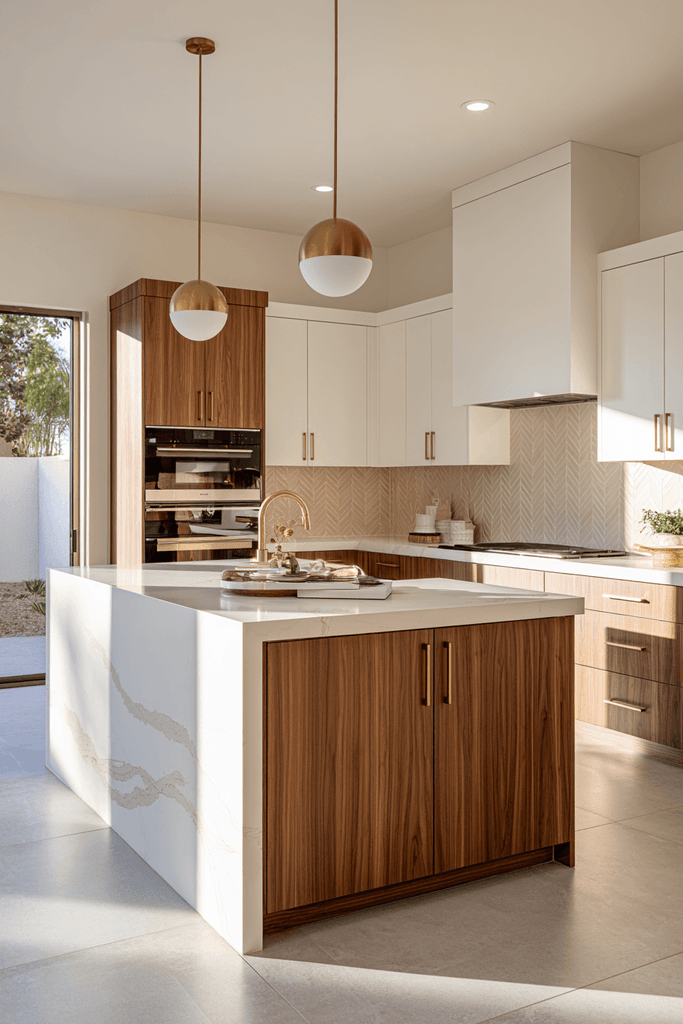
The two-tone kitchen is the most versatile theme on this list — sophisticated enough for formal spaces, warm enough for family homes. Warm walnut wood lower cabinetry is paired with crisp matte white upper cabinets, a combination that balances visual weight and avoids the visual monotony of a single-tone approach. A waterfall quartz island in soft greige with fine marble-like veining grounds the central space with tactile elegance. Integrated appliances preserve the clean contemporary lines throughout, while brushed gold hardware provides a refined metallic thread that runs consistently across both cabinet tones. A chevron-pattern backsplash in ivory and soft taupe ceramic tile adds subtle directional texture without competing with the material transitions at the core of the design.
Key Design Tips:
- Pair warm wood tones below with white or off-white above — this combination mirrors the natural visual hierarchy of light over dark.
- Choose a waterfall island in a neutral quartz to serve as the material bridge between the two cabinet tones.
- Integrate appliances fully to maintain the clean contemporary silhouette.
- Use brushed gold hardware as the unifying metallic accent across both cabinet colors.
- Select a backsplash with subtle pattern and texture — chevron or herringbone — rather than bold color or veining.
Why These Kitchen Themes Are Among the Best
Each of these ten kitchen themes earns its place on this list because it represents a coherent design philosophy executed with intention. The modern farmhouse kitchen and rustic Spanish Colonial kitchen appeal to those who value history, handcraft, and warmth — spaces that feel accumulated rather than installed. The Japandi kitchen and Scandinavian minimalist kitchen serve design-conscious homeowners who believe in the discipline of restraint — every object earns its place, and the quality of materials does all the expressive work. The Mediterranean kitchen and coastal kitchen are rooted in geography and light — ideal for those who want their home to feel like a permanent vacation. The industrial kitchen and bold black and white kitchen serve those with an architectural eye — spaces that treat raw materials and graphic contrast as aesthetic statements. The maximalist kitchen rewards the collector and the storyteller, while the contemporary two-tone kitchen offers a refined, accessible middle ground that suits a wide range of tastes and budgets.
Together, these themes cover the full spectrum of kitchen design styles — from open-plan kitchen layouts and small kitchen ideas to luxury kitchen renovations and budget-friendly kitchen makeovers. Whether you’re searching for kitchen color schemes, modern kitchen cabinets, kitchen backsplash ideas, or kitchen island designs, each theme provides a complete, resolved visual language that can be adapted to any floor plan or budget level.
Conclusion
Transforming your kitchen begins with a single, committed decision: choosing a theme that genuinely reflects how you want to live in the space. Whether you’re drawn to the serene order of Japandi minimalism, the sun-drenched warmth of a Mediterranean palette, or the graphic confidence of a black and white kitchen, the most successful interiors are those designed with intention from floor to ceiling. Use the key design tips in each section as your starting point, then personalize — swap materials, adjust proportions, introduce a signature element that is uniquely yours. The best kitchen isn’t the one that looks exactly like an inspiration image; it’s the one that feels unmistakably like home. Start with a theme you love, respect its principles, and give yourself permission to make it your own.