10 Stylish and Functional Small Kitchen Counter Organization Ideas to Transform Your Space
A well-organized kitchen counter is one of the most underrated elements of a functional, beautiful home. In compact kitchens especially, the counter is more than a workspace — it is the visual anchor of the entire room, the place where cooking, coffee rituals, and daily life converge. Thoughtful small kitchen counter organization doesn’t just reduce clutter; it shapes how a space feels, how efficiently you move through it, and how much joy you take in spending time there. Whether your kitchen leans toward minimalist Scandinavian serenity, rustic farmhouse warmth, or sleek industrial utility, there is a counter organization system designed to match your personality and your square footage. The ten ideas explored in this article span a wide spectrum of interior styles — each one offering a distinct visual identity alongside genuinely practical solutions for making the most of limited counter space.
1. Bamboo Tiered Riser: The Classic Compact Counter Fix
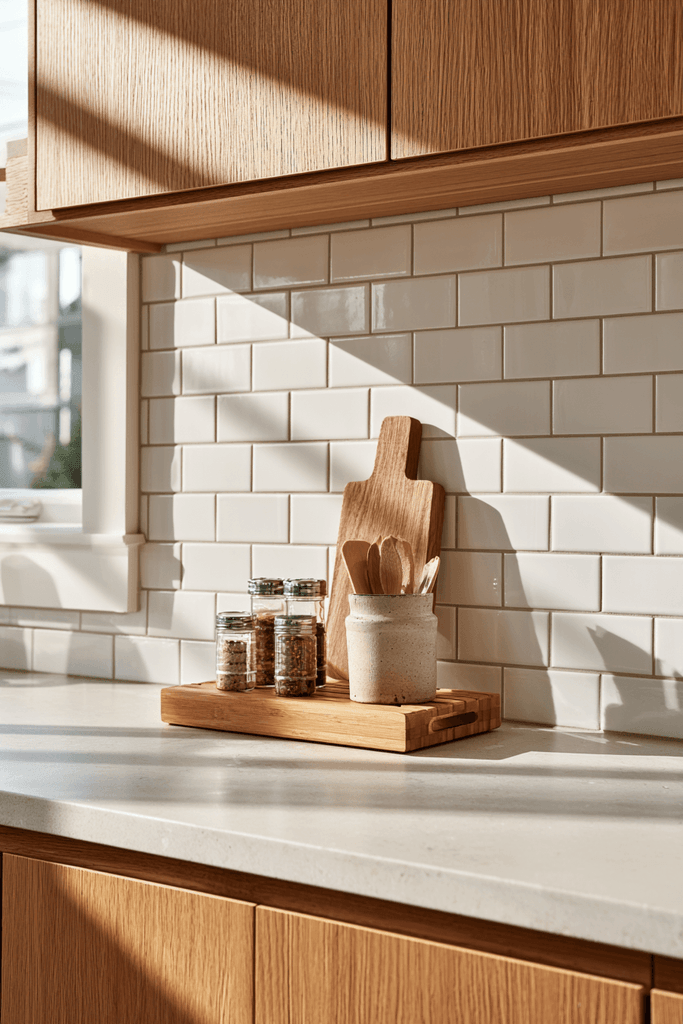
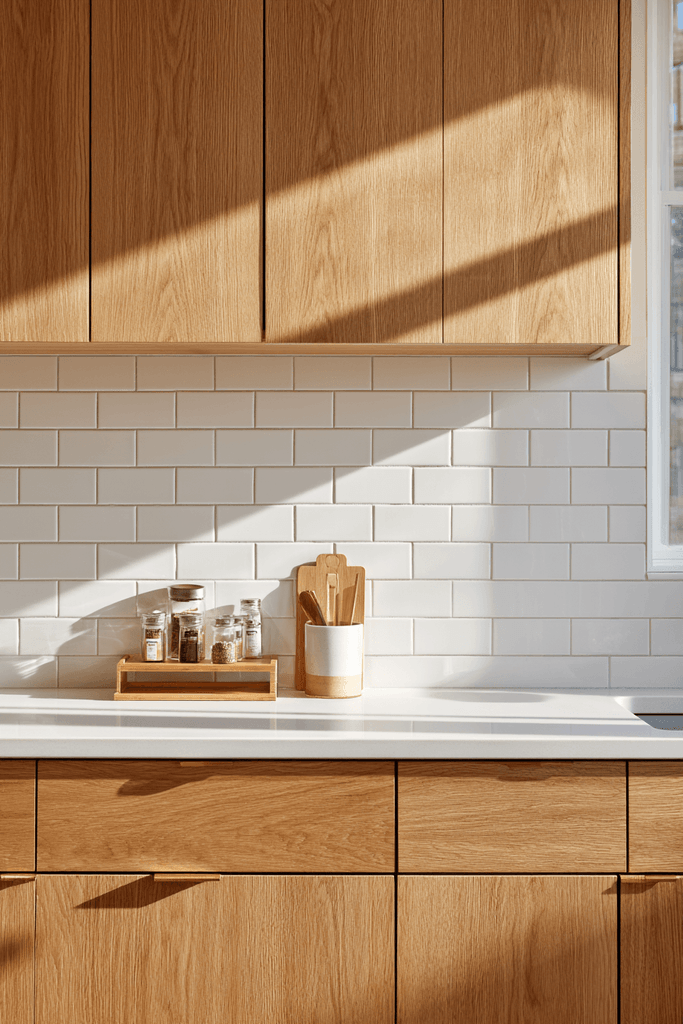
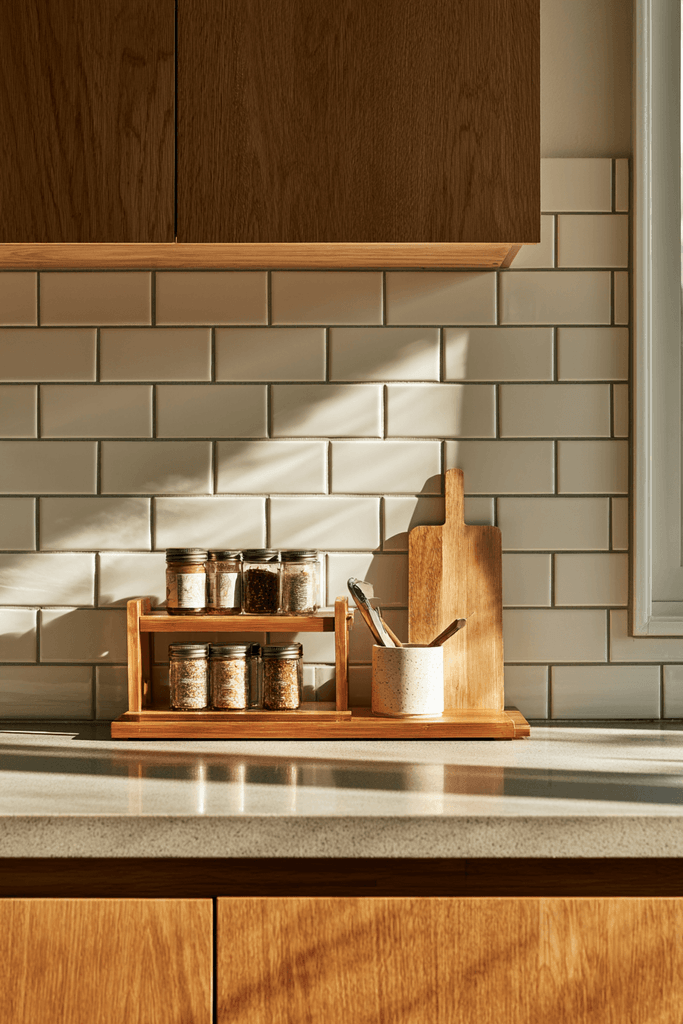
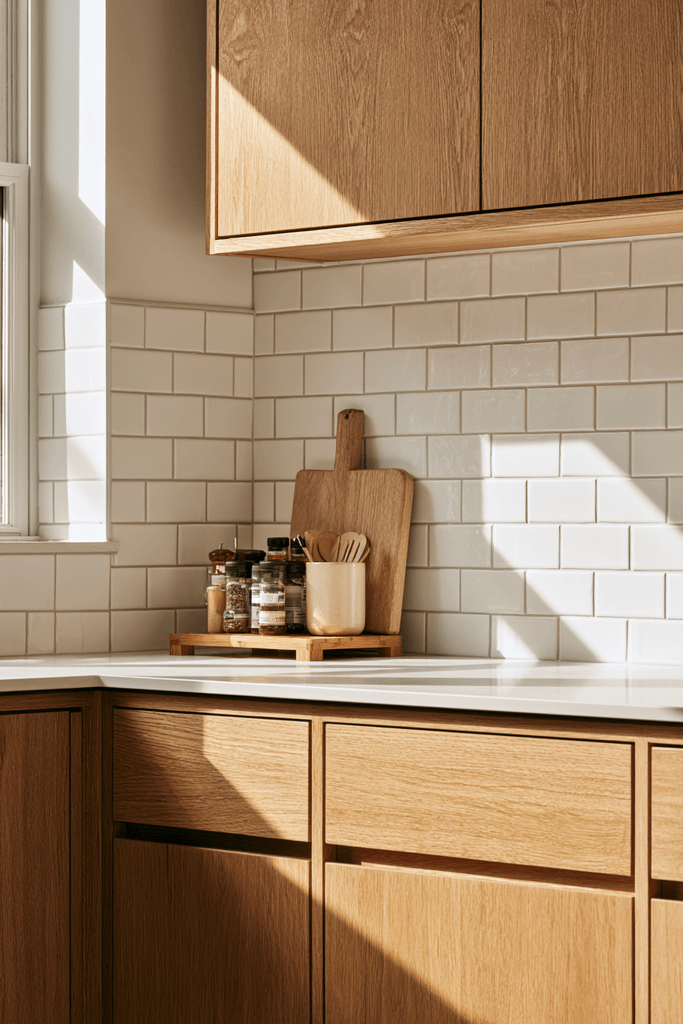
The tiered bamboo shelf riser is one of the most versatile tools in small kitchen counter organization, and when executed with care it becomes a design moment in its own right. Picture a slim bamboo two-tier riser positioned against a white subway tile backsplash in a compact apartment kitchen with natural oak cabinetry. Spice jars line the upper tier in neat formation, a sturdy utensil crock anchors one end of the lower level, and a small cutting board stands upright at the back, saving precious horizontal space. Morning light streaming through a nearby window casts soft, warm shadows across the bamboo grain, turning a simple organizer into something almost sculptural. The warmth of the natural material bridges the gap between the cool white tiles and the honey-toned cabinetry, creating a cohesive palette that feels effortless rather than engineered.
Key Design Tips:
- Choose a slim-profile riser (no wider than 10–12 inches) to preserve generous working space on the counter.
- Group items on the riser by frequency of use — daily essentials at the front, occasional items tucked at the back.
- Coordinate spice jar lids or labels in a single color family for a tidier visual impression.
- Let natural wood tones do the aesthetic heavy lifting; keep the surrounding counter surface as clear as possible.
2. Magnetic Knife Strip and Vertical Efficiency
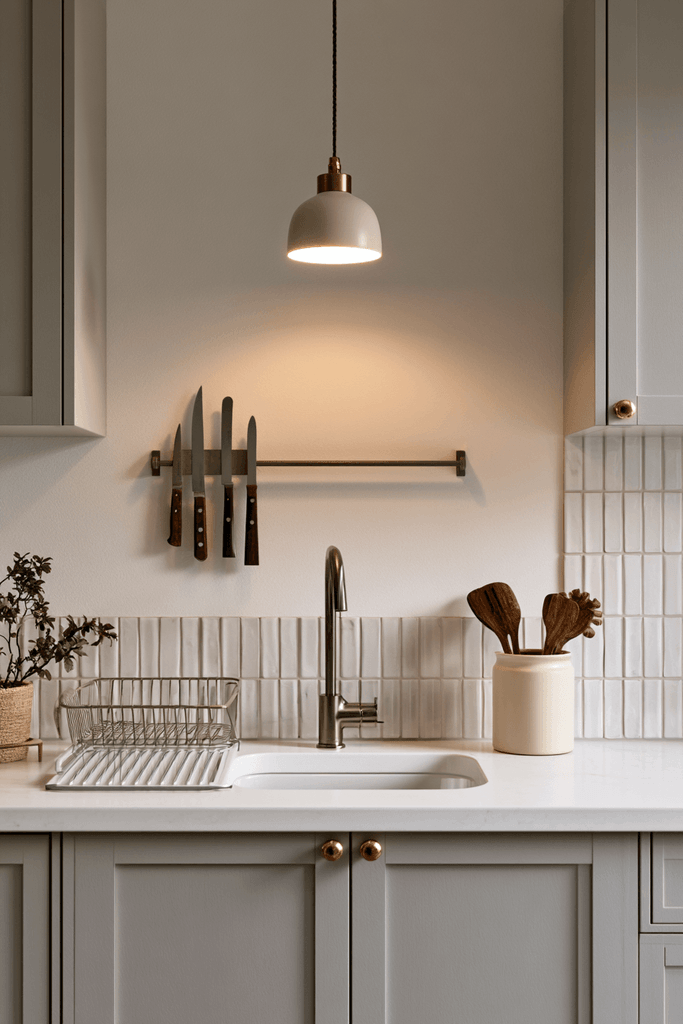
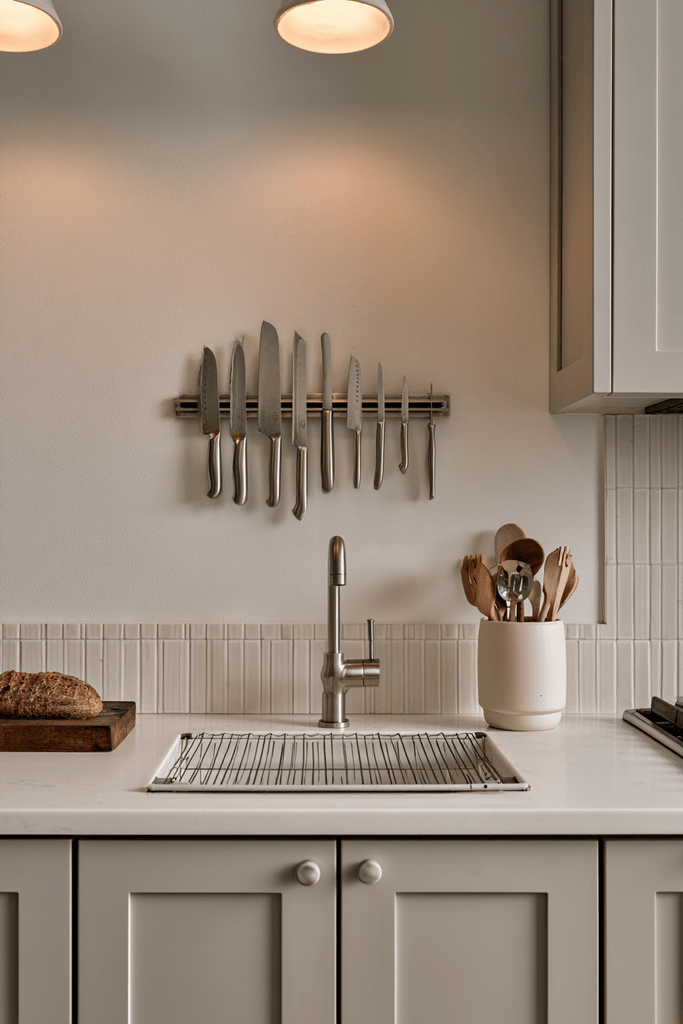
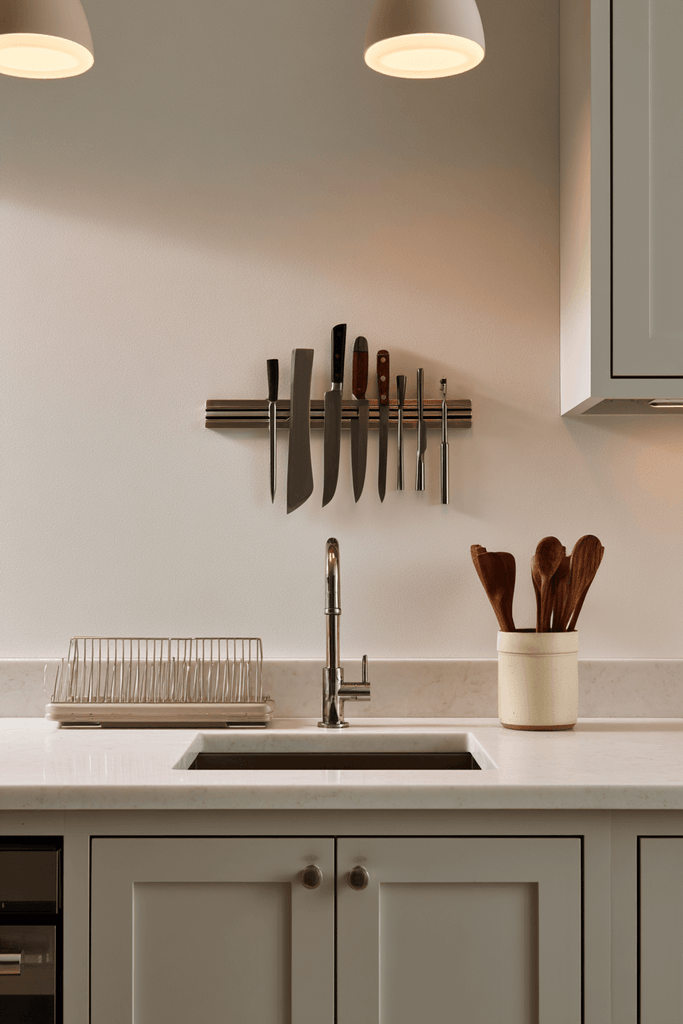
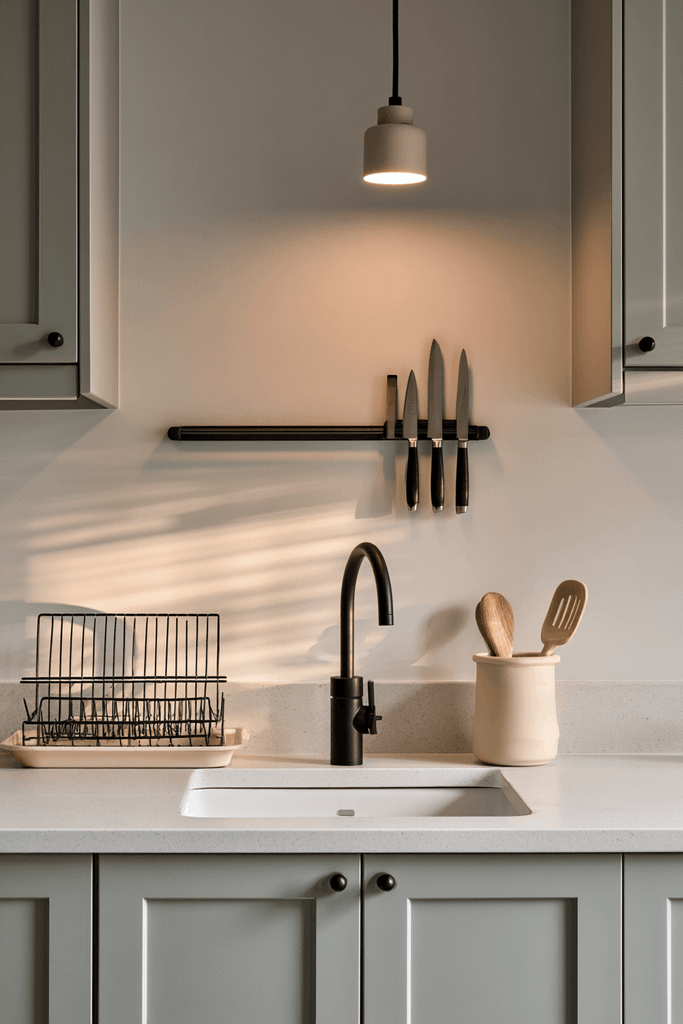
For kitchens where every square inch of horizontal counter is precious, the answer is almost always to go vertical. A wall-mounted magnetic knife strip installed above a narrow white quartz counter immediately reclaims surface space while putting your most-used blades within effortless reach. Pair it with a compact over-sink drying rack and a matte cream ceramic utensil holder, and you have a small kitchen counter organization system that works on multiple levels — literally. Pale grey shaker cabinets and warm pendant lighting overhead give the setup a calm, considered quality, while the contrast between the matte ceramic and the cool quartz surface adds quiet visual interest. The key here is restraint: every item on the counter is there for a reason, and together they form a composition that looks curated rather than crammed.
Key Design Tips:
- Mount the magnetic strip at a height that keeps knives out of reach of children but comfortably accessible for adults.
- Choose a ceramic utensil holder in a neutral matte finish to avoid visual competition with other surfaces.
- Invest in a slim over-sink rack with a drip tray to prevent water from pooling on the counter.
- Keep the quartz surface completely clear except for the drying rack and utensil crock — negative space is part of the design.
3. Scandinavian Tray Styling: Cohesion Through Simplicity
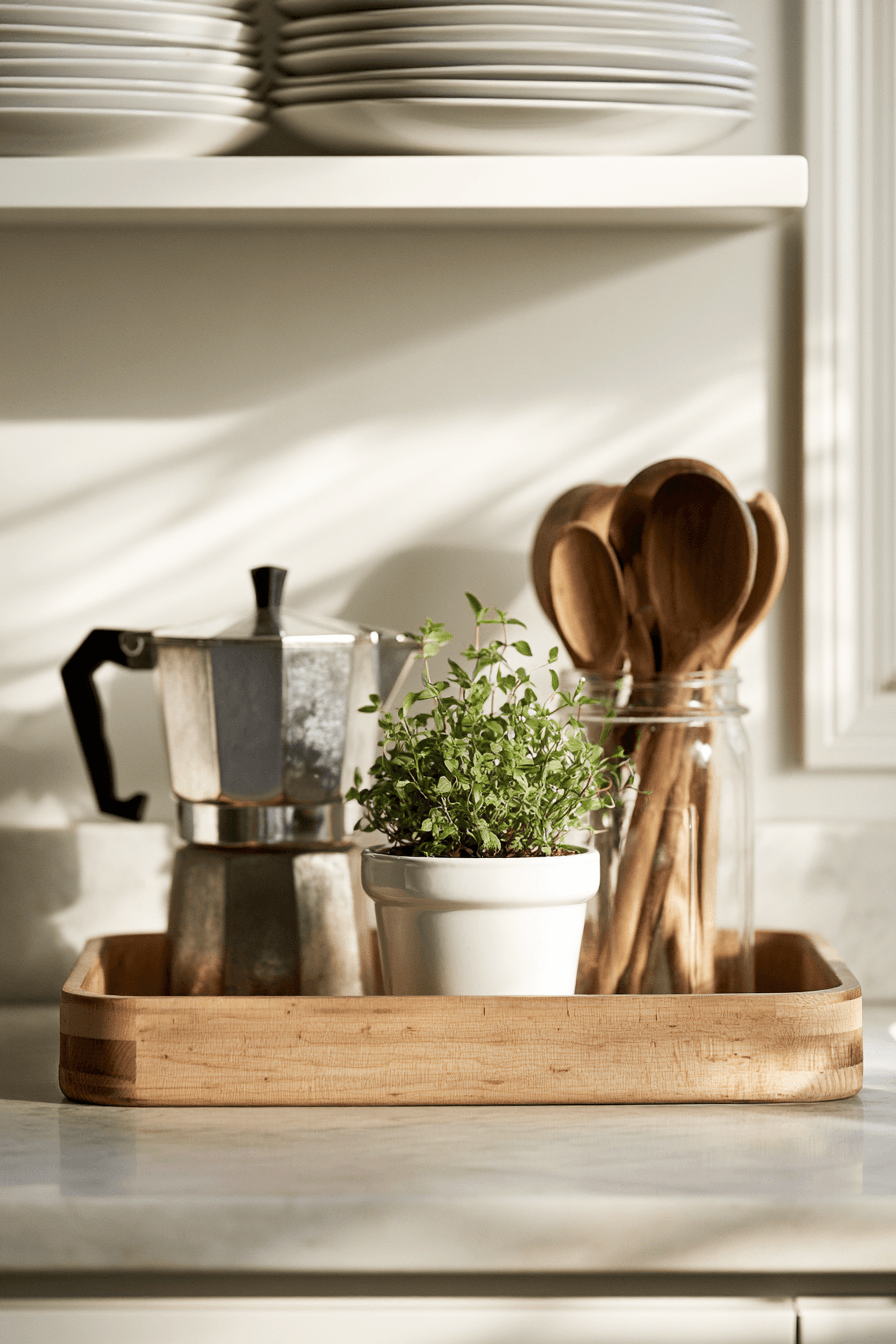
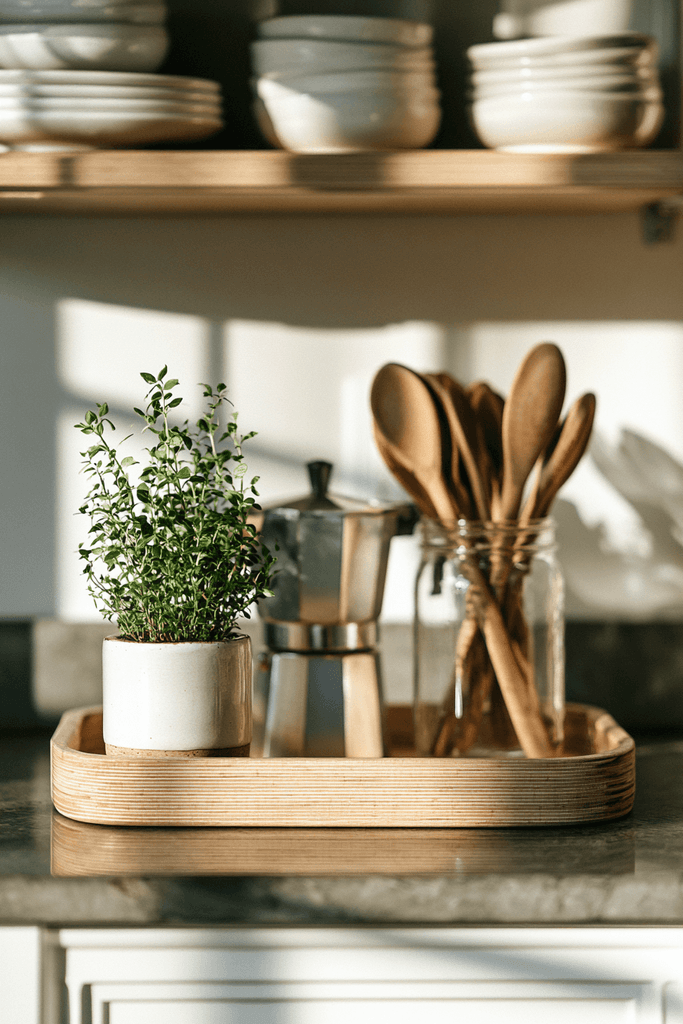
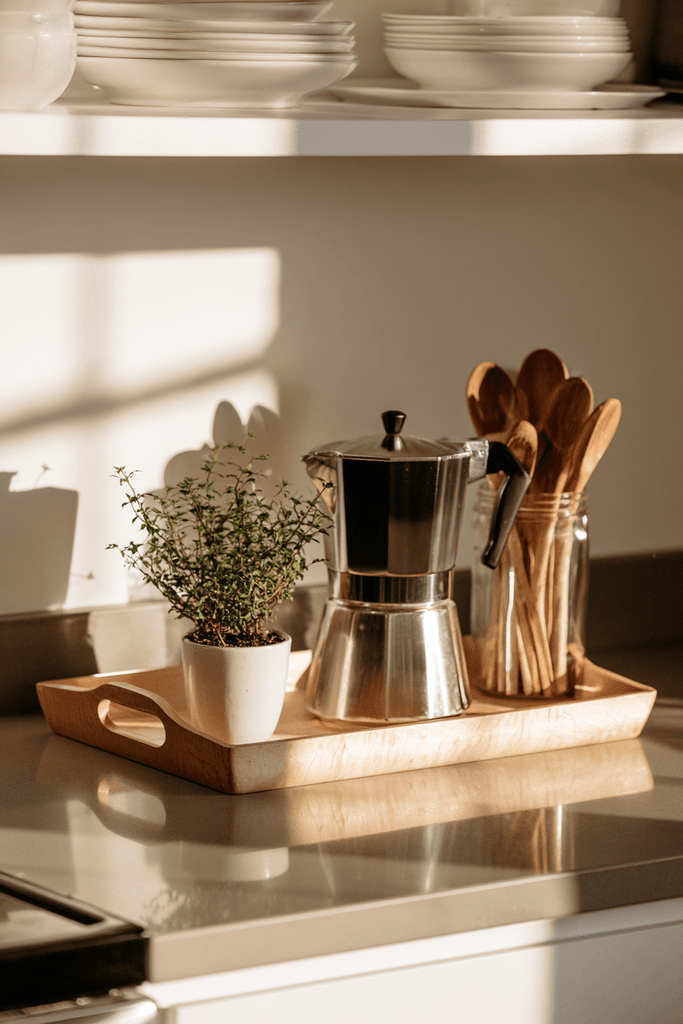
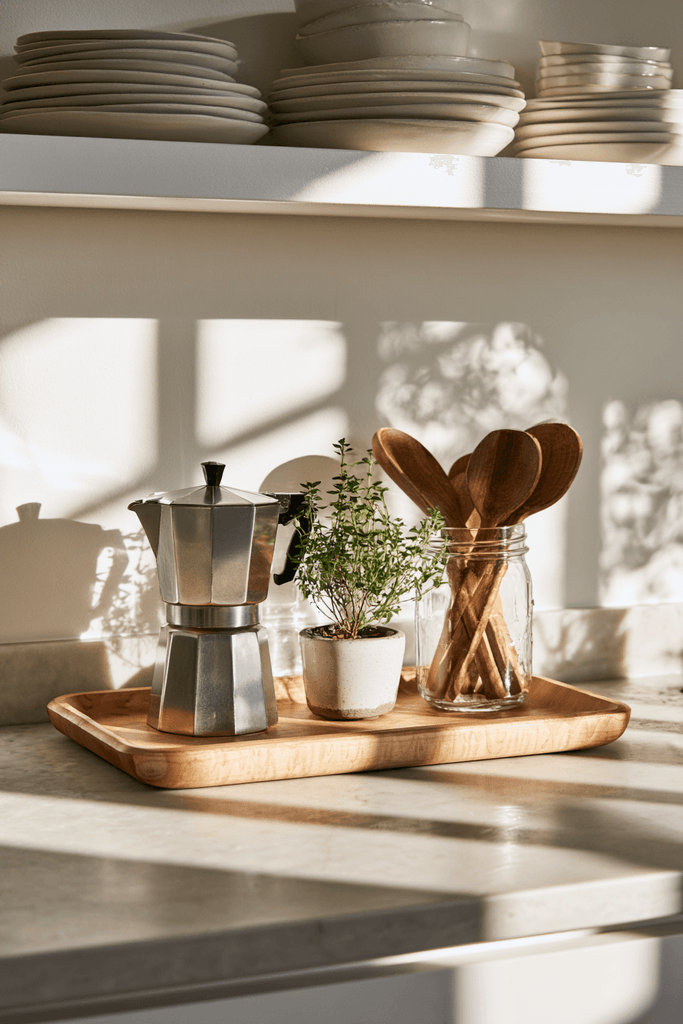
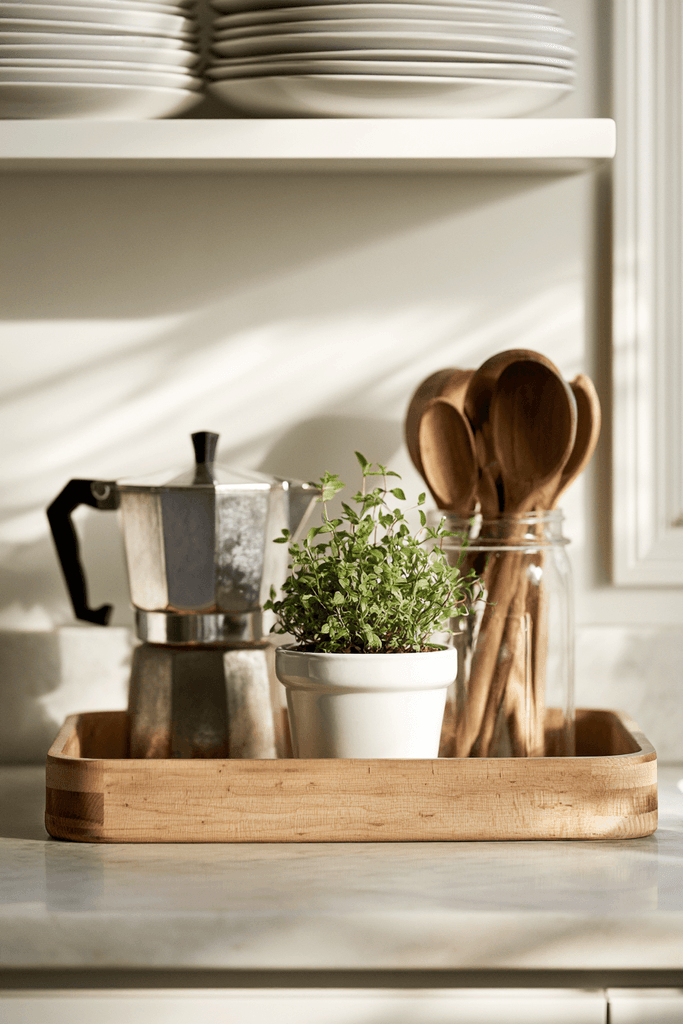
The Scandinavian approach to small kitchen counter organization is built around one powerful principle: everything has a place, and that place is beautiful. A light birch wood tray acts as the organizing anchor here, corralling a compact coffee maker, a small potted herb in a white ceramic pot, and a glass jar of wooden spoons into a unified vignette. Below open floating shelves displaying neatly stacked white dishes, this counter arrangement feels intentional without being sterile. Soft white morning light fills the space, illuminating the natural wood grain and the gentle green of the herb, creating a scene that feels domestic in the best possible sense — lived-in, calm, and completely under control. The tray is the unsung hero: it creates a visual boundary that separates the “organized zone” from the rest of the counter, making tidying up as simple as repositioning a single object.
Key Design Tips:
- Use a wooden or marble tray to group small appliances and everyday items into one contained zone.
- Introduce one living element — a small herb or succulent — to soften the hard lines of appliances.
- Keep floating shelf displays minimal: three to five items maximum, evenly spaced.
- Stick to a two-tone palette (natural wood + white) for a cohesive Nordic aesthetic.
4. Modern Farmhouse Canisters and Textural Charm
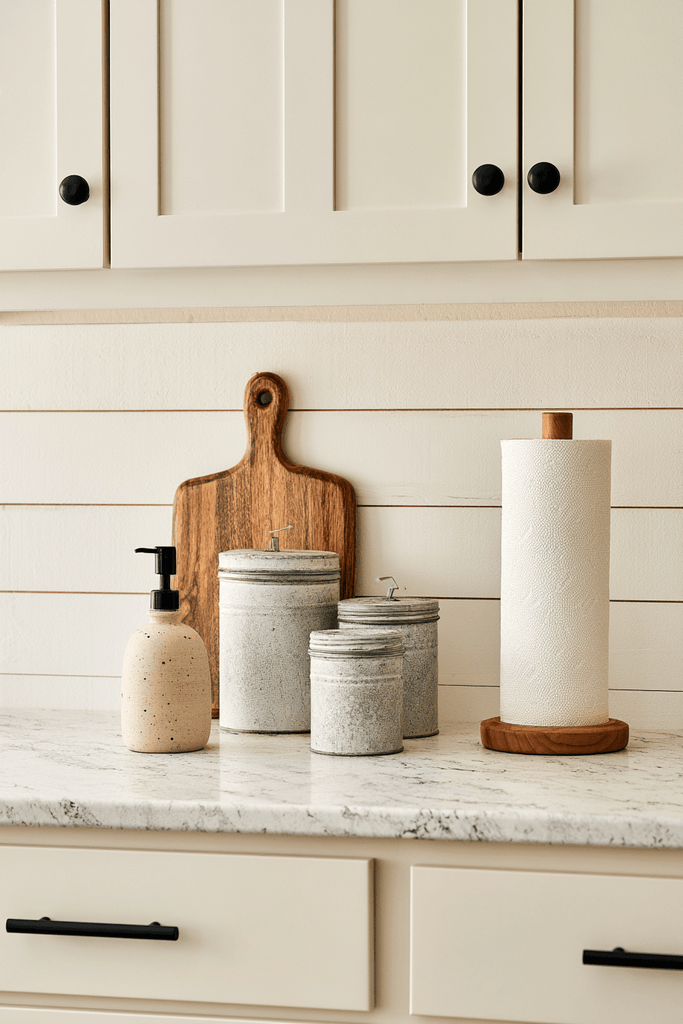
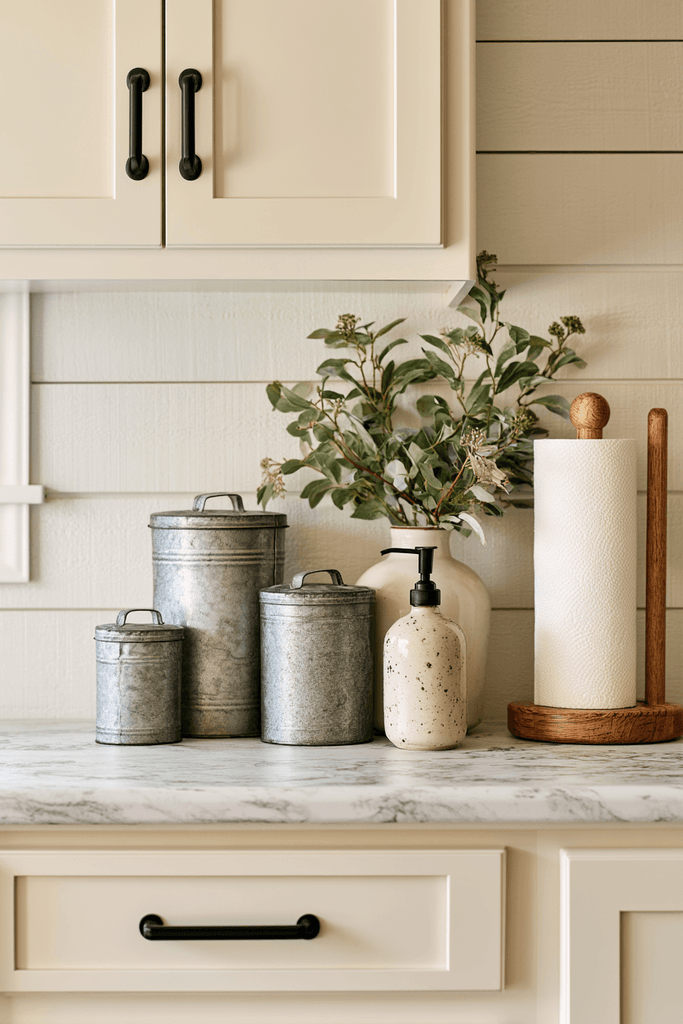
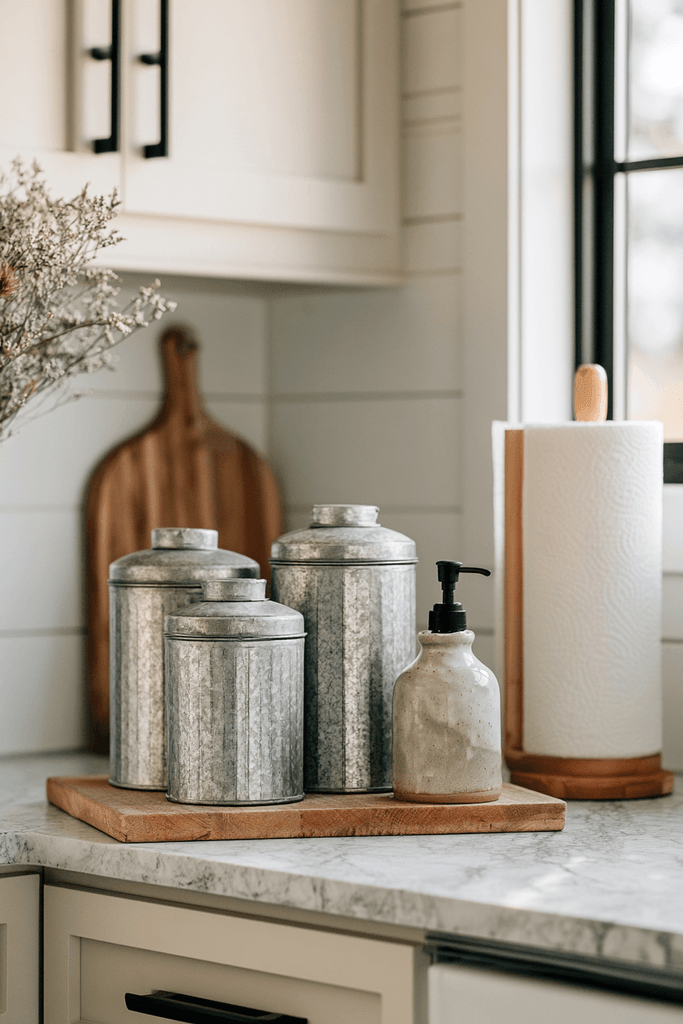
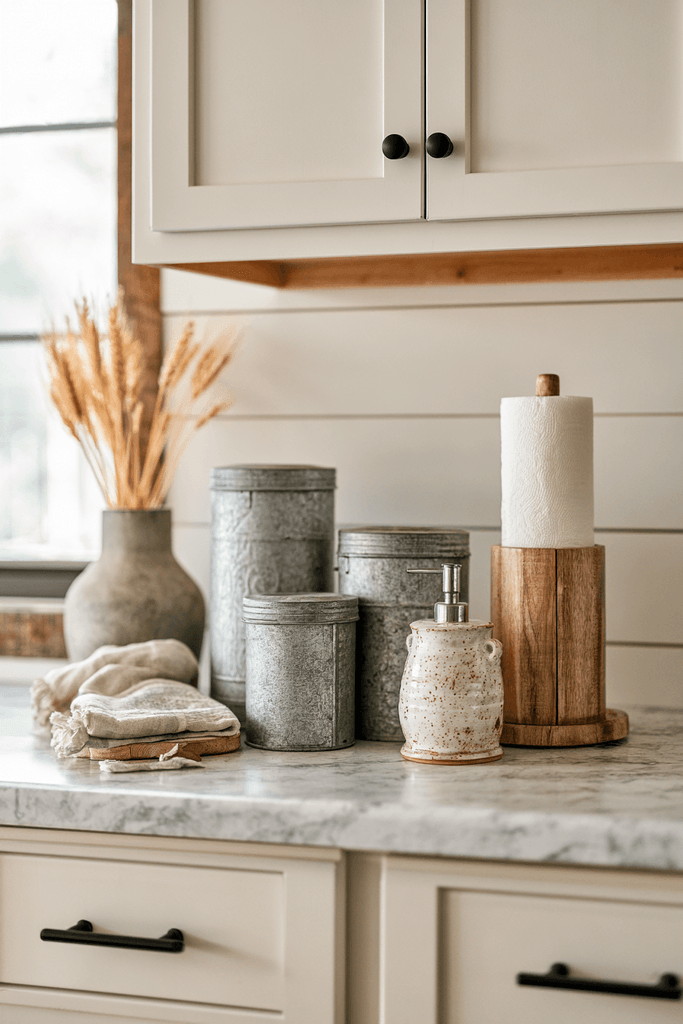
The modern farmhouse kitchen thrives on the marriage of practicality and character, and its approach to small kitchen counter organization is no different. A set of galvanized metal canisters for dry goods, a vintage-style ceramic soap dispenser, and a solid wooden paper towel holder come together on a white marble-look laminate countertop to create a counter that works hard while looking effortlessly charming. A shiplap backsplash in soft white and matte black hardware on cream cabinets complete the picture — every element reinforcing a visual language of heritage and warmth. Warm natural daylight highlights the textural contrast between the cool metal, the smooth ceramic, and the grainy wood, making this a counter organization scheme that rewards close attention. It’s the kind of setup that makes kitchen tasks feel more pleasurable simply by existing.
Key Design Tips:
- Invest in a matching canister set (three to four pieces) to create immediate visual coherence.
- Choose hardware finishes — soap dispensers, towel holders — that match your cabinet pulls exactly.
- Reserve the laminate counter surface for only three or four permanent items; everything else goes inside cabinets.
- Rotate seasonal elements (a small pumpkin in autumn, a citrus bowl in summer) to keep the display fresh.
5. Industrial Appliance Garage and Urban Edge
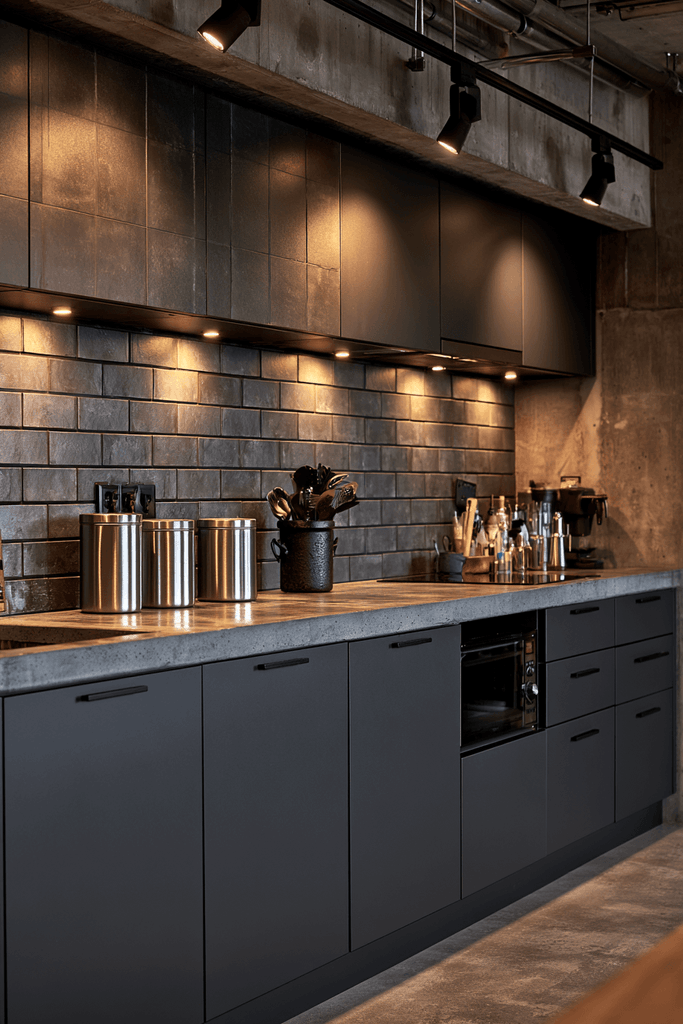
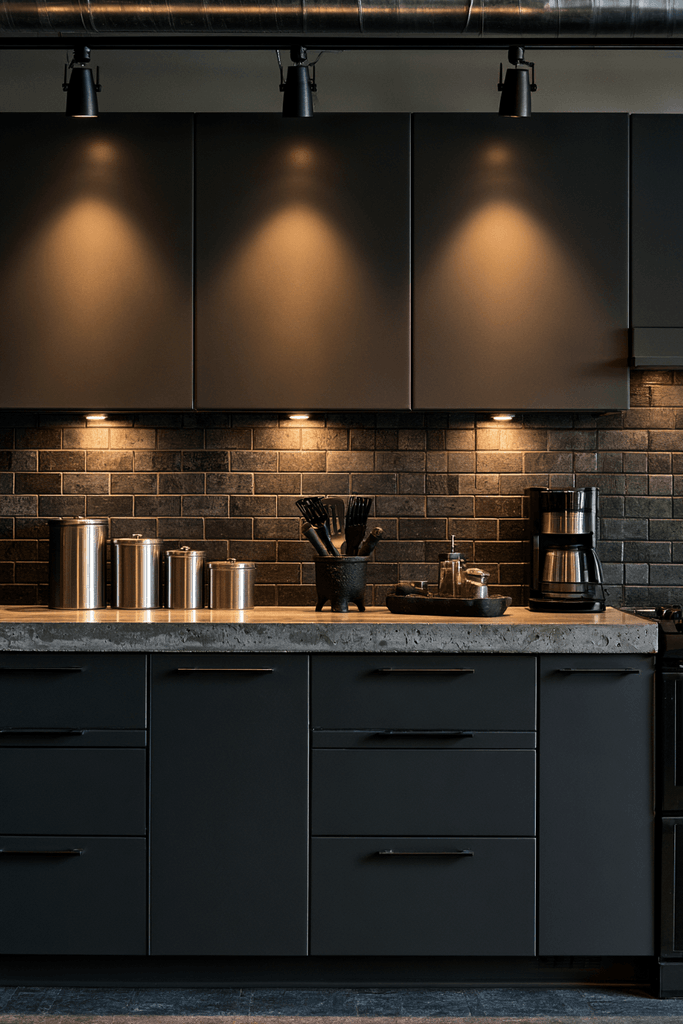
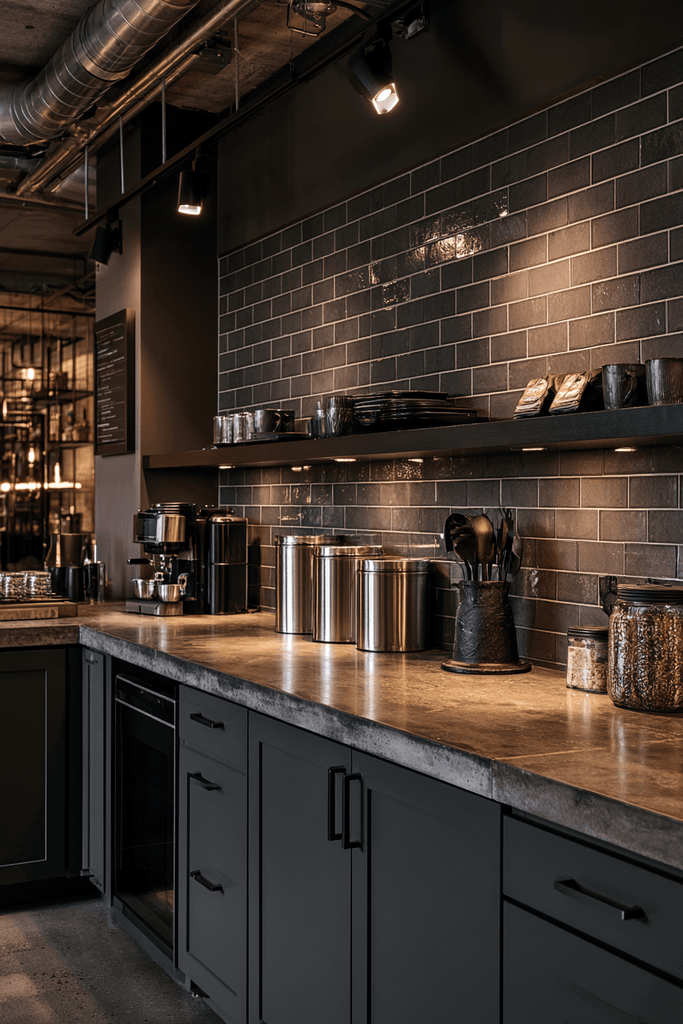
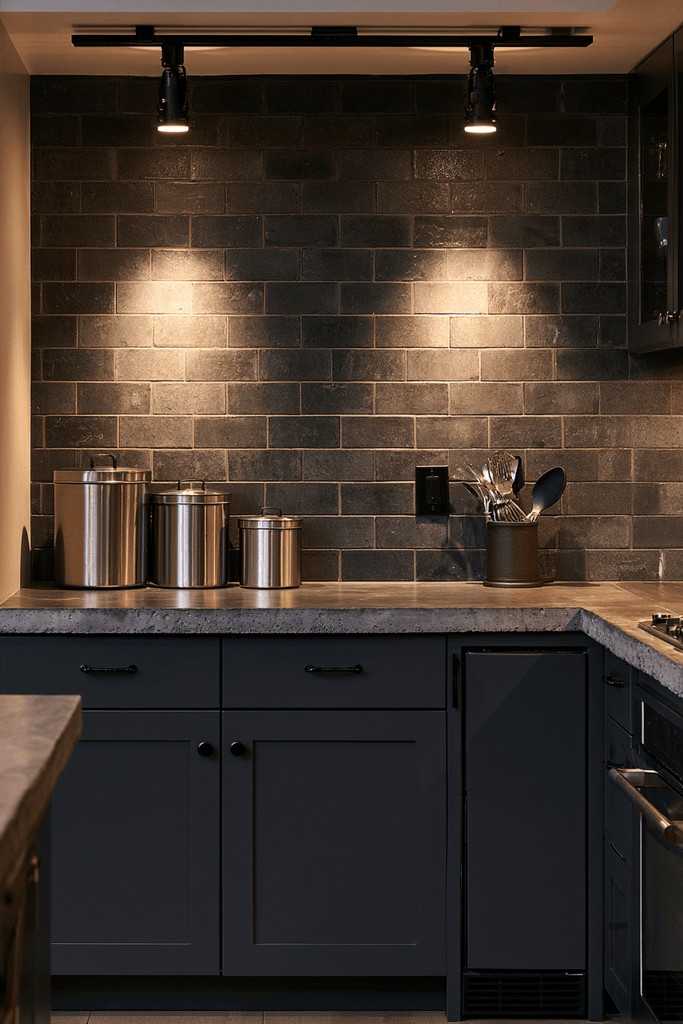
Industrial kitchens demand small kitchen counter organization solutions that match their no-nonsense ethos. A built-in appliance garage tucked into the end of dark grey lower cabinets is the sleekest possible answer: toasters, blenders, and small appliances disappear behind a tambour door or simple cabinet panel, leaving the exposed concrete countertop almost entirely clear. Brushed steel canisters and a cast iron utensil holder provide the only counter-level presence, their weight and materiality entirely at home against the charcoal subway tile backsplash. Overhead track lighting throws focused pools of illumination across the counter surface, dramatizing the intentional arrangement and giving the space a loft-like quality. This is kitchen counter organization at its most architectural — where storage solutions are designed into the structure of the kitchen itself.
Key Design Tips:
- If a built-in appliance garage isn’t possible, use a large woven basket or cabinet-top box to store appliances when not in use.
- Limit counter materials to two: one metal, one raw (concrete, slate, or honed stone).
- Use track or pendant lighting pointed directly at the counter surface to highlight the clean organization.
- Cast iron and brushed steel age beautifully — embrace patina as part of the aesthetic.
6. Boho Rattan Trays and Earthy Warmth
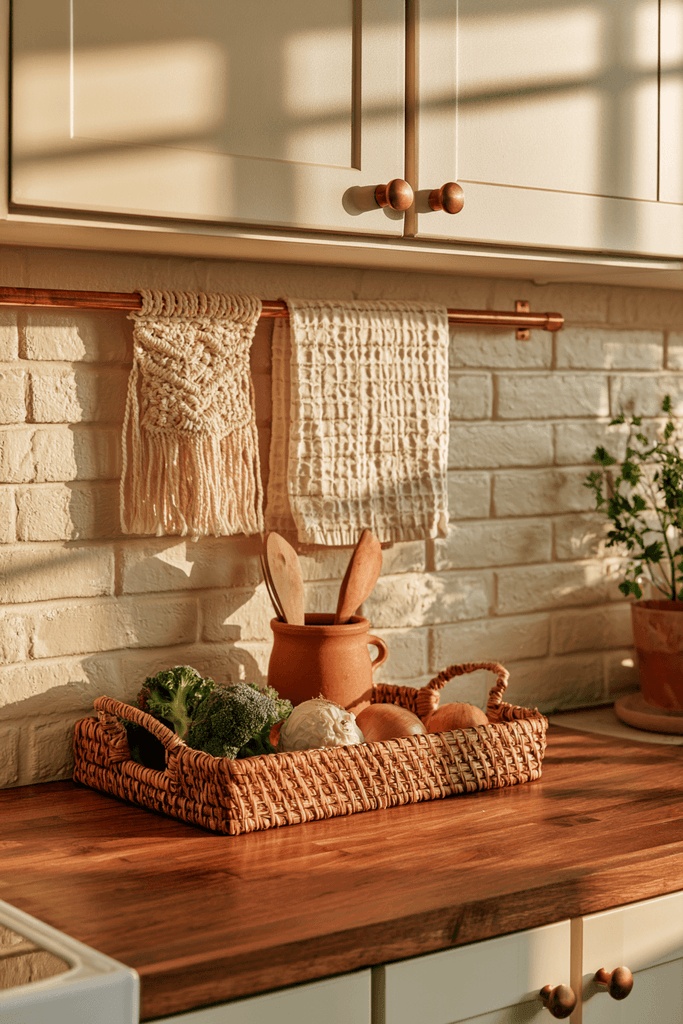
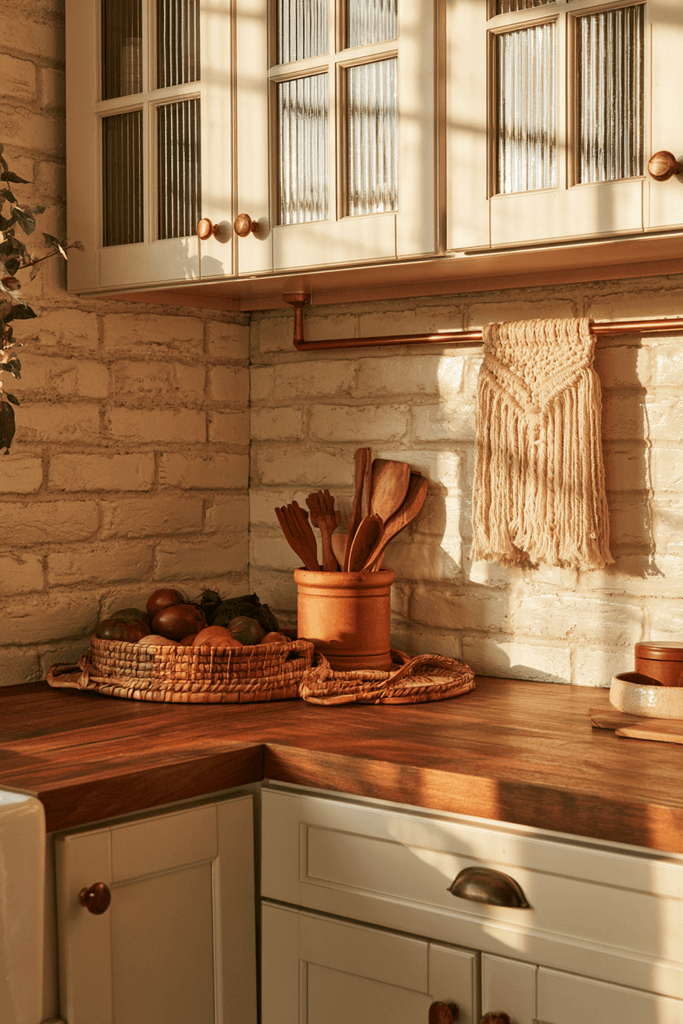
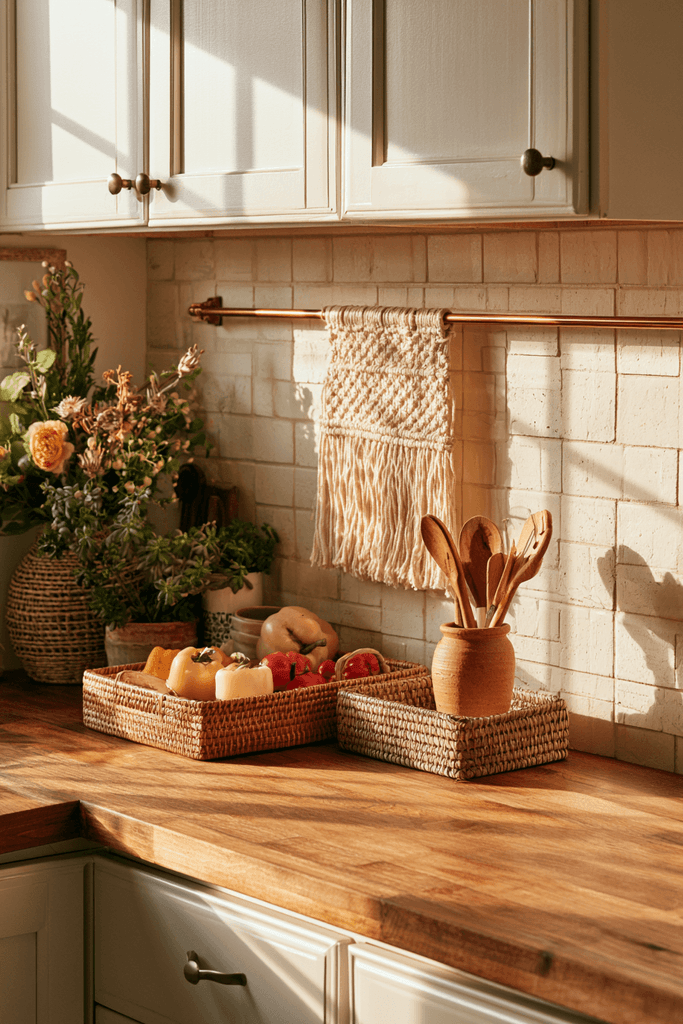
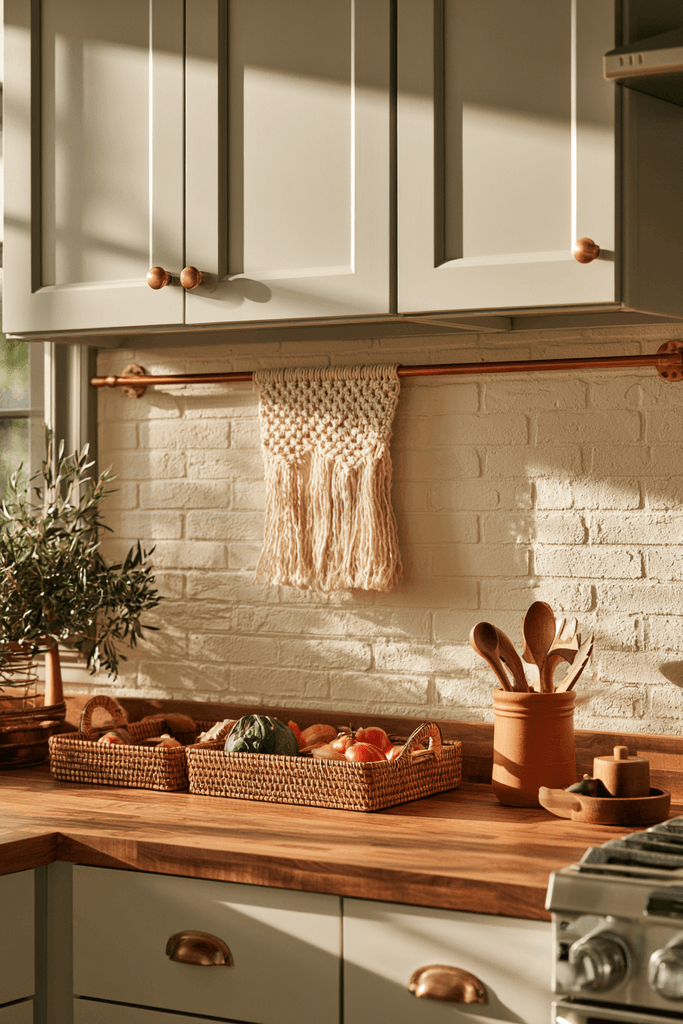
Bohemian style brings a relaxed generosity to small kitchen counter organization — less rigid grid, more layered abundance. Woven rattan basket trays hold seasonal produce in casual but deliberate arrangement; a terracotta utensil pot grounds the display with earthy color; a macramé dish towel draped over a copper rail below the upper cabinets adds soft, handcrafted texture. Warm wood countertops and a cream-painted brick backsplash provide a rich, tactile backdrop that makes every natural material glow. Late afternoon golden light floods the scene, deepening the terracotta tones and casting long, romantic shadows through the woven rattan. This is counter organization as still life — practical, yes, but also genuinely beautiful to look at. The boho approach invites you to embrace organic imperfection and let the warmth of natural materials do the organizing work.
Key Design Tips:
- Use rattan or seagrass trays to corral produce, onions, and garlic in a visually appealing way.
- Layer textures deliberately: woven rattan + terracotta + macramé creates depth without clutter.
- Copper or brass hardware and rails tie together warm-toned kitchens instantly.
- Replace plastic dish towels with linen or cotton macramé versions for an immediate style upgrade.
7. Lazy Susan Corner System: The Corner Counter Solved
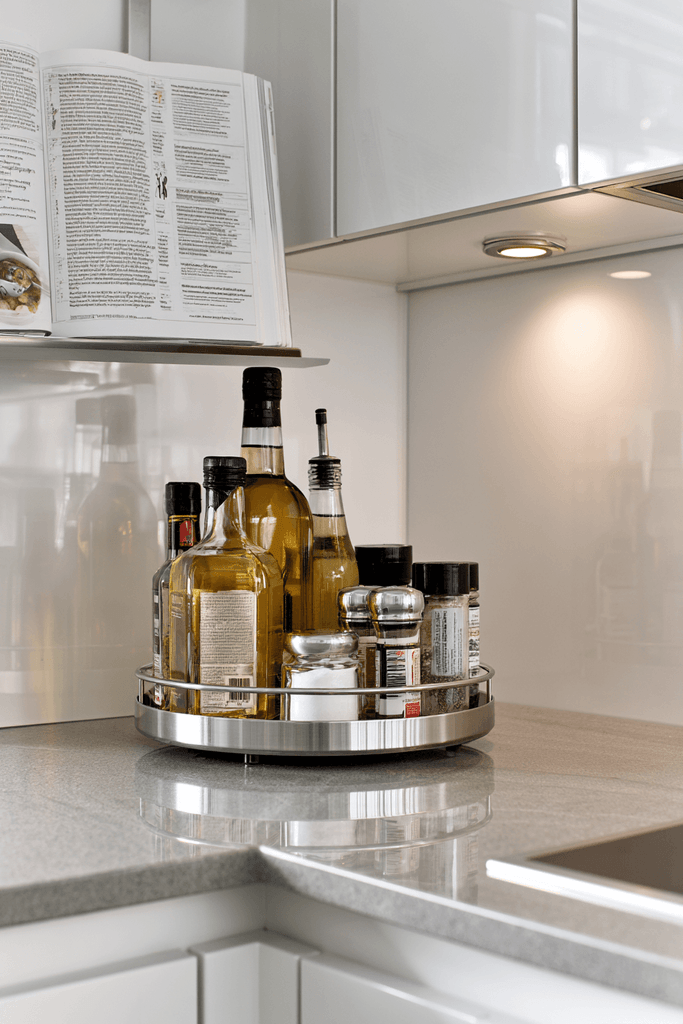
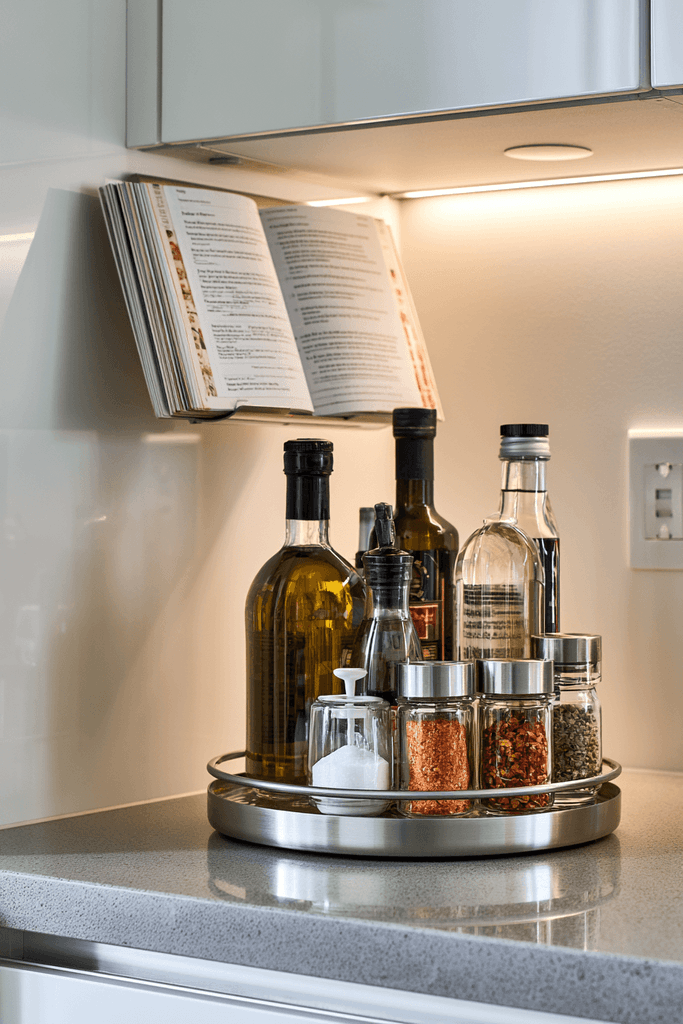
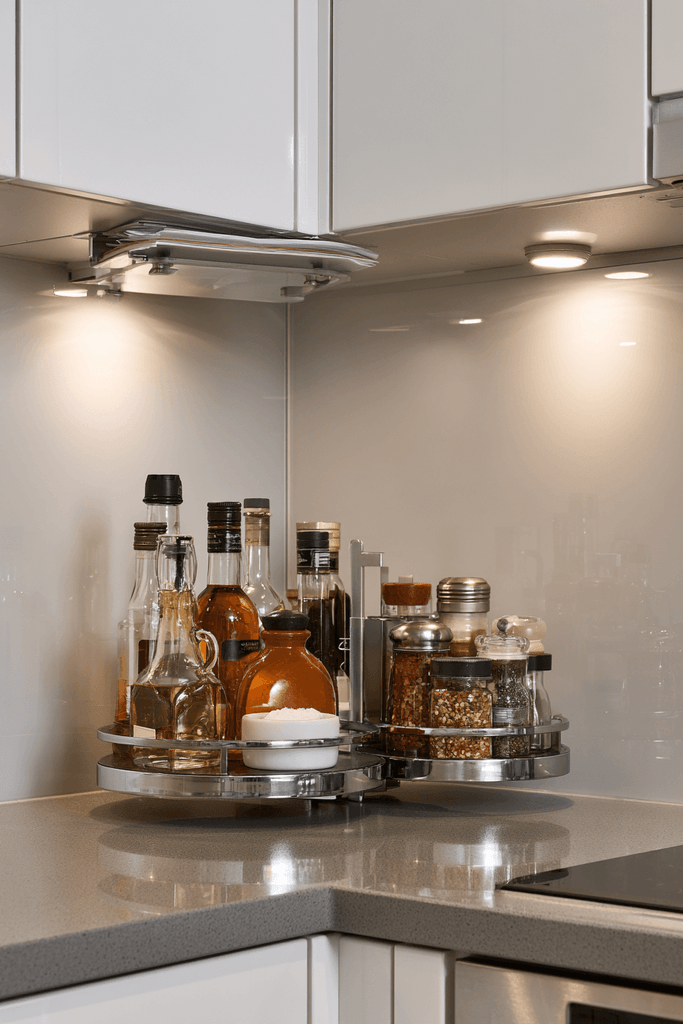
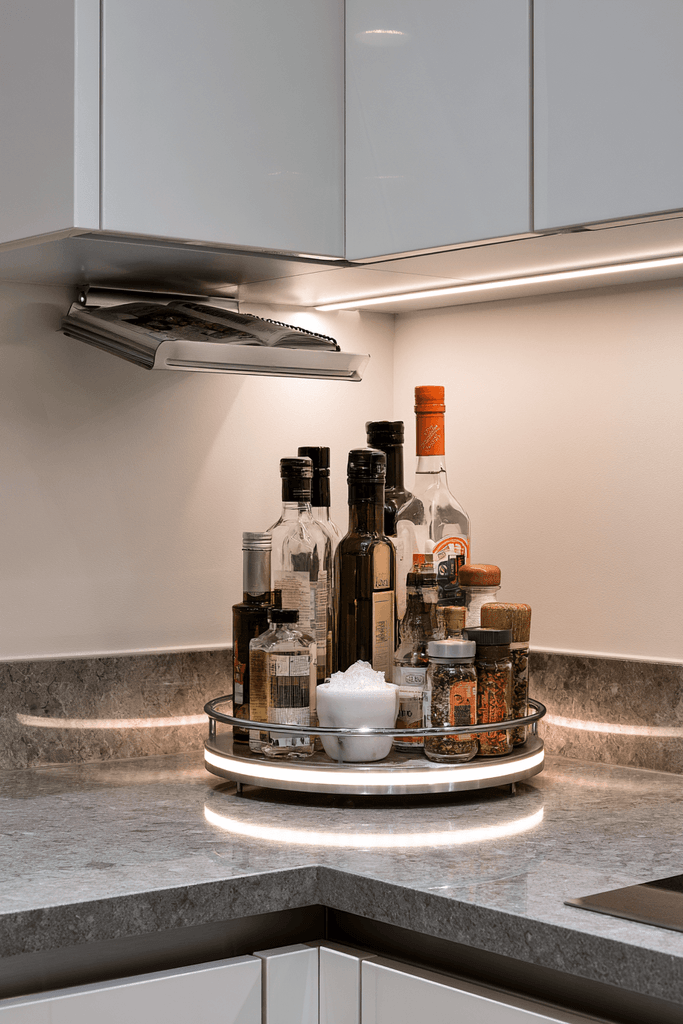
Corner counter space is notoriously difficult to use well, but a rotating lazy Susan carousel transforms it into the most efficient zone in the kitchen. Cooking oils, a salt cellar, and frequently used spices sit on the carousel within arm’s reach from any angle, while a small under-cabinet mounted cookbook holder keeps the recipe visible at eye level — freeing the counter below entirely. White gloss cabinets and a grey quartz counter reflect soft overhead lighting evenly, making this compact small kitchen counter organization setup feel bright and spacious despite its corner location. The genius of the lazy Susan is in its invisibility when not in use: spin it to access what you need, and the corner reads as intentionally minimal when you step back.
Key Design Tips:
- Choose a two-tier lazy Susan for corners — the extra level doubles your storage without increasing footprint.
- Group the carousel by cooking category: oils and vinegars together, spices together, baking essentials together.
- A wall-mounted cookbook holder eliminates the need for a cookbook stand on the counter entirely.
- In gloss kitchens, wipe the lazy Susan surface regularly — reflective cabinets highlight dust and drips.
8. Cottage Enamel and Butcher Block Nostalgia
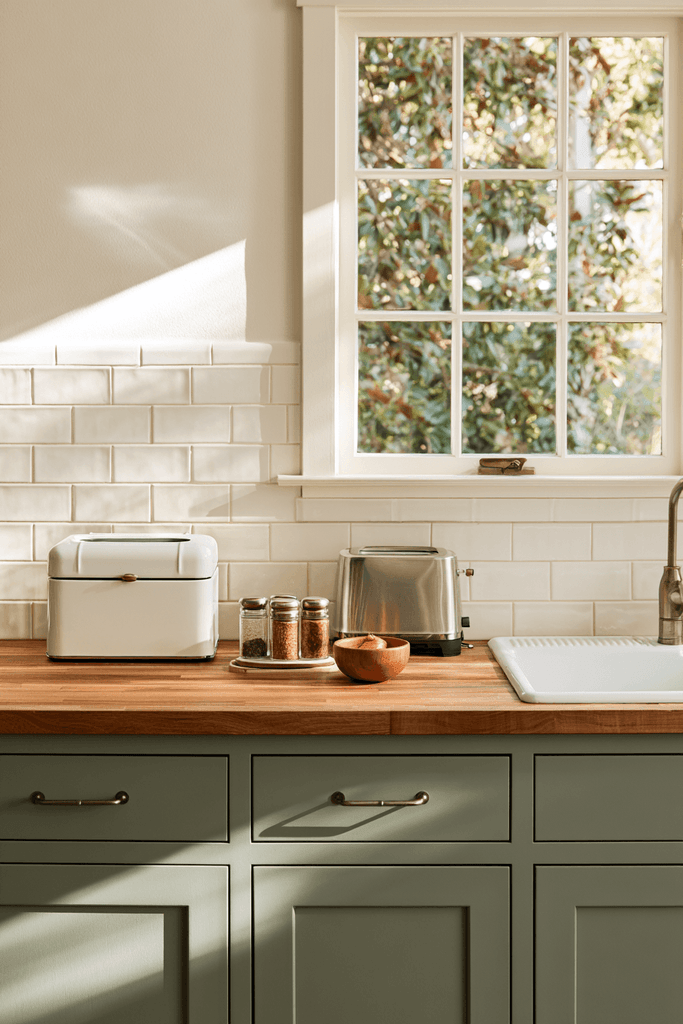
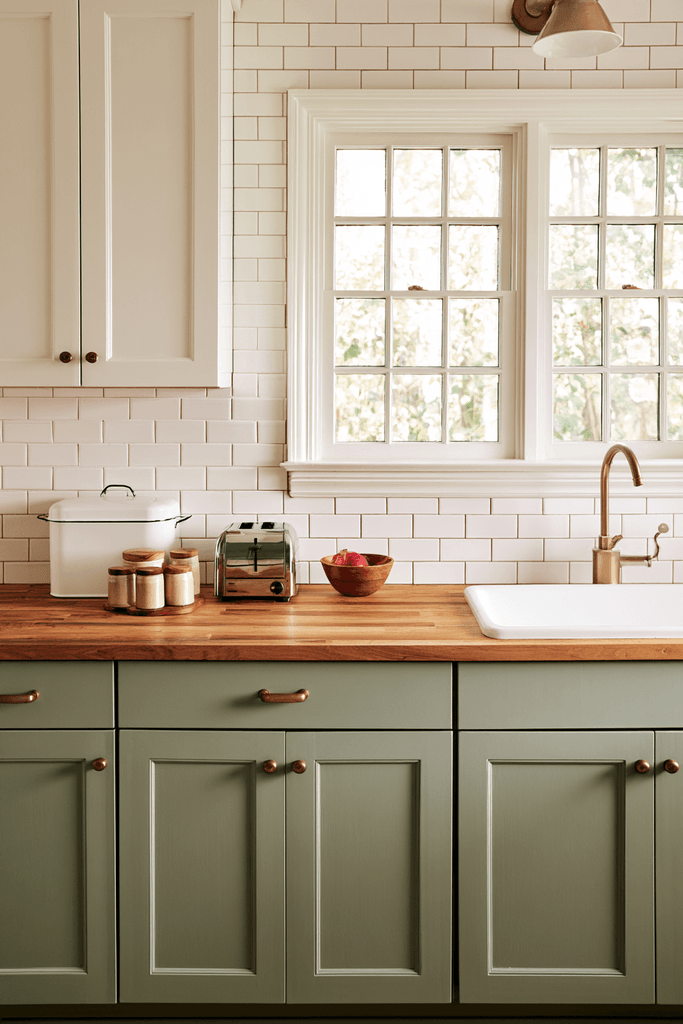
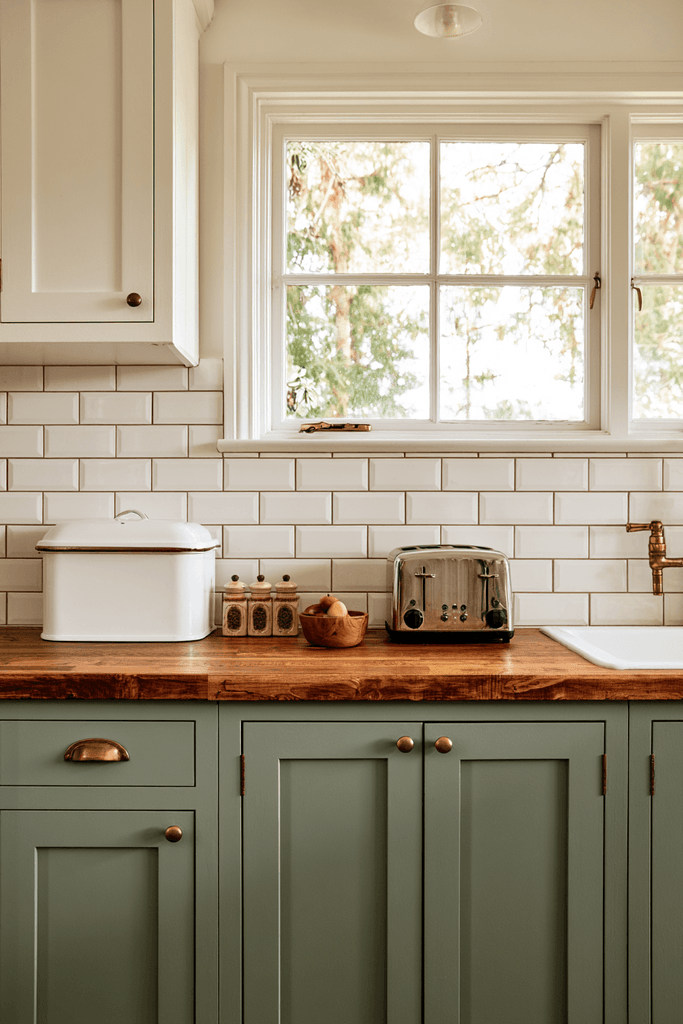
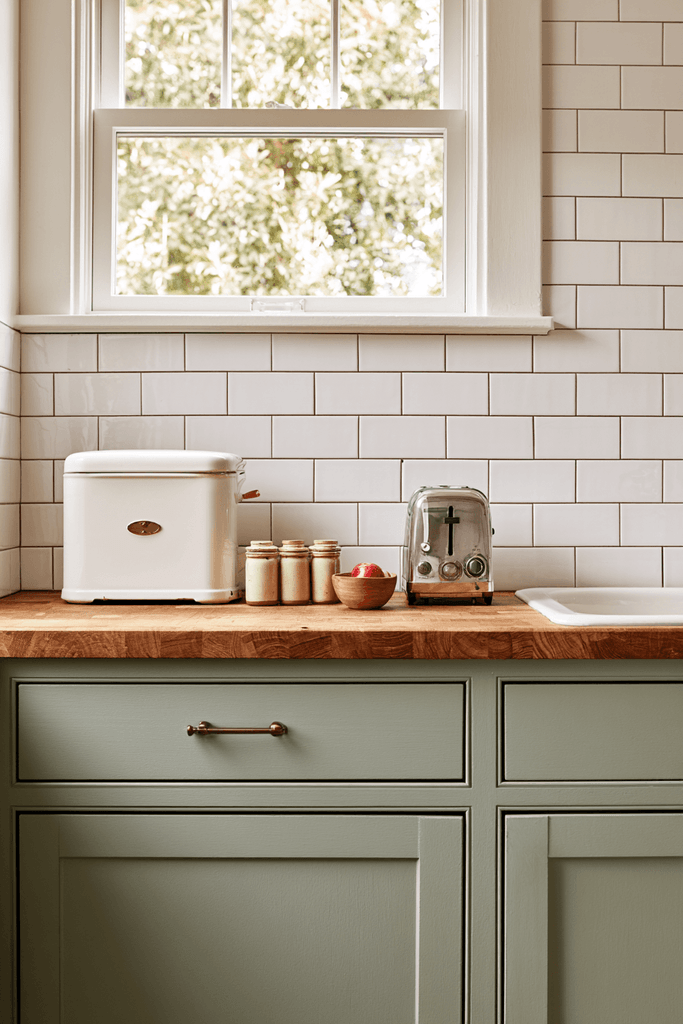
There is something deeply comforting about a cottage-style counter — the kind that looks like it has always been there, quietly useful and completely unpretentious. A white enamel bread box, a three-jar ceramic spice rack, and a small wooden fruit bowl arranged beside a compact toaster on a butcher block countertop create exactly that sense of permanence and ease. Sage green lower cabinets and white metro tile backsplash provide a fresh, heritage-inspired backdrop that makes every object on the counter feel like it belongs. Soft natural daylight from a window above the sink warms the butcher block and highlights the smooth enamel finish. This small kitchen counter organization style rewards patience and editing — each item earns its place by being both useful and beautiful.
Key Design Tips:
- A bread box dramatically reduces counter clutter by giving bread, rolls, and pastries a dedicated, airtight home.
- Oil and condition butcher block countertops monthly to preserve warmth and prevent cracking.
- Sage green pairs beautifully with cream, white, and warm wood — avoid adding cold greys or blues.
- Keep the fruit bowl seasonal and restrained: three or four pieces of one type of fruit looks intentional; a mixed jumble does not.
9. Galley Kitchen Built-Ins: Space-Saving Ingenuity
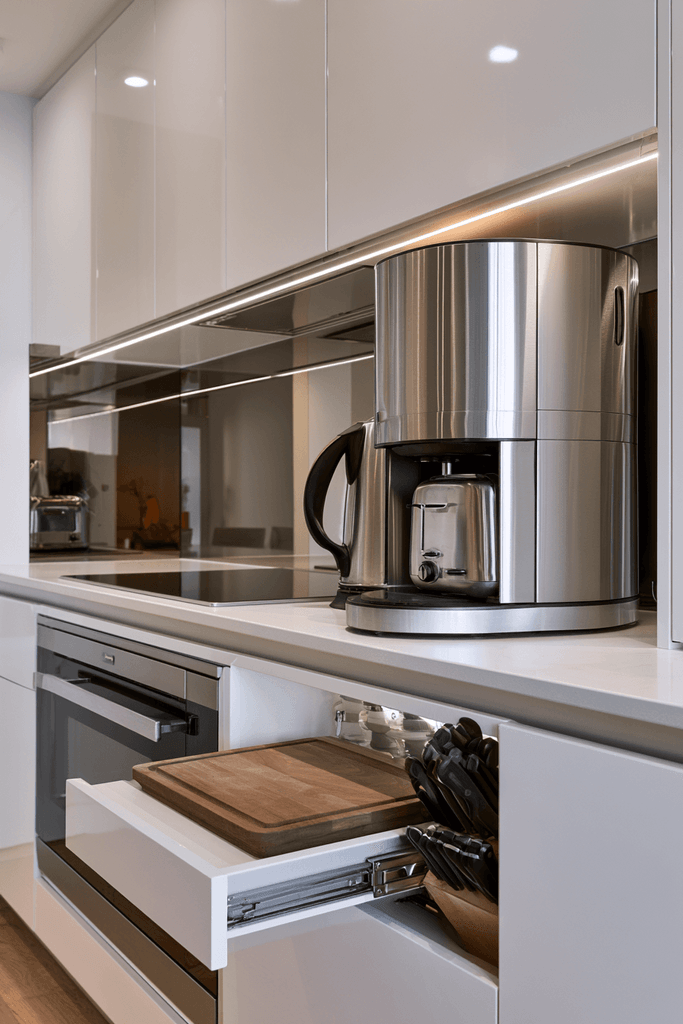
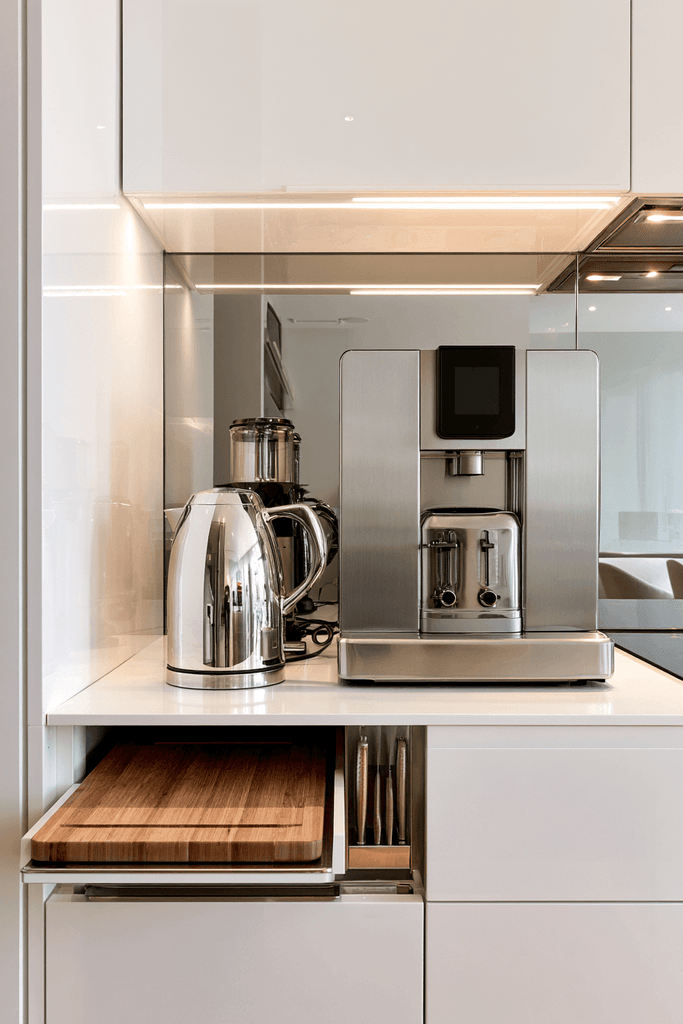
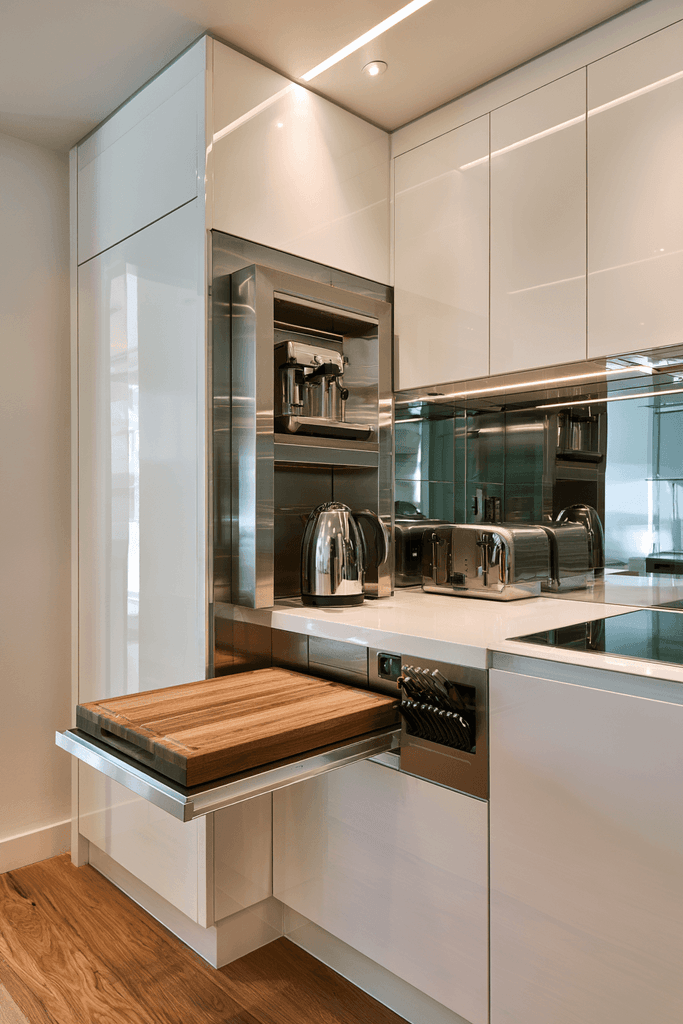
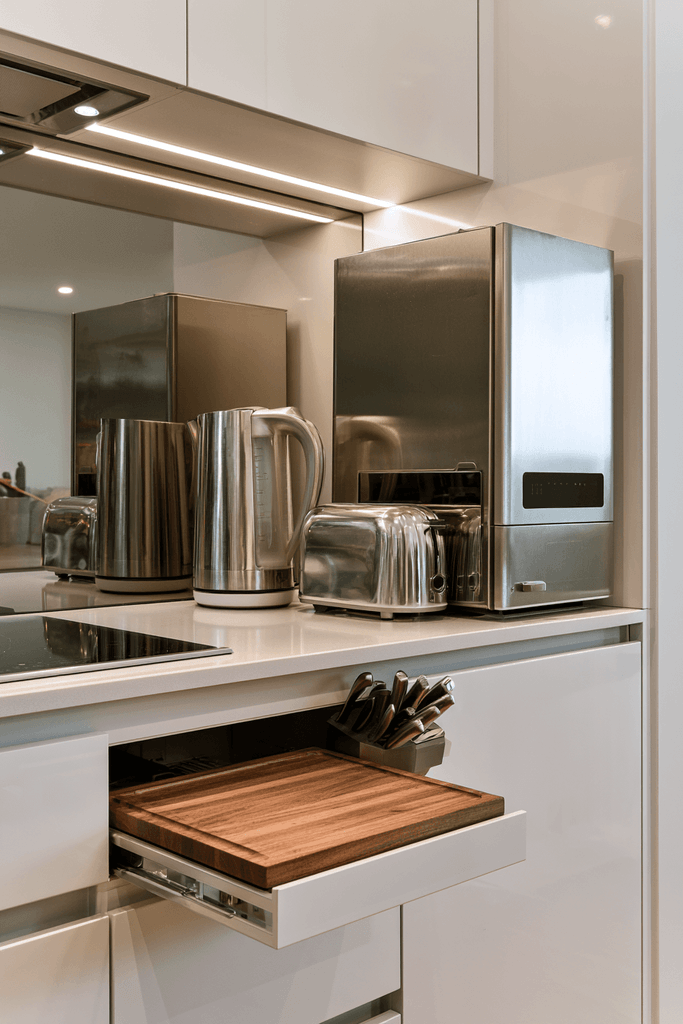
Galley kitchens demand the most ruthless approach to small kitchen counter organization, and the smartest solutions here are the ones built directly into the cabinetry. A pull-out under-counter cutting board eliminates the need for a standalone board on the surface; a knife block integrated into the counter edge keeps blades accessible without occupying counter real estate; a sleek stainless steel appliance tower housing the kettle and toaster compresses two bulky items into a single vertical footprint. Glossy white cabinets and a mirrored backsplash maximize the perceived depth of the galley, while clean overhead LED lighting creates an even, professional ambiance. This approach asks more of the initial kitchen design but pays dividends in daily usability — and in the satisfaction of a counter that is almost always completely clear.
Key Design Tips:
- Pull-out cutting boards are standard in many flat-pack cabinet ranges — look for them in IKEA’s SEKTION or METOD systems.
- A stainless steel appliance tower or caddy reduces two appliances to a single counter “slot.”
- Mirrored or high-gloss backsplashes visually double the width of narrow galley kitchens.
- LED strip lighting under upper cabinets adds task illumination and reduces the need for overhead brightness.
10. Wabi-Sabi Minimalism: The Art of Intentional Restraint
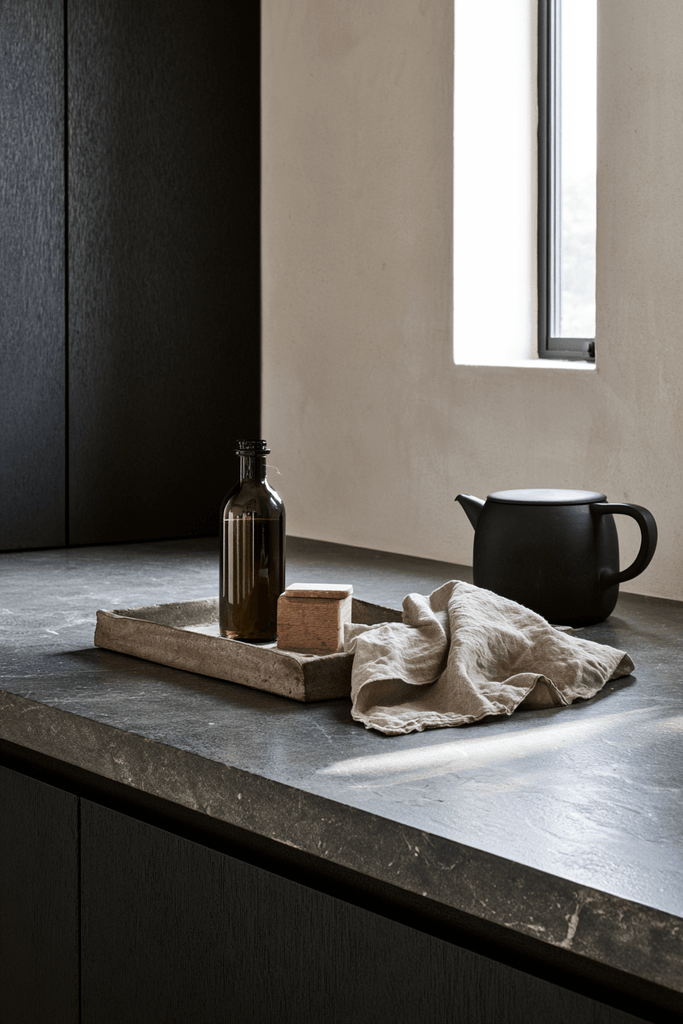
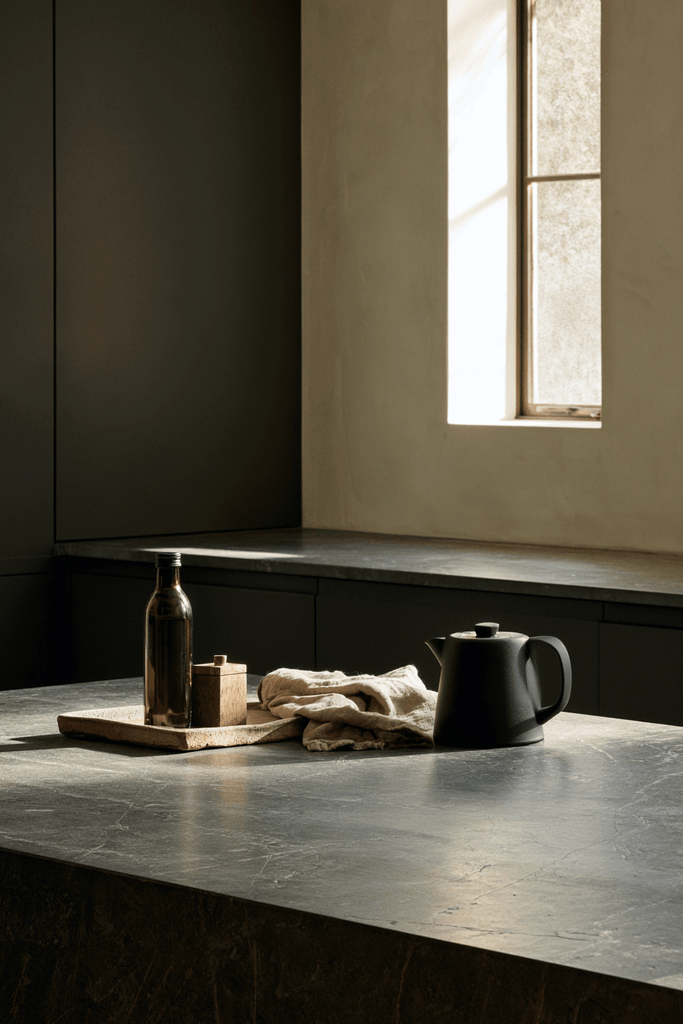
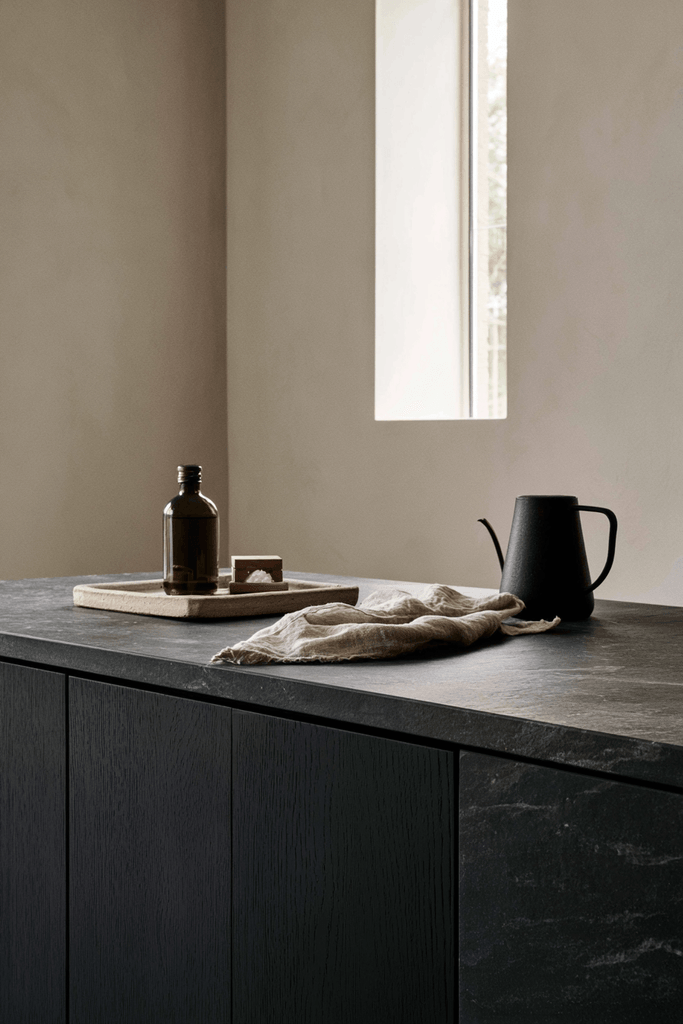
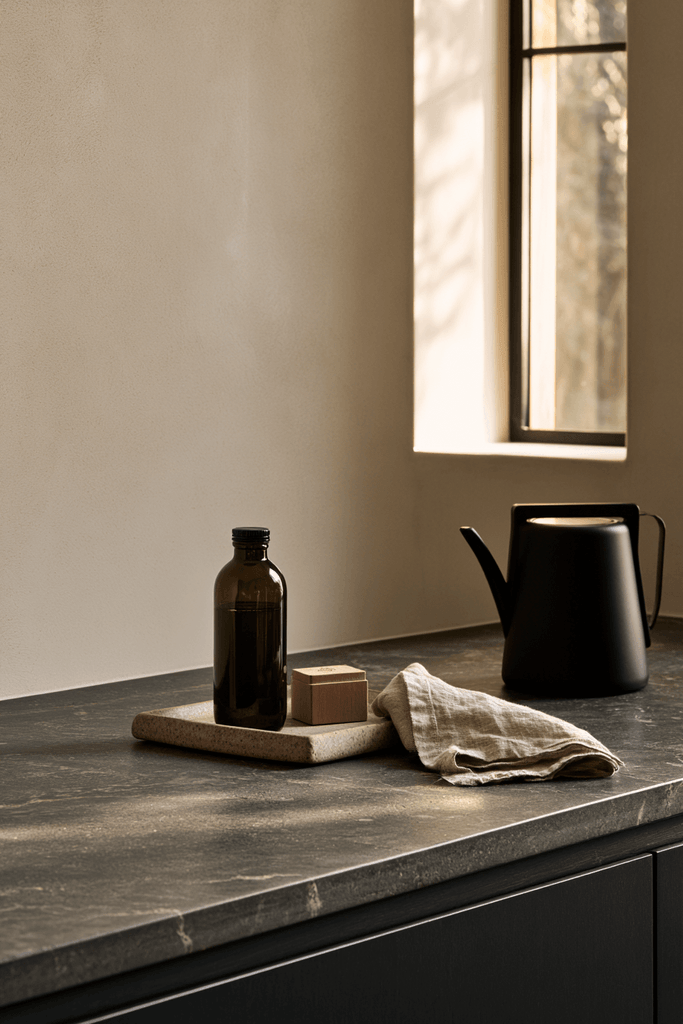
The Japanese wabi-sabi philosophy finds beauty in imperfection, impermanence, and simplicity — and it produces perhaps the most serene of all small kitchen counter organization approaches. A minimal ceramic tray holds just three objects: a single olive oil bottle, a small wooden salt box, and a linen dish towel folded with quiet precision. Beside them, a matte black kettle sits alone on a honed grey soapstone counter, its presence both functional and sculptural. Dark charcoal lower cabinets contrast with a light plaster wall and a narrow window admitting diffused, almost meditative natural light. Every surface is clear. Every object earns its place. This is counter organization at its most philosophical — a daily practice of editing, of choosing fewer things and experiencing them more fully.
Key Design Tips:
- Limit the counter to five objects maximum — including appliances. Everything else lives inside.
- Choose vessels and containers in matte finishes: matte black, unglazed ceramic, honed stone.
- A linen dish towel folded and displayed (rather than stuffed in a drawer) adds softness and warmth to a minimal counter.
- Soapstone counters develop a natural patina over time — embrace the aging as part of the wabi-sabi aesthetic.
Why These Small Kitchen Counter Organization Ideas Work
Each of the ten approaches explored in this article addresses the central challenge of small kitchen counter organization from a different creative and functional angle — and together they cover virtually every kitchen personality and lifestyle. The bamboo riser and Scandinavian tray both leverage the power of corralling: grouping items visually so that even a full counter reads as organized. The magnetic knife strip and galley built-ins demonstrate how vertical kitchen storage ideas and built-in kitchen organization can reclaim horizontal space entirely. The farmhouse canister set and cottage bread box show how decorative kitchen counter storage can be both practical and beautiful, turning everyday objects into a considered display.
The lazy Susan corner system and the industrial appliance garage tackle the most difficult counter zones — corners and appliance-heavy surfaces — with solutions that are as clever as they are stylish. The boho rattan arrangement and wabi-sabi ceramic tray prove that minimalist kitchen counter organization and natural material kitchen storage can coexist with genuine warmth and personality. Across all ten ideas, the consistent thread is intentionality: knowing which items deserve counter space, finding the right vessel or system to hold them, and leaving enough breathing room for the kitchen to feel calm rather than crowded.
Whether you are working with a tiny apartment kitchen, a narrow galley kitchen, or a compact urban kitchen, these ideas offer a starting point that can be adapted, mixed, and layered to suit your exact space and style.
Conclusion
The best small kitchen counter organization is the kind you barely notice — because everything is exactly where it should be, and nothing is where it shouldn’t. From the earthy warmth of a boho rattan tray to the architectural precision of a wabi-sabi ceramic display, each idea in this article proves that limited square footage is no barrier to a kitchen that feels intentional, functional, and genuinely beautiful. Start with one zone — the area beside the stove, the corner, the space next to the sink — and apply a single organizing principle: corral, go vertical, or edit down to essentials. Once you experience how much a well-organized counter transforms your daily kitchen routine, expanding the approach to the rest of the surface becomes the most natural next step. Your counter is small. The potential it holds is not.