10 Charming Small Vintage Kitchen Design Ideas to Transform Your Cooking Space
There is something profoundly comforting about a small vintage kitchen — a space that whispers stories of slow Sunday mornings, handwritten recipes, and the gentle clatter of well-loved cookware. In an era of sleek minimalism and clinical finishes, the vintage kitchen stands apart as a deliberate celebration of character, warmth, and imperfection. Far from being a design limitation, a compact footprint becomes an opportunity to layer texture, history, and personality into every square inch. Whether your heart belongs to the nostalgia of a 1950s pastel diner, the rustic soul of a farmhouse cottage, or the refined elegance of a Victorian townhouse, this curated collection of ten small vintage kitchen ideas proves that great design is never about size — it is about soul.
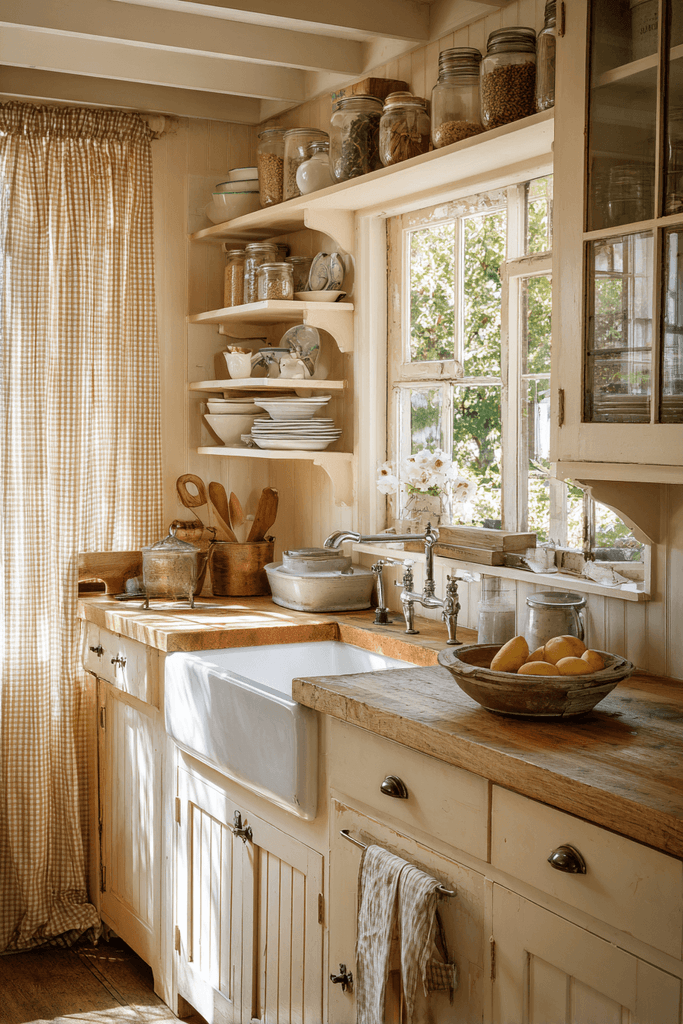
1. Shaker Charm with Morning Light and Open Shelving
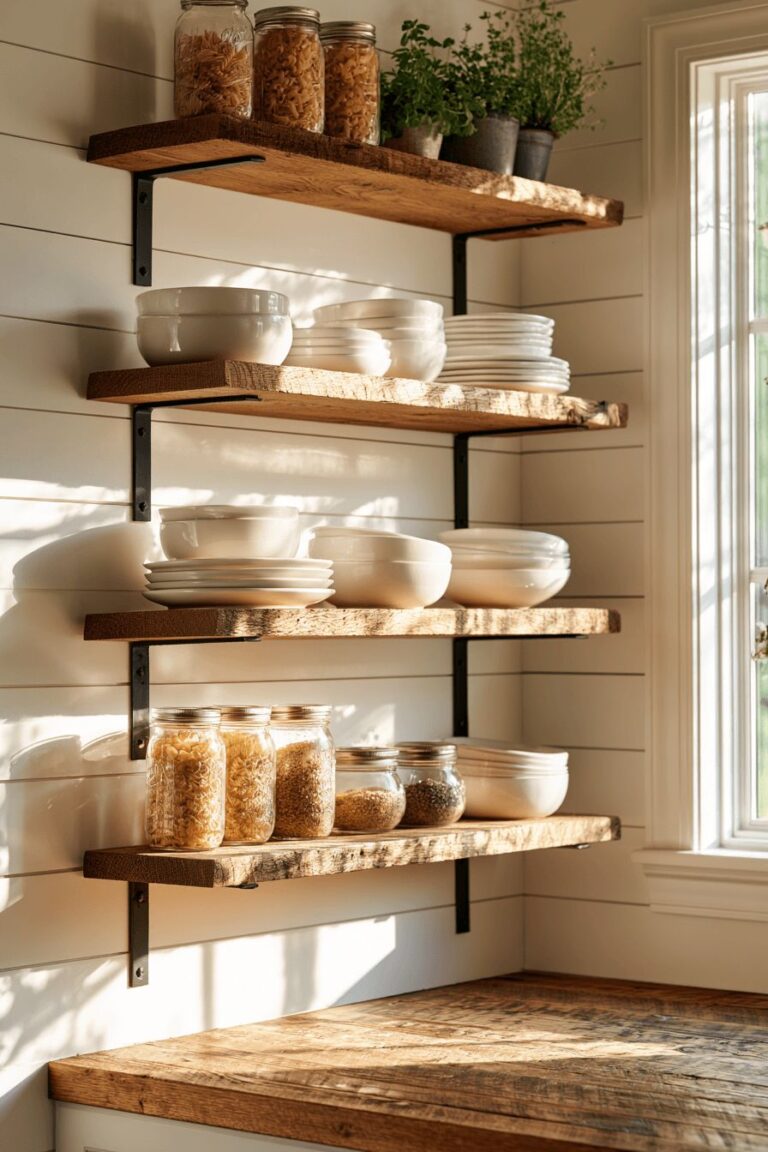
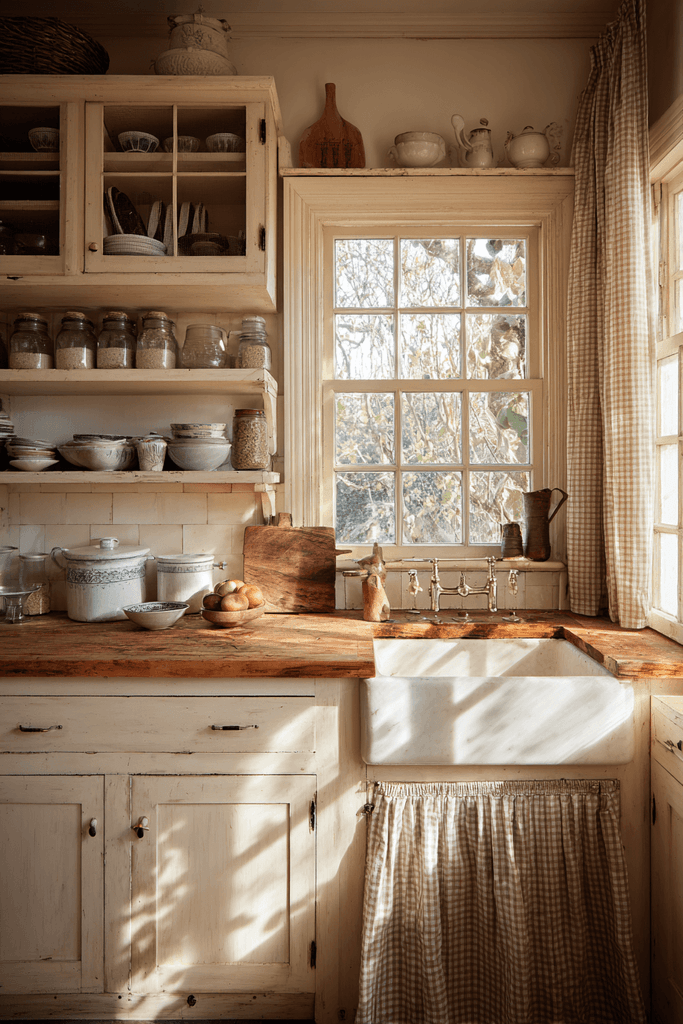
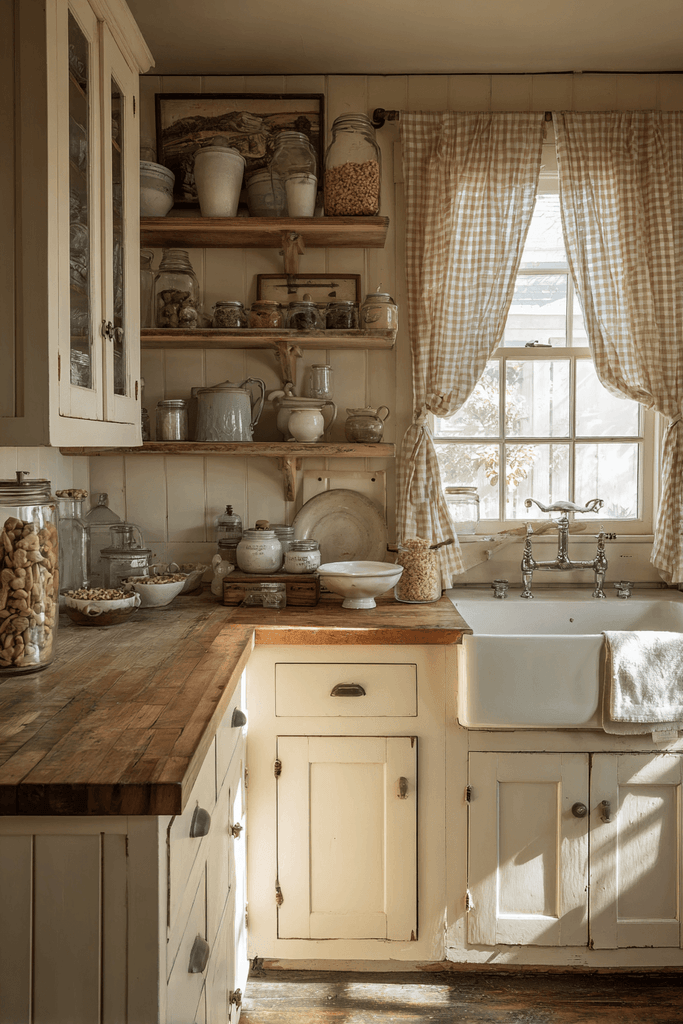
Step into a world of quiet, unhurried elegance where cream-painted shaker cabinets set the tone for a kitchen rooted in heritage craftsmanship. The upper glass-front panels offer a curated display of mismatched antique dishware — each piece a small artifact of domestic history. Open wooden shelves carry mason jars filled with dried goods alongside well-seasoned cast iron cookware, their dark surfaces telling the story of a thousand meals. A farmhouse apron sink in aged white porcelain anchors the room beneath a cotton gingham curtain that filters the morning light into something golden and gentle. The butcher block countertops bear the grain and wear of natural wood, transforming everyday cooking into an almost meditative ritual.
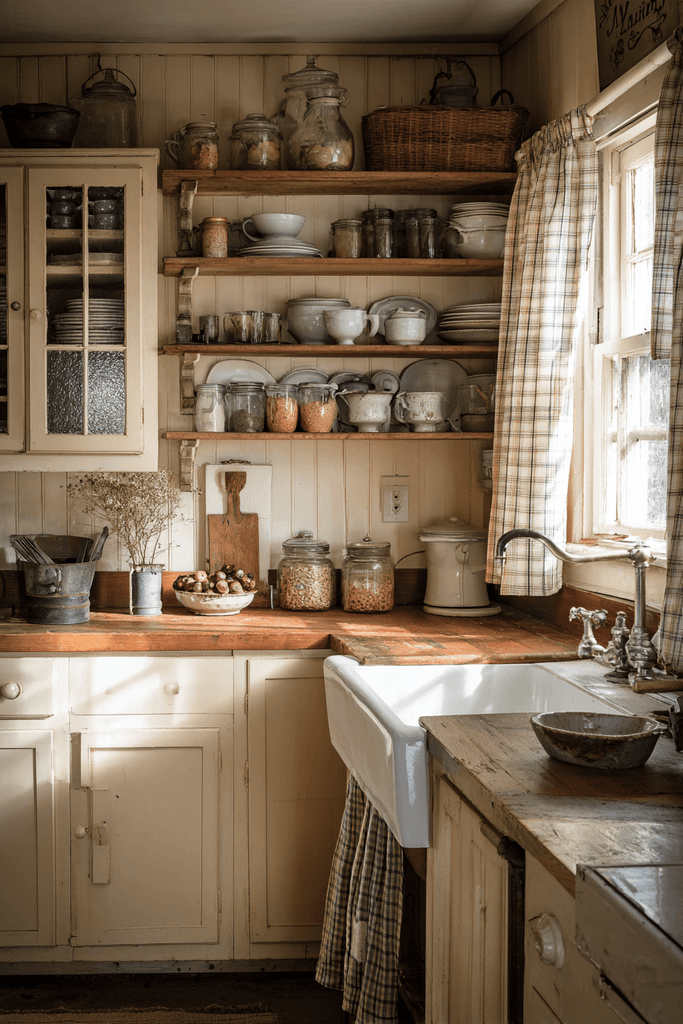
Key Design Tips:
- Choose shaker-style cabinets in warm cream or off-white for a timeless vintage foundation.
- Display heirloom or mismatched dishware behind glass-front uppers to add curated personality.
- Invest in a genuine farmhouse apron sink — it is the single most impactful vintage fixture in any small kitchen.
- Let natural wood grain show on butcher block surfaces rather than sealing them to a high gloss.
- Use cotton or linen textiles at windows to soften light without blocking it.
2. The 1950s Pastel Mint Revival
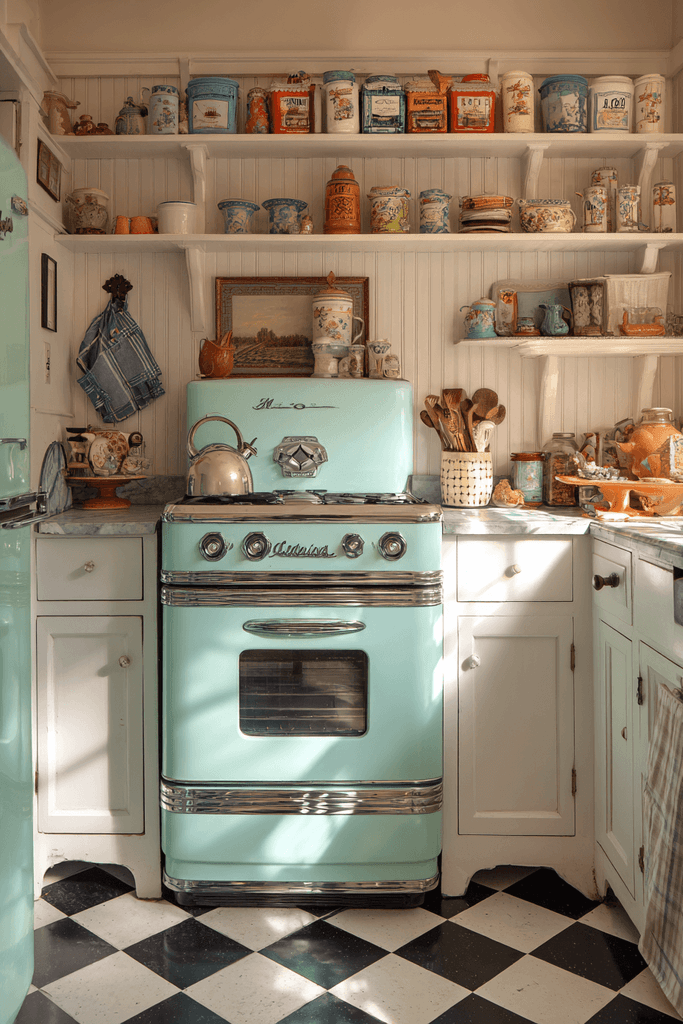
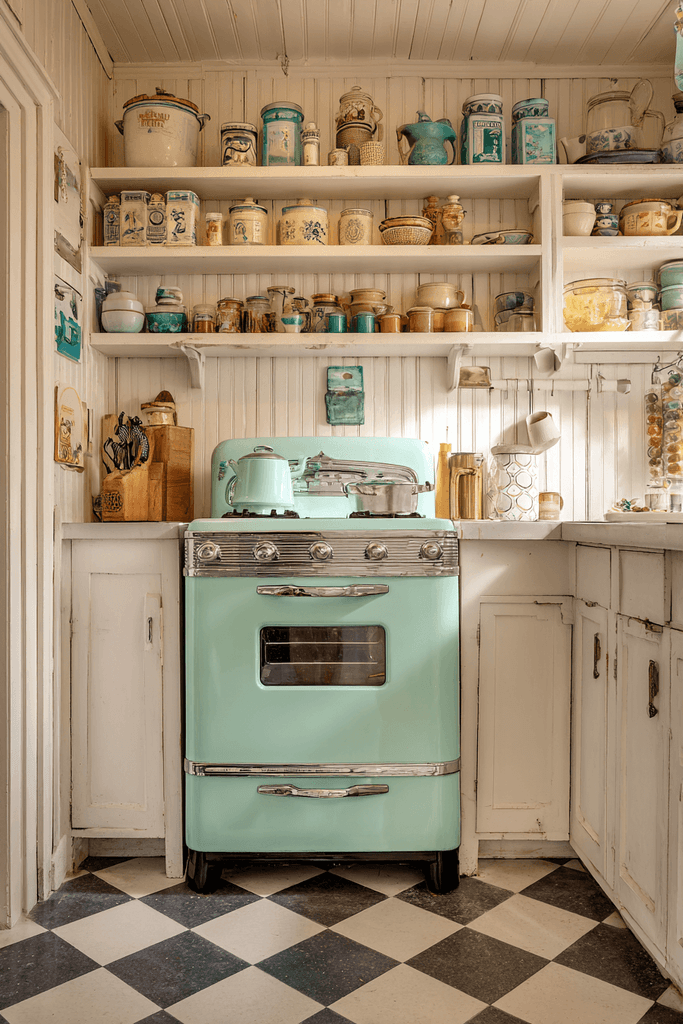
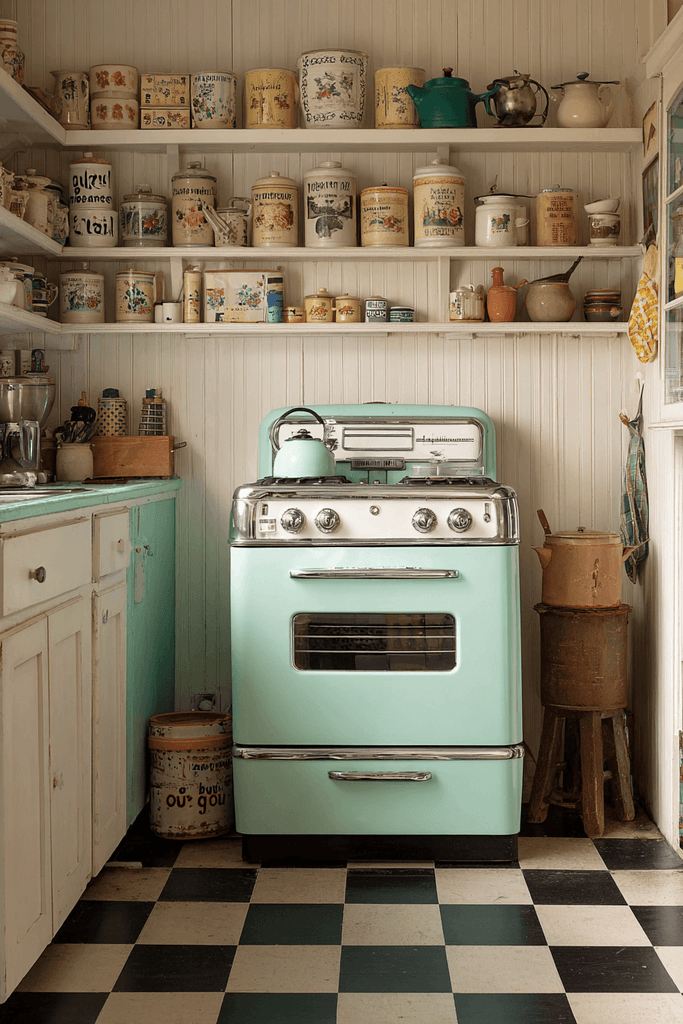
Nothing commands nostalgic attention quite like a restored 1950s pastel mint green enamel stove positioned proudly as the kitchen’s centerpiece. Its chrome details catch the afternoon sun with a cheerful flash, turning an appliance into a sculpture. Beadboard paneling in aged white rises along the walls, framing open shelving that holds vintage ceramic canisters and enamelware in complementary pastels. Underfoot, a checkerboard black and white linoleum floor with subtle authentic wear grounds the retro palette with graphic confidence. A collection of handmade pottery sits at ease among the vintage finds, softening the diner-inspired aesthetic into something more personal and lived-in.
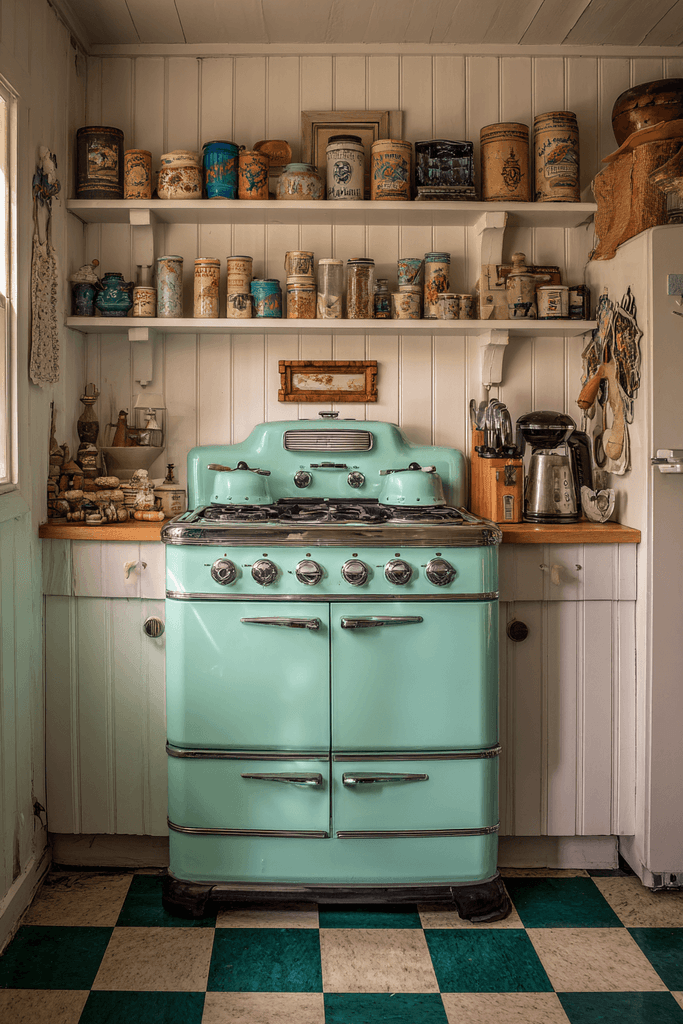
Key Design Tips:
- Source a restored or reproduction vintage enamel stove as your hero piece — it justifies the entire design direction.
- Pair pastel appliances with aged white beadboard to avoid the look becoming costume-like.
- Checkerboard flooring in linoleum is both period-authentic and extremely practical for small kitchens.
- Build a curated collection of enamelware and ceramic canisters gradually for an authentic feel.
- Keep overhead lighting warm to prevent the pastel palette from reading as cold.
3. Exposed Brick and Distressed Sage Green
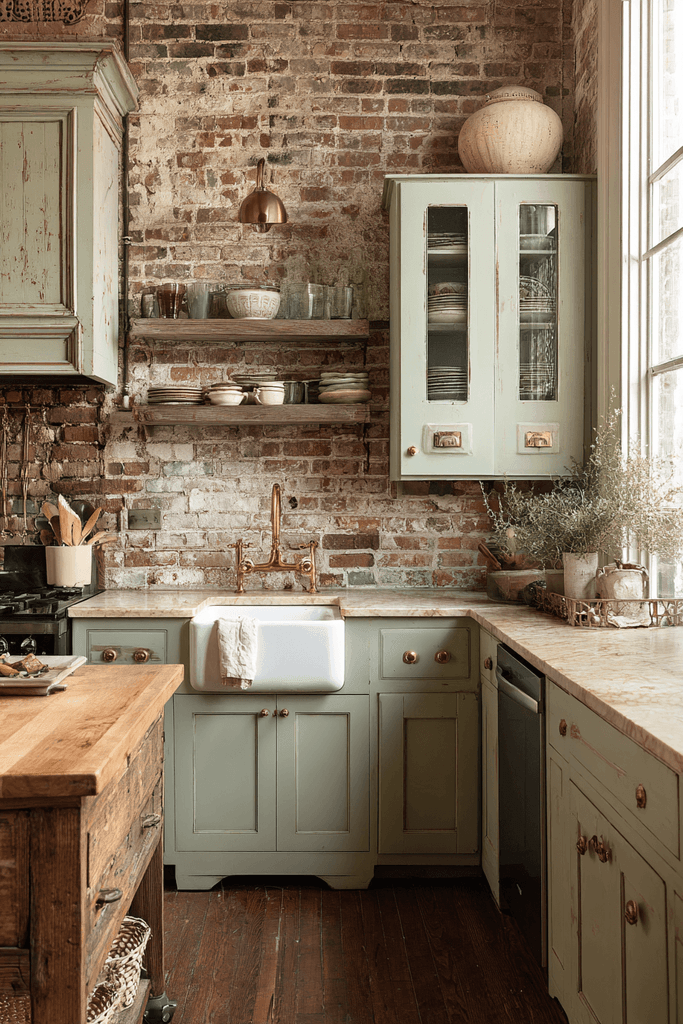
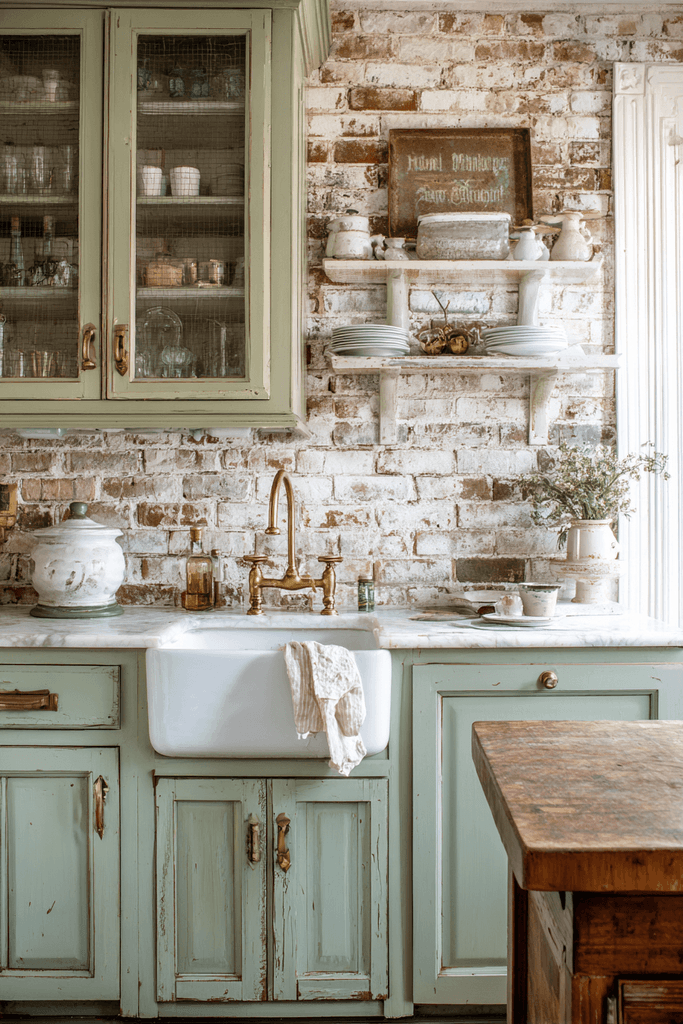
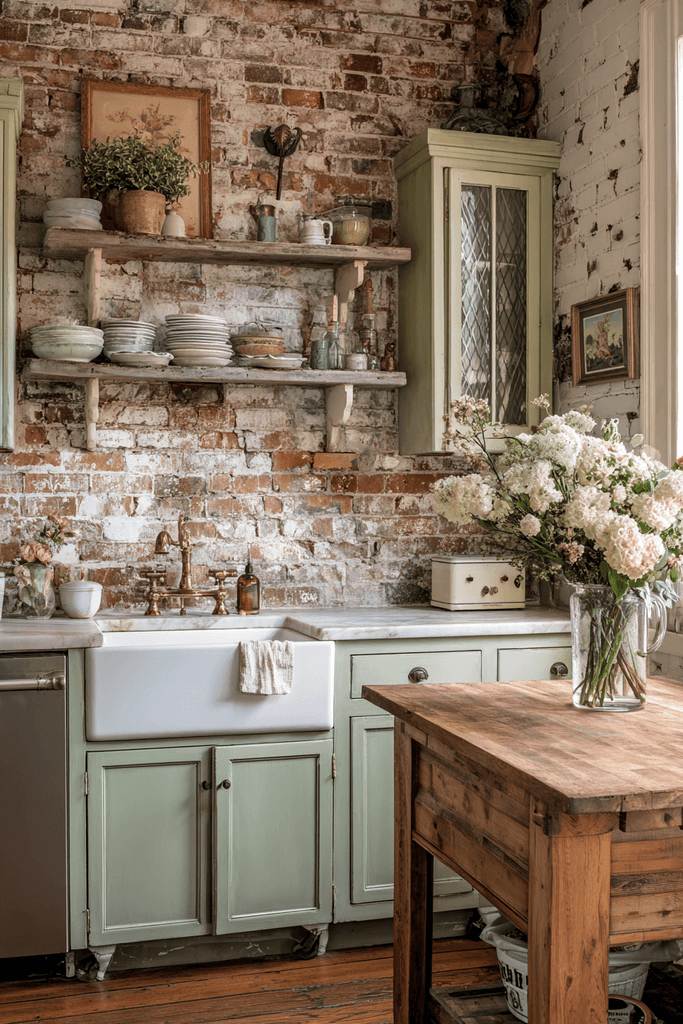
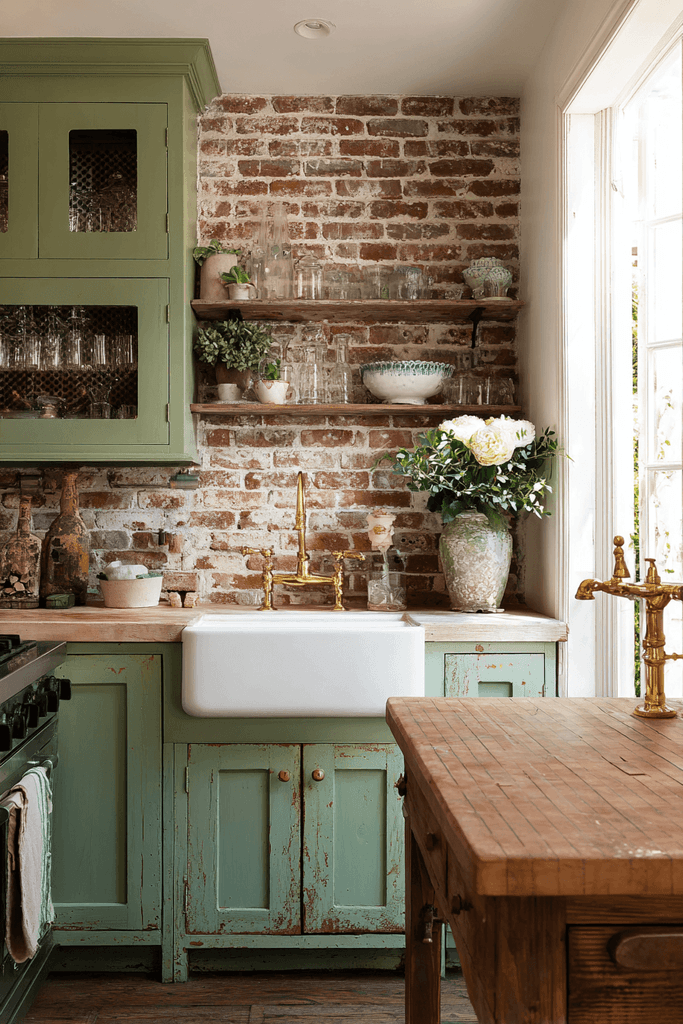
Raw, honest, and utterly beautiful — this small vintage kitchen draws its energy from the tension between rough and refined. The original exposed brick backsplash behind a farmhouse apron sink creates a backdrop of unpolished drama, offset by the gentle femininity of distressed sage green cabinets with chicken wire inserts and edges that have softened beautifully over time. A brass gooseneck faucet with visible patina bridges both worlds, its aged warmth echoing the tones of the brick and the worn wood. A butcher block island on casters adds flexible prep space without committing to a permanent footprint — a smart, adaptable choice for compact layouts.
Key Design Tips:
- Expose original brick where possible — if none exists, consider thin brick veneer for authenticity.
- Distress cabinet paint at natural wear points — edges, corners, around hardware — for believable aging.
- Chicken wire cabinet inserts offer visual lightness while maintaining the rustic vintage spirit.
- Choose unlacquered or lightly lacquered brass fixtures to develop genuine patina over time.
- A caster-mounted island is one of the most practical investments in a small vintage kitchen.
4. Floor-to-Ceiling Reclaimed Pine and Portuguese Tiles
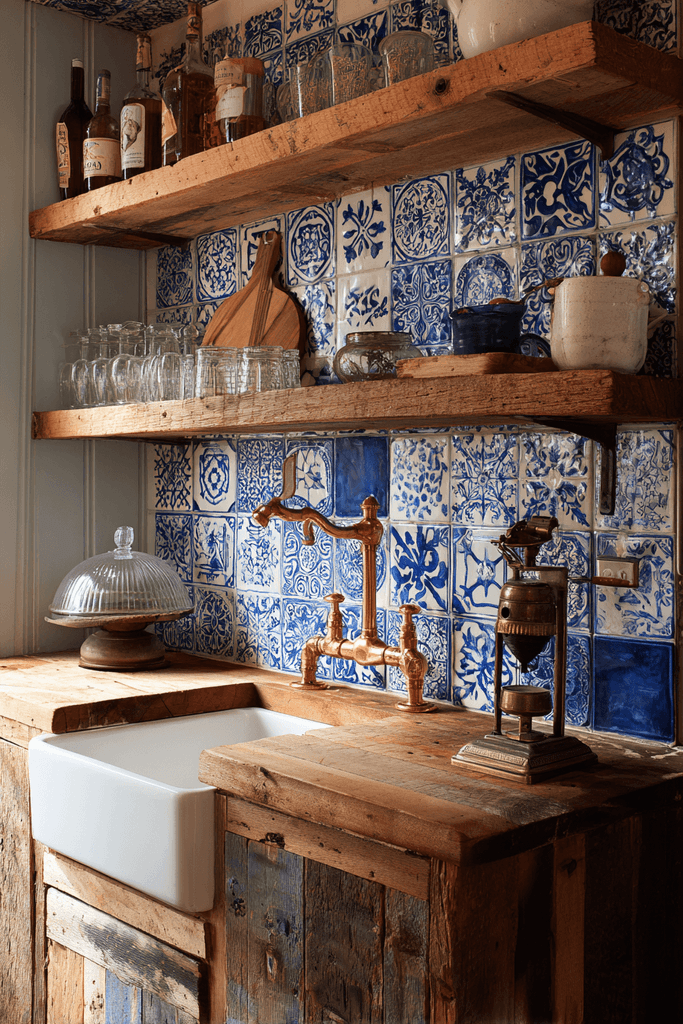
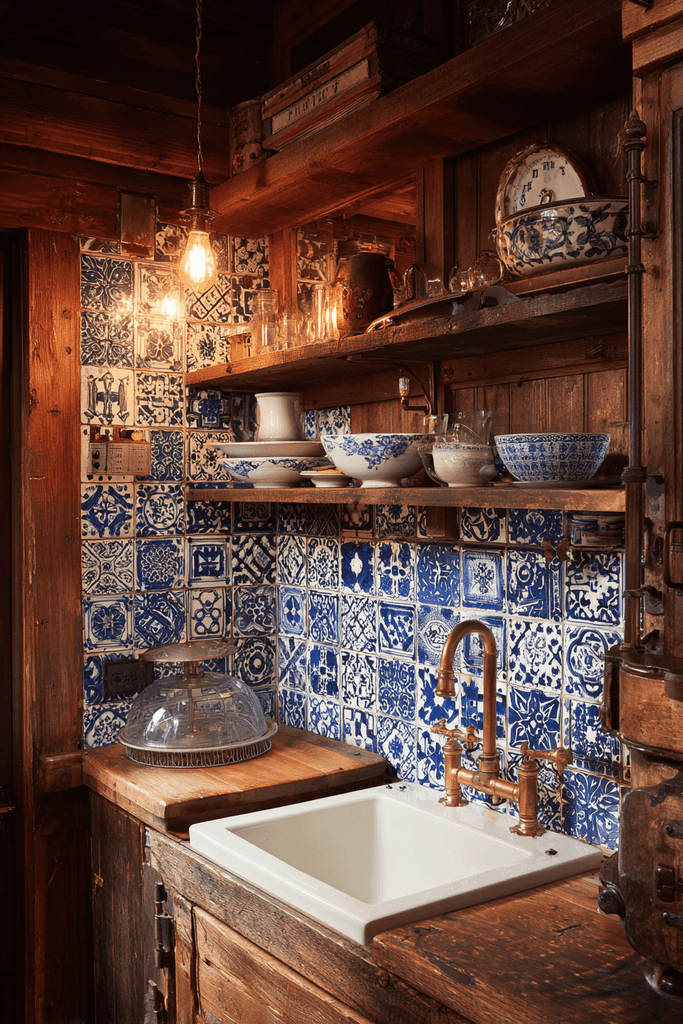
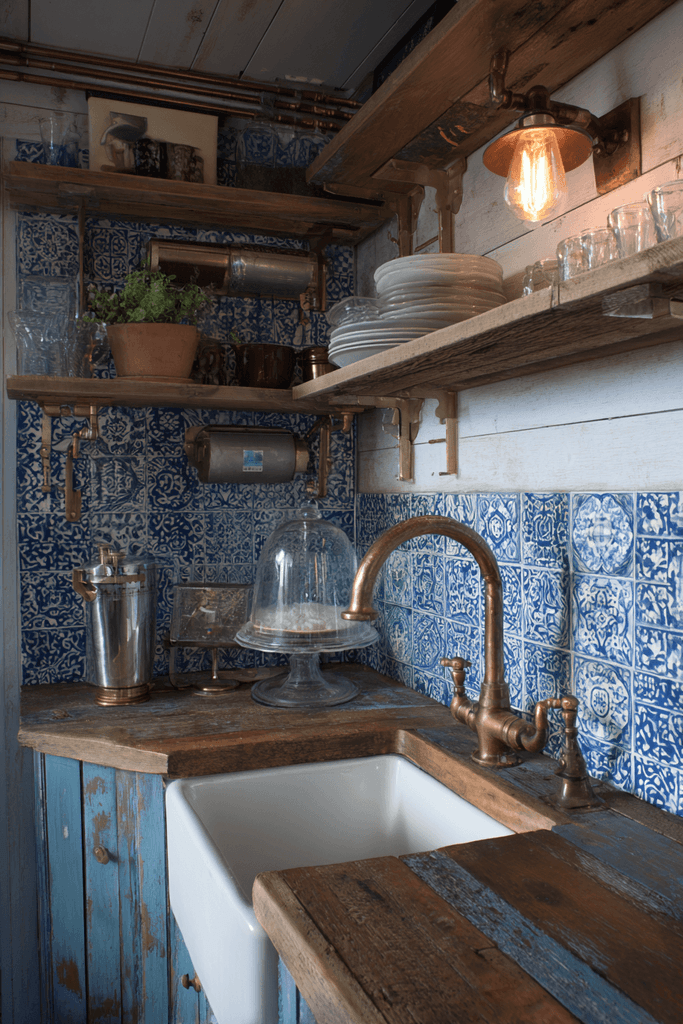
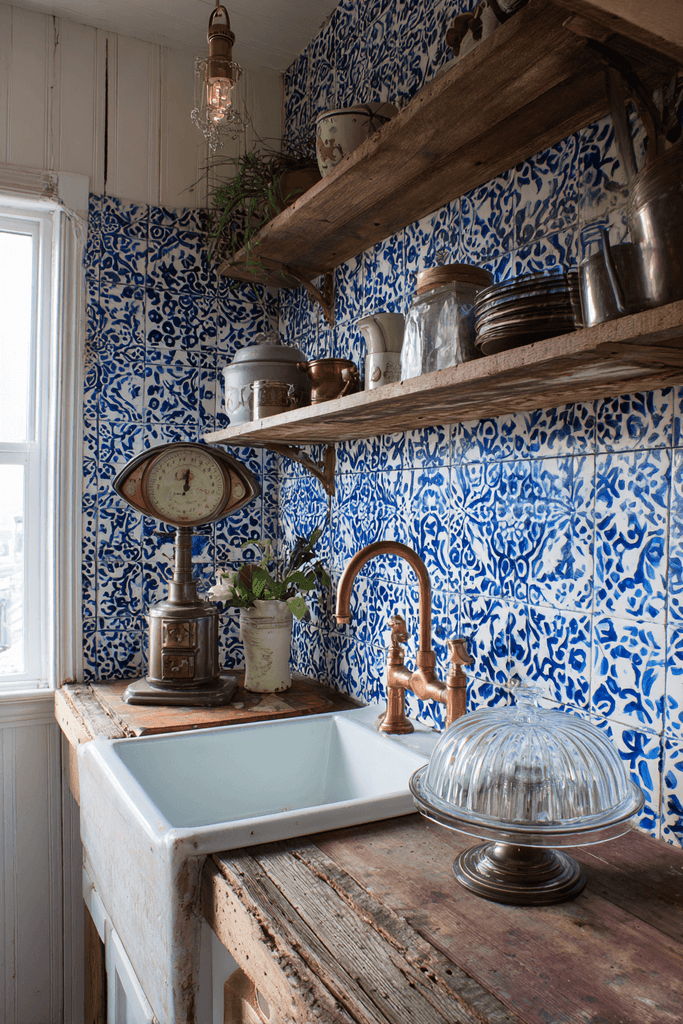
This tiny kitchen proves that maximalism and small spaces are not opposites. Floor-to-ceiling open shelving crafted from reclaimed pine — with visible nail holes and the beautiful color variation of aged timber — transforms storage into display. Hand-painted blue and white Portuguese tiles form a backsplash of remarkable artisanal character, each tile slightly different from its neighbor. A single-basin enamel sink sits beneath intentionally exposed copper pipes, turning the mechanical into the decorative. An antique scale and a glass dome cake stand complete the vignette, adding decorative function — objects that earn their place both visually and practically.
Key Design Tips:
- Reclaimed pine shelving brings warmth and history that no new timber can replicate.
- Hand-painted Portuguese or Delft tiles make the backsplash the visual hero of the room.
- Leave pipes exposed and polish them — copper piping is genuinely beautiful design material.
- Curate open shelves with a mix of functional and purely decorative vintage objects.
- An antique scale or bread box adds period-appropriate charm while serving a purpose.
5. Forest Green Cabinets with Marble and Cast Iron
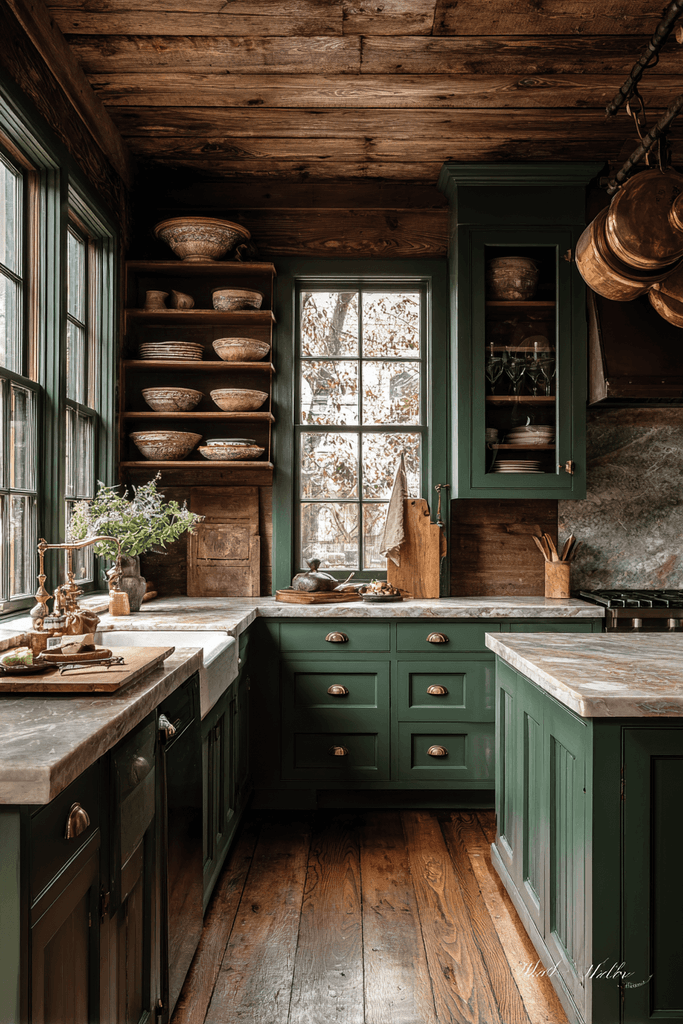
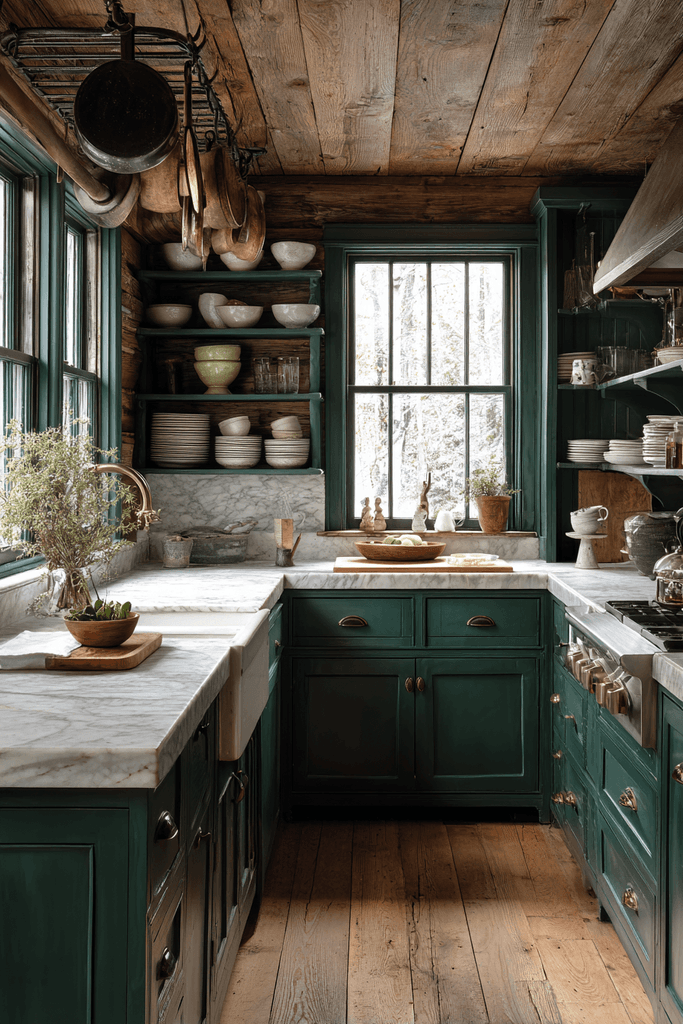
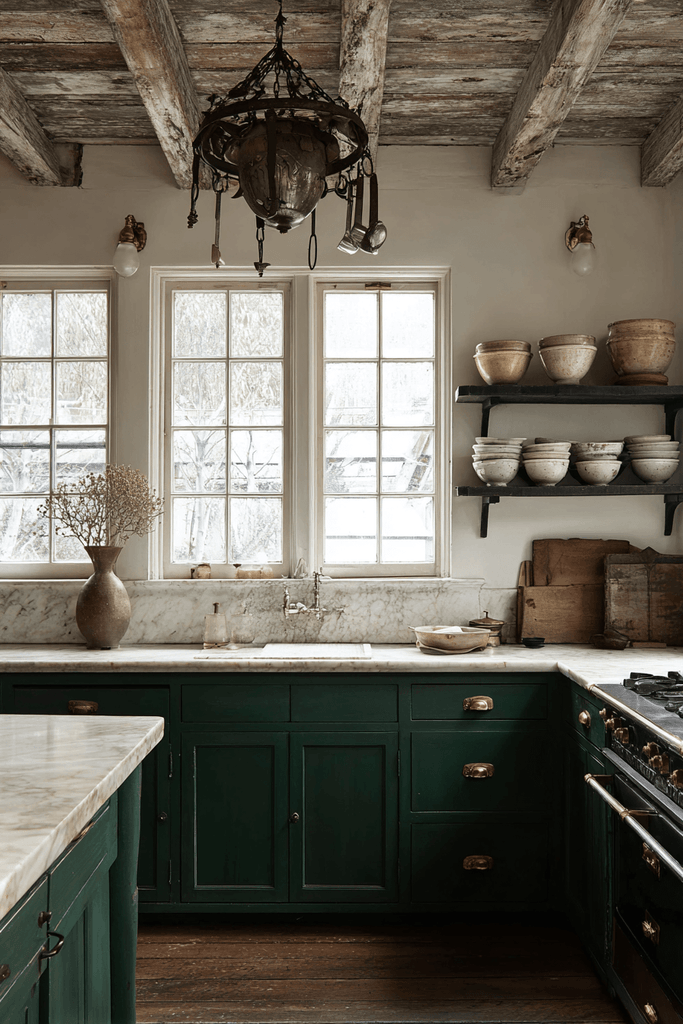
Sophistication and heritage meet in a kitchen defined by deep forest green lower cabinets with aged brass cup pulls, stacked vintage mixing bowls visible behind open fronts, and a marble countertop that tells its own story through natural veining and gentle etching accumulated over decades of use. Above, a tongue-and-groove ceiling hosts a cast iron pot rack from which cookware hangs with quiet, functional pride. Multi-pane windows deliver soft natural light that moves across the marble’s surface and catches the warm undertones in the aged brass. This kitchen feels less like a designed space and more like one that simply evolved into elegance.
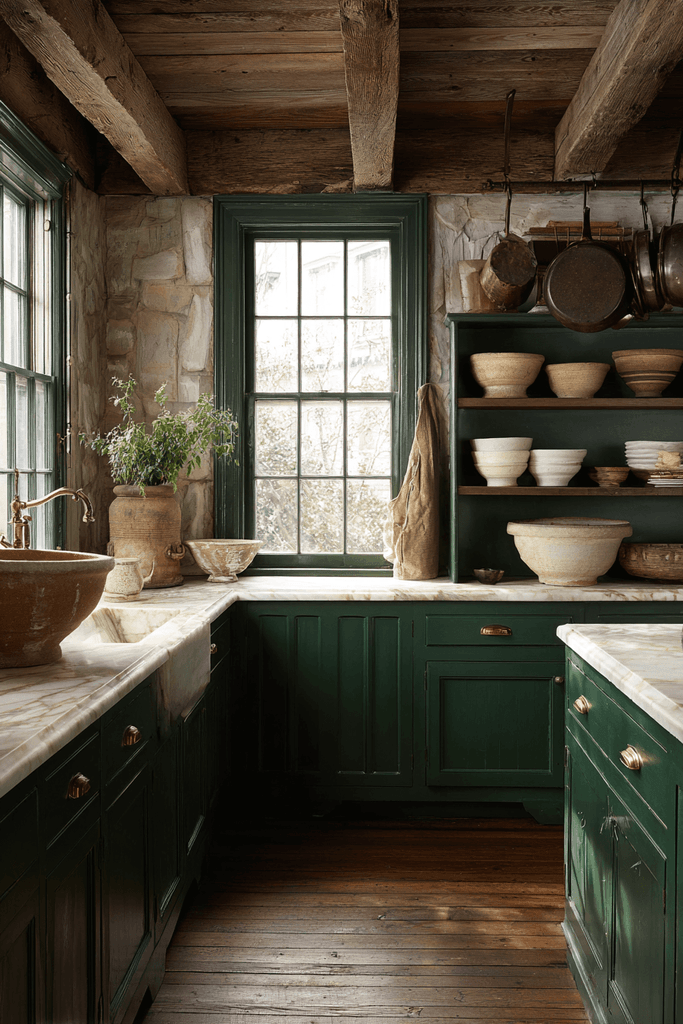
Key Design Tips:
- Deep, saturated cabinet colors like forest green or navy give small vintage kitchens a rich, grounded presence.
- Aged brass cup pulls are period-appropriate and develop character beautifully over years of use.
- A ceiling-mounted pot rack frees cabinet space and adds visual height to a compact kitchen.
- Choose marble with visible veining — perfection reads as modern; character reads as vintage.
- Multi-pane windows in wood frames reinforce the heritage architectural language throughout.
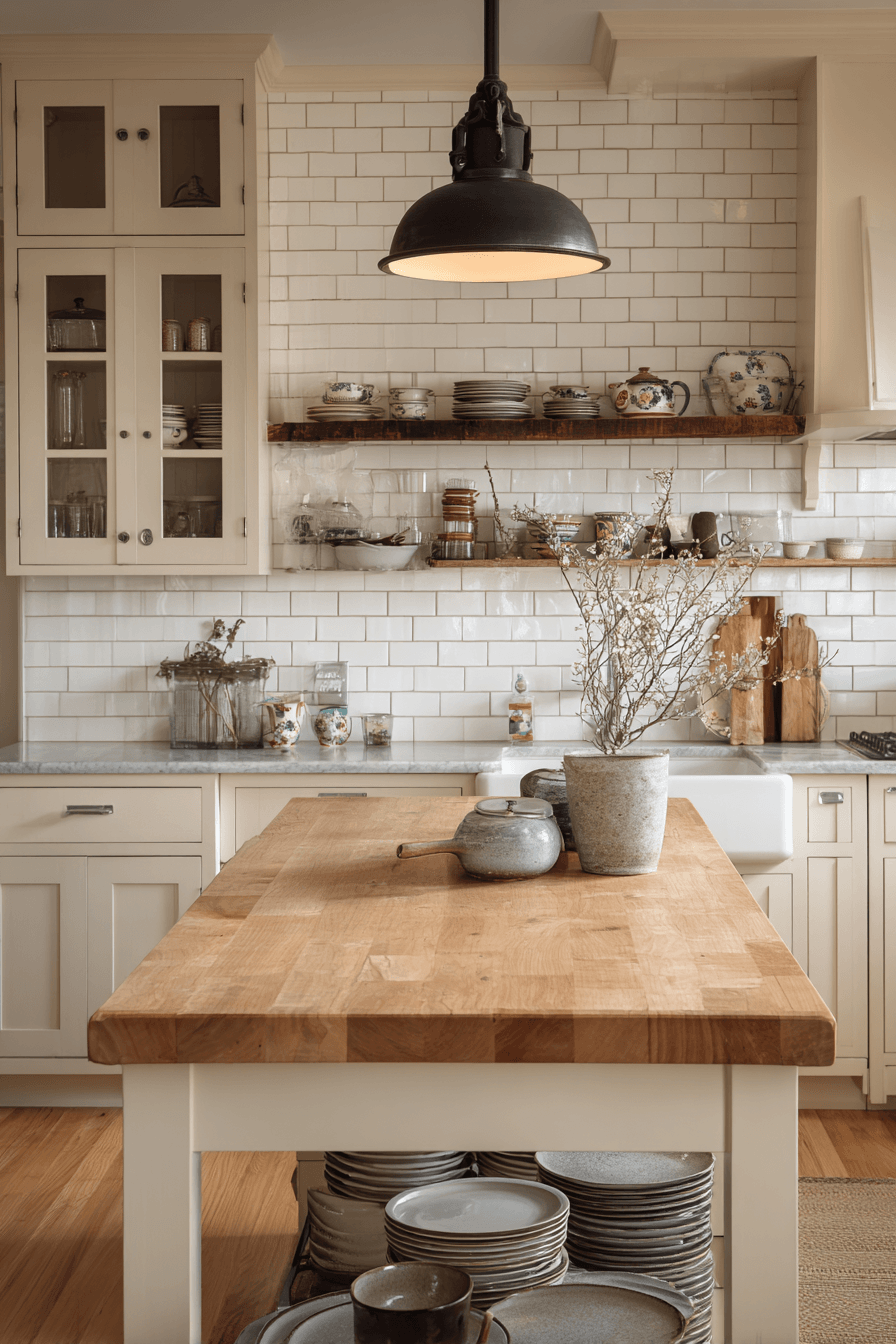
6. Schoolhouse Pendant and Transferware Display
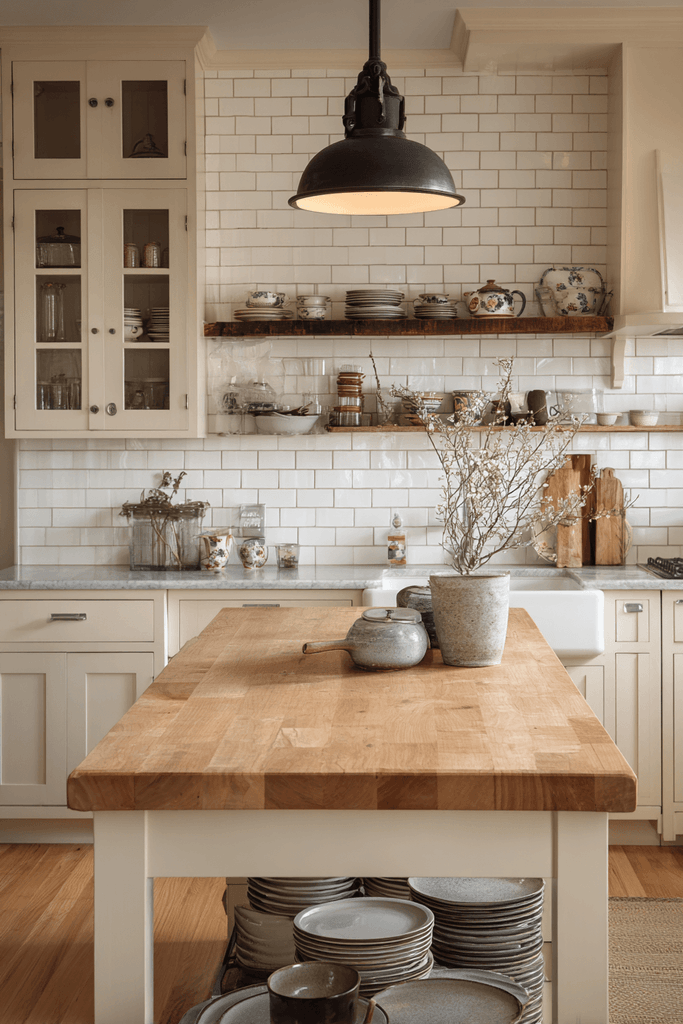
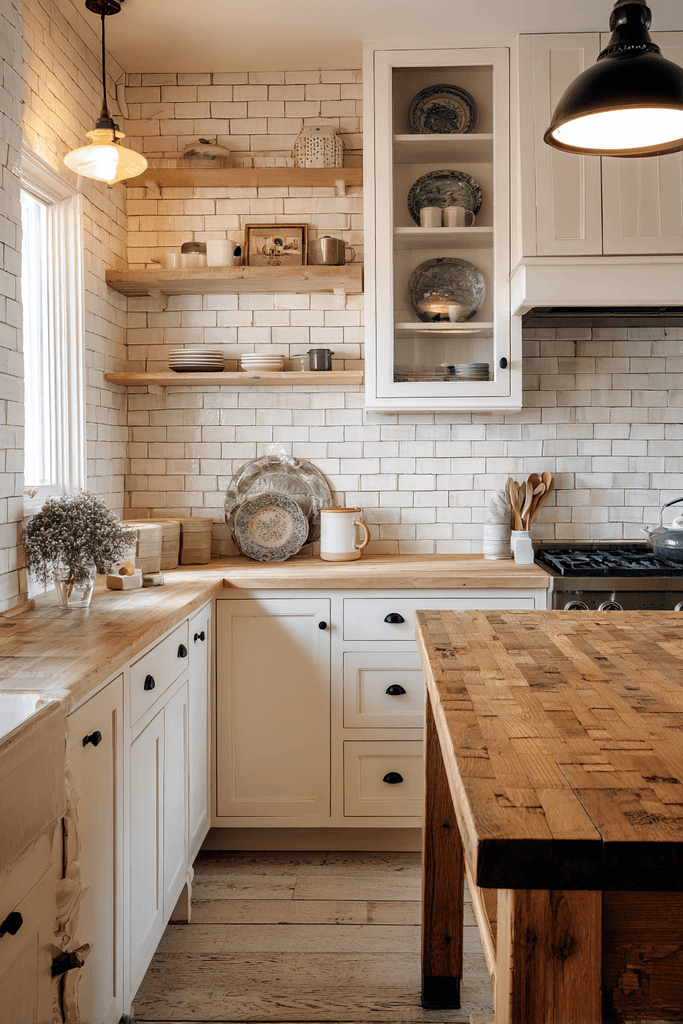
Livable authenticity is the defining quality of this charming small kitchen, where a rolling maple butcher block island bears the knife marks and oil seasoning of genuine use. Open-front cabinets display vintage transferware plates and mismatched teacups in an arrangement that looks collected rather than staged. The backsplash features handmade subway tiles in creamy off-white with slight surface irregularity that catches the light differently at every hour. Overhead, a matte black schoolhouse pendant delivers warm, focused illumination — a classic form that complements rather than competes with the vintage surroundings.
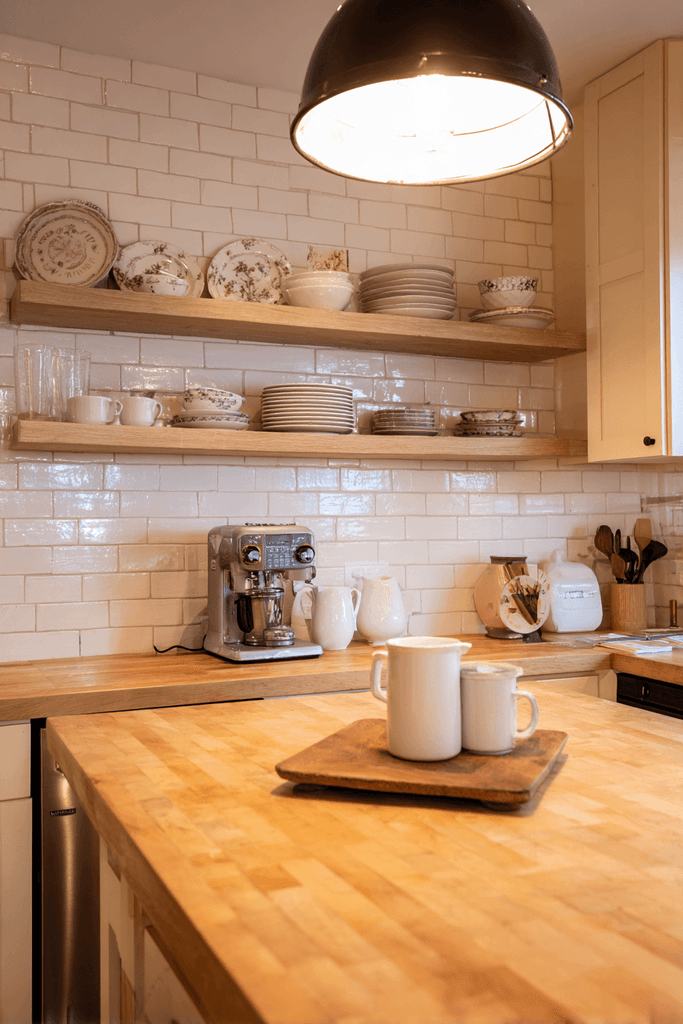
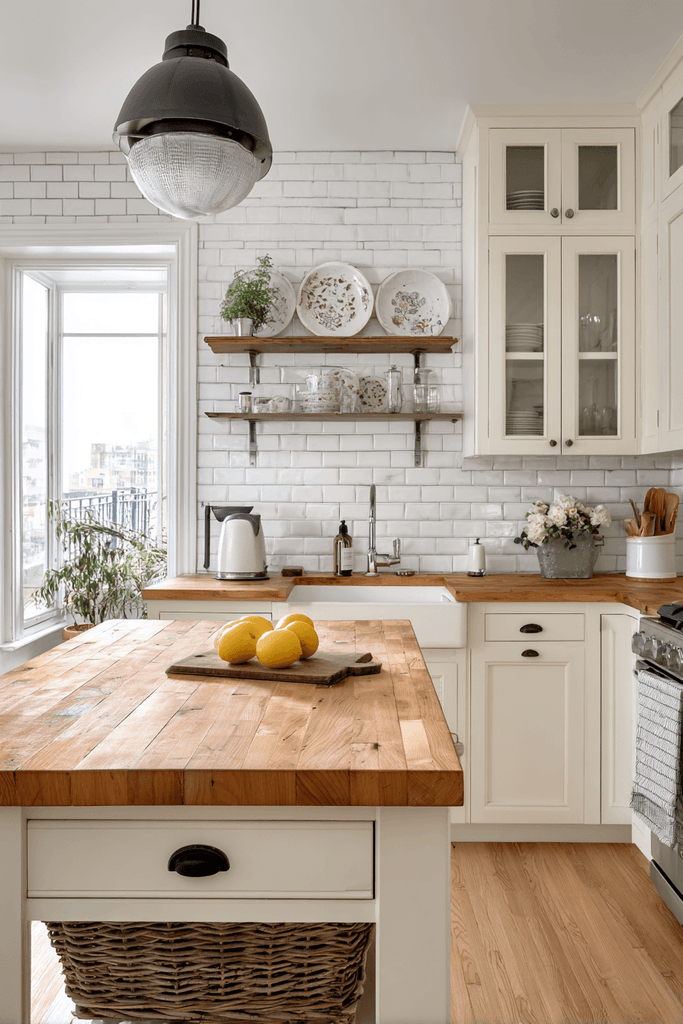
Key Design Tips:
- Embrace knife marks and seasoning on butcher block — they are the marks of a working kitchen, not damage.
- Transferware and mismatched china displayed openly communicates taste and history simultaneously.
- Specify handmade subway tiles rather than machine-perfect ones for genuine vintage texture.
- The schoolhouse pendant is one of the most versatile vintage lighting forms for small kitchens.
- Roll the island out of the way when needed — flexibility matters enormously in compact spaces.
7. Victorian Verticality and Wrought Iron Baker’s Rack
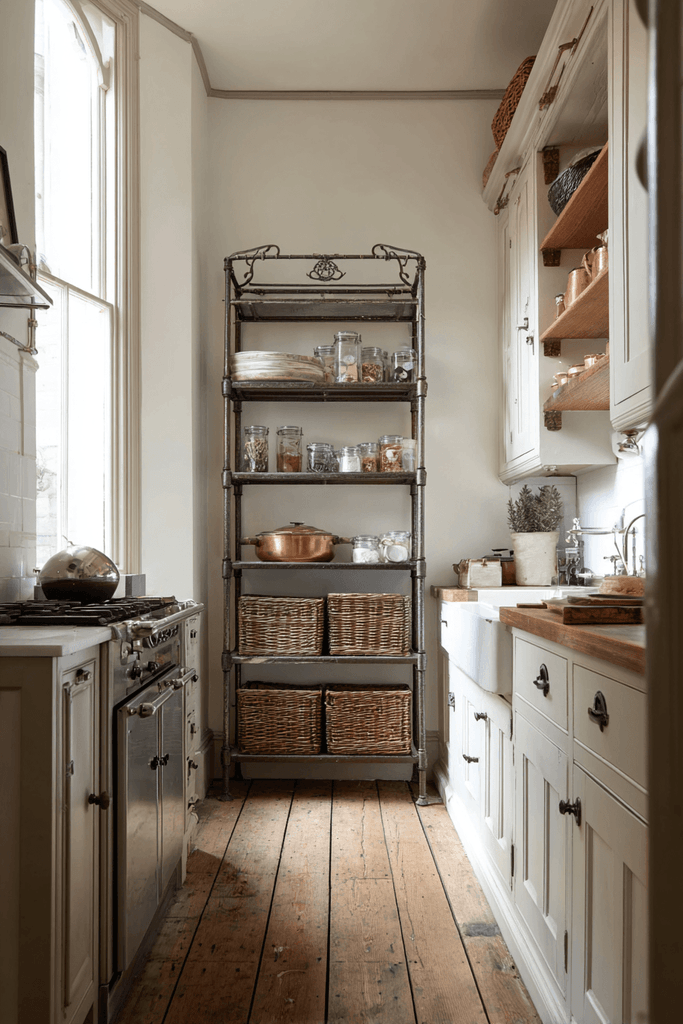
In a narrow Victorian row house kitchen, the design solution is always vertical. Ceiling-height antique white cabinets with beaded trim and original iron hardware draw the eye upward, making the space feel dramatically taller. A freestanding wrought iron baker’s rack introduces a sculptural quality while holding copper pots, wicker baskets, and rows of preserves jars with effortless practicality. Original pine floorboards with natural patina run the length of the space, their slight gaps and surface variation adding warmth underfoot. A transom window delivers beautifully balanced natural light that highlights the vertical ambition of every design decision.
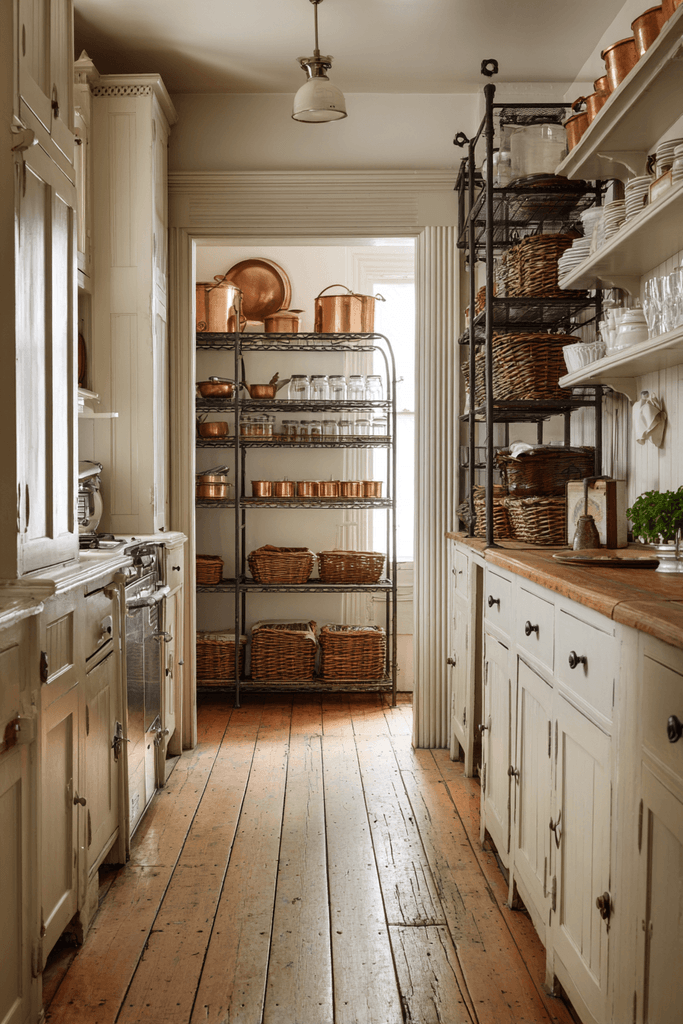
Key Design Tips:
- In narrow kitchens, prioritize ceiling-height storage to maximize capacity without crowding the floor.
- A wrought iron baker’s rack is a period-perfect freestanding storage solution with enormous visual character.
- Preserve and restore original pine floorboards — they are irreplaceable once gone.
- Beaded cabinet trim is a small but important Victorian-era detail worth preserving or replicating.
- Transom windows provide light without sacrificing wall storage space.
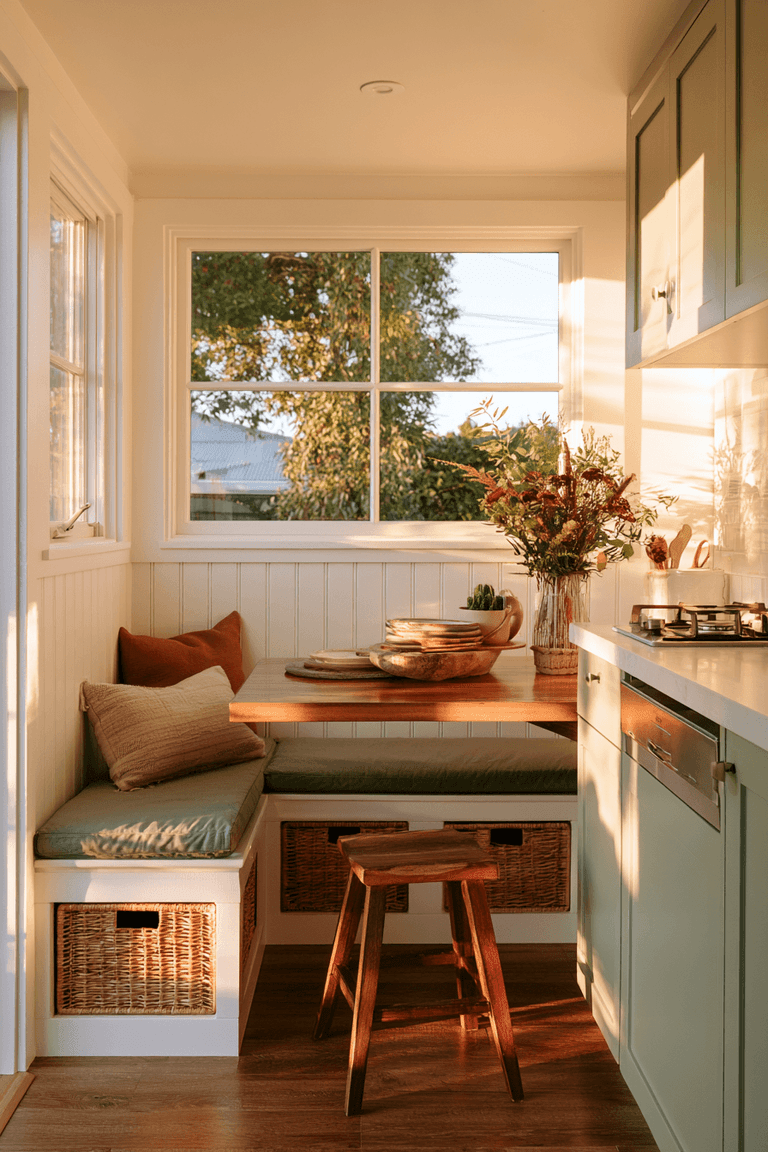
8. The Integrated Breakfast Nook with Retro Refrigerator
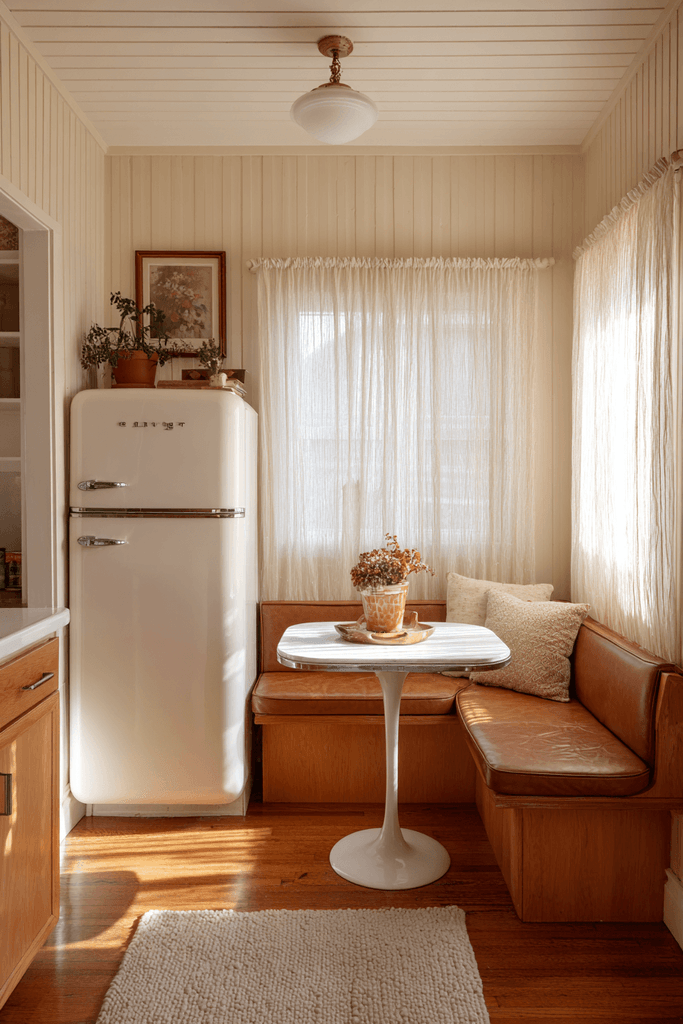
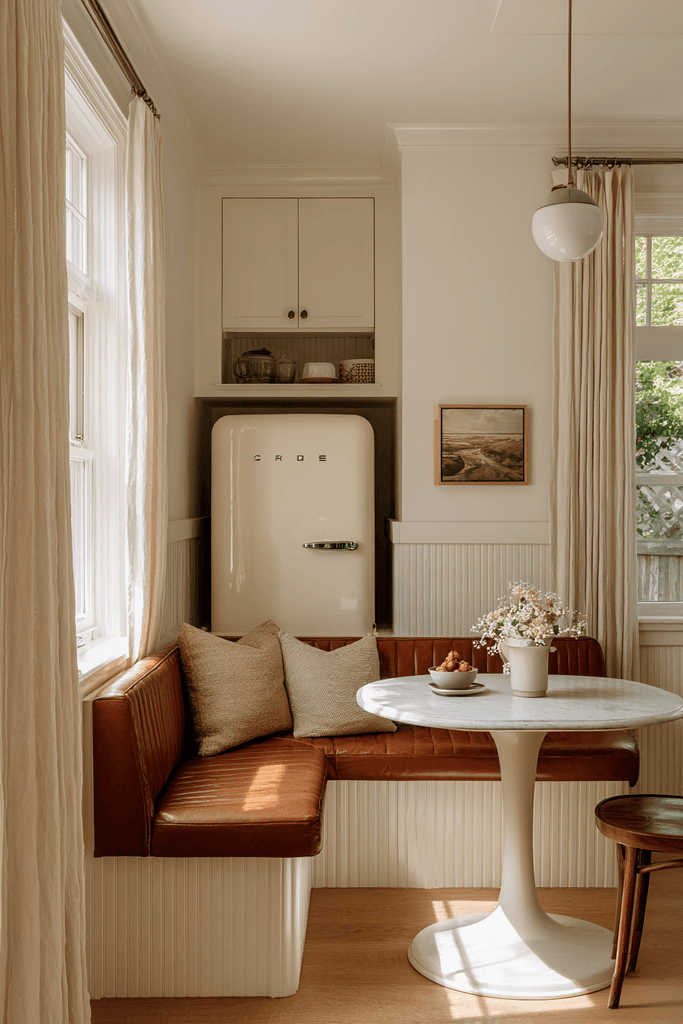
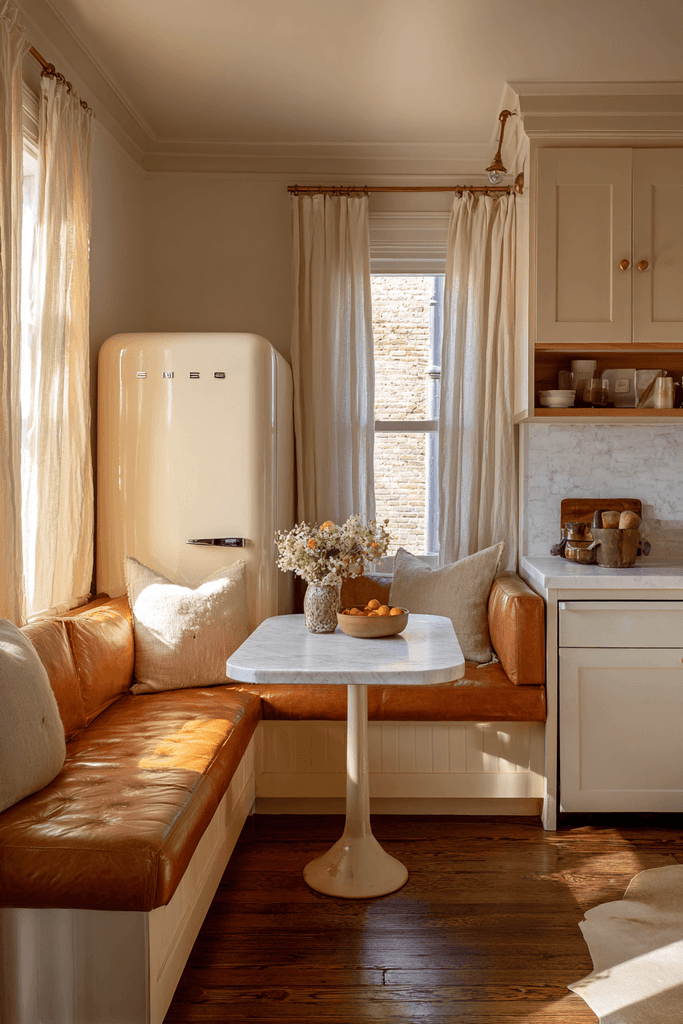
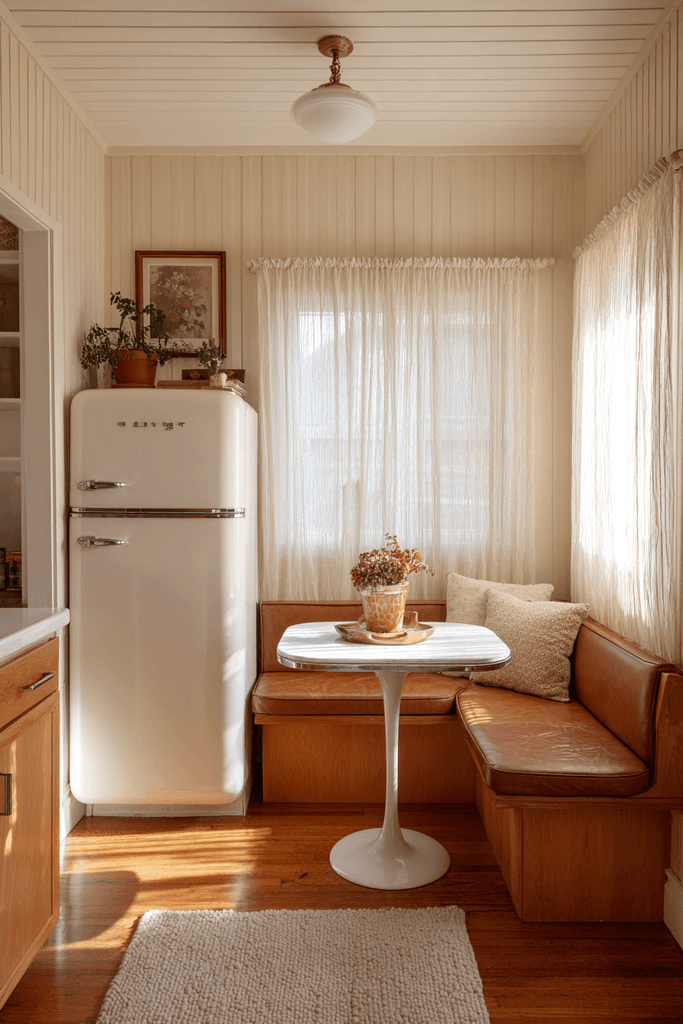
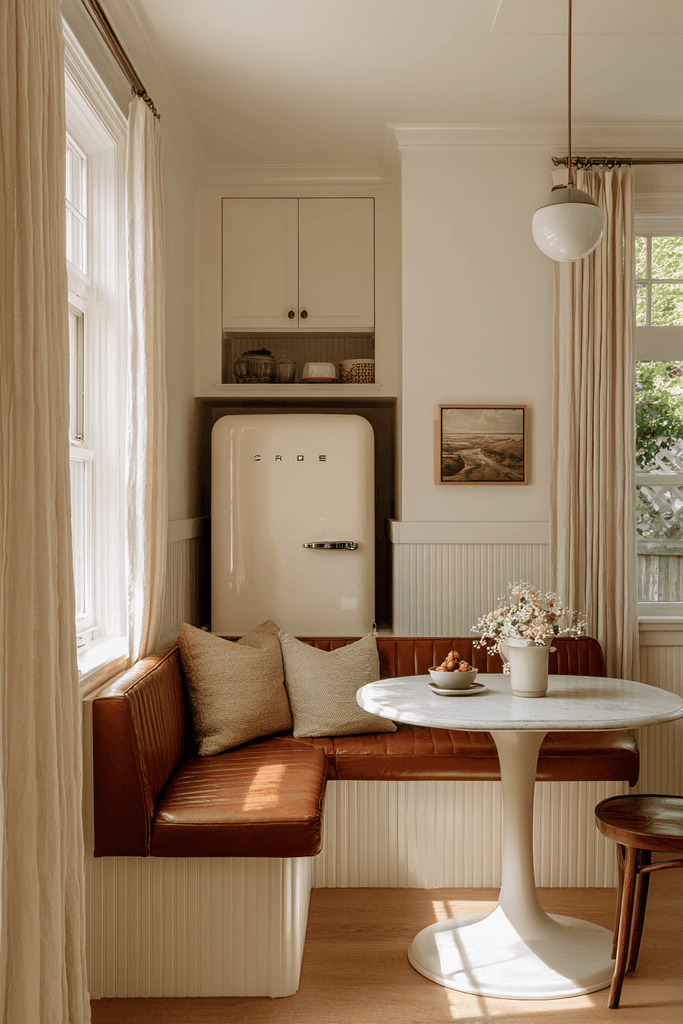
A small vintage kitchen becomes a complete domestic world when a built-in breakfast nook is incorporated into the layout. A worn cognac leather banquette curves around a pedestal table with an original white enamel top — a combination that is at once humble and quietly beautiful. Tongue-and-groove wainscoting in warm cream wraps the lower walls, and a retro rounded refrigerator sits flush in a dedicated alcove as if it has always belonged there. Golden hour light through sheer linen curtains creates an atmosphere so warm and complete that leaving the kitchen becomes genuinely difficult.
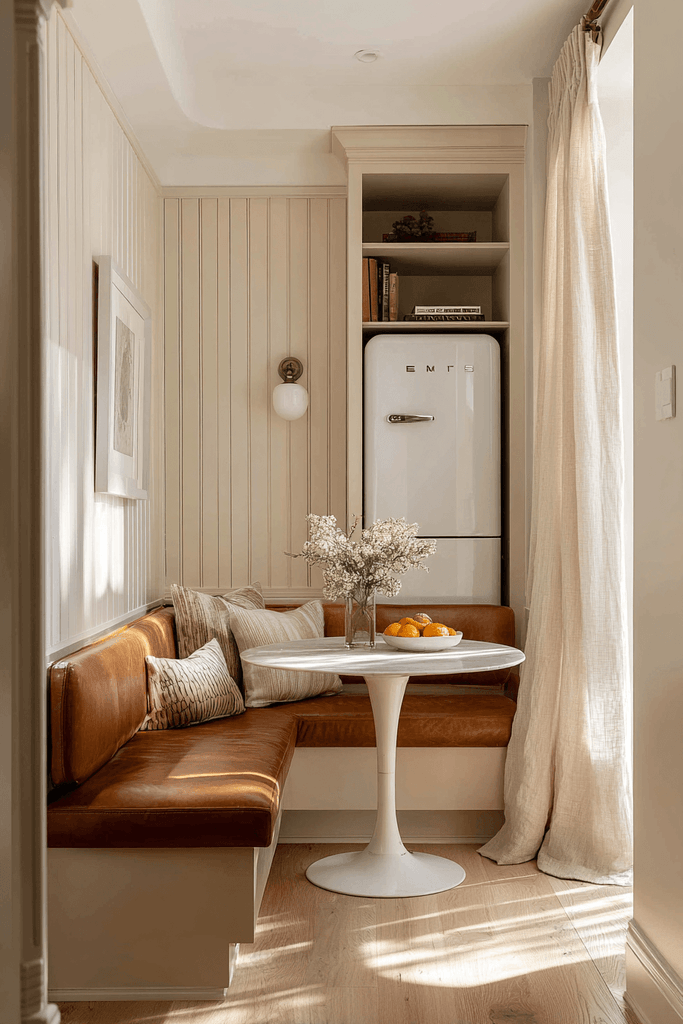
Key Design Tips:
- A built-in banquette turns wasted corner space into the most beloved spot in the home.
- Aged leather seating in warm tones anchors the nook without demanding attention.
- Tongue-and-groove wainscoting is one of the most cost-effective ways to achieve vintage wall character.
- Source a rounded retro-style refrigerator — they are increasingly available in modern energy-efficient formats.
- Sheer linen curtains diffuse harsh light into something genuinely romantic.
9. Terracotta Floors and Ceiling-Hung Drying Rack
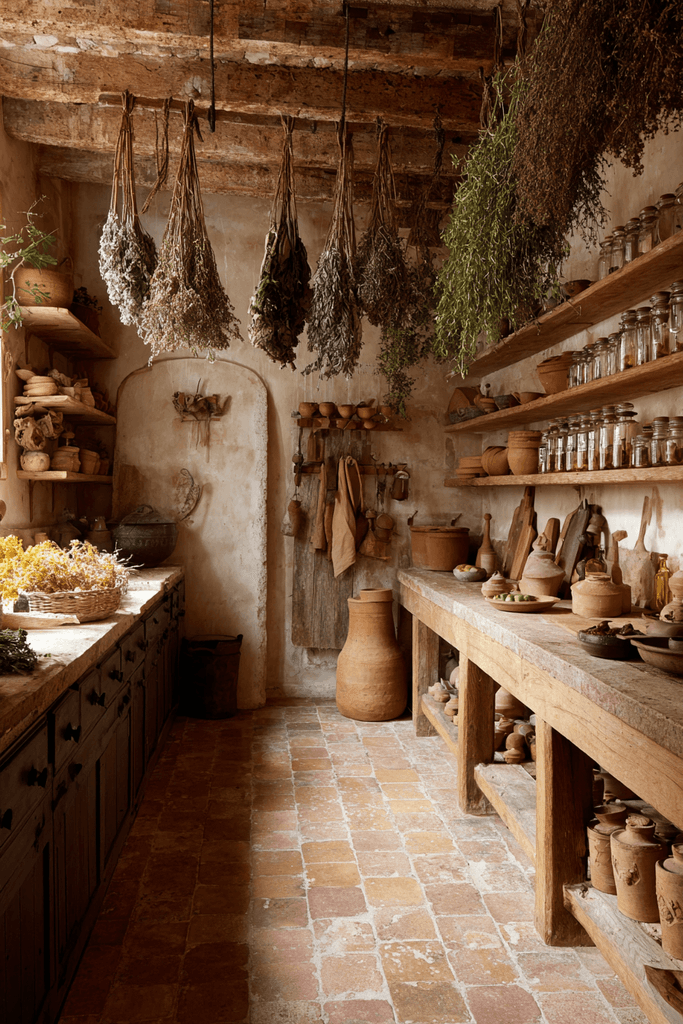
This kitchen is a sensory experience — dried herb bundles hang from a ceiling-mounted drying rack above a central work area, scenting the air and blurring the line between kitchen and garden. Handmade terracotta tiles with their warm earthy tones and slight surface variation cover the floor in a pattern that rewards close attention. Open shelves in rough-sawn walnut hold brown transferware, vintage glass bottles, and worn wooden utensils. Limestone countertops with natural fossil details and gentle surface etching add geological depth to the material palette. This is a kitchen that engages all five senses.
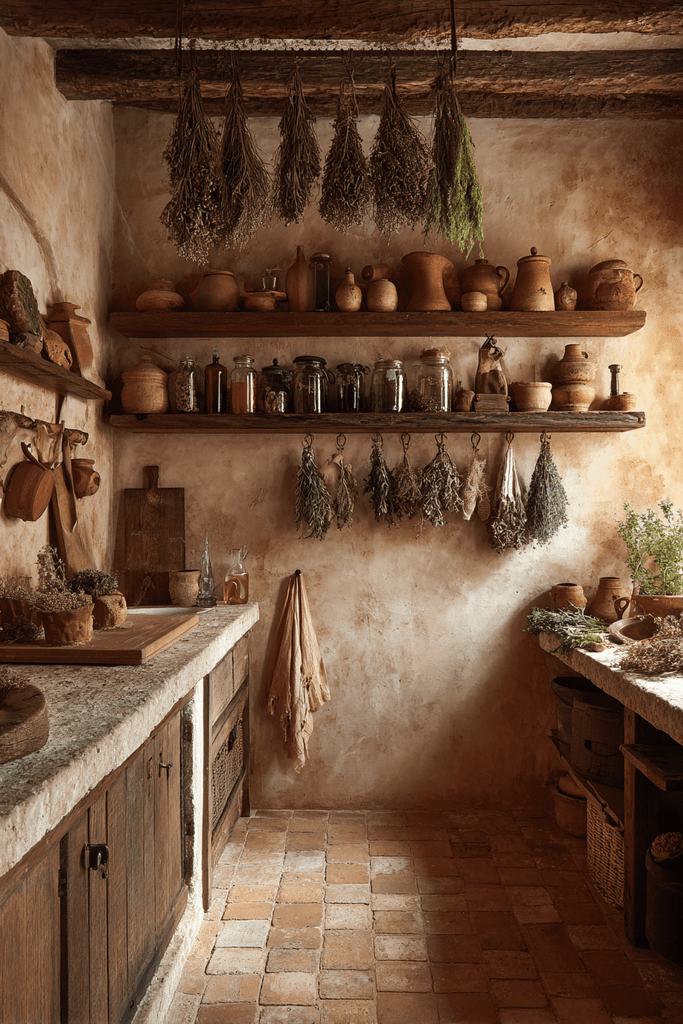
Key Design Tips:
- A ceiling-hung drying rack is both functional and deeply atmospheric in a vintage kitchen.
- Handmade terracotta tiles require sealing but reward with unmatched warmth and authenticity.
- Rough-sawn walnut shelving adds a rawer, more artisanal edge than planed timber alternatives.
- Dry herbs and edible flowers hung from racks bring the garden inside practically and beautifully.
- Limestone countertops develop a natural patina over time — embrace rather than fight this quality.
10. The Freestanding Hutch and Penny Tile Perfection
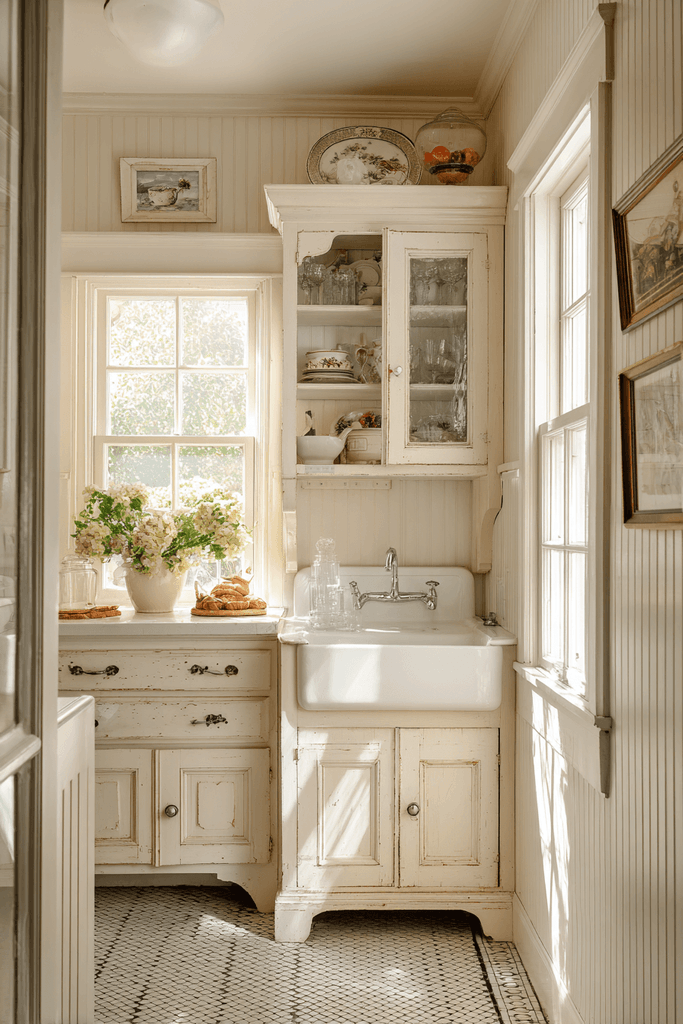
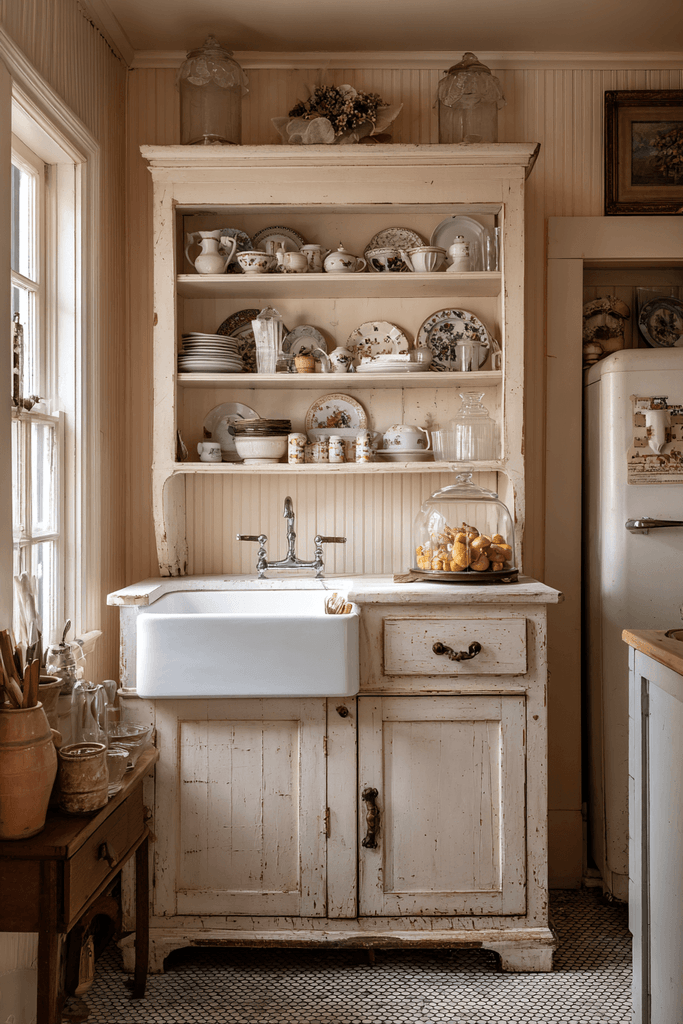
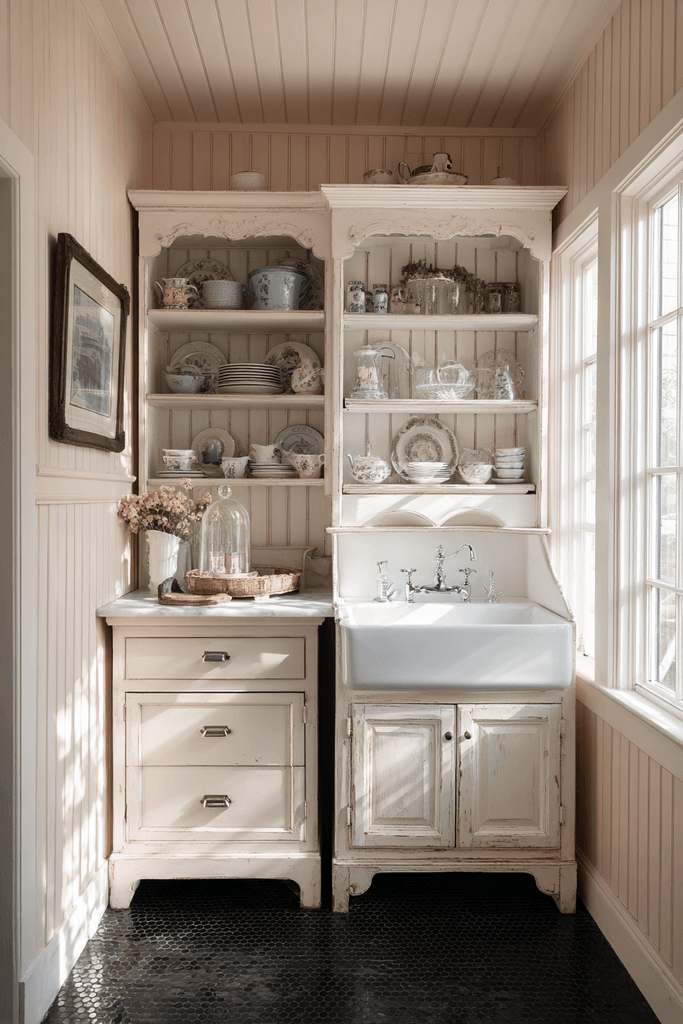
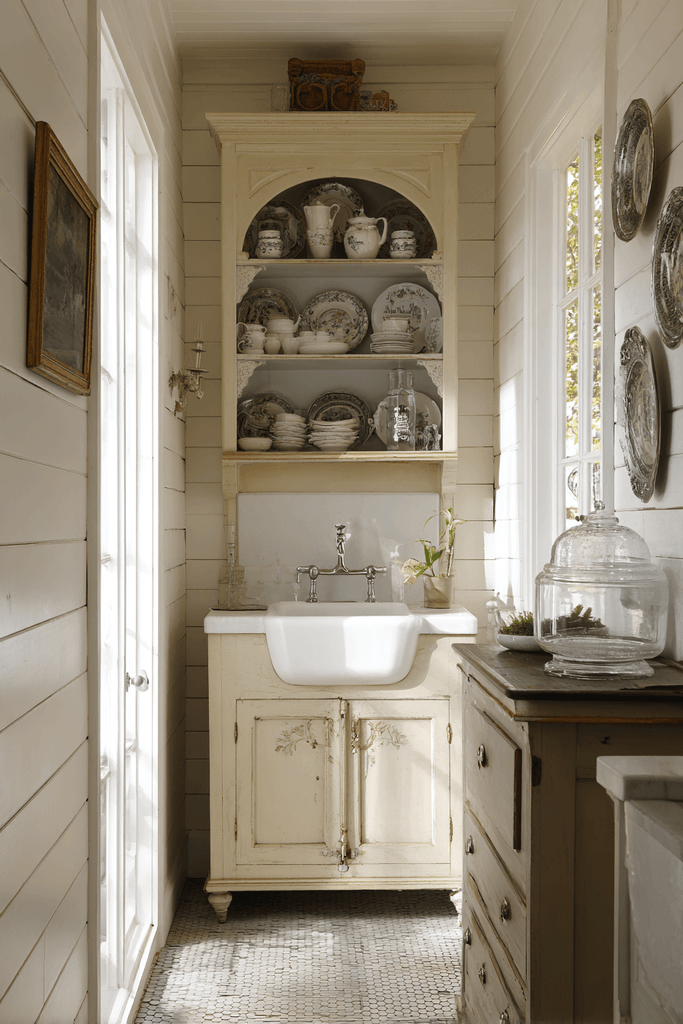
This final kitchen achieves a kind of curated completeness — a freestanding furniture-style hutch in distressed antique white displays heirloom china and vintage glass cloches with the quiet confidence of a well-edited collection. A pedestal farmhouse sink in aged white porcelain is fitted with a wall-mounted bridge faucet in unlacquered brass, its warm gleam contrasting beautifully with the soft buttercream of painted beadboard walls. Underfoot, black penny tile flooring with white grout delivers graphic precision that grounds the softer tones above. Morning light enters gently, illuminating every aged surface and curated accessory with equal generosity.
Key Design Tips:
- A freestanding hutch can be sourced secondhand and painted — it is one of the most impactful vintage furniture investments.
- The bridge faucet in unlacquered brass is a distinctive fixture that instantly signals vintage commitment.
- Penny tile flooring offers a period-appropriate graphic element that works in both small and large kitchens.
- Layer aged white, buttercream, and antique white tones for depth without color clash.
- Curate hutch displays intentionally — every piece visible on open shelving should earn its place.
Why Small Vintage Kitchens Are Among the Most Beloved Interior Design Styles
Across all ten of these concepts, a consistent truth emerges: small vintage kitchen design is not a compromise — it is a choice made with full confidence in the beauty of the past. These spaces succeed because they embrace authentic materials, handcrafted surfaces, and imperfect finishes at a time when so much interior design chases the opposite. The appeal of a vintage farmhouse kitchen, a retro 1950s kitchen, a Victorian cottage kitchen, or a rustic small kitchen with open shelving lies precisely in their refusal to be anonymous. Every aged brass pull, every worn butcher block, every handmade tile tells a story. In a compact kitchen, that storytelling becomes even more concentrated — more intimate, more deliberate, and ultimately more powerful. Whether you are drawn to the sage green distressed cabinet kitchen, the terracotta tile cottage kitchen, or the pastel retro enamel kitchen, the design principles remain the same: choose materials with history, let surfaces develop character, display the things you love, and allow the kitchen to become the warm and welcoming heart of the home it was always meant to be.
Conclusion
A small vintage kitchen is one of interior design’s most rewarding canvases. The ten ideas explored here demonstrate that limited square footage, far from being a constraint, is an invitation to design with greater intention, greater warmth, and greater authenticity. From the shaker cabinet farmhouse sink kitchen to the Victorian baker’s rack layout, from the mint green 1950s revival to the terracotta and limestone artisan kitchen, each concept offers actionable inspiration that can be adapted to real homes and real lives. Begin with one anchor piece — a statement sink, a reclaimed wood shelf, a handmade tile backsplash — and build outward from there. The most beautiful vintage kitchens are never finished all at once; they are gathered, layered, and loved into existence over time. Start where you are, use what speaks to you, and trust that character, once invited in, has a way of making itself at home.