10 Stunning Kitchen Background Aesthetic Styles to Transform Your Cooking Space
The kitchen is no longer just a place to prepare meals — it has become the emotional and visual heart of the modern home. As open-plan living continues to shape how we design our interiors, the kitchen background aesthetic has emerged as one of the most powerful expressions of personal style in any home. Whether you crave the sun-warmed simplicity of Mediterranean living, the quiet restraint of Scandinavian design, or the layered drama of maximalist interiors, your kitchen’s visual identity speaks volumes about who you are. In this article, we explore ten distinct kitchen background aesthetics — each one a fully realized design world unto itself — giving you the inspiration, vocabulary, and practical tips to transform your own cooking space into something truly extraordinary.
1. Warm Farmhouse Glow: Creamy Shaker Cabinets and Natural Textures
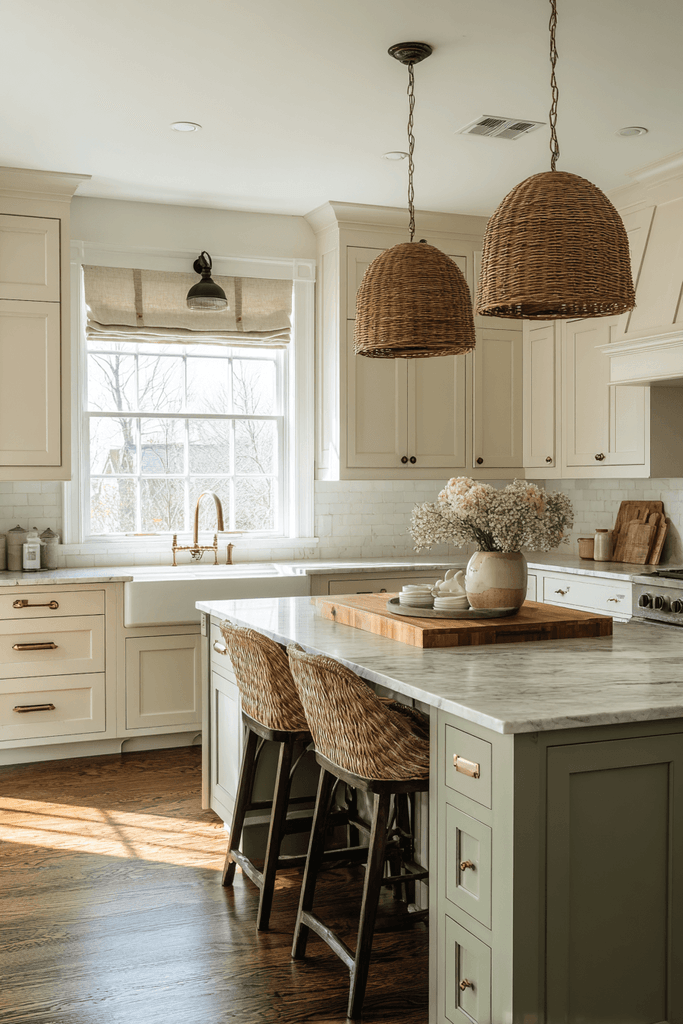
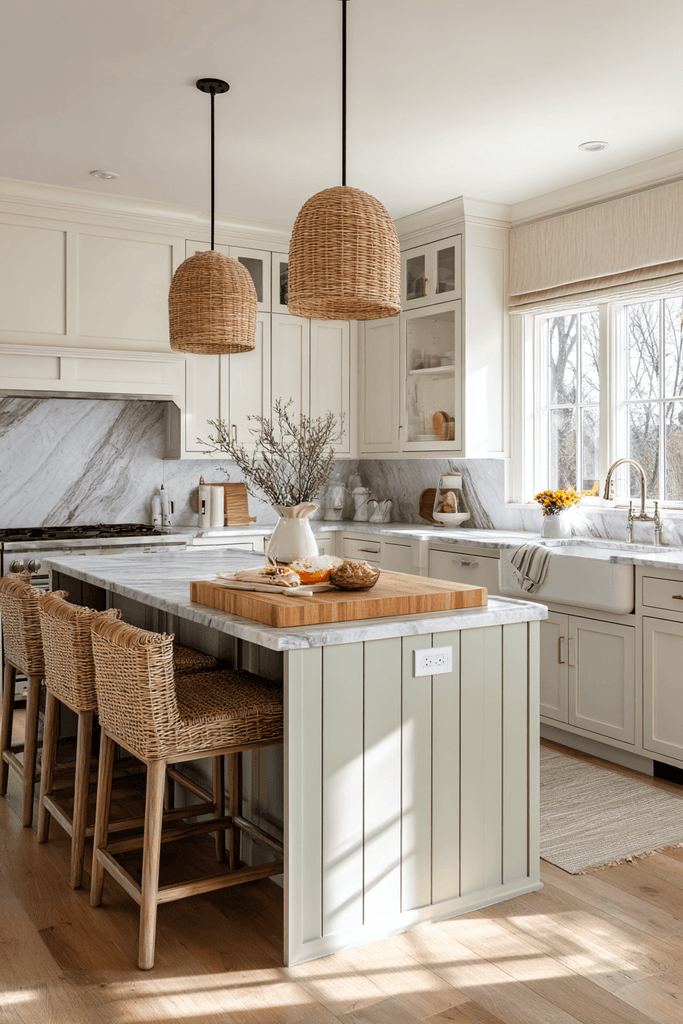
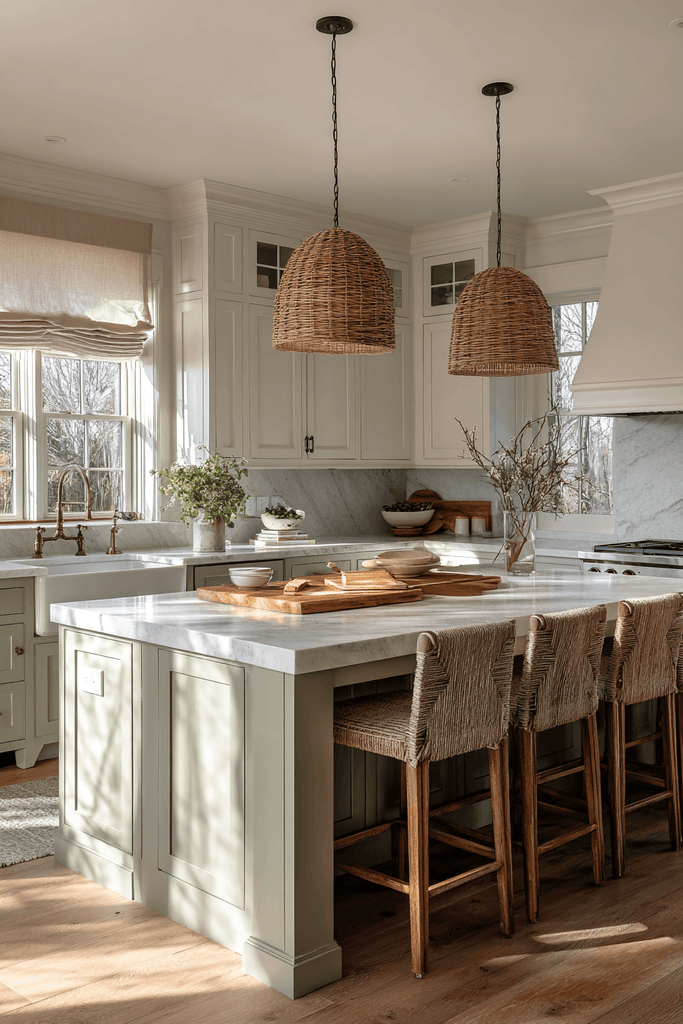
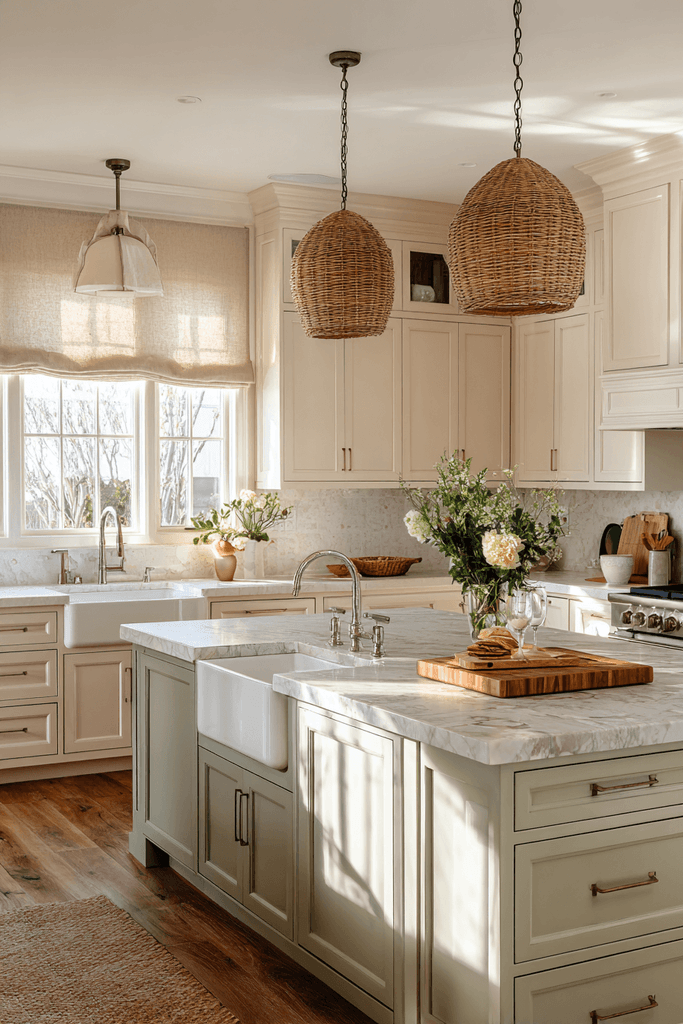
There is something undeniably soul-soothing about stepping into a kitchen where creamy white shaker cabinets meet soft sage green lower units beneath a canopy of woven rattan pendant lights. This kitchen background aesthetic draws its strength from the layering of natural materials — honed marble countertops with delicate grey veining, a butcher block island top that carries the warmth of real wood grain, and a farmhouse sink framed by a linen-curtained window through which morning light pours like honey. The result is a space that feels simultaneously curated and genuinely lived-in, a rare and deeply appealing quality in contemporary kitchen design.
Key Design Tips:
- Pair white upper cabinets with a contrasting sage or muted green on lower units to add depth without overwhelming the space.
- Choose honed rather than polished marble for a more relaxed, organic finish that hides everyday wear.
- Layer rattan, linen, and wood together to build a tactile richness that photographs beautifully and feels warm in person.
- Let natural light do the heavy lifting — sheer linen curtains diffuse harsh sunlight while maintaining an airy, golden ambiance.
2. Moody Sophistication: Navy Cabinetry and Aged Brass Drama
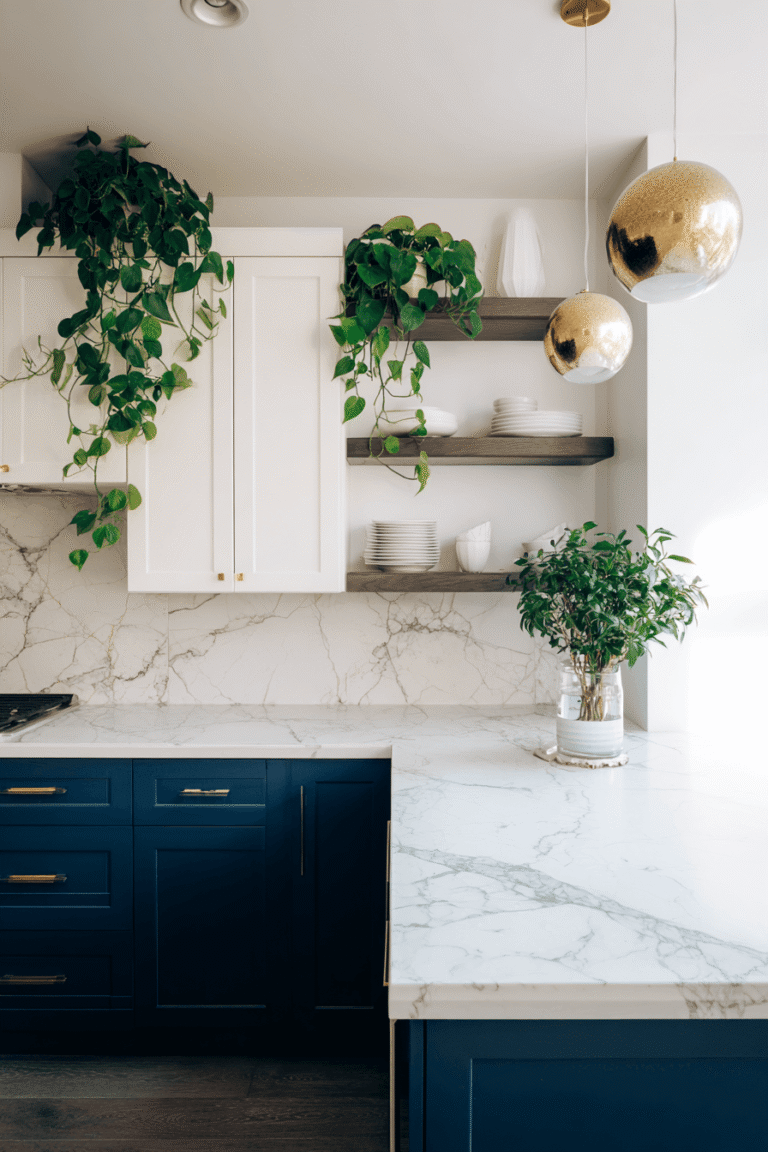
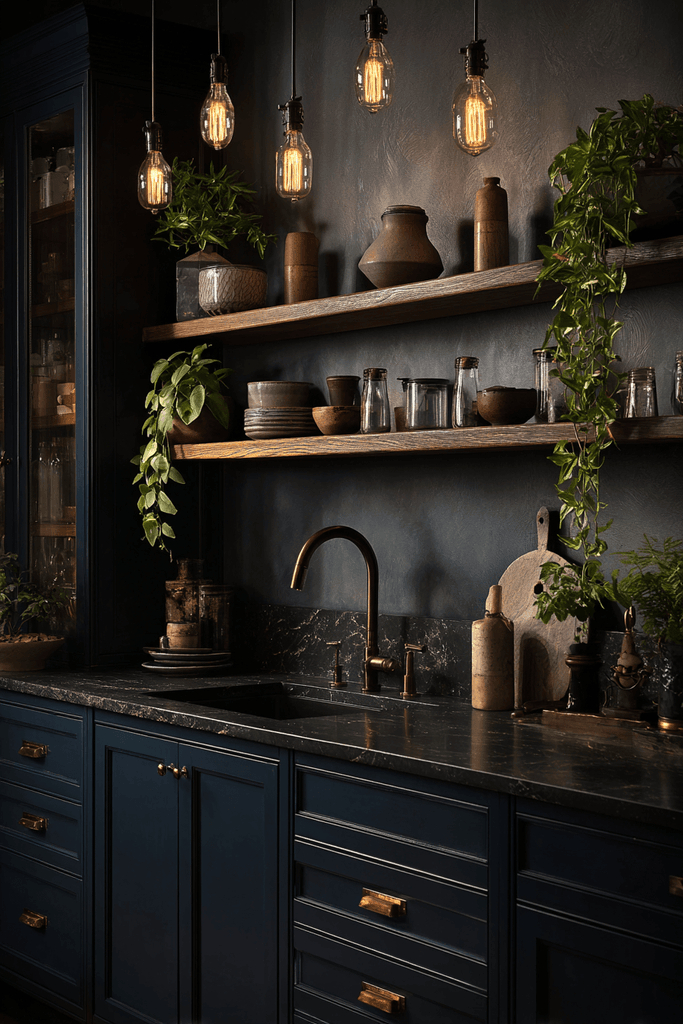
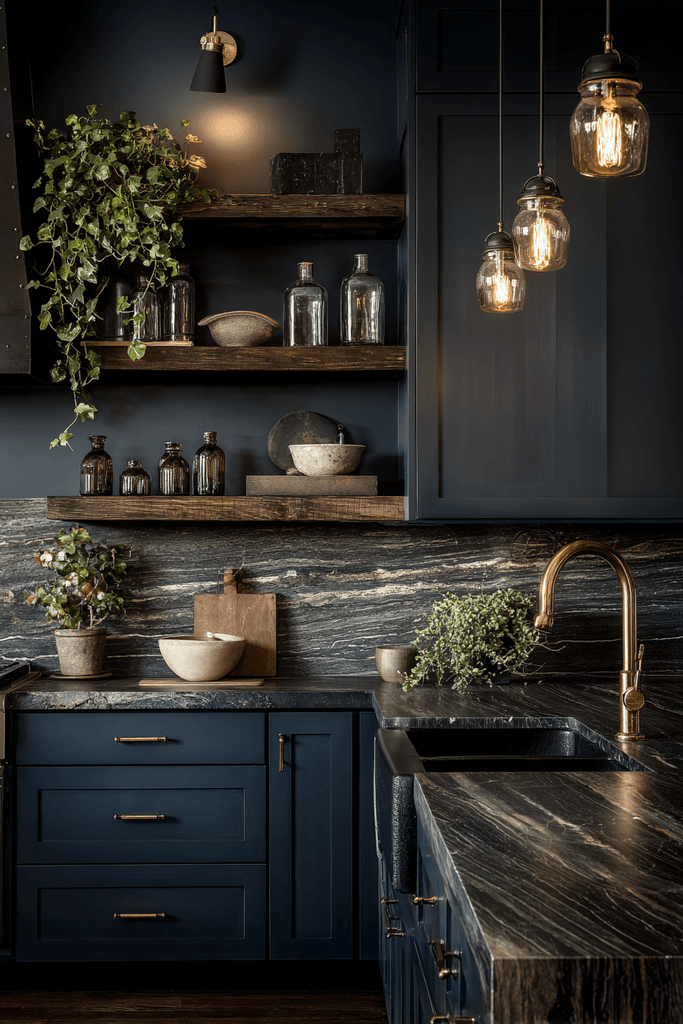
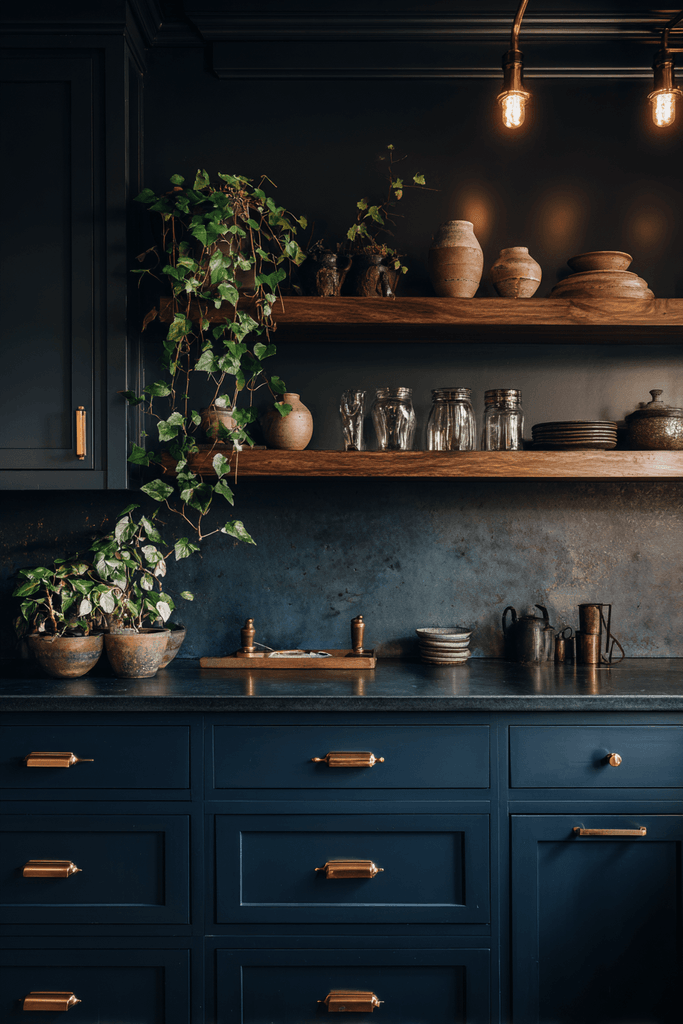
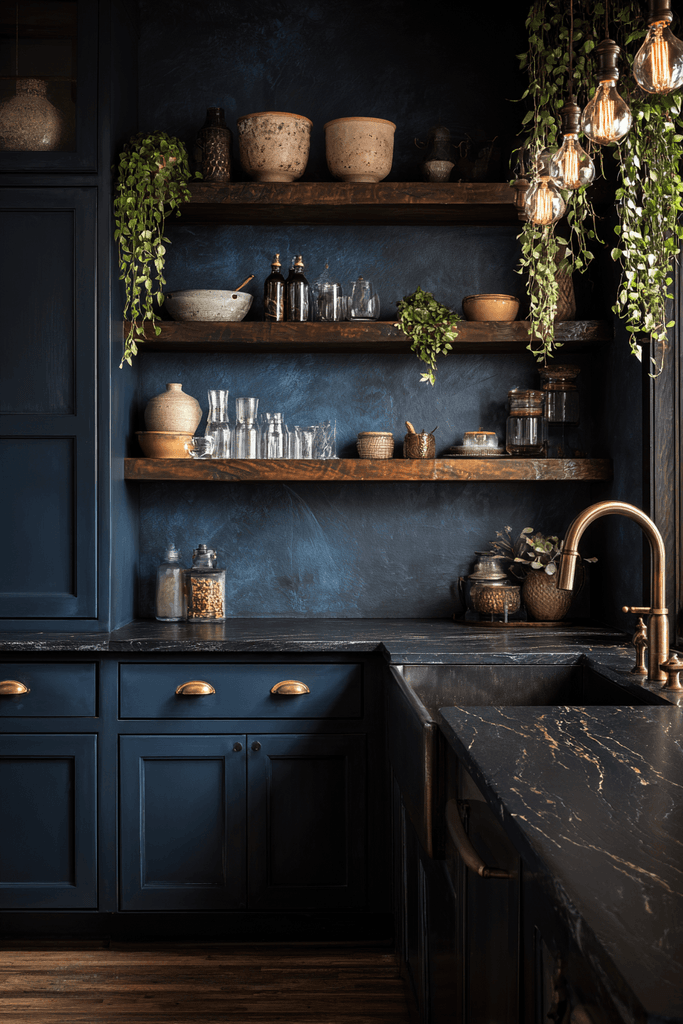
For those who find beauty in shadow and depth, this moody kitchen background aesthetic delivers an atmosphere of refined drama that few other palettes can match. Deep navy blue cabinetry anchors the space with quiet authority, while aged brass hardware adds a burnished warmth that prevents the dark tones from feeling cold or austere. A black soapstone countertop carries its own geological poetry — matte, dense, and beautifully imperfect. Raw walnut open shelving introduces an organic counterpoint, dressed with ceramic vessels, glass jars, and the trailing tendrils of pothos plants. Warm Edison bulbs overhead bathe the entire composition in amber light, turning every evening in this kitchen into something cinematic.
Key Design Tips:
- Use aged or unlacquered brass hardware to complement deep cabinet colours — polished brass reads as too bright and modern in contrast.
- Soapstone countertops are naturally heat-resistant and develop a beautiful patina over time; embrace the living quality of this material.
- Edison bulb pendants work best in clusters or on dimmers, allowing you to shift the mood from functional to atmospheric.
- Trailing plants on open shelving soften an otherwise very structured, design-forward kitchen aesthetic.
3. Nordic Calm: Scandinavian Simplicity in White Oak and Quartz
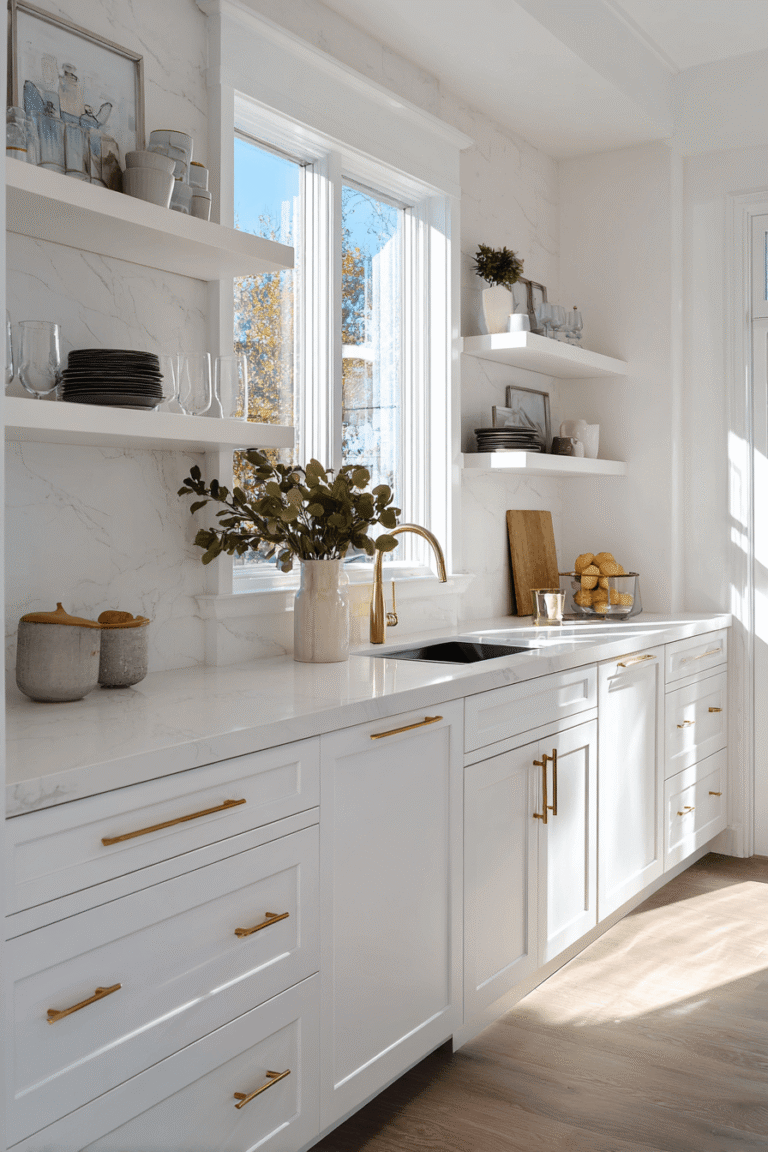
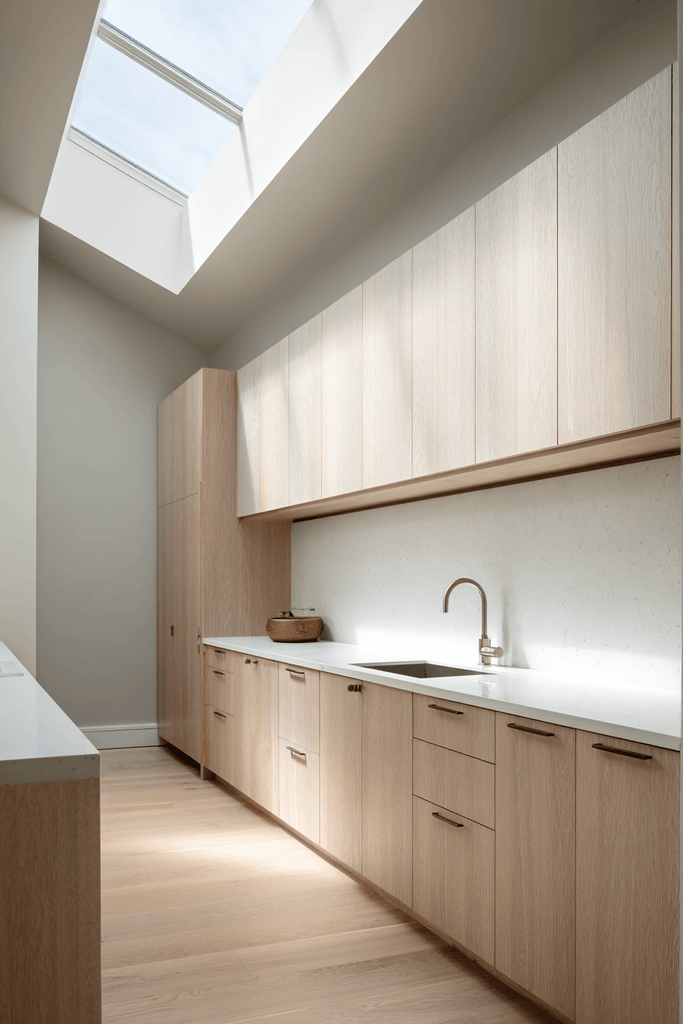
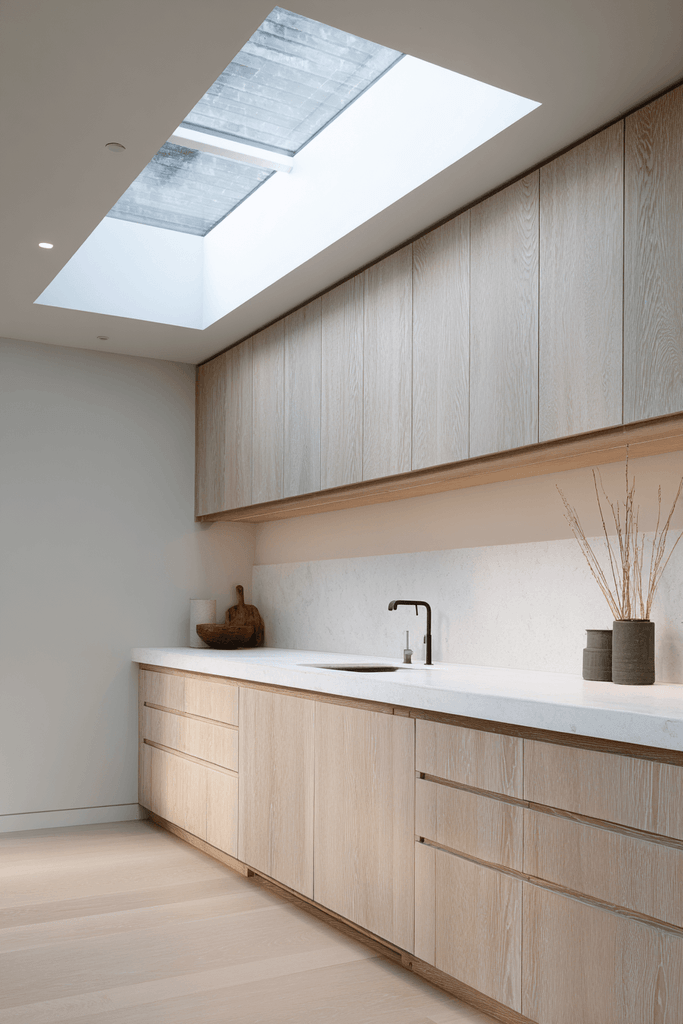
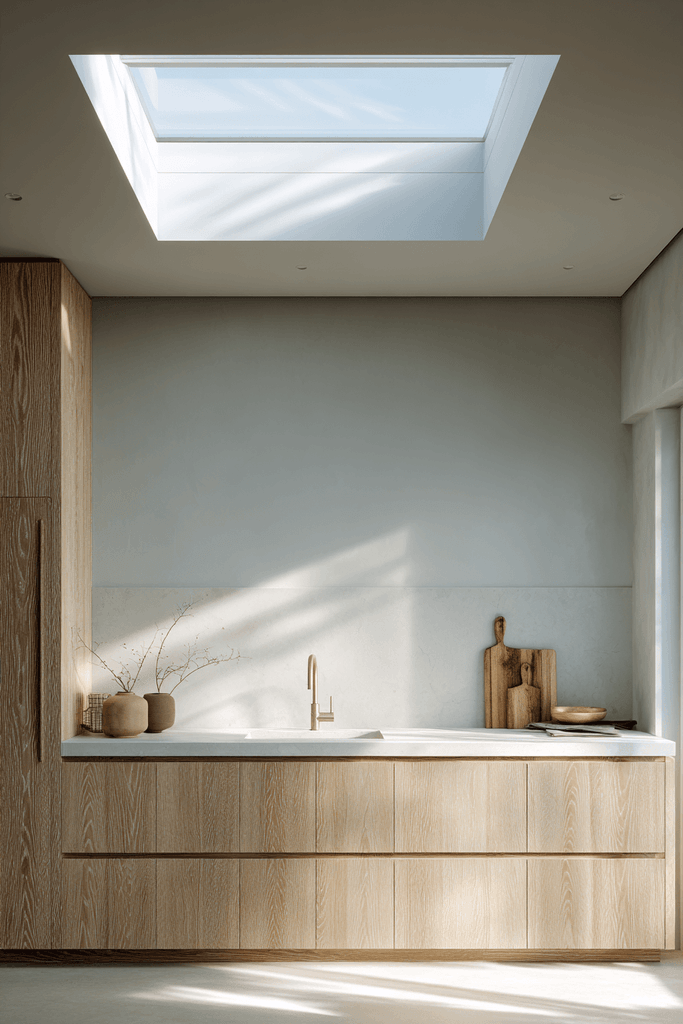
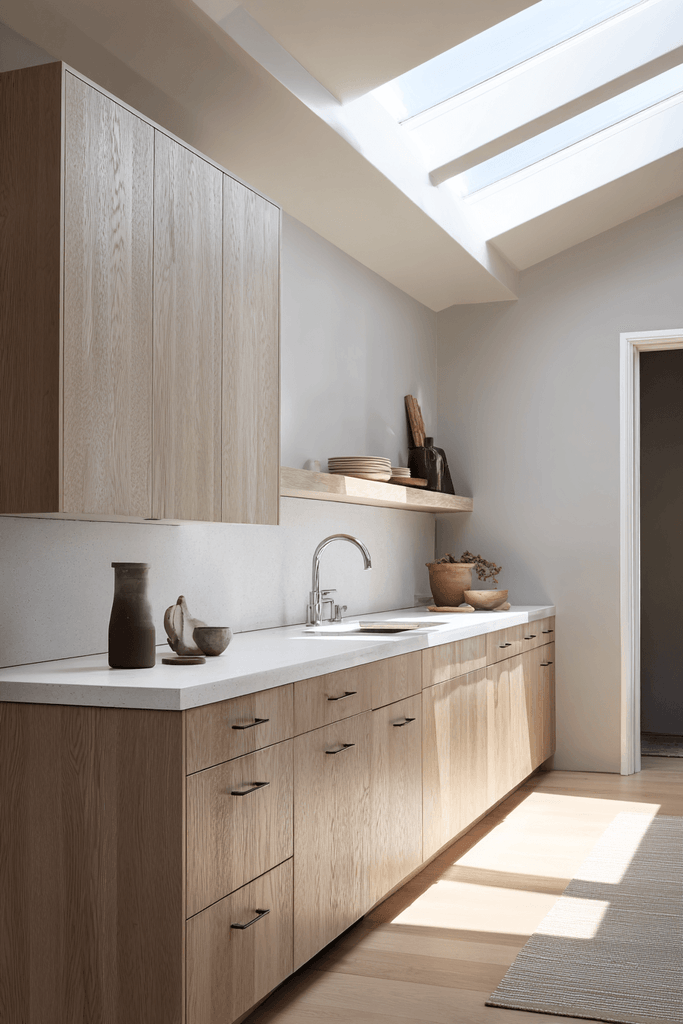
The Scandinavian kitchen background aesthetic is a masterclass in the philosophy that less, executed perfectly, is always more. Flat-front white oak cabinetry with integrated handleless pulls sits against pale grey limewash walls that carry just enough texture to prevent the space from feeling sterile. A long, unbroken cloud-white quartz countertop reinforces the horizontal calm of the design, while a minimalist apron sink maintains the functional purity at the heart of Nordic living. Light floods in from a generous skylight above, casting soft, diffused shadows across surfaces so clean they seem to breathe. This is a kitchen built not for performance, but for peace.
Key Design Tips:
- Choose flat-panel cabinetry with integrated or recessed handles to maintain the uninterrupted visual lines essential to Scandinavian style.
- Limewash or clay-based wall paint adds subtle texture that makes white-on-white kitchens feel layered rather than flat.
- A skylight is the single most transformative investment in a Nordic-inspired kitchen — natural, shadowless light is irreplaceable.
- Allow the natural grain of oak cabinetry to be the primary decorative element; resist the urge to over-accessorize.
4. Rustic Farmhouse Soul: Distressed Painted Wood and Reclaimed Pine
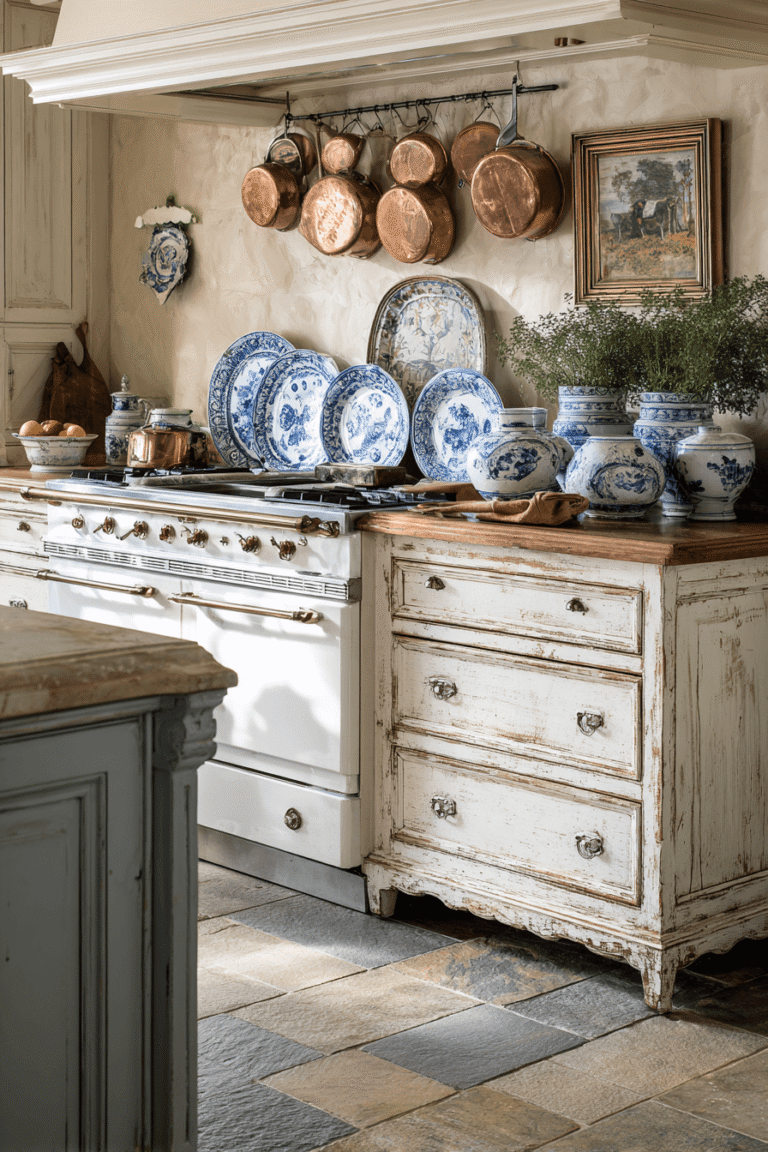
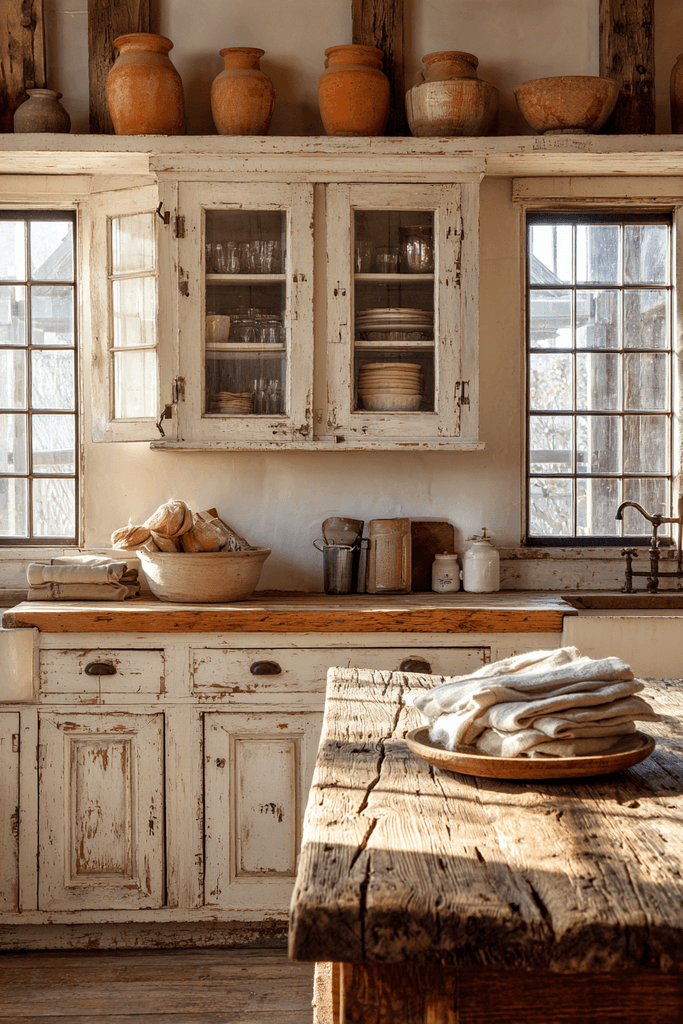
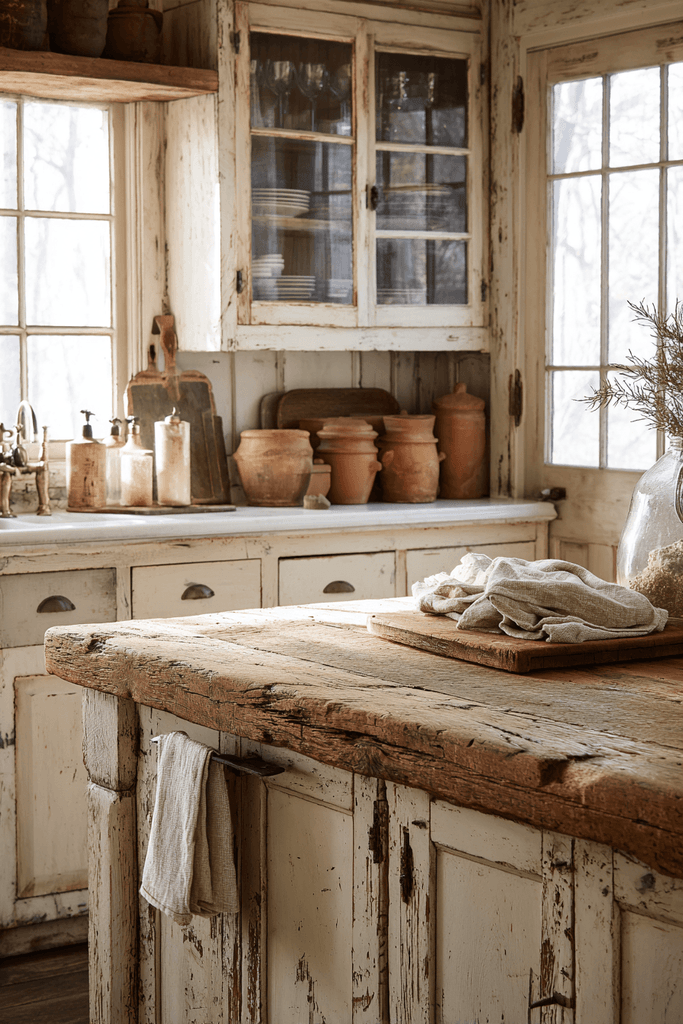
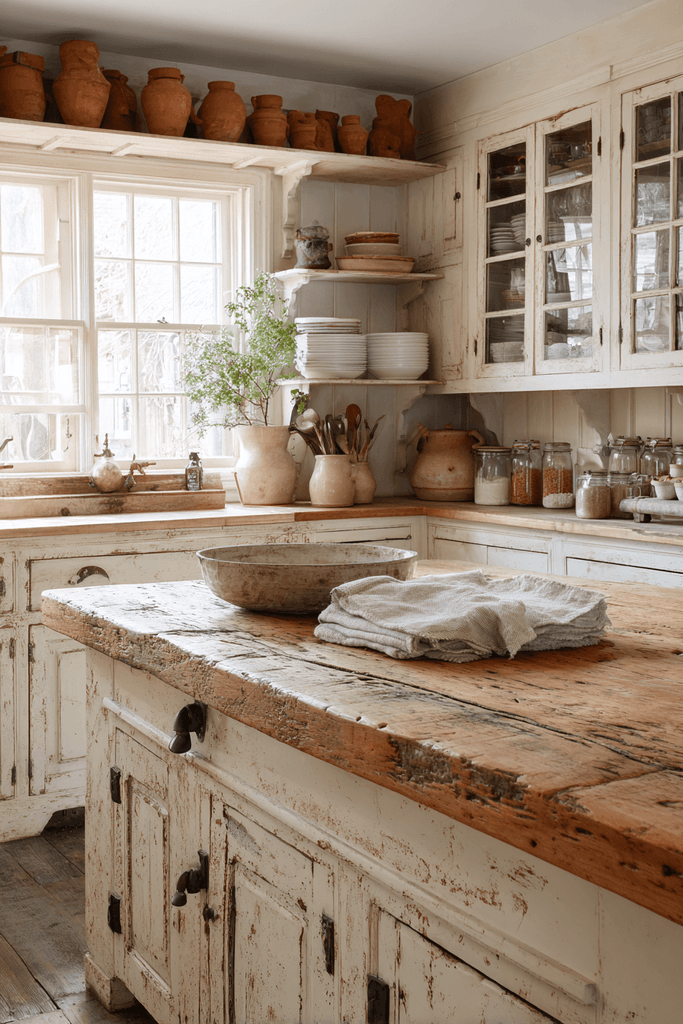
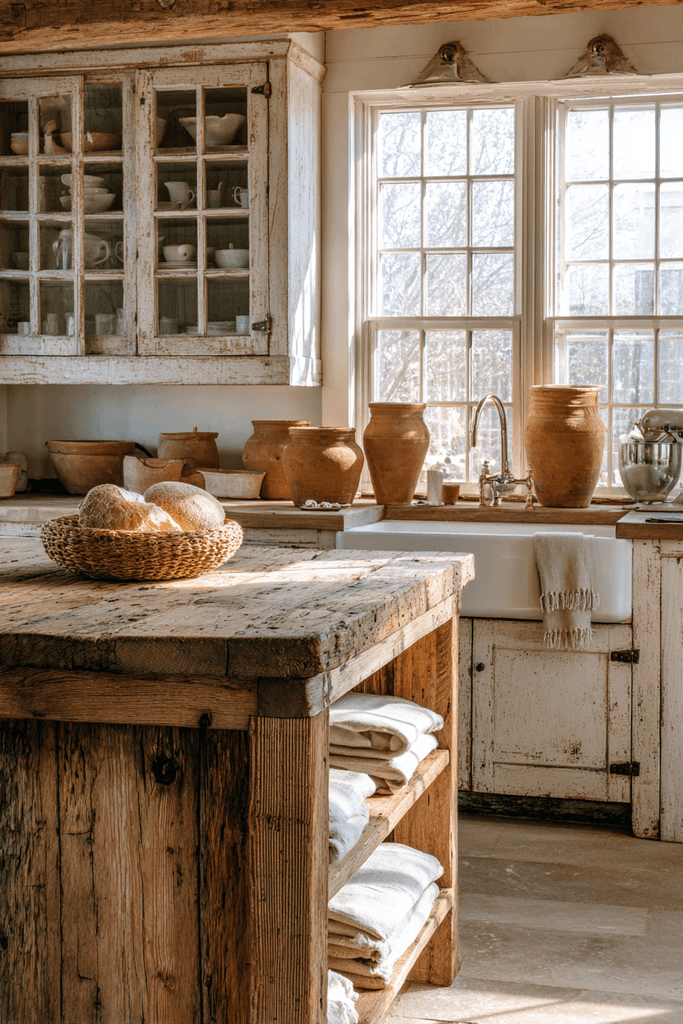
This kitchen background aesthetic is for those who believe that the most beautiful things in life carry the marks of time. Distressed white-painted cabinetry with exposed hinges and vintage glass-front upper doors tells a story of generations of use — imperfect, characterful, and deeply human. A chunky reclaimed pine butcher block island dominates the centre of the space, its surface alive with natural knots and aged grain variations that no factory could replicate. Terracotta clay pots cluster on open shelves beside folded linen dish towels, and afternoon light filters through divided-light windows, warming every surface with that particular golden quality that only late sun produces.
Key Design Tips:
- Deliberately distress cabinet paint on edges and corners where natural wear would occur to achieve an authentic aged look.
- Source reclaimed wood for island tops locally — salvage yards and architectural antique dealers are excellent resources.
- Exposed hinges and cup pulls in a blackened or oil-rubbed finish reinforce the vintage farmhouse character.
- Terracotta and linen accessories are the fastest way to ground a farmhouse kitchen in organic, earthen warmth.
5. Mediterranean Vibrancy: Encaustic Tile and Sun-Drenched Warmth
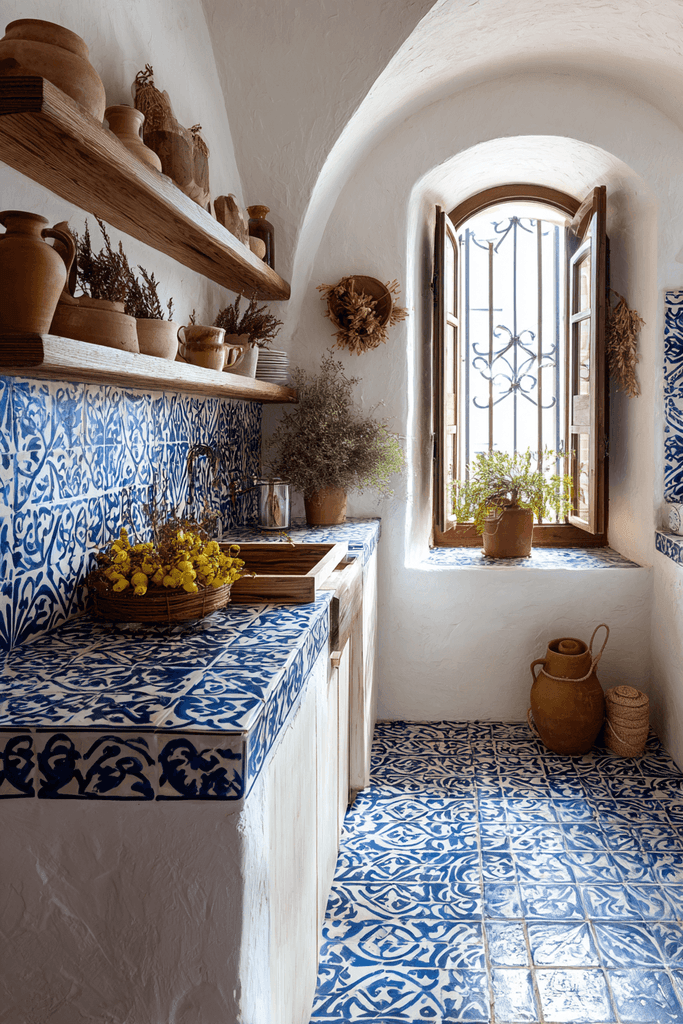
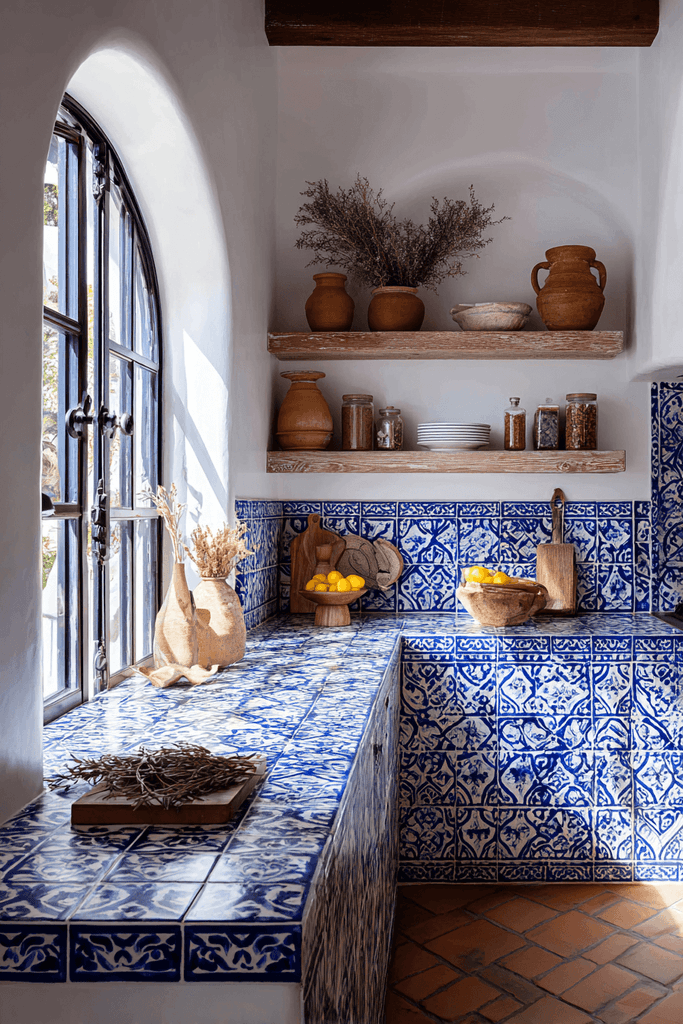
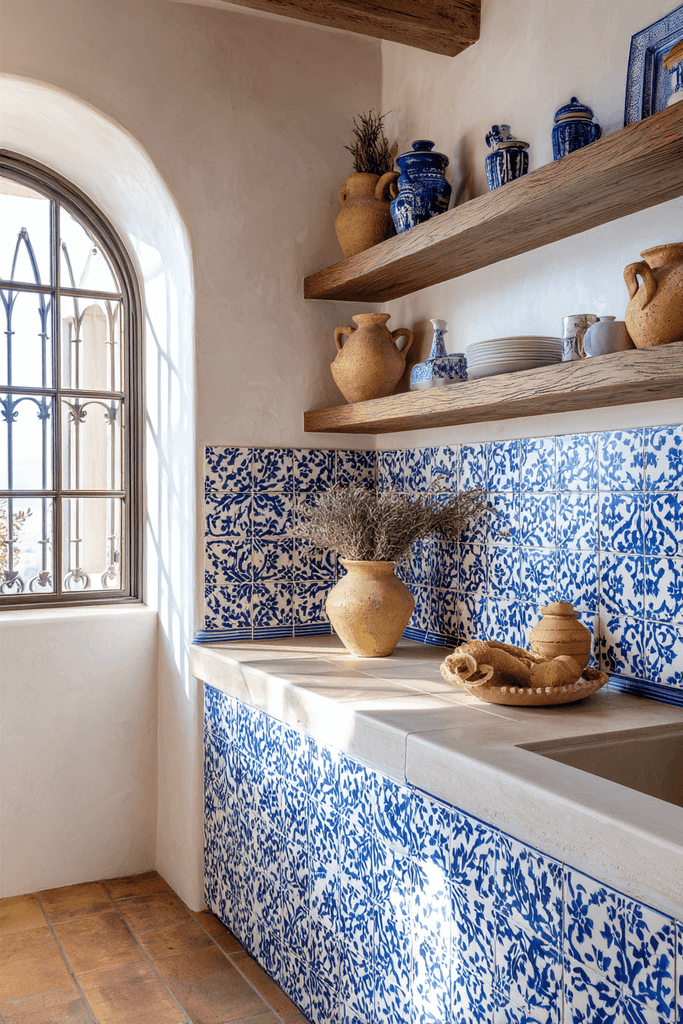
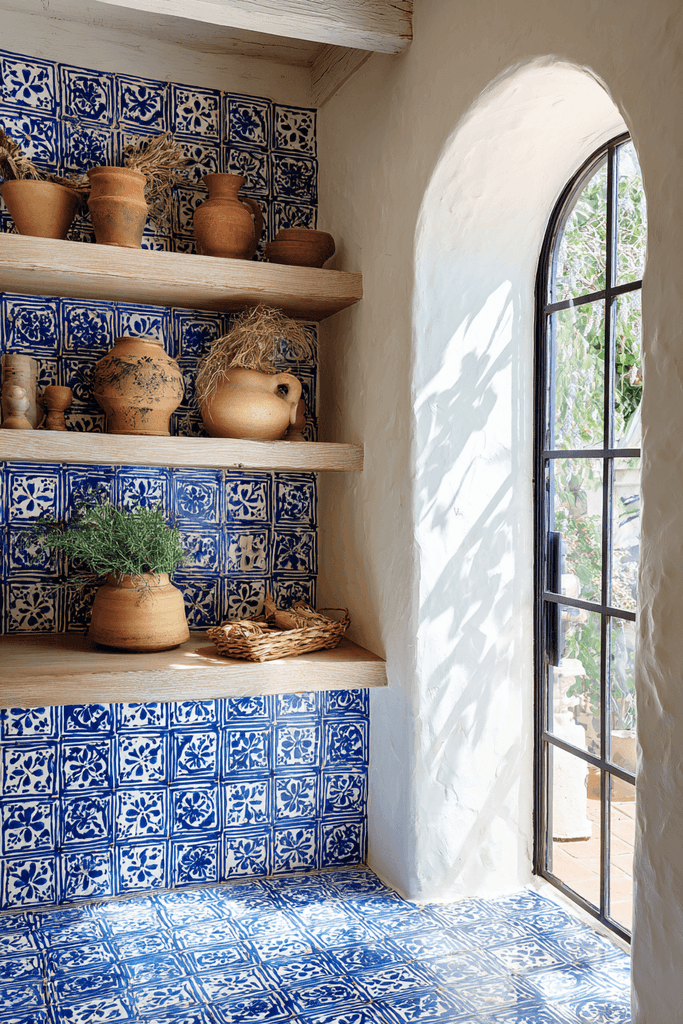
The Mediterranean kitchen background aesthetic announces itself boldly and joyfully — there is nothing shy about hand-painted cobalt blue and white encaustic cement tile covering an entire backsplash wall in a riot of geometric pattern. Yet the surrounding palette of white plaster walls and warm terracotta floor tiles gives the eye the breathing room it needs, ensuring the tile sings rather than shouts. Open timber shelves carry clay pitchers and dried herb bundles, anchoring the space in the sensory traditions of southern European cooking. A wrought iron-framed window floods the kitchen with daylight, and the entire composition hums with the relaxed confidence of a life lived outdoors and at table.
Key Design Tips:
- Let a patterned tile backsplash be the undisputed star — keep cabinetry, walls, and flooring in simple, neutral tones to balance the visual intensity.
- Terracotta floor tiles develop a beautiful patina with age and are naturally cool underfoot in warm climates.
- Open timber shelving displayed with artisan ceramics, dried botanicals, and clay vessels reinforces the handmade quality central to Mediterranean style.
- Wrought iron window frames and hardware add an authentic Old World detail that elevates the entire aesthetic.
6. Industrial Loft Precision: Concrete, Steel, and Reclaimed Wood
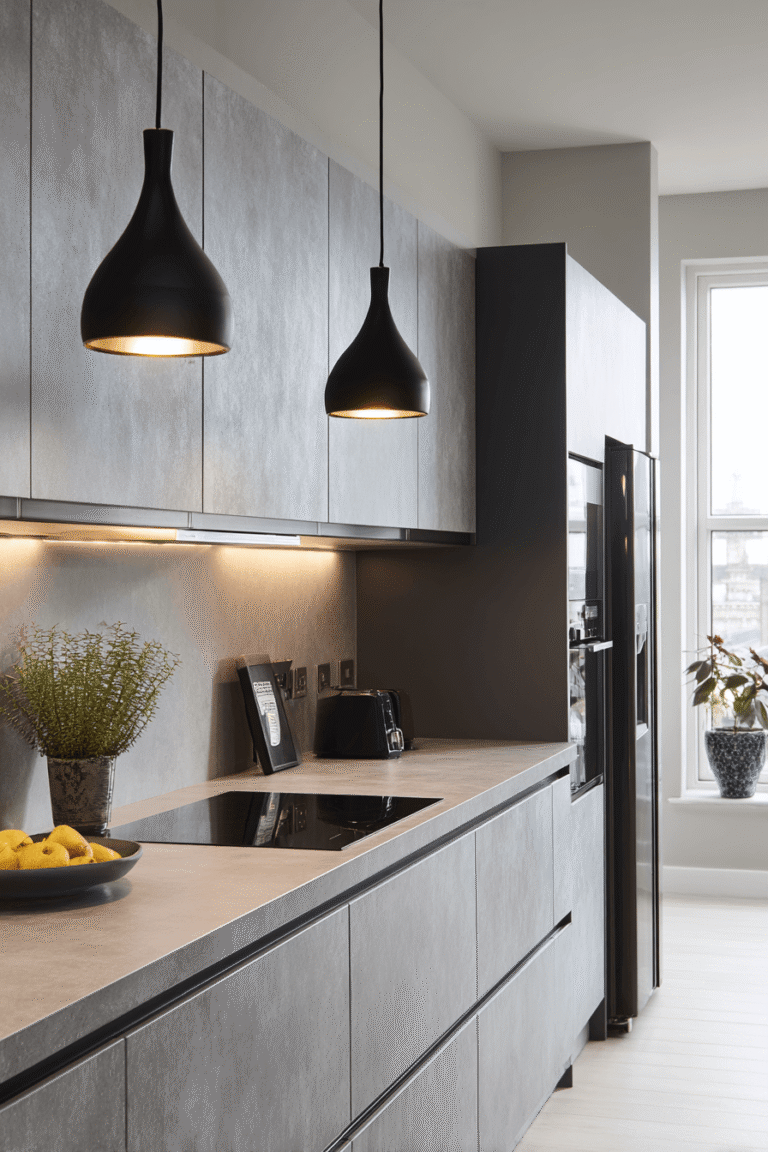
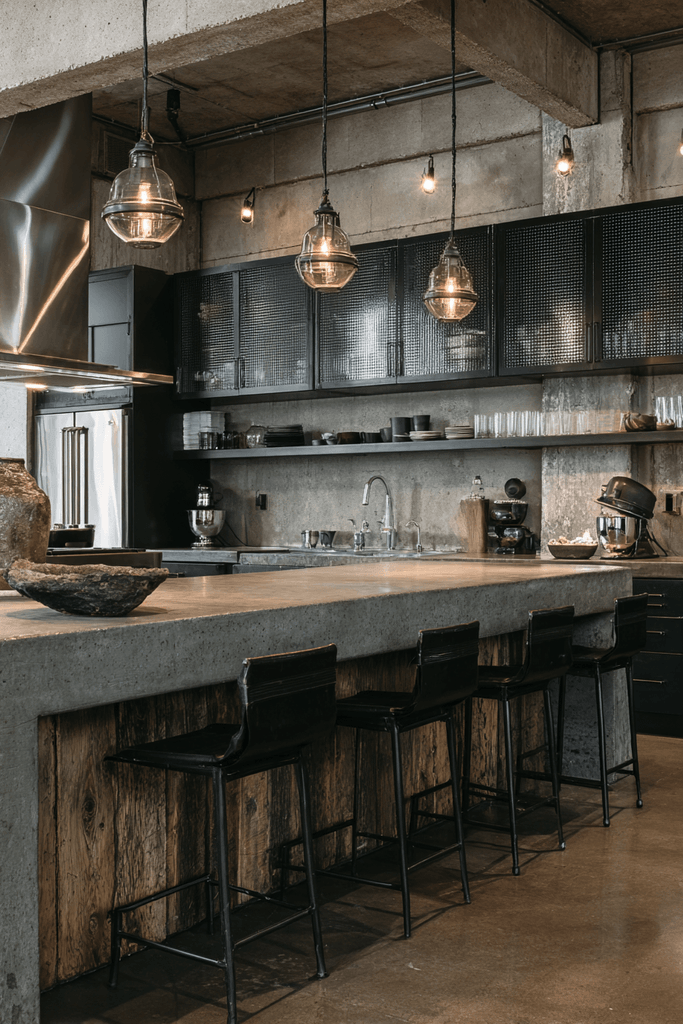
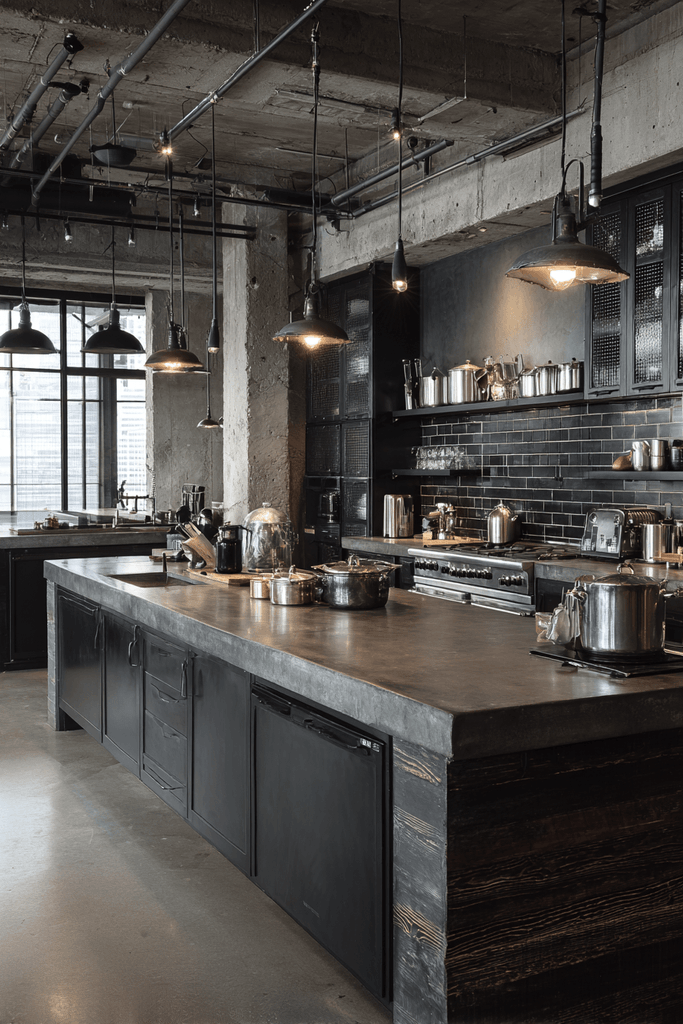
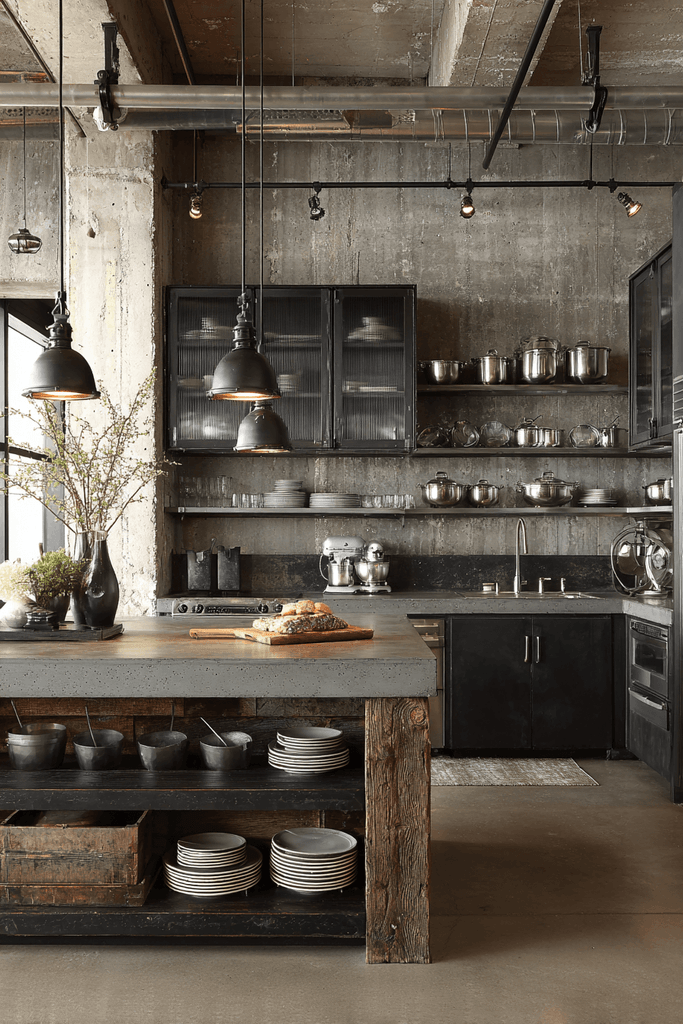
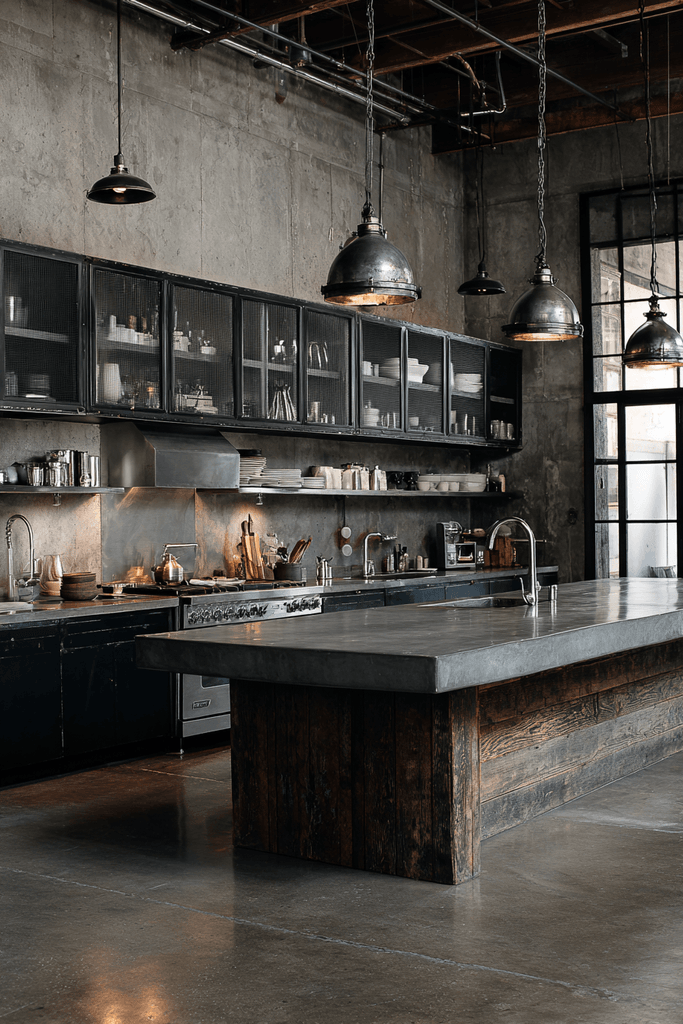
The industrial kitchen background aesthetic finds its poetry in the beauty of raw, unfinished materials presented with deliberate restraint. Exposed concrete walls set the stage, while matte black steel-framed upper cabinets with wire glass inserts bring a utilitarian rigour that is undeniably cool. A poured concrete countertop — its surface revealing the subtle aggregate within — extends the material story downward, and stainless steel open shelving hosts professional-grade cookware that is as much display as function. Pendant lights in aged black metal hang at varying heights above an island with a reclaimed wood base, introducing just enough organic warmth to soften the industrial edge.
Key Design Tips:
- Concrete countertops must be properly sealed and maintained — choose a matte penetrating sealer that preserves the raw visual quality of the surface.
- Matte black finishes throughout (faucets, hardware, lighting) unify an industrial kitchen without the coldness of all-chrome schemes.
- Vary the hanging height of pendant lights above an island for a more dynamic, considered composition.
- A reclaimed wood element — whether a base, shelf, or island top — is essential to humanize the industrial aesthetic.
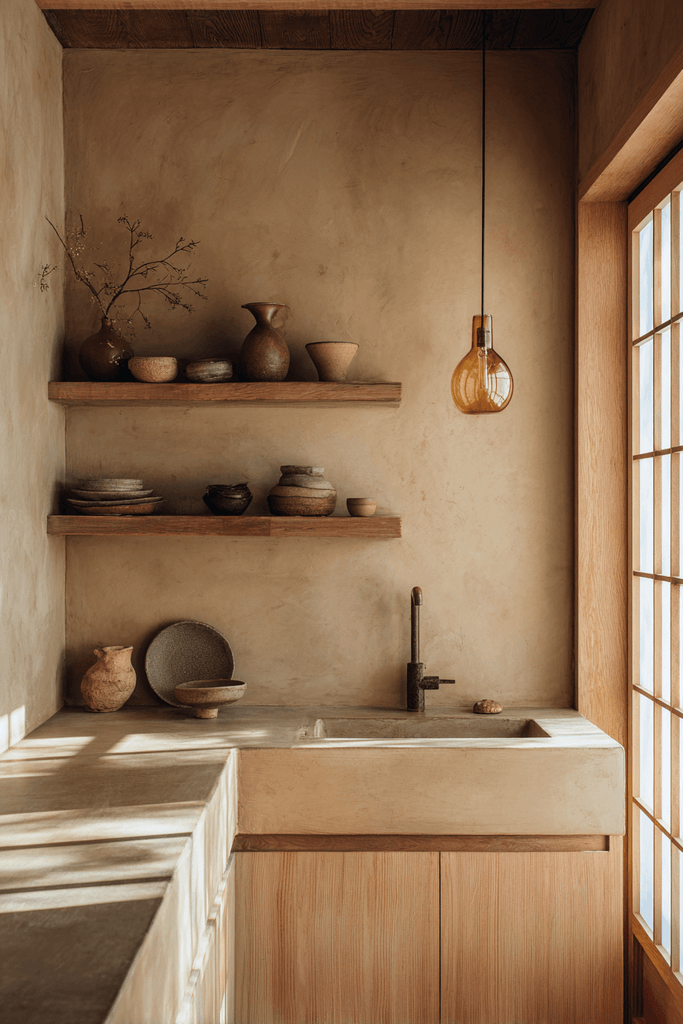
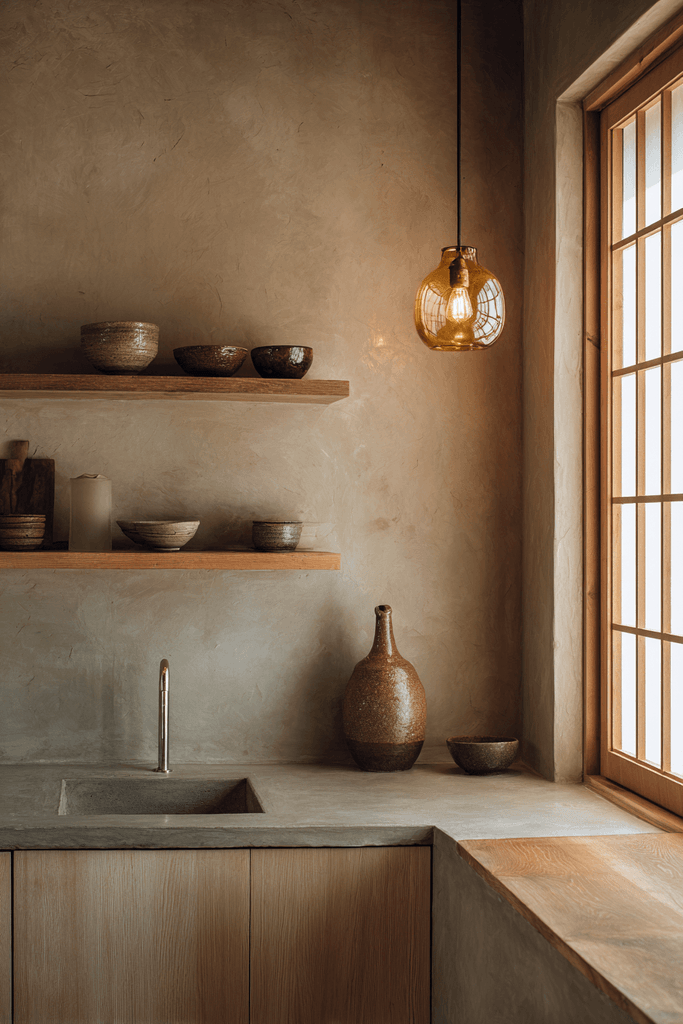
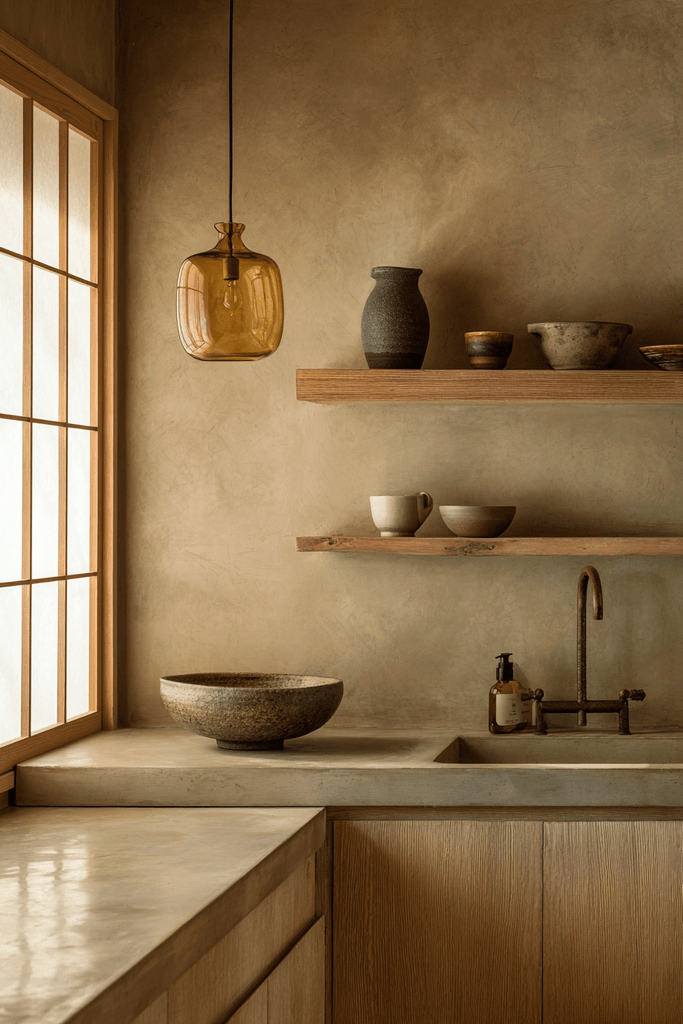
7. Wabi-Sabi Quietude: Japanese Imperfection and Natural Calm
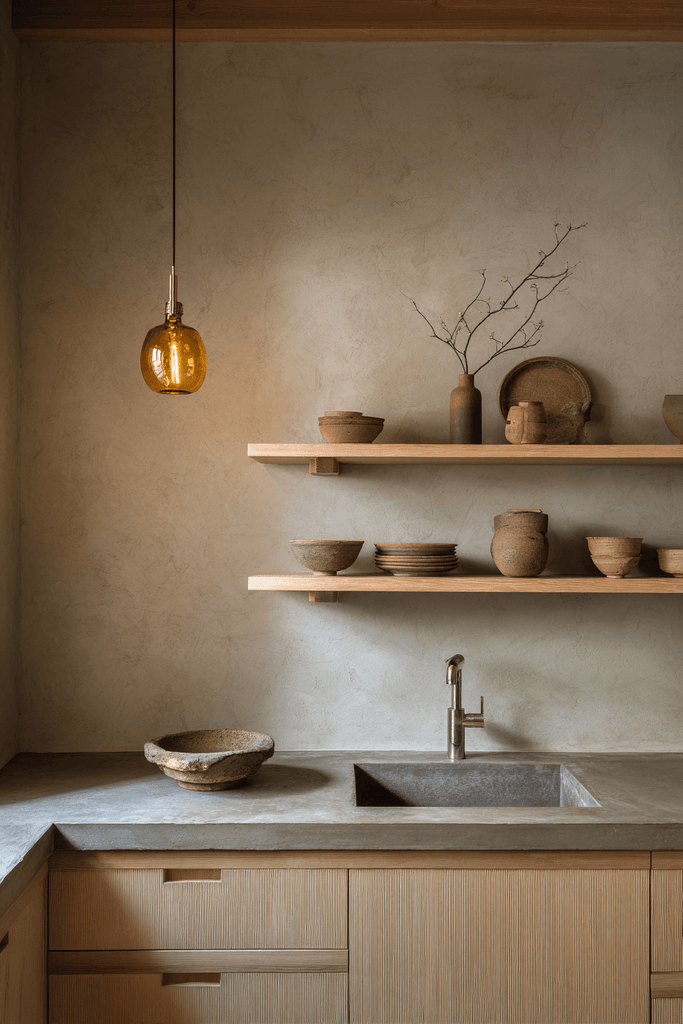
Wabi-sabi — the Japanese philosophy of finding beauty in imperfection and impermanence — translates into one of the most quietly extraordinary kitchen background aesthetics available to the contemporary designer. Matte clay-plastered walls in a warm greige tone envelope the space in an almost geological calm, while flat-panel linen-coloured cabinetry with no visible hardware maintains an uncluttered serenity. A simple stone sink and hand-thrown ceramic dishware in earthy glazes sit on hinoki cypress shelves, their irregular forms a deliberate celebration of the handmade. A single pendant in hand-blown amber glass casts a gentle, centered glow, and light from a shoji-screened window arrives softened, as though filtered through rice paper.
Key Design Tips:
- Clay or lime plaster walls are the single most effective investment in achieving authentic wabi-sabi texture — paint cannot replicate their depth.
- Choose handleless cabinetry in undyed, natural-toned finishes — linen, greige, and warm off-white are ideal.
- Source hand-thrown ceramics from independent potters; their natural irregularity is the heart of the wabi-sabi aesthetic.
- Shoji screens or frosted glass on windows preserve privacy while allowing soft, diffused light that flatters the matte material palette.
8. Bold Maximalism: Forest Green, Terrazzo, and Jewel-Toned Glass
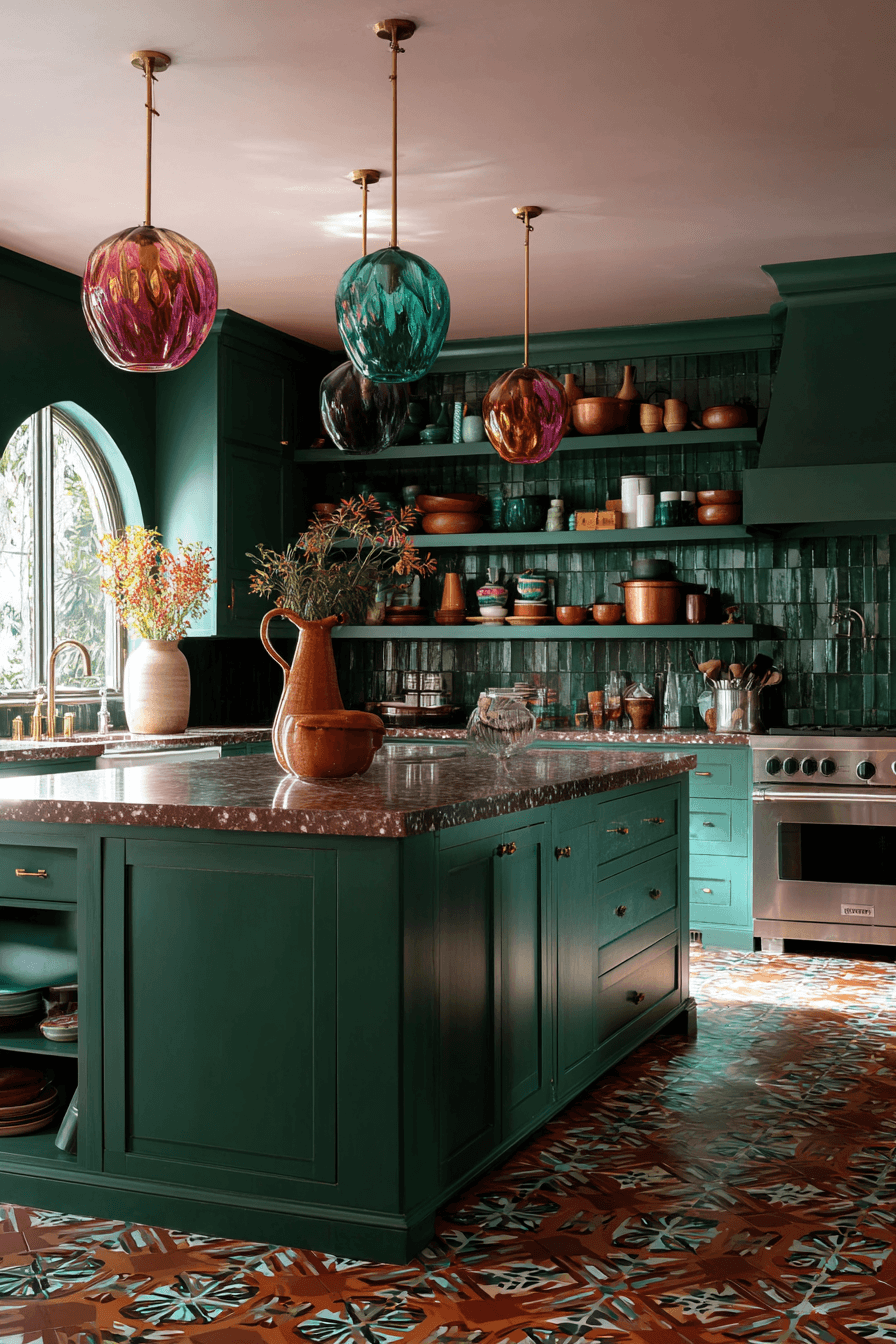
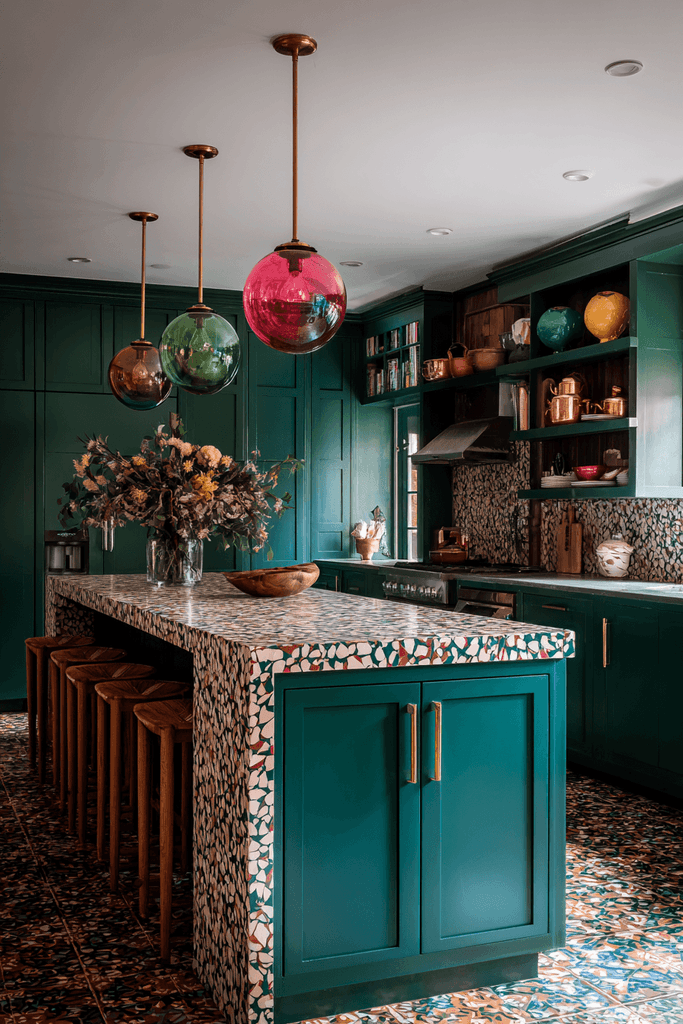
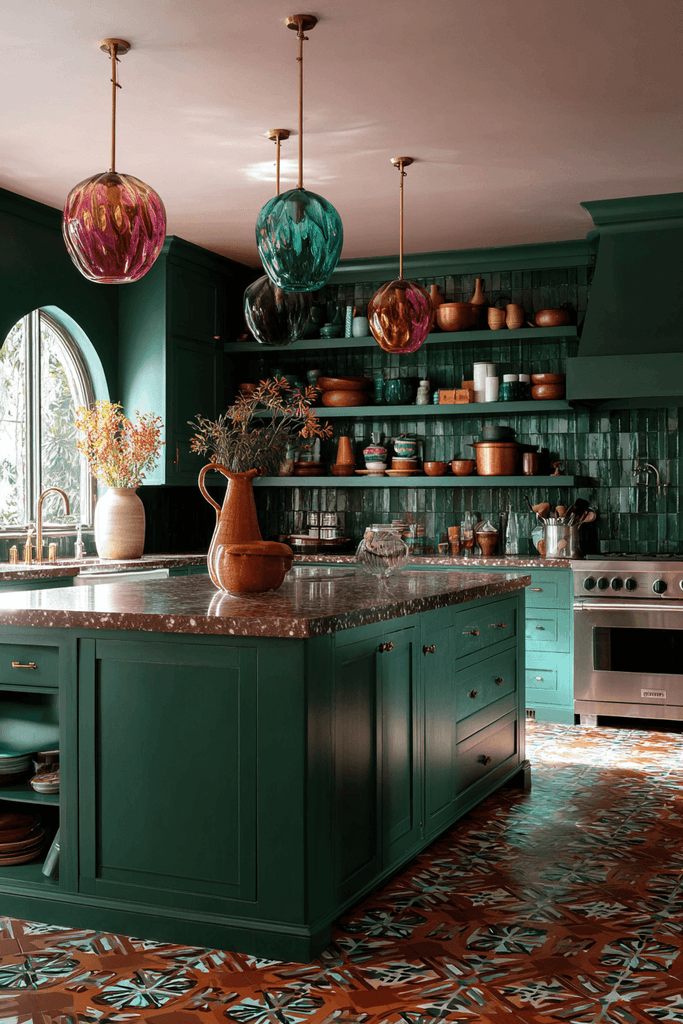
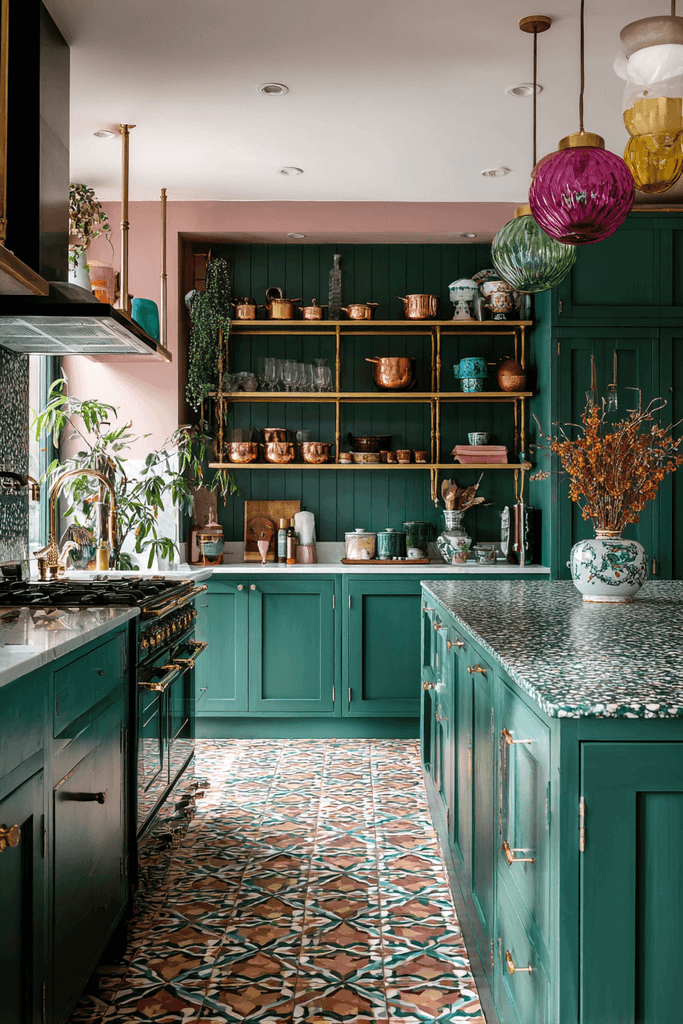
For the fearless decorator, the maximalist kitchen background aesthetic is not excess — it is abundance, deliberately orchestrated. Deep forest green cabinetry commands the room with the quiet authority of an ancient landscape, while a terrazzo countertop in speckled charcoal and pink introduces a playfulness that keeps the drama from becoming oppressive. Patterned Spanish floor tiles in terracotta and cobalt anchor the space with cultural richness, and open brass shelving holds colourful vintage ceramics and copper pots that gleam like treasure. Jewel-toned blown glass pendants above the island cast pools of coloured light that shift with the hour, making this kitchen background aesthetic a living, breathing work of art.
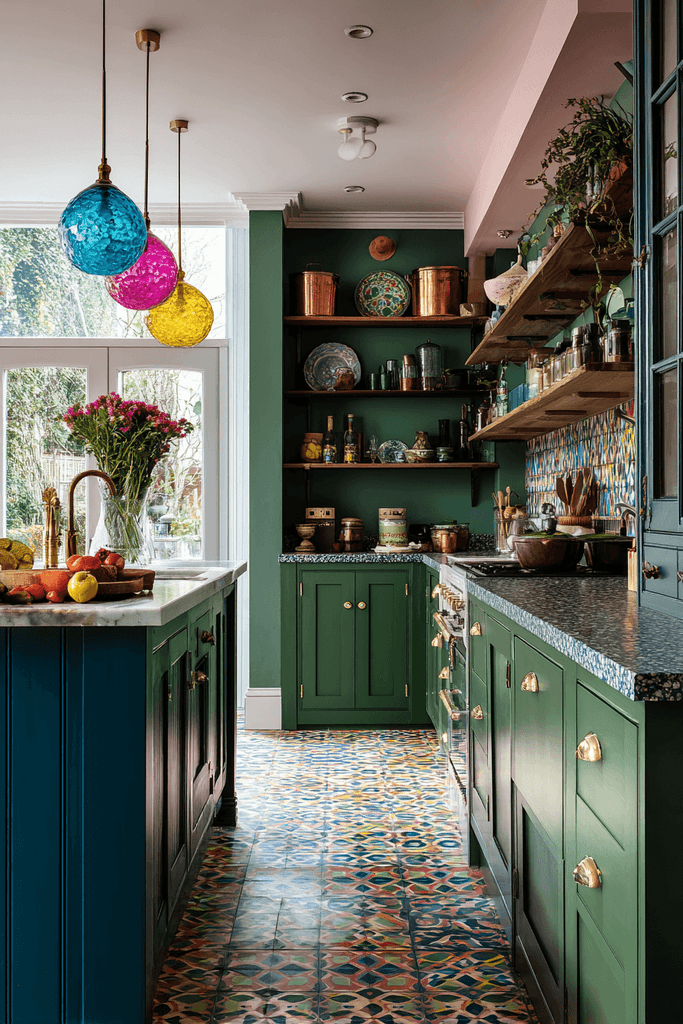
Key Design Tips:
- In maximalist design, balance is more important than restraint — ensure strong colours are distributed across the vertical and horizontal planes of the space.
- Terrazzo countertops are highly durable, heat-resistant, and available in an enormous range of aggregate colours; commission a custom mix to complement your cabinetry.
- Brass open shelving should be styled with intention — group objects by colour, material, and height to avoid visual chaos.
- Jewel-toned pendant glass in amber, emerald, or cobalt creates magical light effects at dusk and evening.
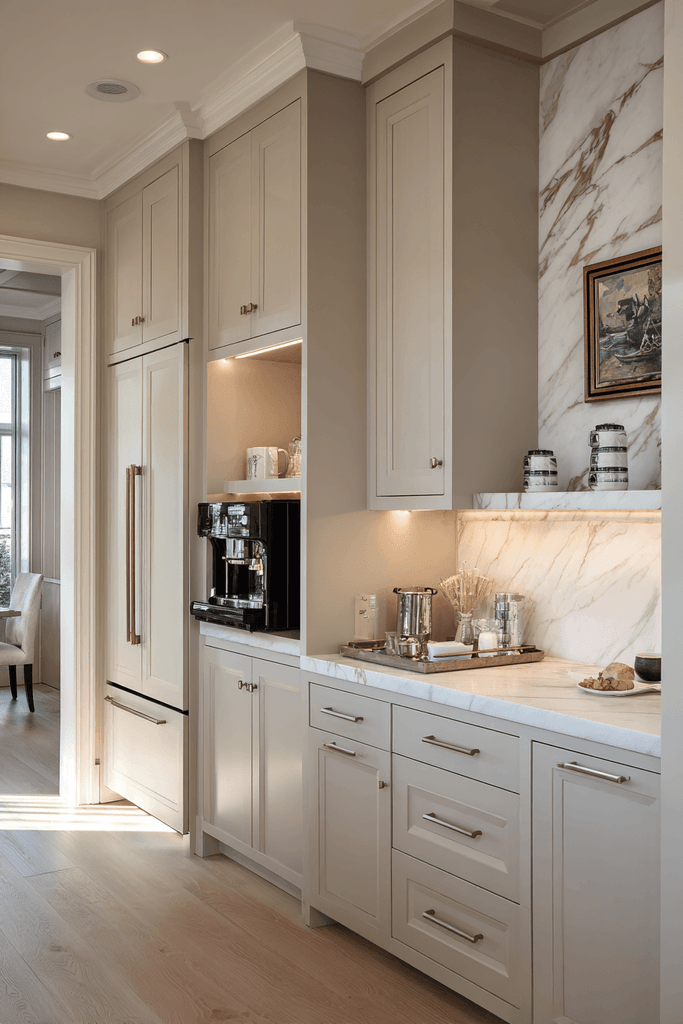
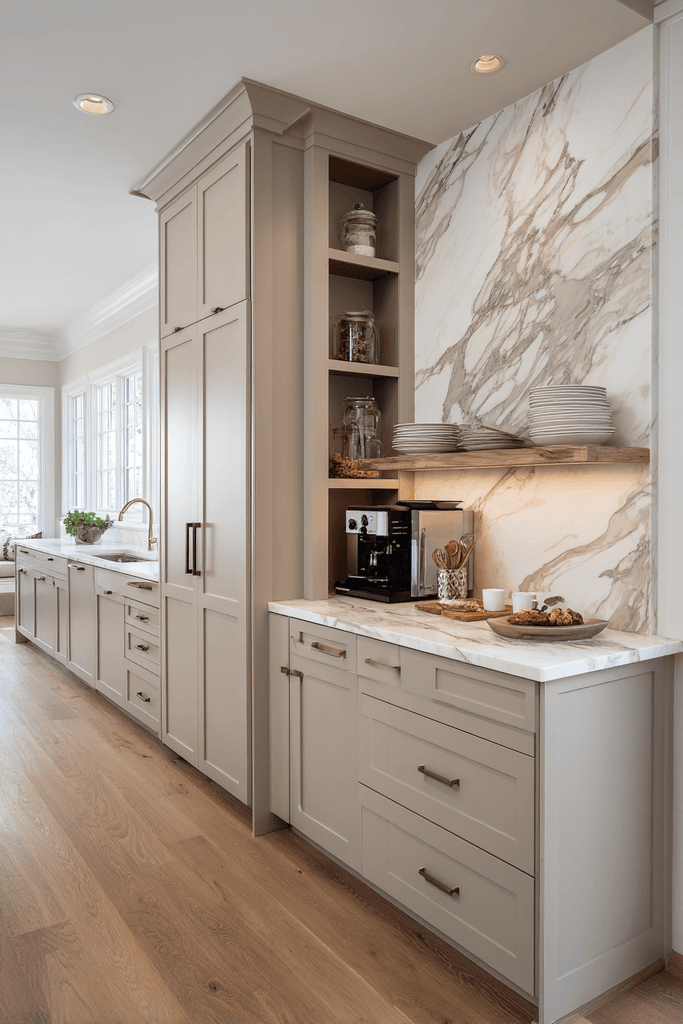
9. Transitional Elegance: Greige Cabinetry and Calacatta Marble Slabs
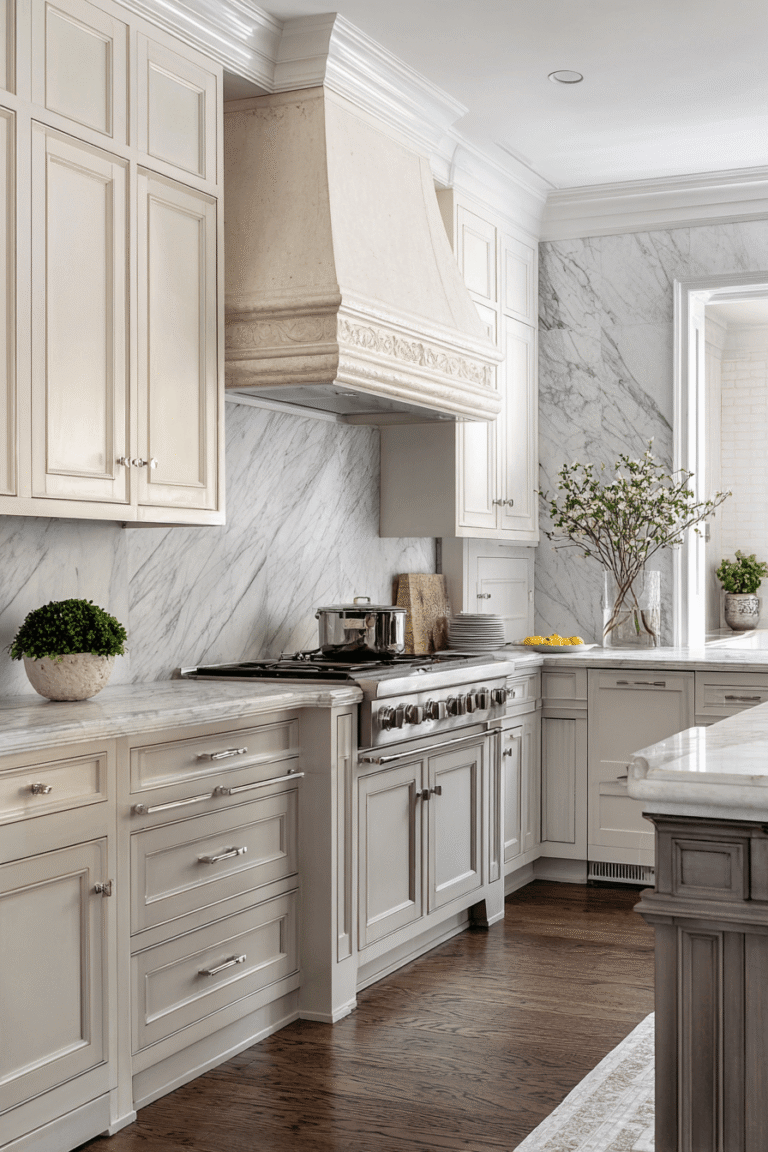
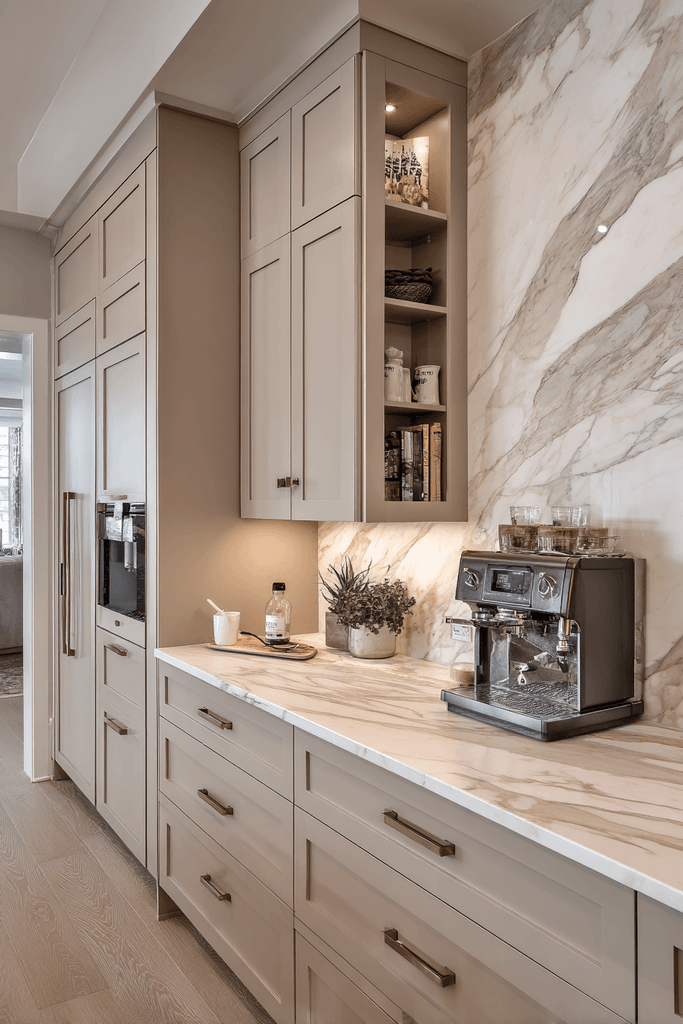
The transitional kitchen background aesthetic is the art of the perfectly calibrated middle ground — neither strictly traditional nor rigidly modern, but drawing the finest qualities from both. Warm greige painted cabinetry with oil-rubbed bronze hardware occupies this graceful in-between space effortlessly, while a honed Calacatta marble countertop extending into a full-height backsplash slab delivers a moment of restrained luxury that anchors the entire room. A built-in coffee station with open niches and a concealed pantry demonstrate the thoughtful functionality at the heart of this style, and recessed lighting paired with undercabinet LED strips ensures the workspace is as practical as it is beautiful.
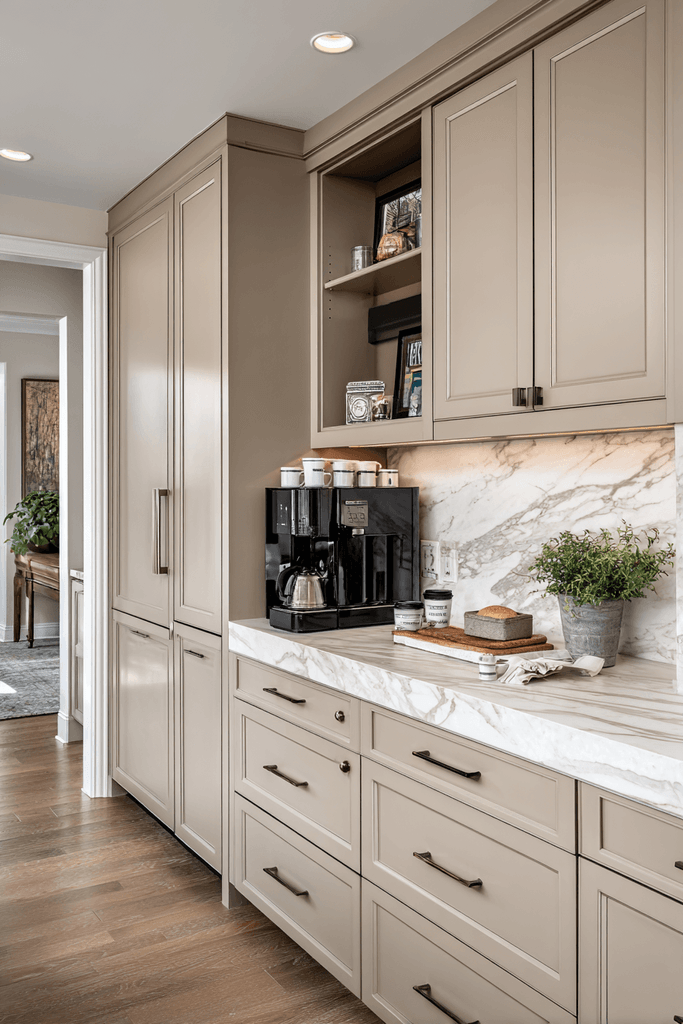
Key Design Tips:
- A full-height marble slab backsplash creates a dramatic, hotel-suite quality that single tile installations cannot achieve — book-matched slabs amplify this effect further.
- Oil-rubbed bronze hardware is the ideal bridge finish between traditional warmth and contemporary restraint.
- Built-in coffee stations and concealed pantries are the hallmarks of high-end transitional kitchen planning — invest in a cabinetmaker who understands integrated design.
- Layer recessed ceiling lighting with undercabinet strips for a kitchen that is both beautifully lit for photography and genuinely functional for daily cooking.
10. Coastal Cottage Breeze: Whitewashed Beadboard and Sea Glass Green
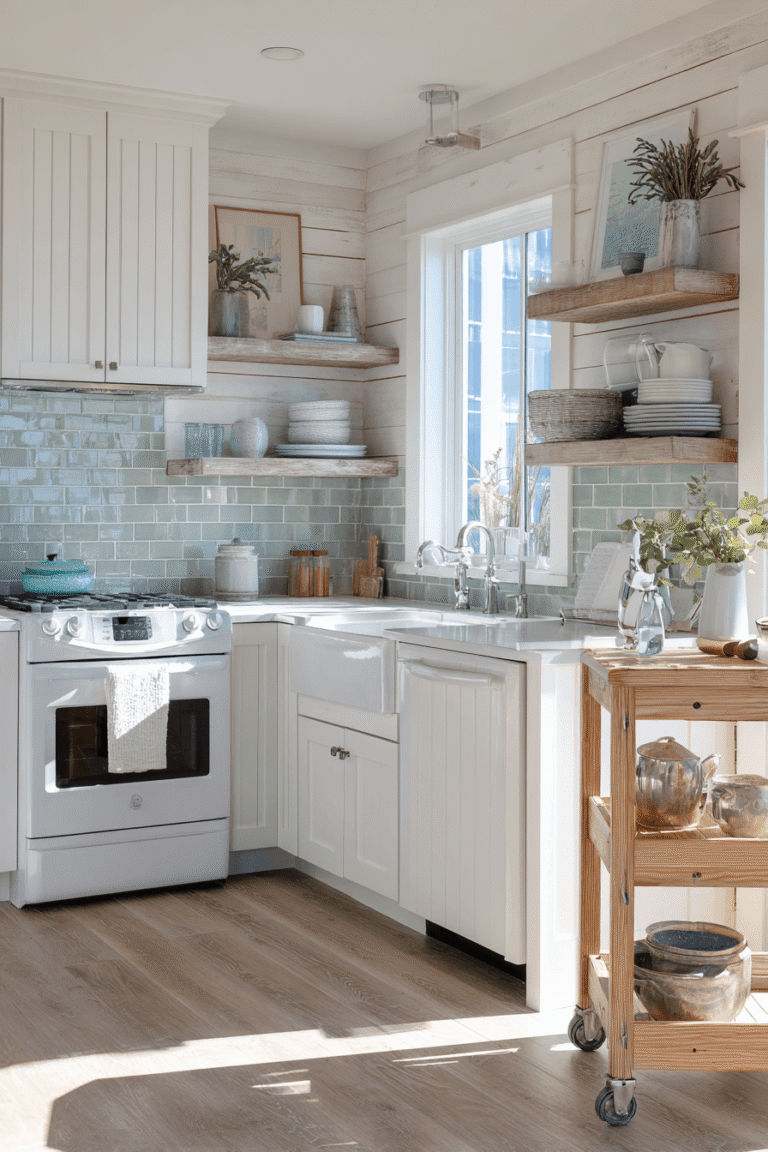
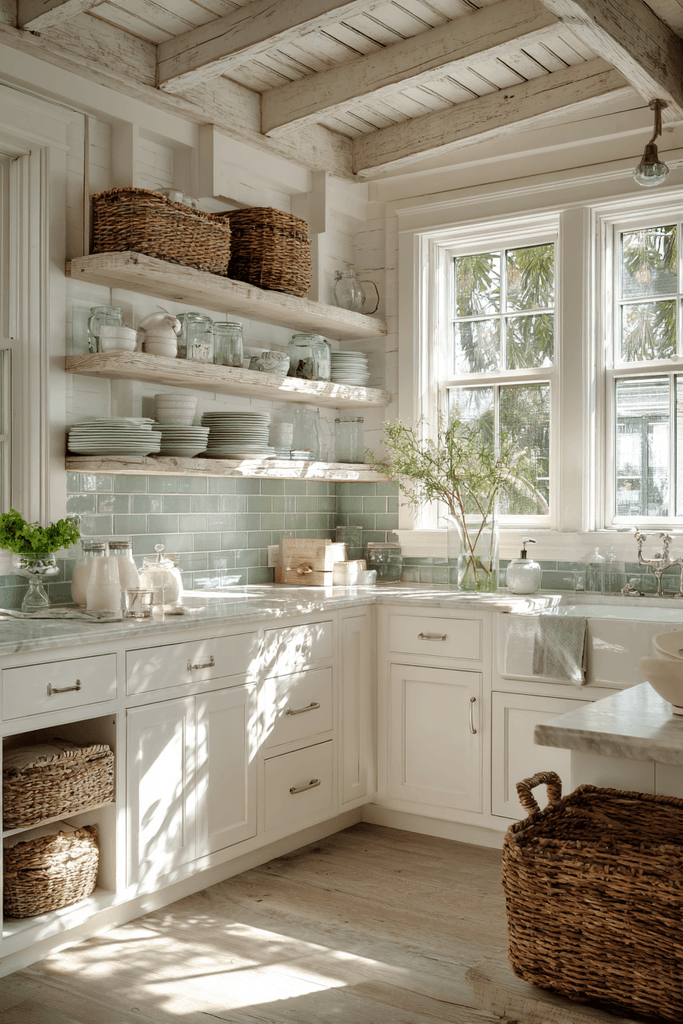
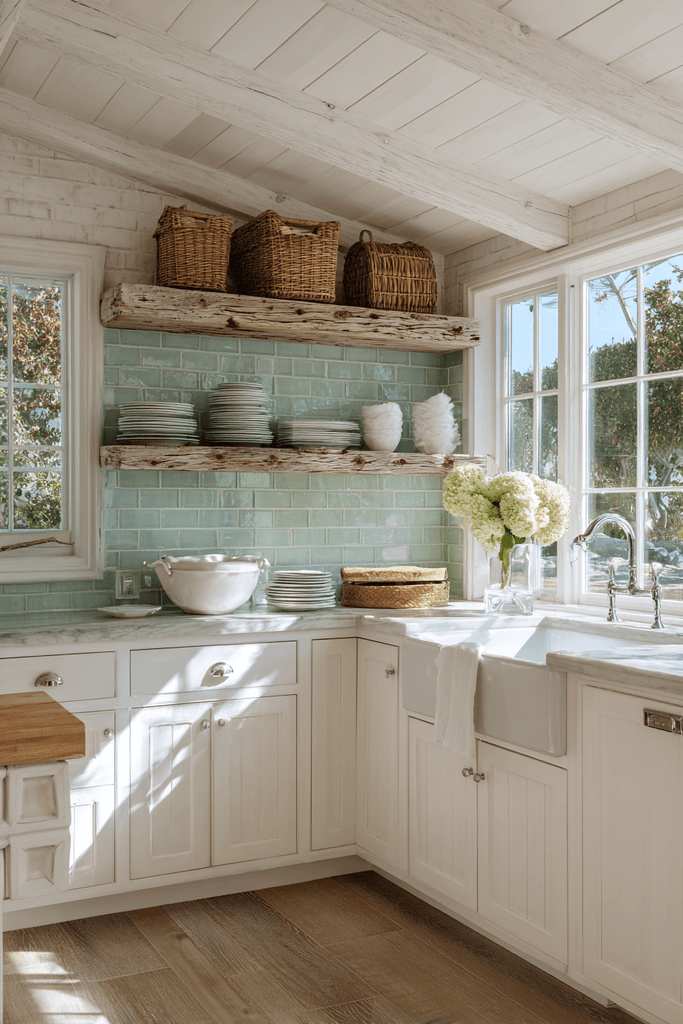
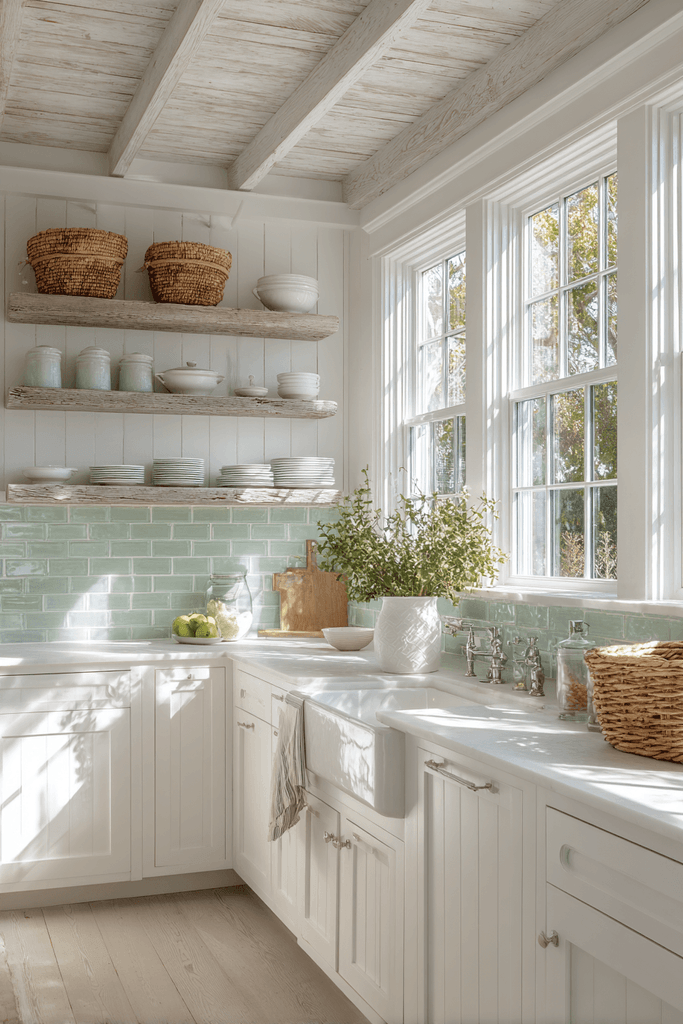
The coastal kitchen background aesthetic carries with it the sensation of salt air and the sound of water — an ease of living that is immediately felt upon entering the space. Whitewashed beadboard cabinetry with its characteristic vertical rhythm speaks to a long tradition of seaside architecture, while a sea glass green subway tile backsplash introduces colour with the restraint of a painter who knows when to stop. Weathered driftwood open shelves display woven baskets and white ceramic bowls, and an aged fireclay farmhouse sink beneath a window looks out to greenery, blurring the boundary between interior and garden. Bright natural light from multiple windows creates a softness that is the defining quality of this beloved aesthetic.
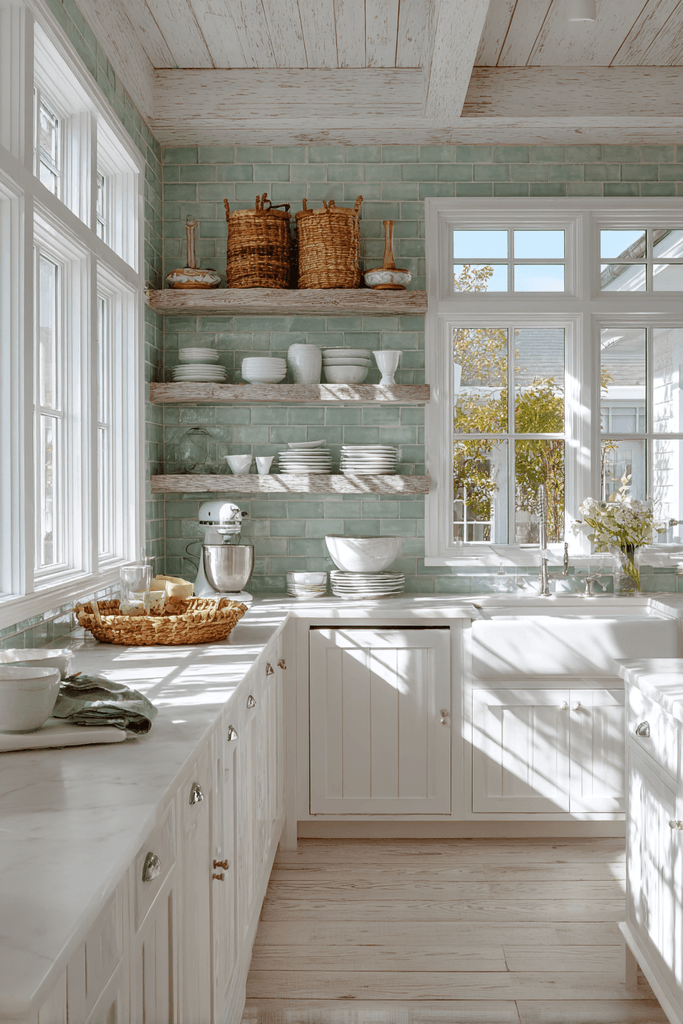
Key Design Tips:
- Whitewash or lime-paint beadboard rather than using standard white paint — the translucent quality of a wash allows the wood grain to show through for a more authentic coastal result.
- Sea glass green, soft aqua, and sandy off-white are the essential coastal kitchen palette — resist the temptation to introduce too many competing hues.
- A tongue-and-groove or beadboard ceiling extends the coastal character vertically, making the space feel like a true cottage interior.
- Woven textures — seagrass, rattan, and wicker — are the coastal equivalent of throw pillows: essential, layerable, and endlessly versatile.
Why These Kitchen Background Aesthetics Represent the Best in Modern Design
Across these ten distinct styles — from the warm farmhouse kitchen aesthetic and moody navy kitchen design to the Scandinavian minimalist kitchen, Mediterranean encaustic tile kitchen, industrial concrete kitchen, Japanese wabi-sabi kitchen, maximalist green kitchen, transitional marble kitchen, and coastal cottage kitchen — a common thread of intentionality runs through every choice. Each aesthetic succeeds because it commits fully to a design language: every material, every finish, every light source, and every accessory is chosen in service of a singular, coherent vision. These are not kitchens assembled from trend reports; they are kitchens built from a deep understanding of how human beings respond to space, light, texture, and colour. Whether you are drawn to the serene restraint of a wabi-sabi kitchen background or the joyful exuberance of maximalist cabinetry, the most important design principle is always the same — authenticity of vision.
Conclusion
The kitchen background aesthetic you choose is one of the most expressive design decisions in your home. It shapes how you feel each morning, how your guests experience your hospitality, and how the space functions across the full spectrum of daily life. The ten styles explored in this article — spanning rustic and refined, minimal and maximal, coastal and continental — demonstrate that there is no single correct approach, only the approach that is most authentically yours. Take the elements that resonate, apply the key design tips that speak to your practical reality, and don’t be afraid to mix the threads of two or three aesthetics into something entirely personal. The most memorable kitchens are never carbon copies of a style — they are the places where good design meets real life, and where every meal begins with a sense of pleasure in the space itself.