10 Charming Cottage Kitchen Design Ideas to Transform Your Home
The kitchen has always been the heart of the home, and nowhere is this more true than in a cottage setting. Cottage kitchen design captures something deeply human — the warmth of a well-worn surface, the scent of dried herbs, the gentle light filtering through linen curtains. Unlike sleek modern kitchens built for visual spectacle, cottage kitchens are built for living. They invite you to linger, to bake, to gather. Whether you’re renovating a countryside retreat or simply longing to bring that cozy, storied aesthetic into your city home, the ideas ahead offer ten beautifully distinct interpretations of the cottage kitchen — from romantic floral-tiled spaces to snug winter hearth kitchens — each one grounded in authentic materials, timeless character, and thoughtful design.
1. Open Shelving and Farmhouse Sink Cottage Kitchen
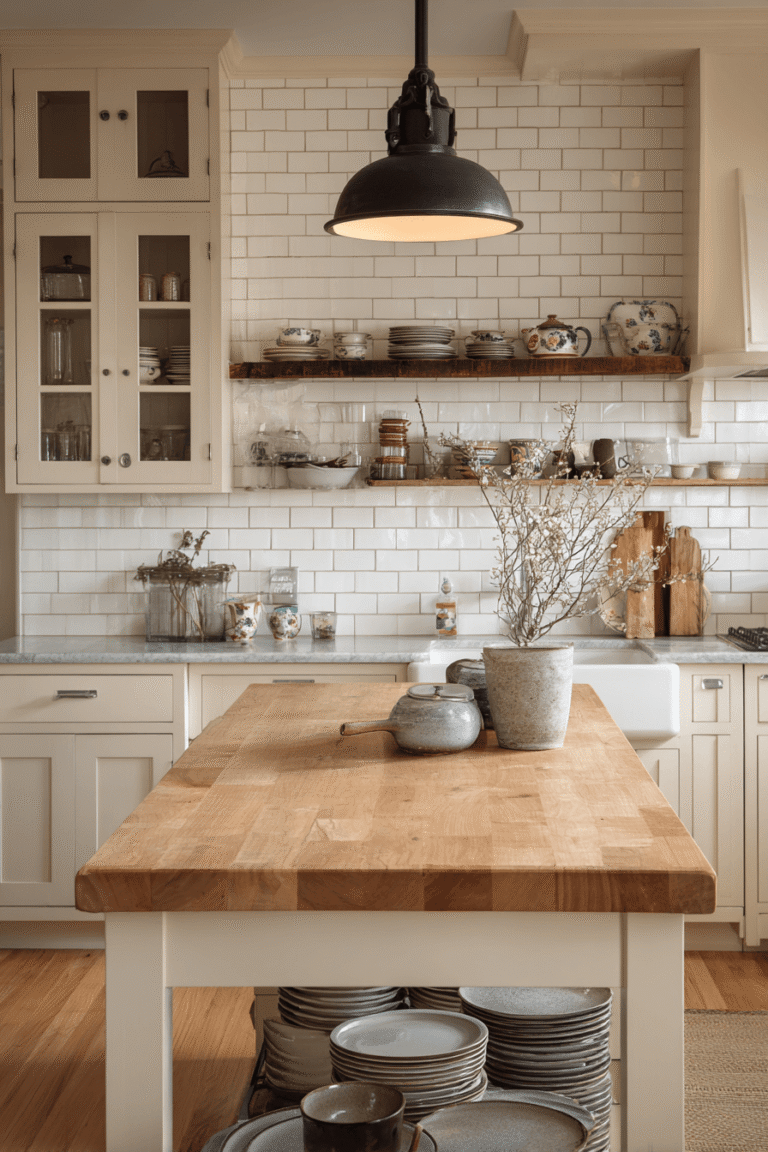
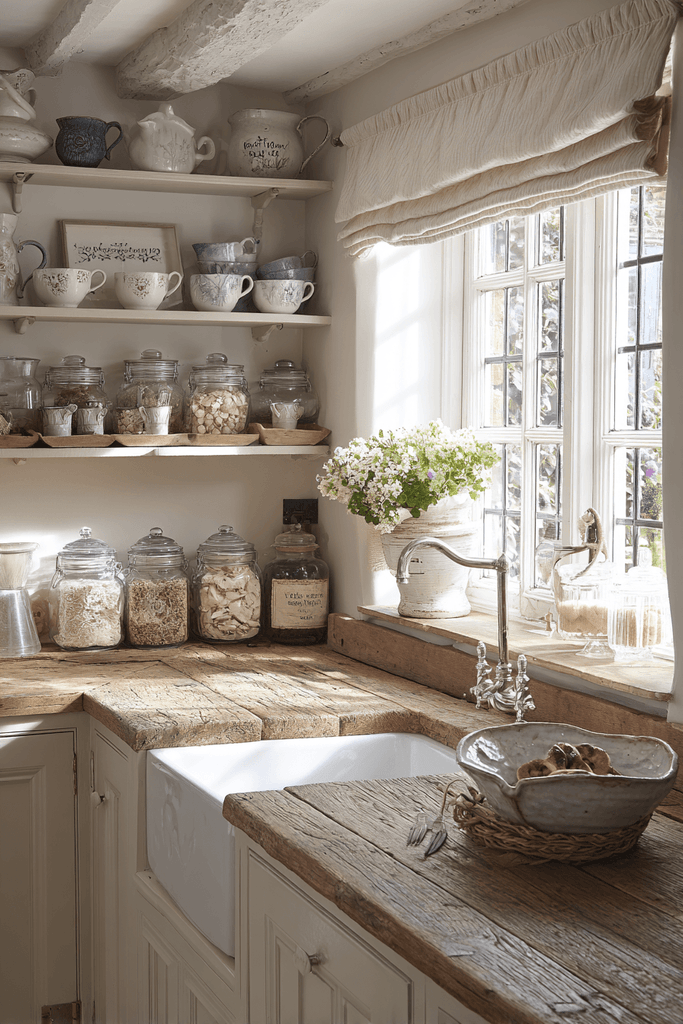
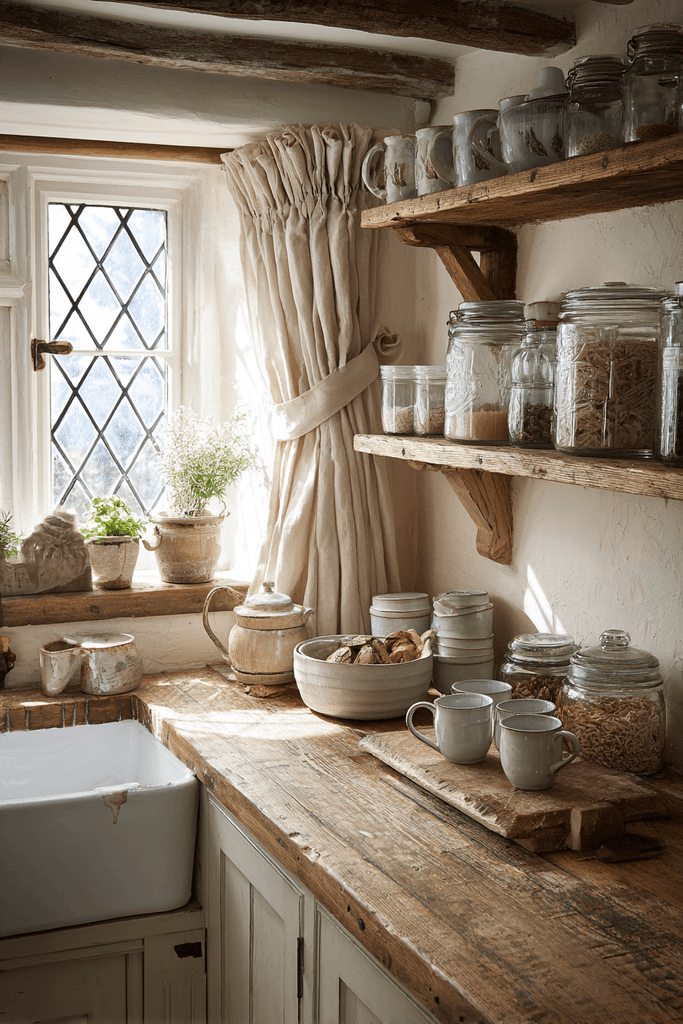
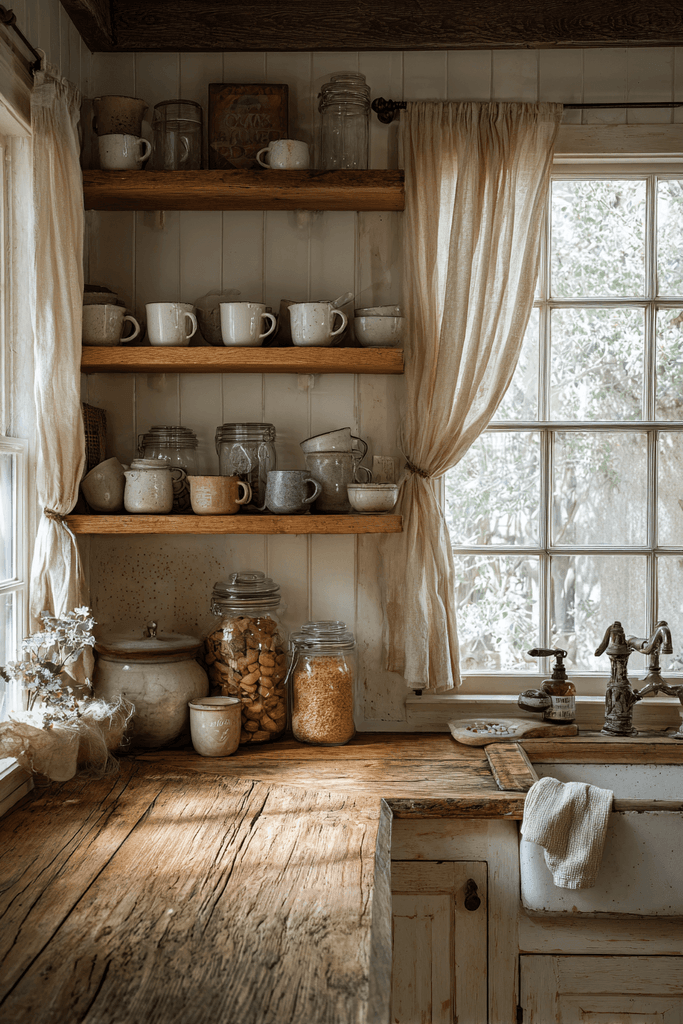
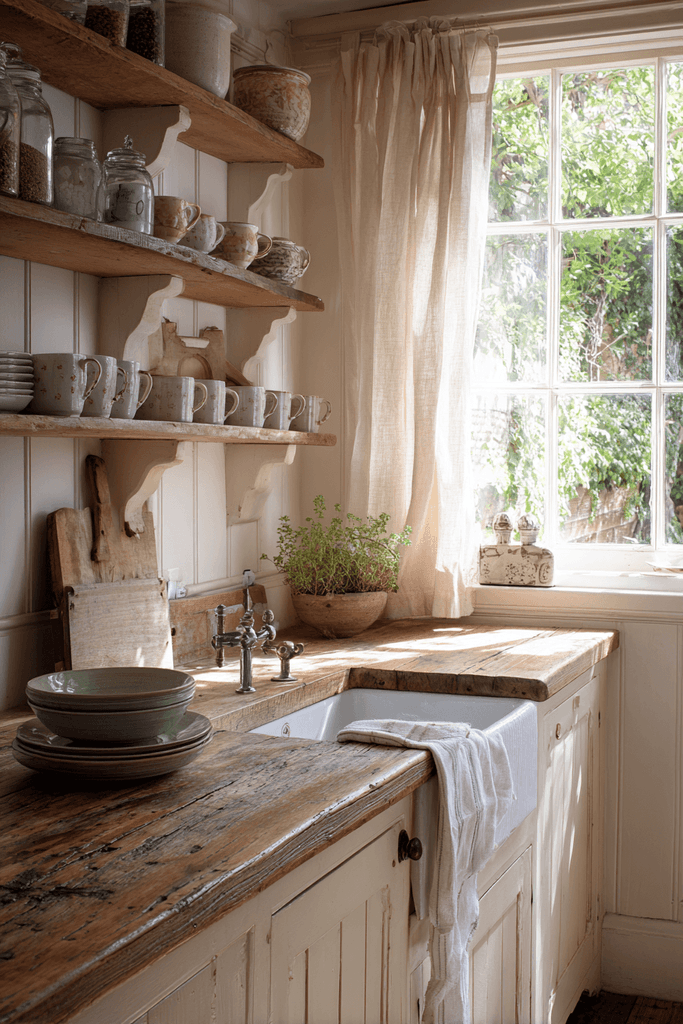
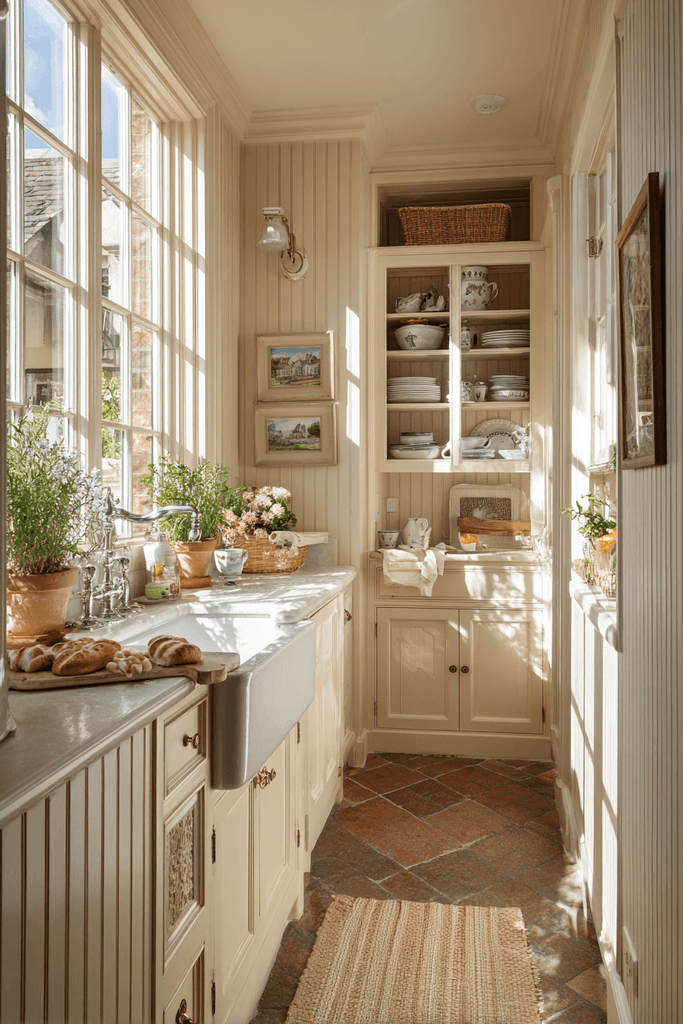
Step into a kitchen where every surface tells a story. Cream-painted wooden shelving lines the walls, holding hand-thrown ceramic mugs and vintage glass jars filled with dried goods — a display that’s equal parts practical and beautiful. A worn farmhouse sink sits beneath a small mullioned window dressed with linen café curtains, drawing in the soft warmth of morning light. Reclaimed wood countertops carry natural grain and subtle wear patterns that only deepen in beauty over time. This is cottage kitchen design at its most honest — unpretentious, tactile, and radiating the kind of warmth no showroom can replicate.
Key Design Tips:
- Choose open wooden shelving in soft cream or white to display curated ceramics and glassware
- Source a genuine farmhouse sink for its deep basin and timeless silhouette
- Use reclaimed wood countertops to introduce authentic texture and warmth
- Dress windows with natural linen fabrics to soften light without blocking it
- Display everyday items — mugs, jars, boards — as part of the décor
2. Sage Green Shaker Kitchen with Butcher Block Island
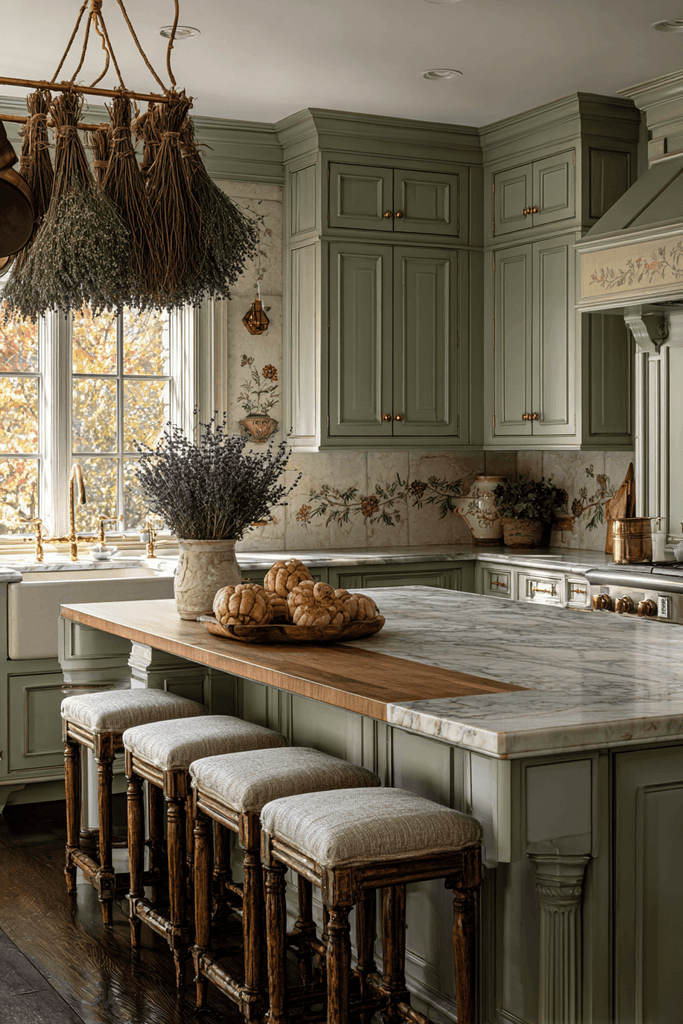
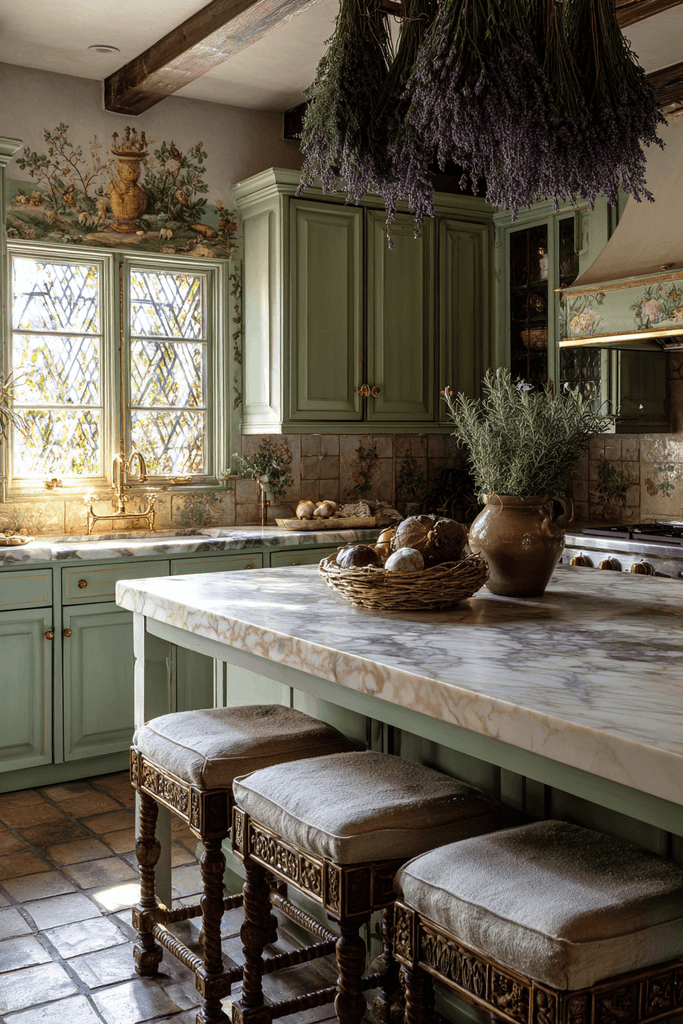
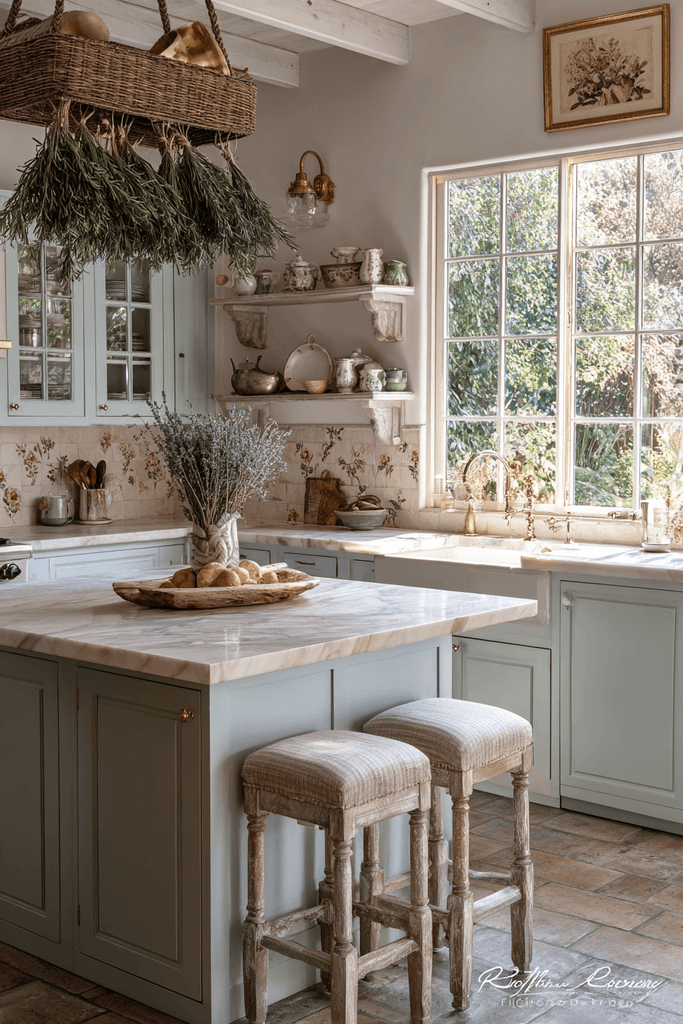
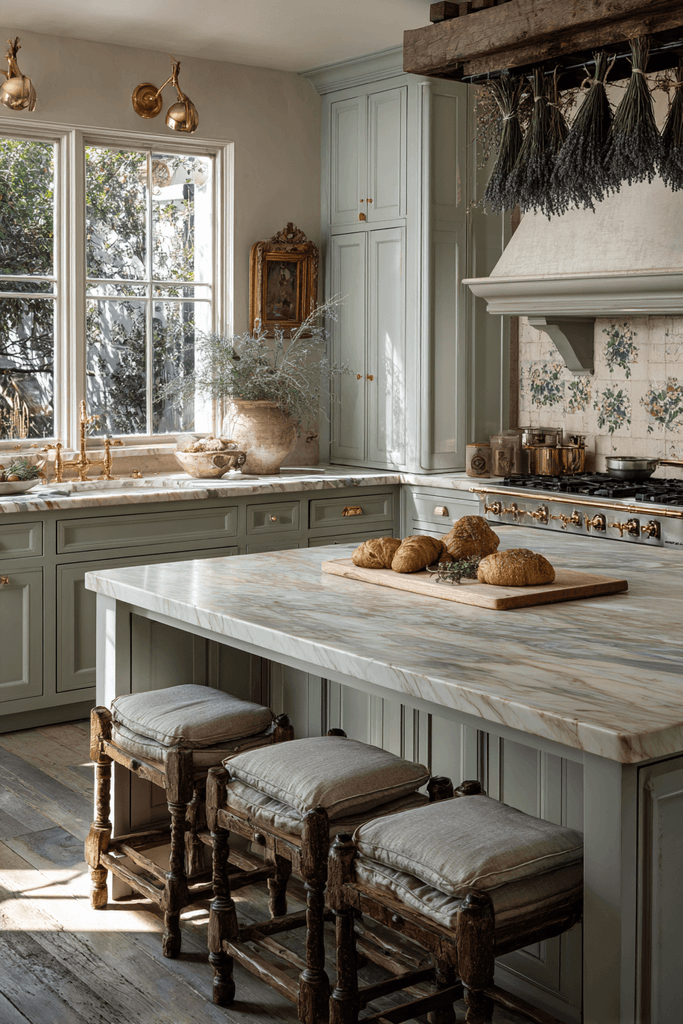
At the center of this enchanting kitchen stands a butcher block island topped with a cool marble pastry slab, surrounded by mismatched vintage stools with cushioned seats — an effortlessly charming combination of function and character. Sage green Shaker cabinetry lines the walls, fitted with aged brass hardware that catches the golden afternoon light. A hand-painted tile backsplash in soft floral motifs adds a romantic, artisanal touch, while bundles of dried lavender hang from an overhead pot rack, perfuming the air with countryside calm. Every detail in this space is considered, layered, and utterly livable.
Key Design Tips:
- Paint Shaker cabinets in muted sage green for a grounded, nature-connected palette
- Pair aged brass hardware with hand-painted decorative tiles for artisanal warmth
- Top your kitchen island with butcher block for warmth and a marble slab for pastry work
- Hang dried botanicals — lavender, rosemary, eucalyptus — overhead for fragrance and texture
- Combine mismatched seating around islands for an effortlessly collected aesthetic
3. Exposed Beam Countryside Cottage Kitchen with Aga Range
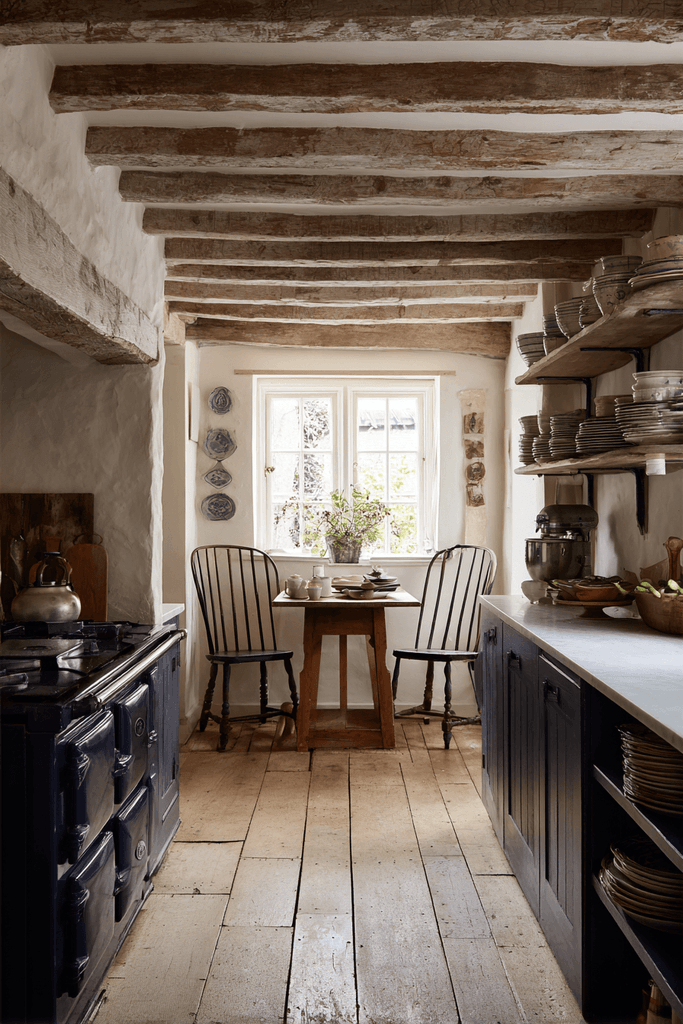
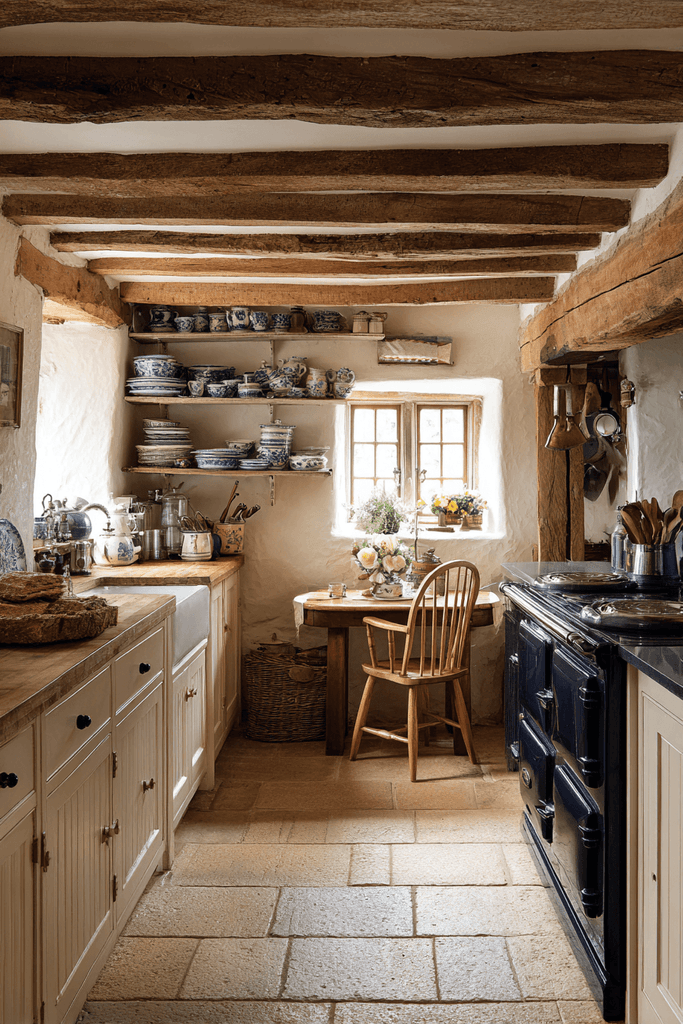
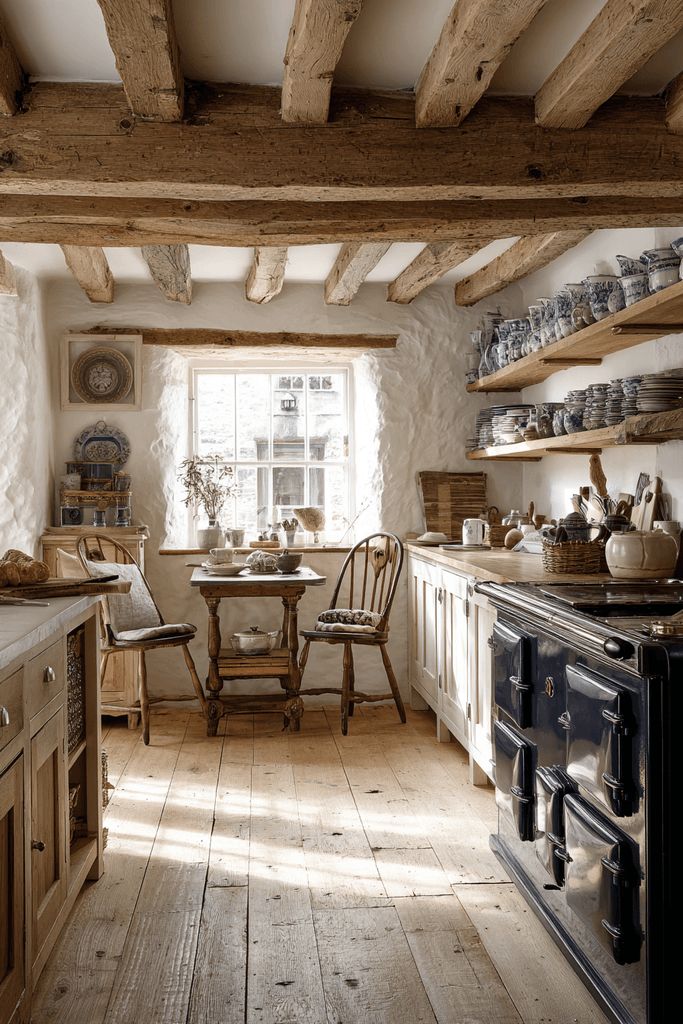
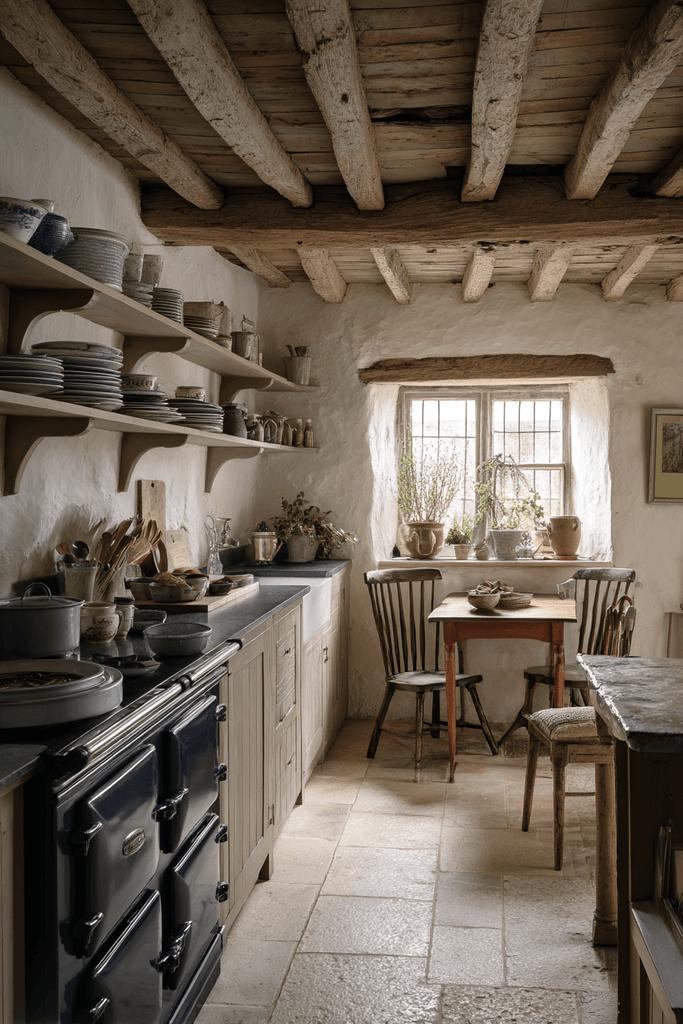
There is something deeply grounding about a kitchen built around natural structural honesty. Exposed ceiling beams in natural oak stretch across this countryside kitchen, complemented by whitewashed plaster walls that carry a subtle rough texture. A classic Aga-style range cooker in deep navy anchors the room with quiet authority, while open shelving holds stacked ironstone plates and cast iron cookware. A small wooden table with spindle chairs tucks neatly beneath the window — an informal dining nook that invites slow mornings and long breakfasts. This is authentic cottage kitchen design for those who want their kitchen to feel genuinely rooted in history.
Key Design Tips:
- Preserve or introduce oak ceiling beams to add architectural character and scale
- Choose a statement range cooker in a deep heritage color like navy or bottle green
- Whitewash plaster walls to maintain brightness while preserving an aged texture
- Stack ironstone and earthenware on open shelves for a curated, rustic display
- Position a small spindle-chair table near the window for a built-in breakfast nook
4. Compact Cottage Kitchen with Clever Storage Design
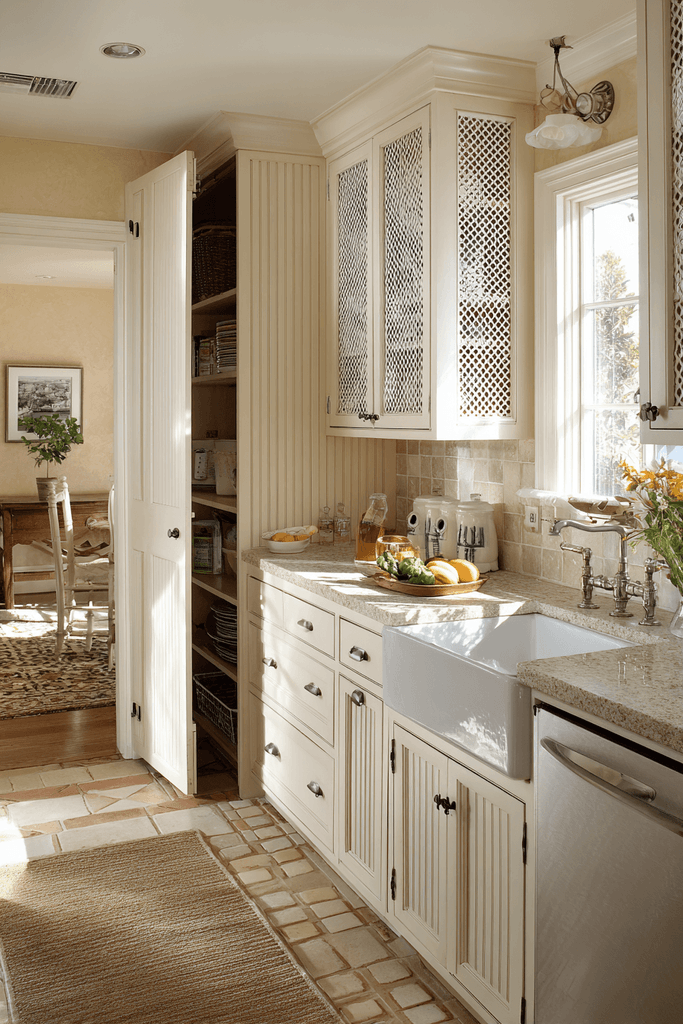
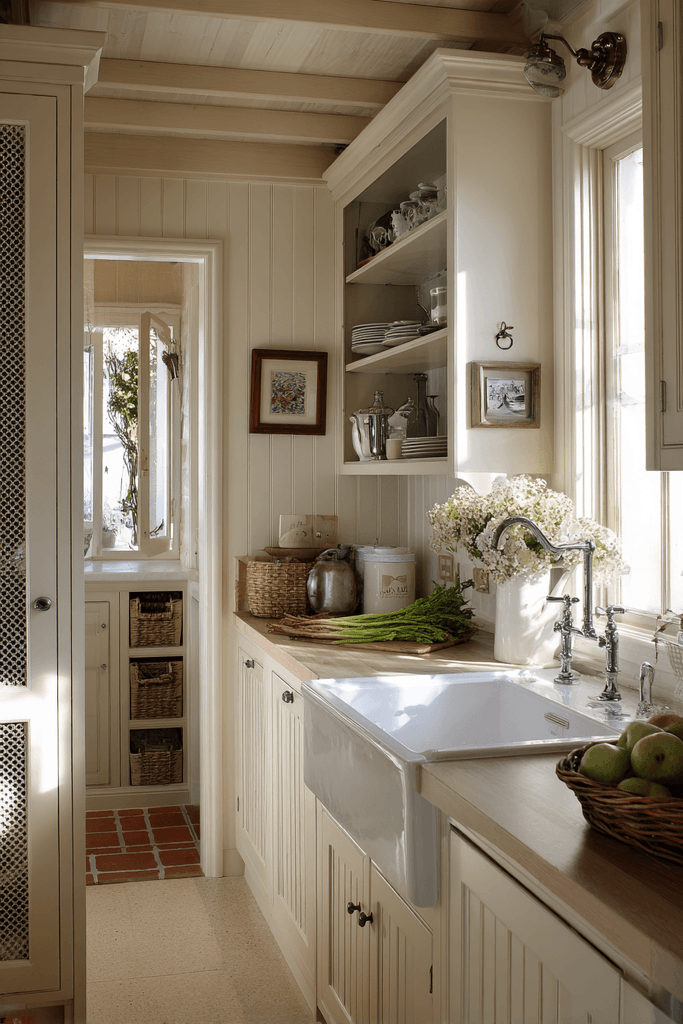
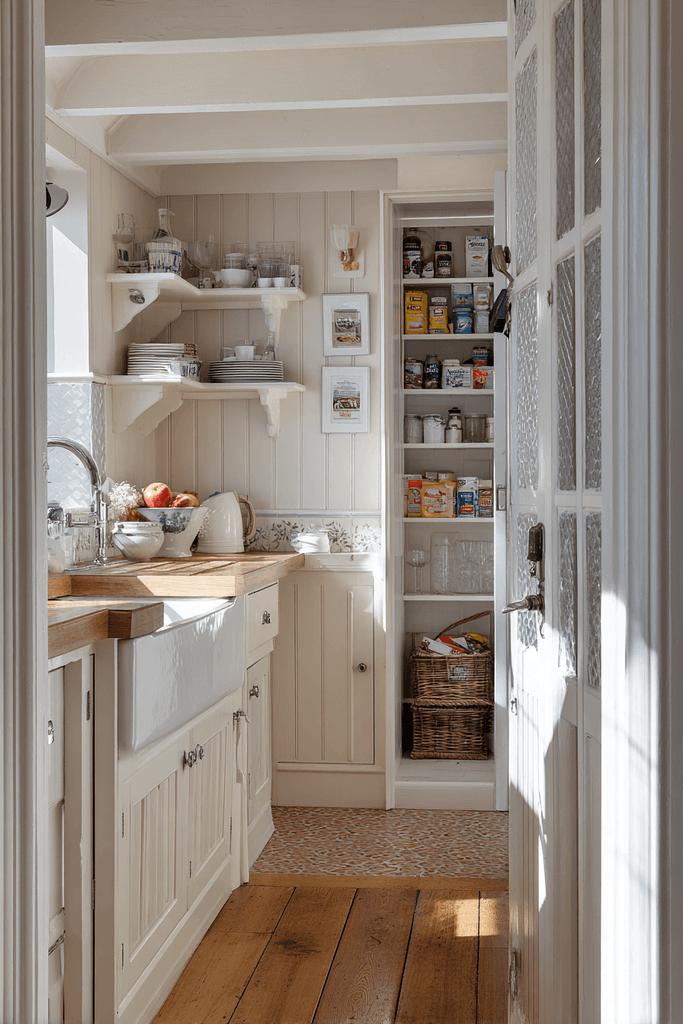
Small kitchens demand creativity, and this design answers that challenge with grace and ingenuity. A floor-to-ceiling pantry cupboard with chicken-wire door inserts — painted in warm buttermilk — offers generous storage while becoming a focal decorative feature. Beadboard wainscoting runs along the lower walls beneath hand-painted terracotta tiles, adding pattern and depth to a compact footprint. A single deep farmhouse sink with a bridge faucet in brushed nickel anchors the layout with quiet elegance. This is proof that cottage kitchen design doesn’t require space to succeed — it requires thoughtfulness.
Key Design Tips:
- Install a full-height pantry cupboard with wire-insert doors for practical, decorative storage
- Use beadboard wainscoting on lower walls to add period-appropriate texture
- Select hand-painted terracotta tiles for a backsplash that feels genuinely crafted
- Choose a bridge-style faucet in brushed nickel for understated vintage elegance
- Paint cabinetry in warm, creamy tones to maximize the sense of light in small spaces
5. Freestanding Dresser and Transferware Cottage Kitchen
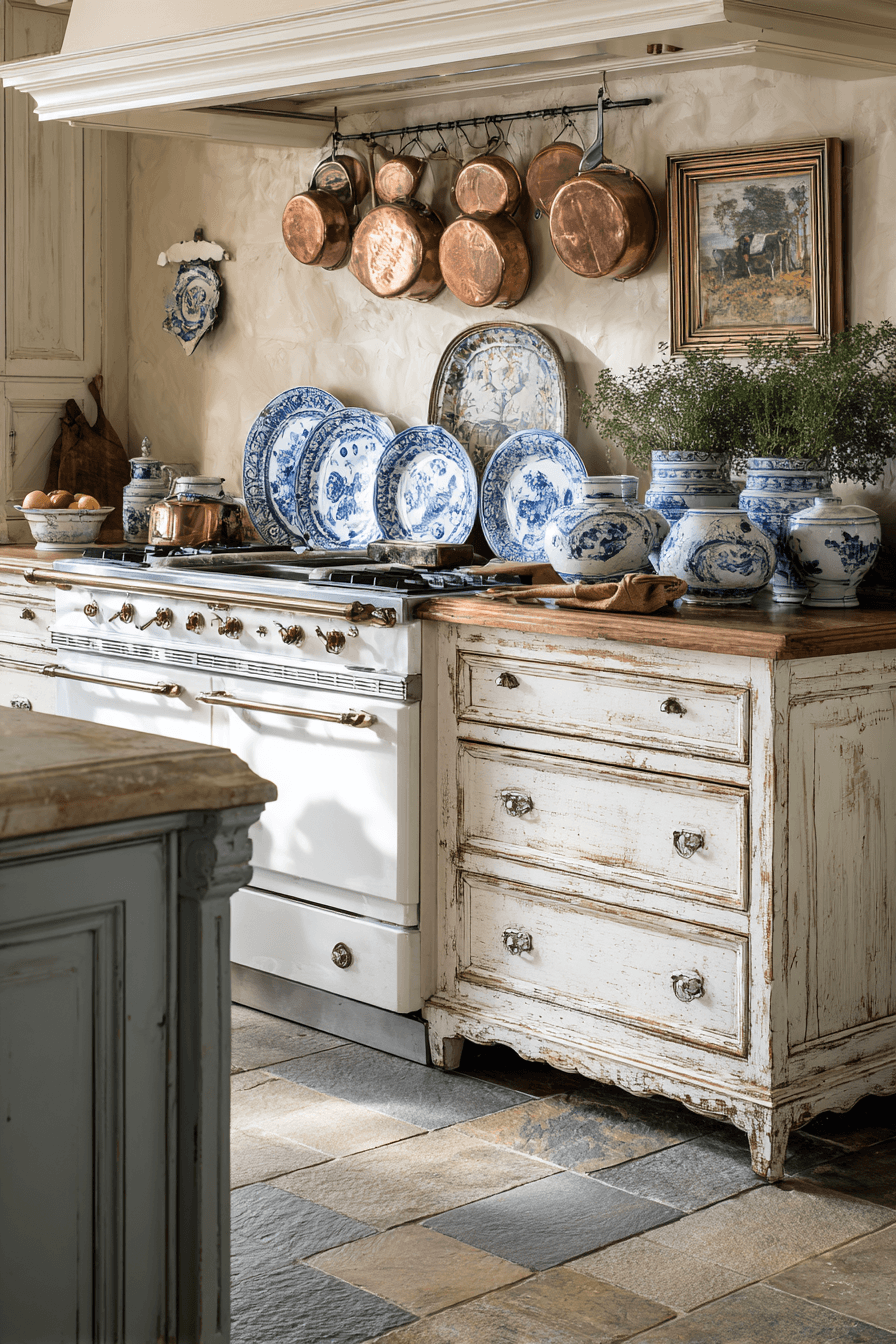
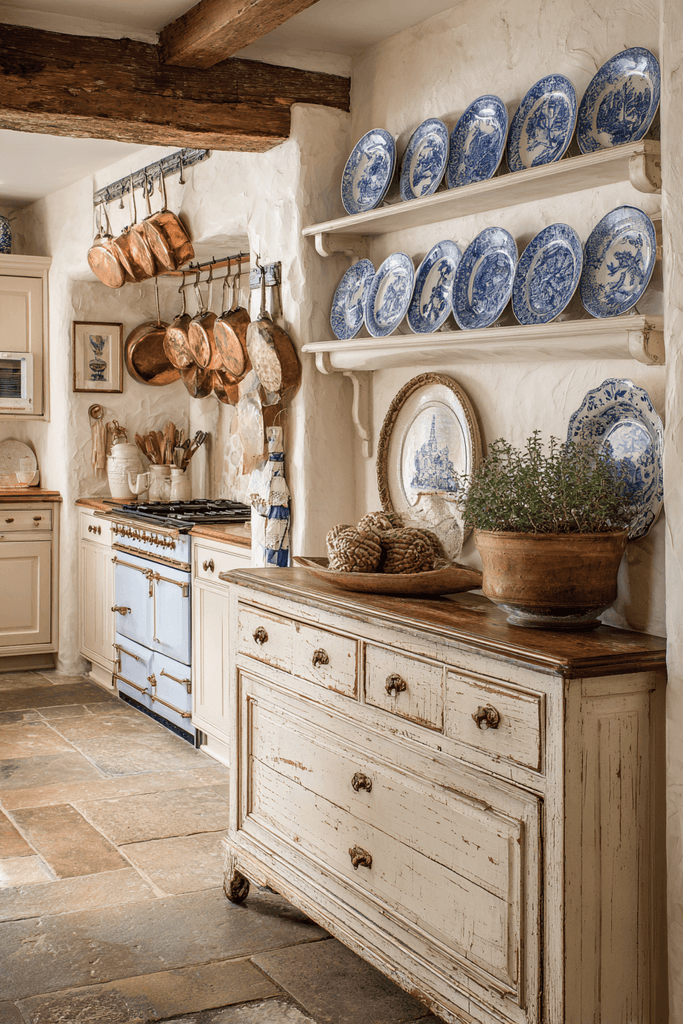
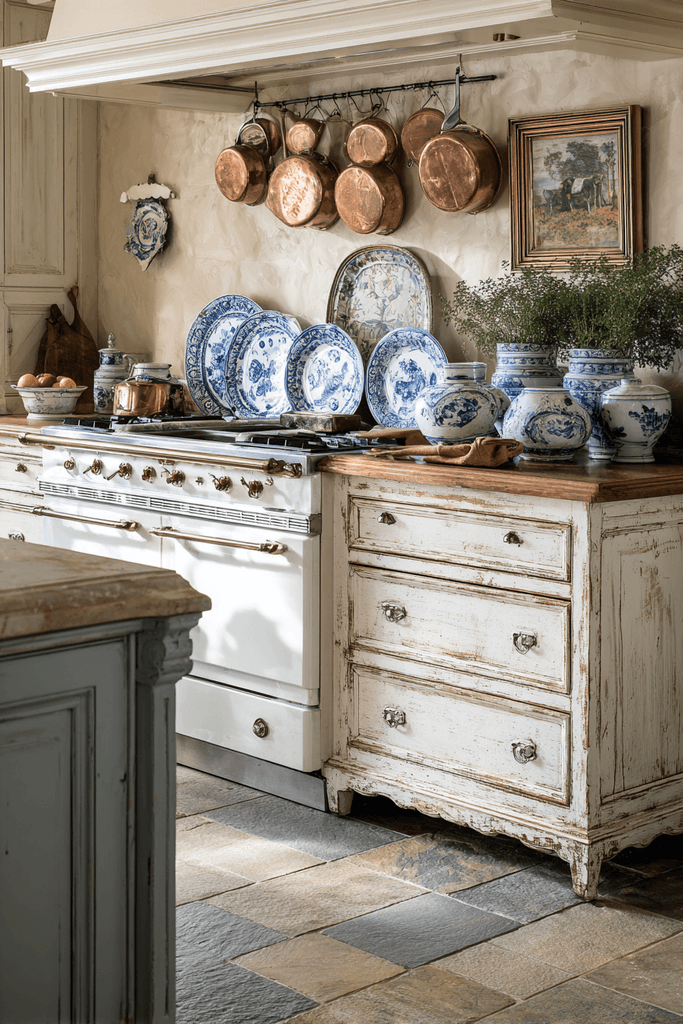
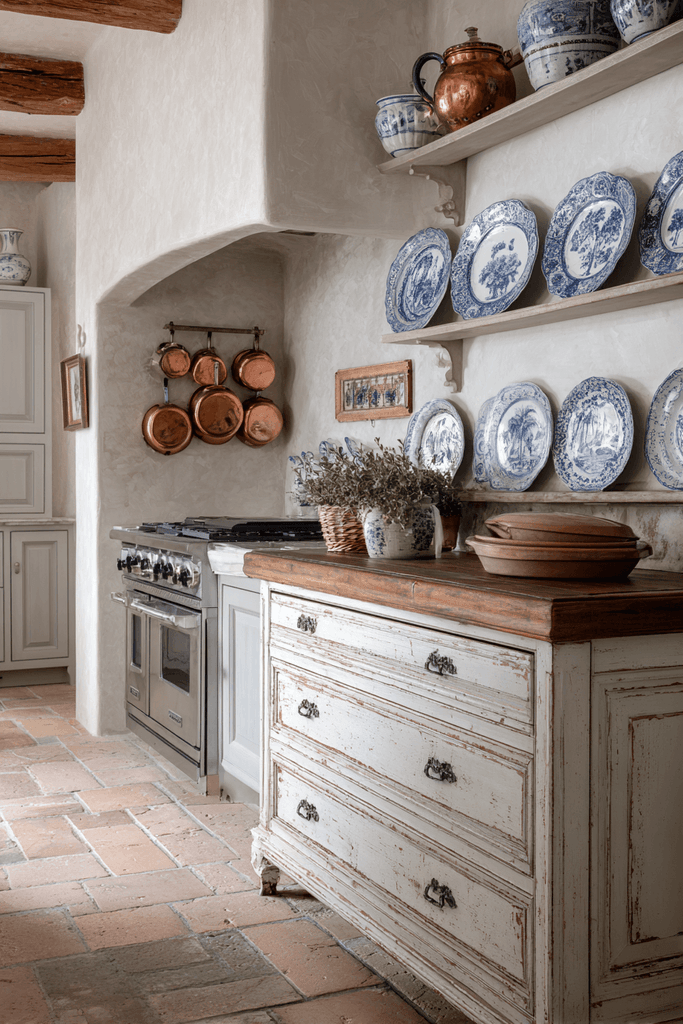
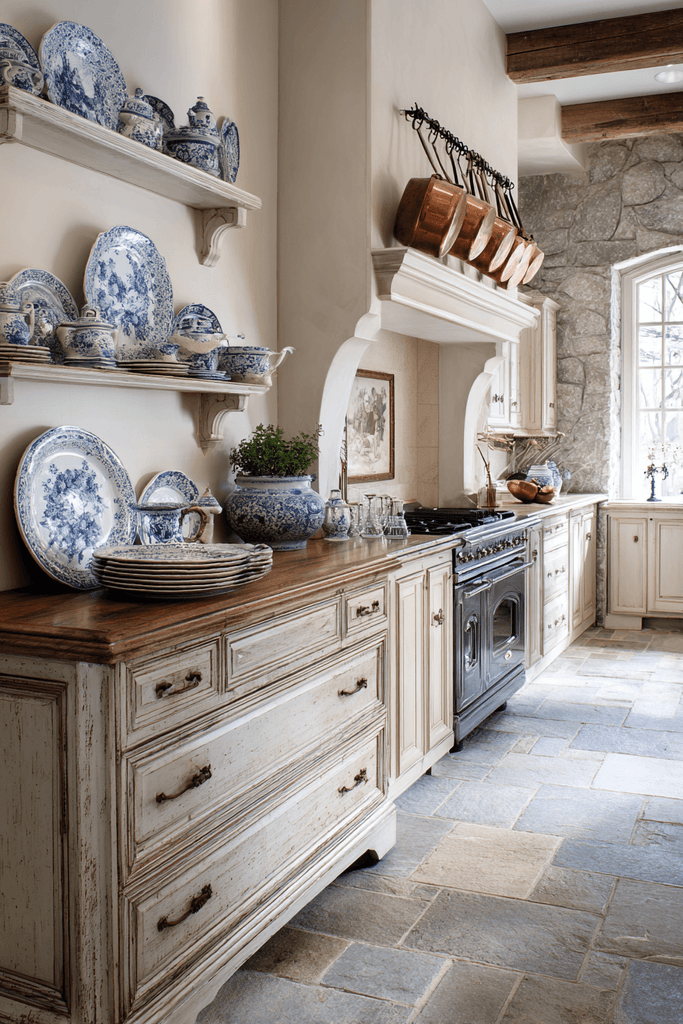
Rooted in the tradition of the English country kitchen, this design centers on a freestanding dresser in distressed antique white, its shelves proudly displaying blue and white transferware plates and countryside pottery. Large-format flagstone floor tiles in natural color variation ground the room with earthy gravitas, while upper walls in soft stone create a calm, neutral backdrop. A copper pot collection hangs above the range — a functional display that doubles as warm, burnished sculpture. This kitchen breathes the spirit of a home that has been loved across generations.
Key Design Tips:
- Use a freestanding painted dresser as the kitchen’s visual centerpiece and primary display
- Collect and display transferware or countryside pottery for authentic vintage character
- Lay flagstone tiles with natural color variation for a floor that grounds the whole space
- Hang copper cookware above the range for warmth, texture, and practicality
- Keep upper walls in soft neutral tones — stone, putty, or linen — to let collections shine
6. Duck Egg Blue Tongue-and-Groove Cottage Kitchen
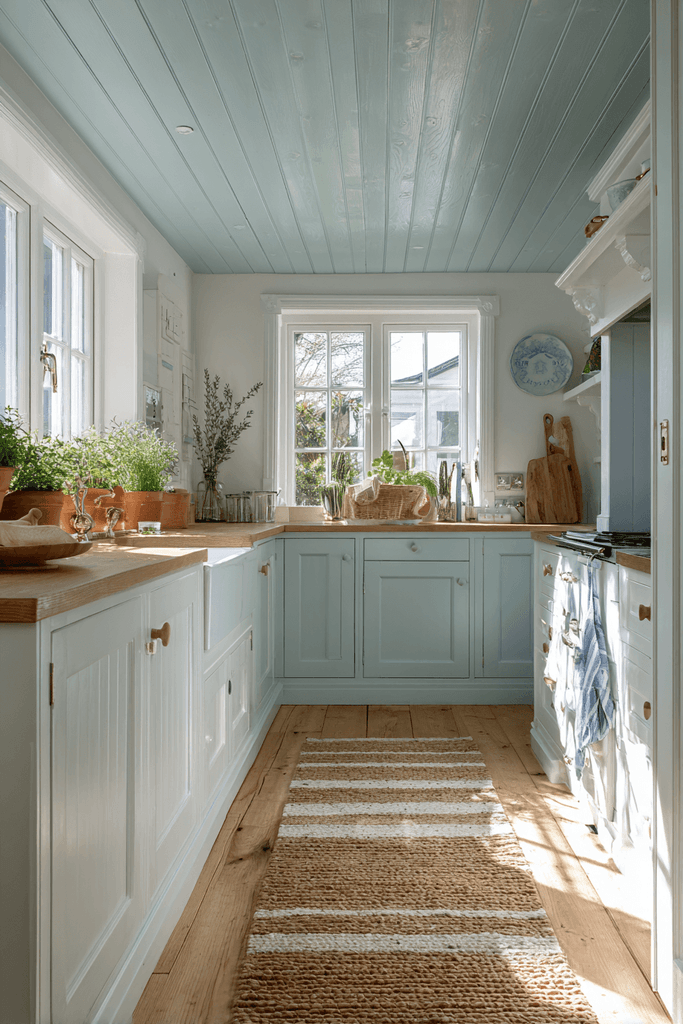
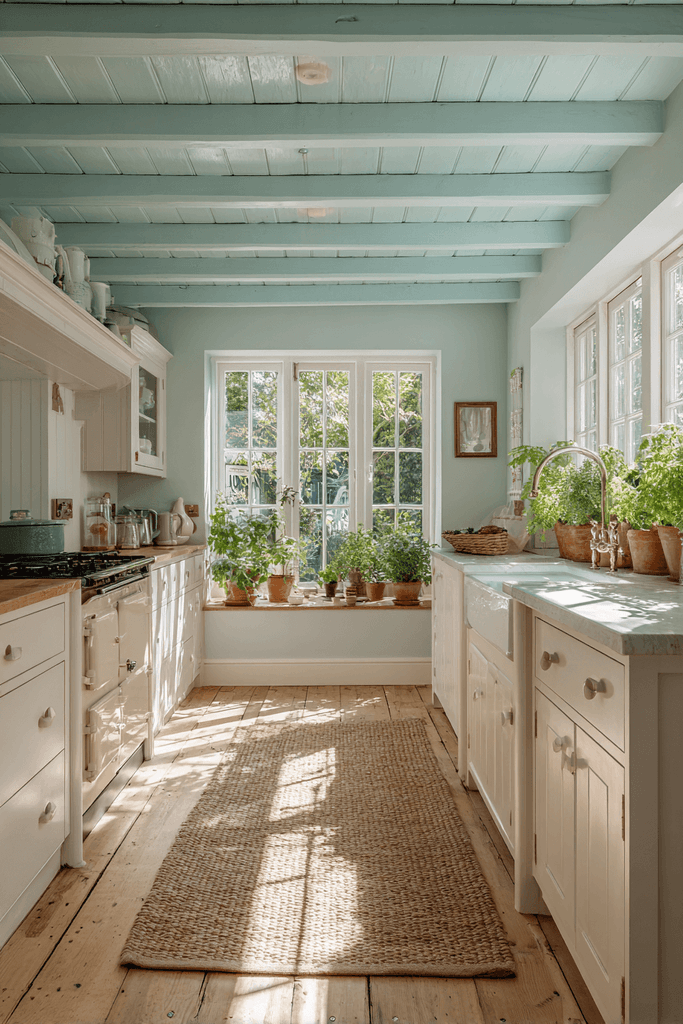
Light dances differently in this kitchen, where painted tongue-and-groove ceiling panels in pale duck egg blue lift the gaze and create a sense of gentle, airy expansion. Shaker cabinets in off-white with porcelain cup pulls keep the palette quietly harmonious, while a deep Belfast sink anchors the space with classic cottage credibility. Fresh herbs grow in terracotta pots along the windowsill, blurring the line between kitchen and garden. Beneath everything, original oak floorboards carry the gentle wear marks of a life well-lived. This is cottage kitchen design for those who find joy in subtle color and garden-connected simplicity.
Key Design Tips:
- Paint tongue-and-groove ceiling panels in pale duck egg blue to add color without weight
- Grow fresh herbs in terracotta pots on the windowsill for beauty, fragrance, and flavor
- Choose porcelain cup pulls on off-white Shaker cabinets for softly period-appropriate hardware
- Preserve and oil original oak floorboards to honor the character of an older home
- Use a Belfast sink as the kitchen’s anchor — a timeless, deeply practical cottage staple
7. Rustic Pine Island Cottage Kitchen with Stone Floors
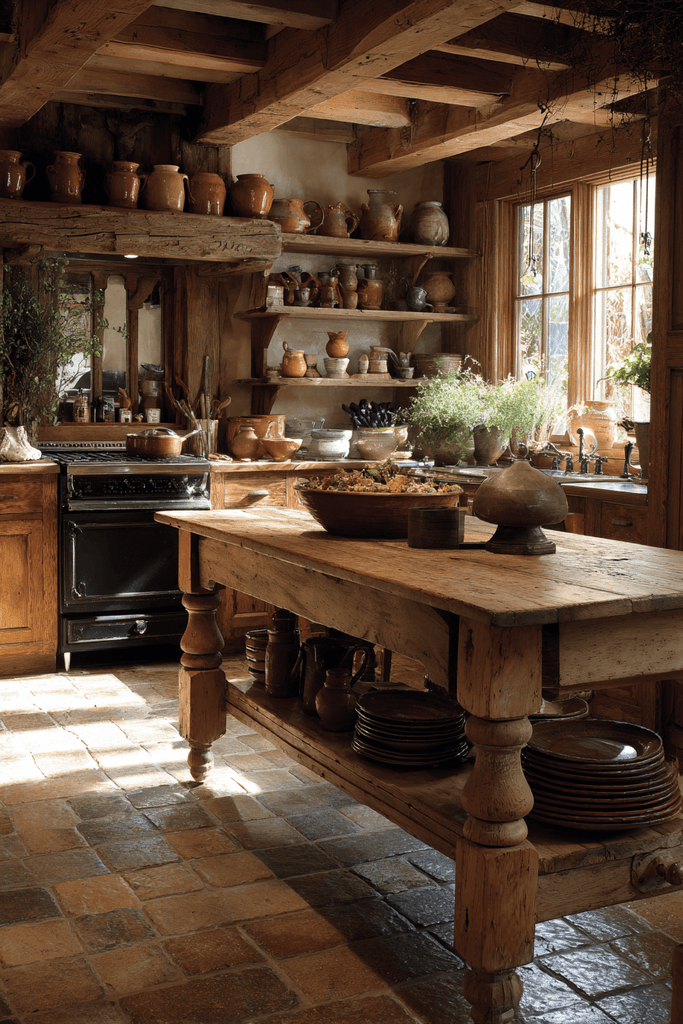
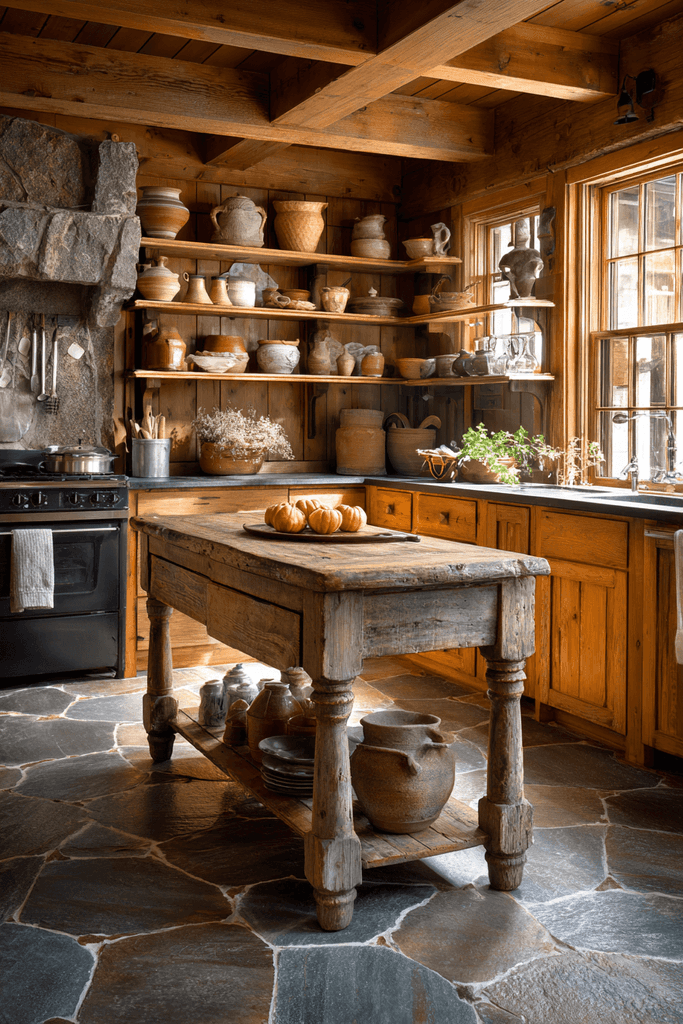
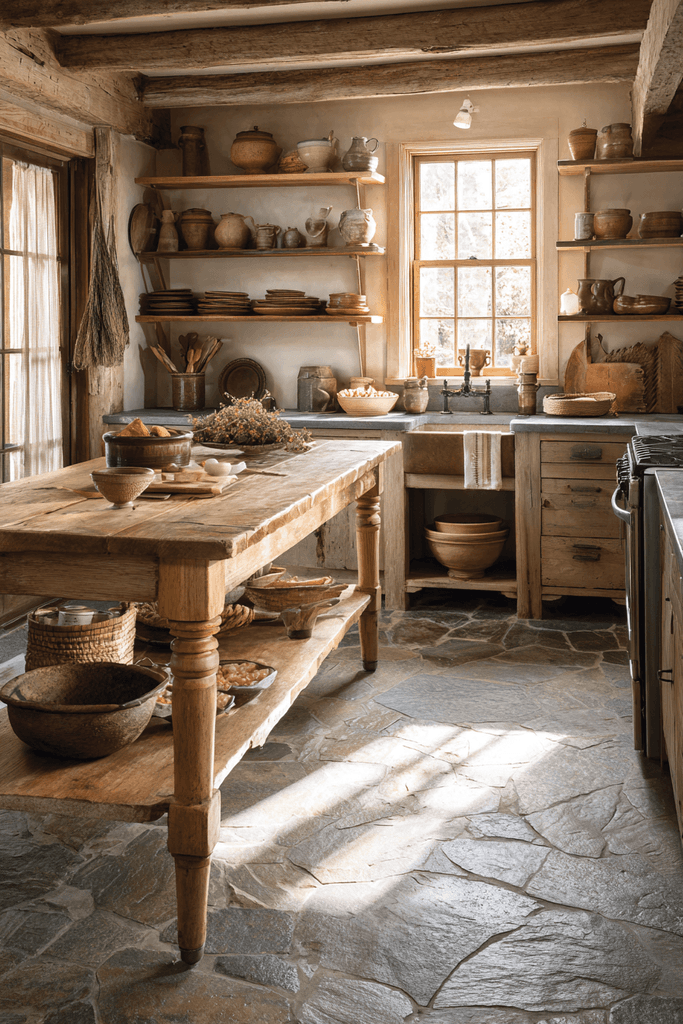
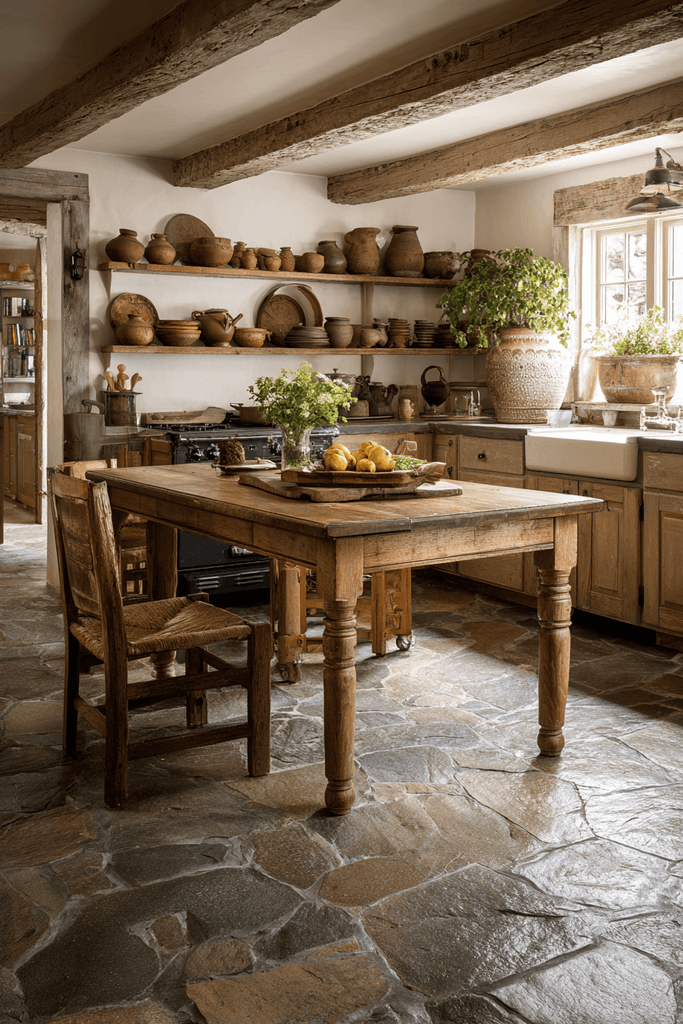
This kitchen is built around the idea of the kitchen as workshop — a place where real cooking happens and every surface wears its history proudly. A well-worn central island with turned legs in unpainted pine serves as prep space, casual dining spot, and the room’s emotional anchor, fitted with drop-leaf extensions for flexibility. Hand-thrown pottery in earthy tones fills open shelves above a small electric range. Stone floor tiles in irregular shapes shift through natural tones of warm grey and sand. Soft morning light emphasizes every groove and grain — a reminder that imperfection, in cottage design, is the point.
Key Design Tips:
- Choose an unpainted pine island with turned legs for rustic authenticity and warmth
- Add drop-leaf extensions to your island for flexible dining and prep options
- Display hand-thrown pottery in earthy tones on open shelving for organic visual texture
- Lay irregular stone floor tiles to create a floor that feels genuinely aged and grounded
- Resist the urge to over-finish surfaces — natural wear and patina are the design
8. Forest Green Inglenook Cottage Kitchen for Winter
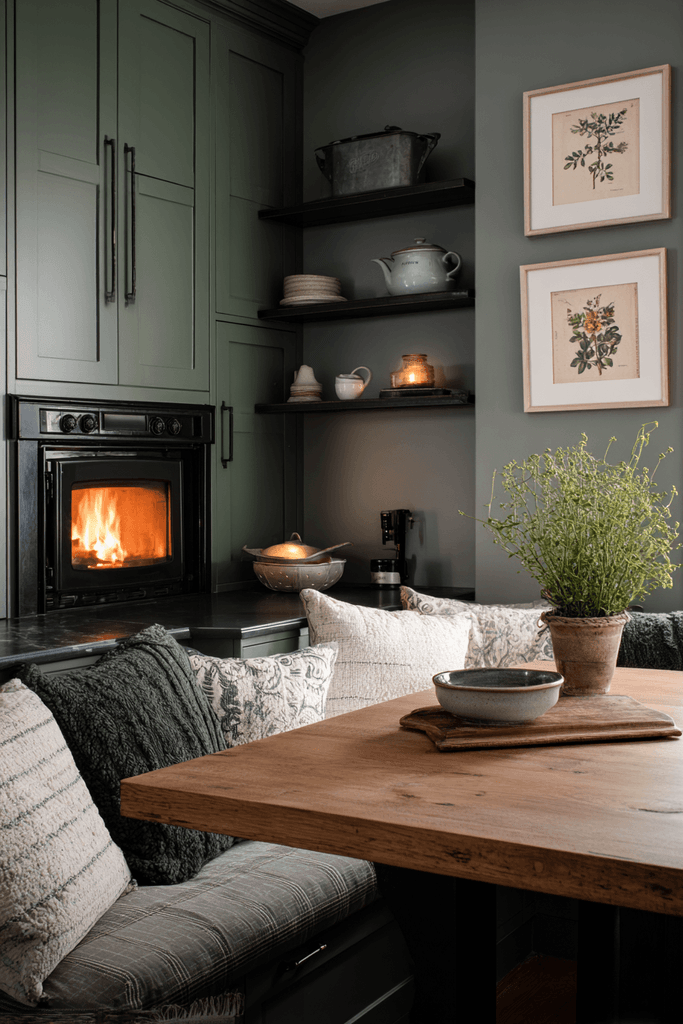
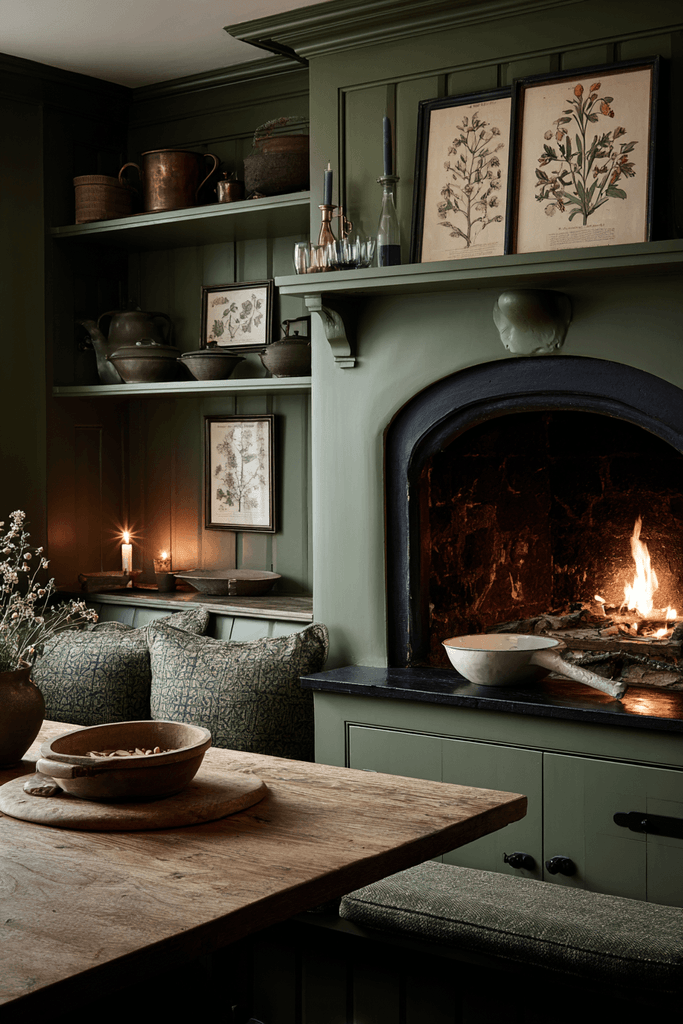
When winter arrives, this kitchen becomes the most coveted room in the house. A deep inglenook fireplace — converted into a warming alcove beside the dining table — fills the room with flickering light and radiant heat, its surround flanked by cabinetry in soft forest green with black iron hardware. Vintage botanical prints in simple frames punctuate the walls between shelves. A worn wooden chopping board and enamelware colander rest on the countertop — tools so beautiful they need no hiding. This is cottage kitchen design conceived around the hearth: intimate, layered, and deeply restorative.
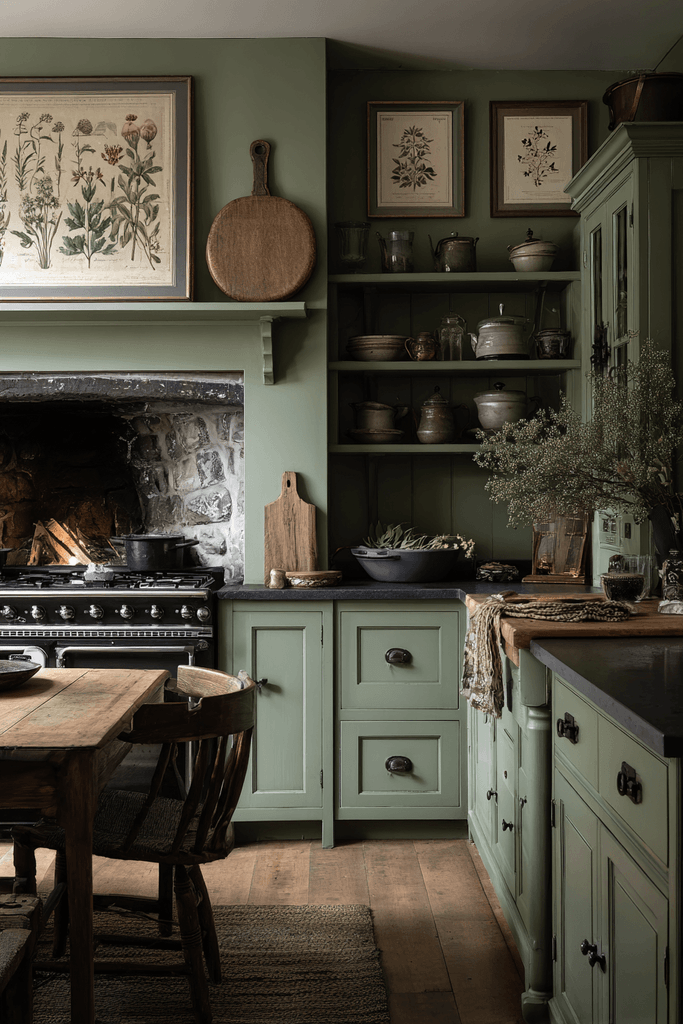
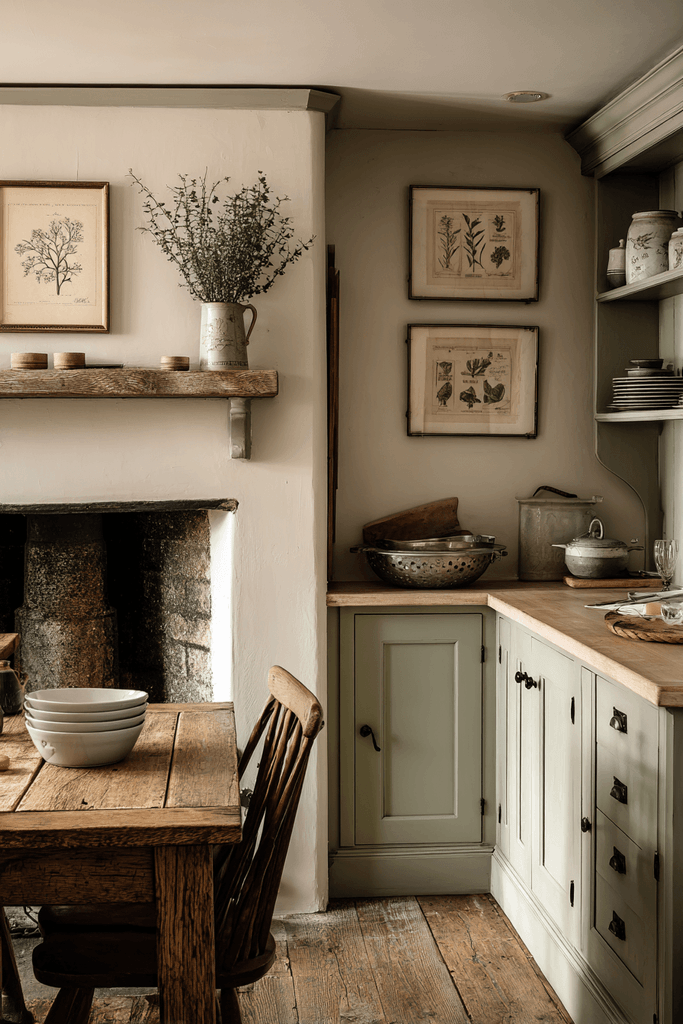
Key Design Tips:
- Incorporate an inglenook or converted fireplace beside the dining area for warmth and atmosphere
- Paint cabinetry in deep forest green paired with matte black iron hardware for rich contrast
- Hang framed vintage botanical prints between shelves for a collected, curated wall presence
- Display beautiful tools — enamelware, wooden boards — openly on countertops as décor
- Layer candlelight and warm artificial light to recreate that hearthside cottage ambiance
9. Oyster Grey Sash Window Cottage Kitchen in a Period Home
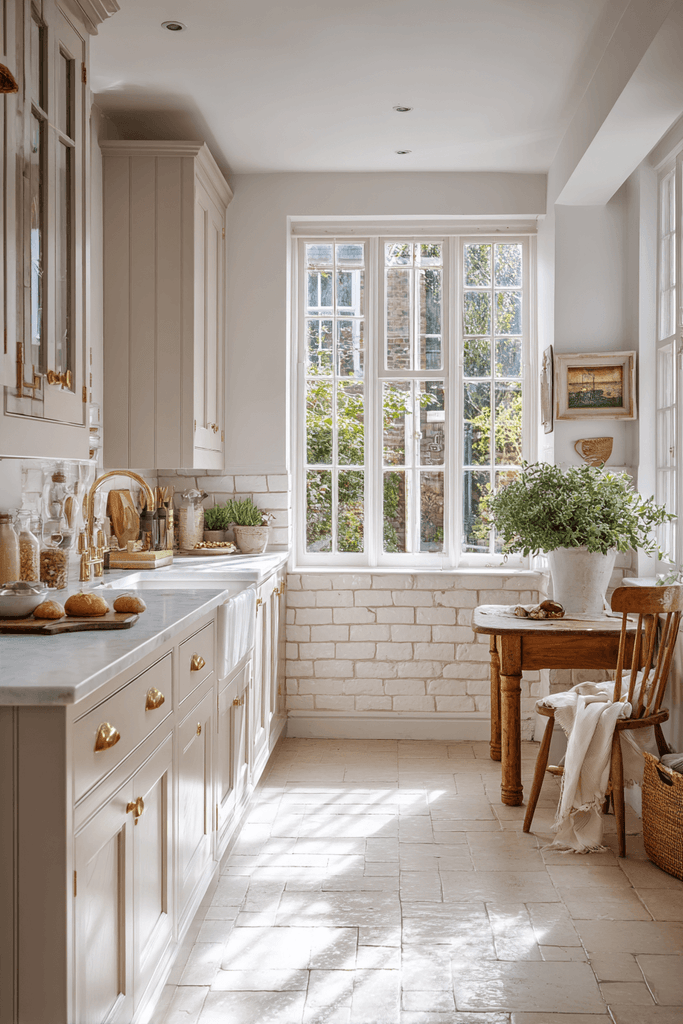
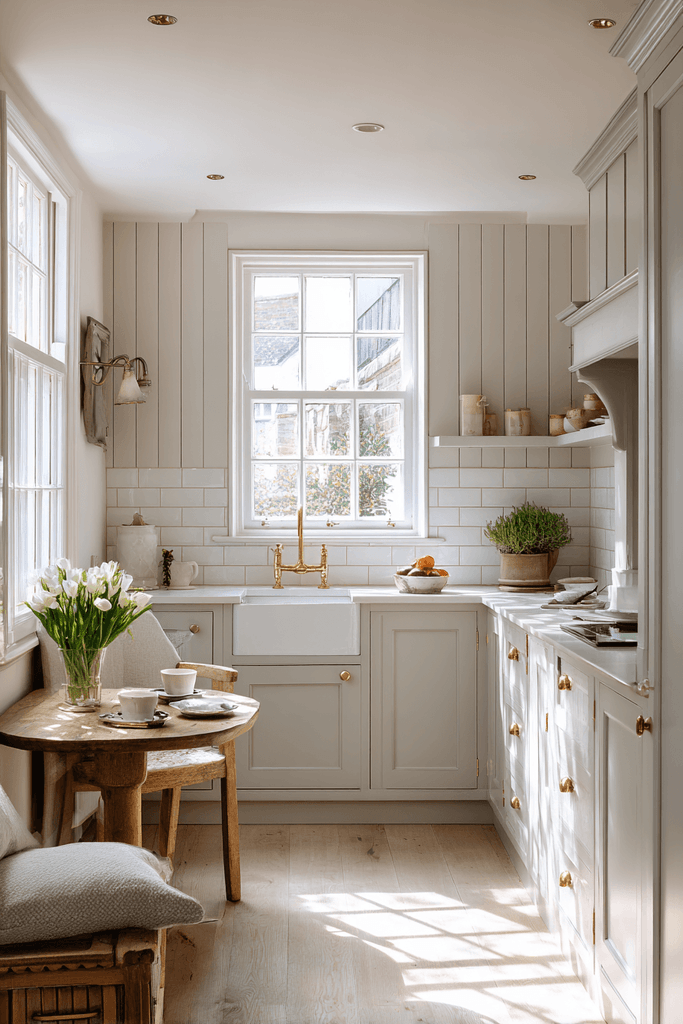
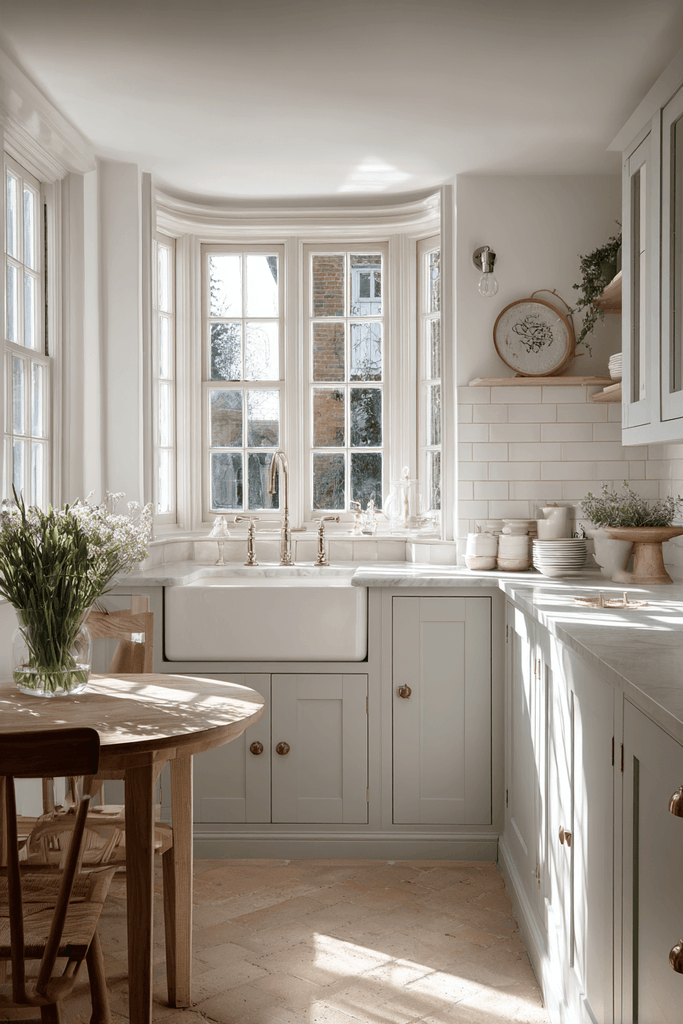
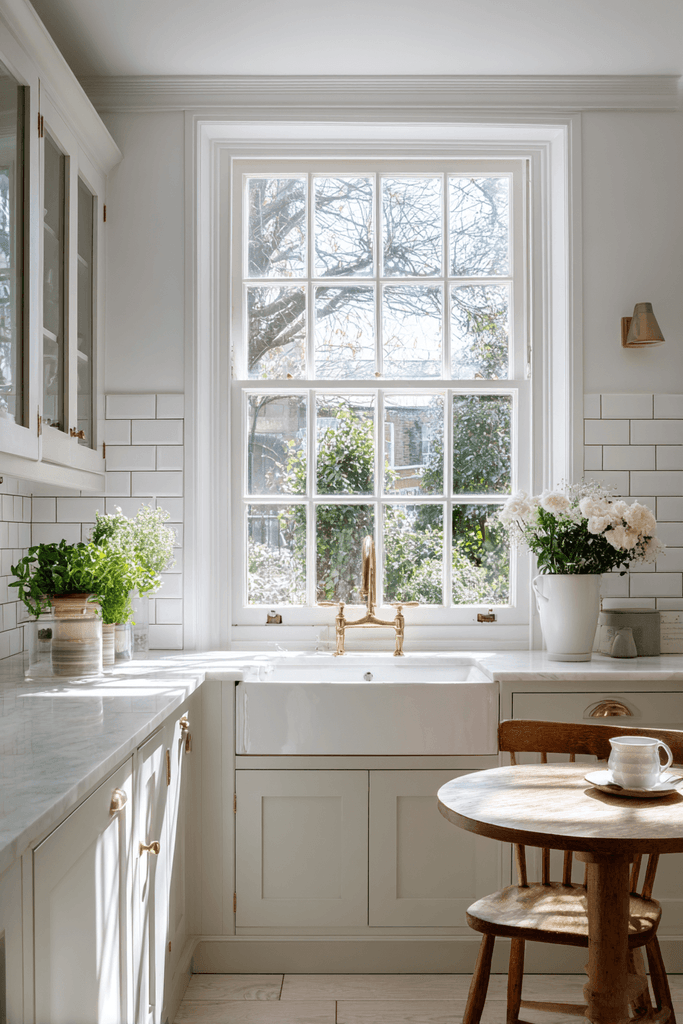
Here, the original architecture is treated as the design’s greatest asset. Unpainted sash windows are left to reveal their authentic timber character, casting long, clean panels of natural light across subway-tiled walls in soft antique white. Cabinetry in pale oyster grey with unlacquered brass hardware ages gently and gracefully over time. A small round table in scrubbed pine sits beside the window — the perfect spot for morning coffee and correspondence. The result is a cottage kitchen design that speaks to those who understand that restraint, when applied with intention, is its own form of beauty.
Key Design Tips:
- Preserve unpainted timber sash windows to retain architectural authenticity and character
- Choose pale oyster grey cabinetry for a refined, understated alternative to white
- Specify unlacquered brass hardware — it develops a living patina that improves over time
- Tile in antique white subway tiles for period-appropriate simplicity with lasting appeal
- Position a small scrubbed pine table beside the window to create an intimate sitting spot
10. Garden-Facing Stable Door Cottage Kitchen with Encaustic Tiles
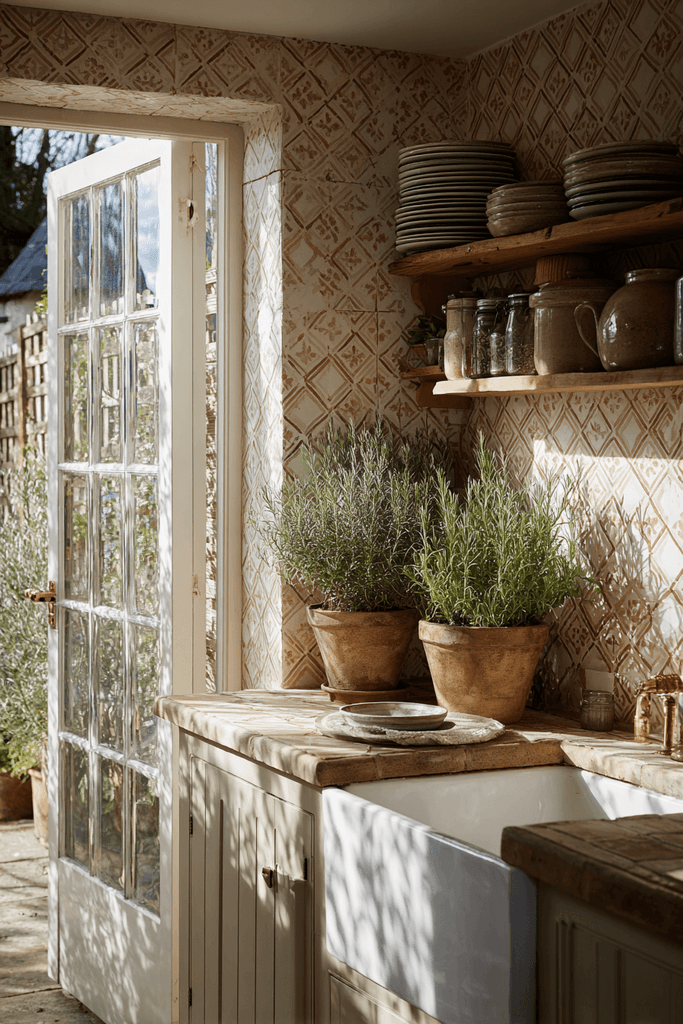
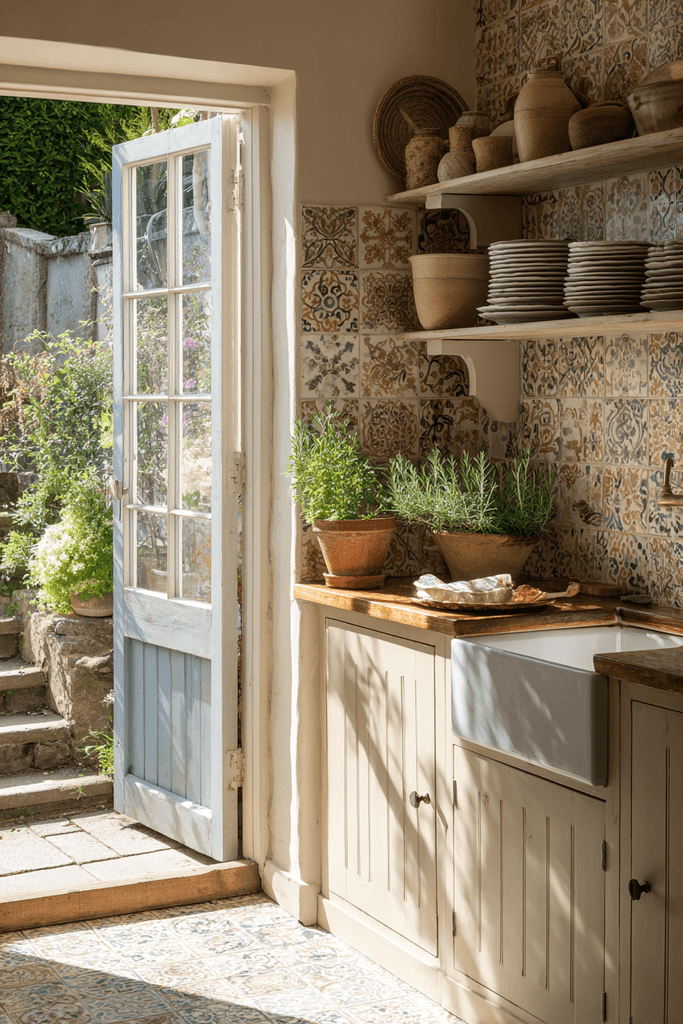
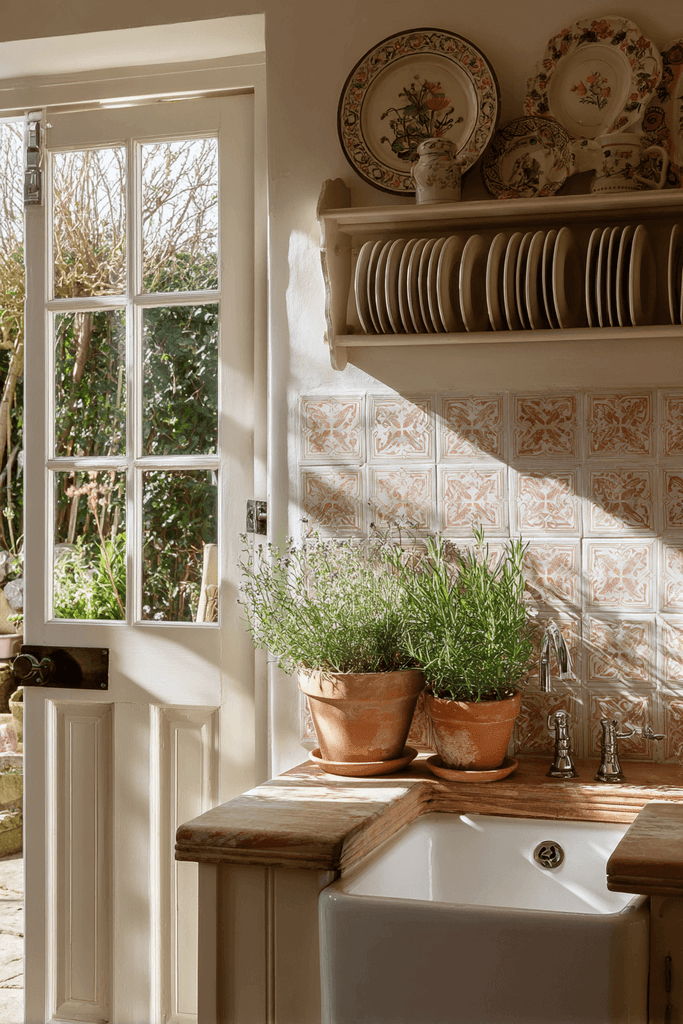
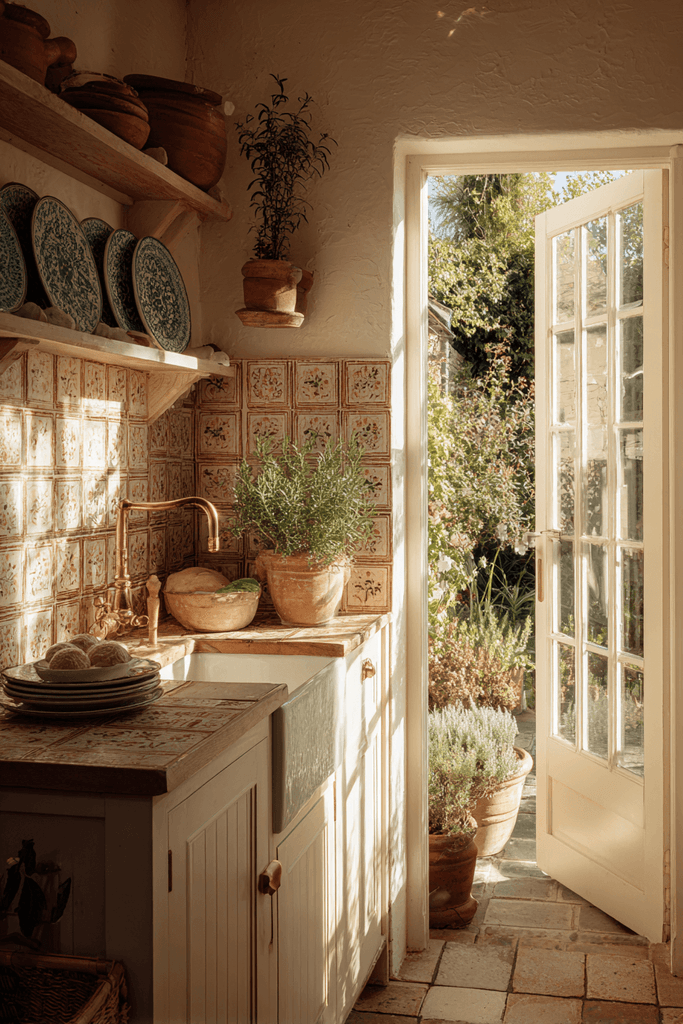
This final kitchen is defined by its relationship with the outdoors. A glazed stable door opens directly onto a herb garden, flooding the space with green-scented air and golden afternoon light. Walls are tiled in handmade encaustic tiles in soft cream and terracotta patterns — each tile a small work of craftsmanship. A plate rack above the sink holds air-dried earthenware, and clusters of potted rosemary and thyme gather near the door, ready for the cook’s reach. This is cottage kitchen design as philosophy — a belief that the kitchen should connect us to the land, the seasons, and the simple pleasure of growing things.
Key Design Tips:
- Install a glazed stable door facing a garden or outdoor herb bed for indoor-outdoor flow
- Use handmade encaustic tiles in cream and terracotta for a backsplash of genuine artisan quality
- Keep a plate rack above the sink for practical, charming open dish storage
- Grow kitchen herbs in terracotta pots near the door for easy access and beautiful display
- Let afternoon light define the room’s mood — position cooking and dining areas to catch it
Why These Cottage Kitchen Designs Are the Best
Across all ten designs, a consistent philosophy emerges: the best cottage kitchen design prioritizes authenticity, warmth, and livability over perfection. These spaces champion reclaimed wood kitchens, farmhouse sink ideas, Shaker cabinet design, open shelf kitchen styling, and vintage kitchen décor — all of which rank among the most searched and beloved interior design keywords for good reason. They resonate because they reflect how people actually want to live.
The use of natural materials — stone, oak, pine, linen, copper, terracotta, and ironstone — connects each design to something older and more honest than trend-driven interiors. Whether you’re drawn to the rustic country kitchen aesthetic, the romantic English cottage kitchen, the cozy winter kitchen with fireplace, or the bright garden kitchen with encaustic tiles, there is a shared underlying quality: these kitchens feel inhabited. They carry the evidence of meals cooked, mornings spent, and seasons passed.
Key elements that unite these designs include Shaker-style cabinetry, heritage color palettes (sage green, forest green, duck egg blue, oyster grey, buttermilk), aged brass and black iron hardware, handmade and artisanal tilework, and freestanding furniture pieces that give the kitchen flexibility and personality. Together, they represent the full spectrum of what cottage kitchen design can be — from compact and clever to expansive and romantic.
Conclusion
Cottage kitchen design is not a single style but a family of values — warmth over perfection, character over uniformity, connection over spectacle. The ten ideas explored in this article offer a rich palette of inspiration: whether you choose the open shelving and farmhouse sink of the first design, the inglenook fireplace drama of the eighth, or the garden-connected flow of the tenth, you are choosing a kitchen built around how life is actually lived.
Start with the materials that speak to you most — a reclaimed wood countertop, a sage green cabinet door, a single handmade tile — and let those choices guide the rest. The most beautiful cottage kitchens are rarely designed all at once; they are gathered, layered, and loved into being over time. That is both the challenge and the joy of the cottage kitchen. Begin where you are, and let the warmth follow.