10 Toddler Room Ideas That Are Safe, Playful & Beautiful
Creating a toddler’s room is one of the most rewarding design challenges a parent or interior designer can take on. It’s a space that must balance safety and function with imagination, warmth, and the kind of sensory richness that supports early childhood development. The best toddler room ideas go far beyond cute décor — they shape how a child explores, rests, learns, and grows. Whether you’re drawn to minimalist Montessori philosophies, vibrant playful themes, or soft gender-neutral palettes, the right design choices can transform a simple bedroom into a nurturing sanctuary. In this article, we explore ten stunning toddler room concepts, each thoughtfully crafted to inspire parents and designers alike — from cozy reading nooks and convertible beds to imaginative play structures and nature-themed walls.
1. Cheerful Animal Mural Toddler Haven

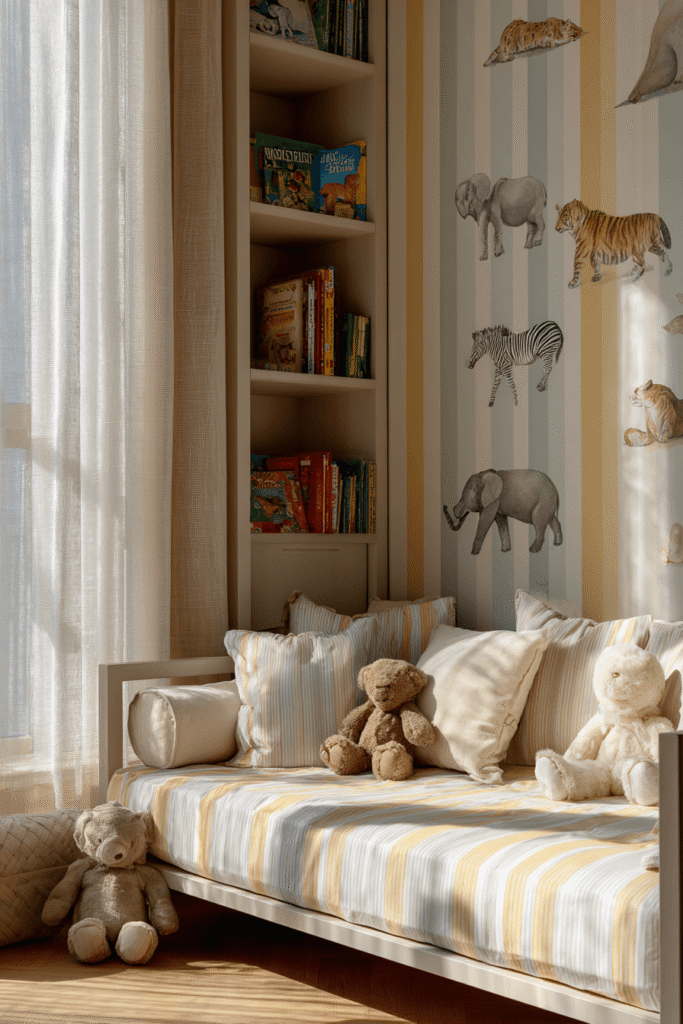

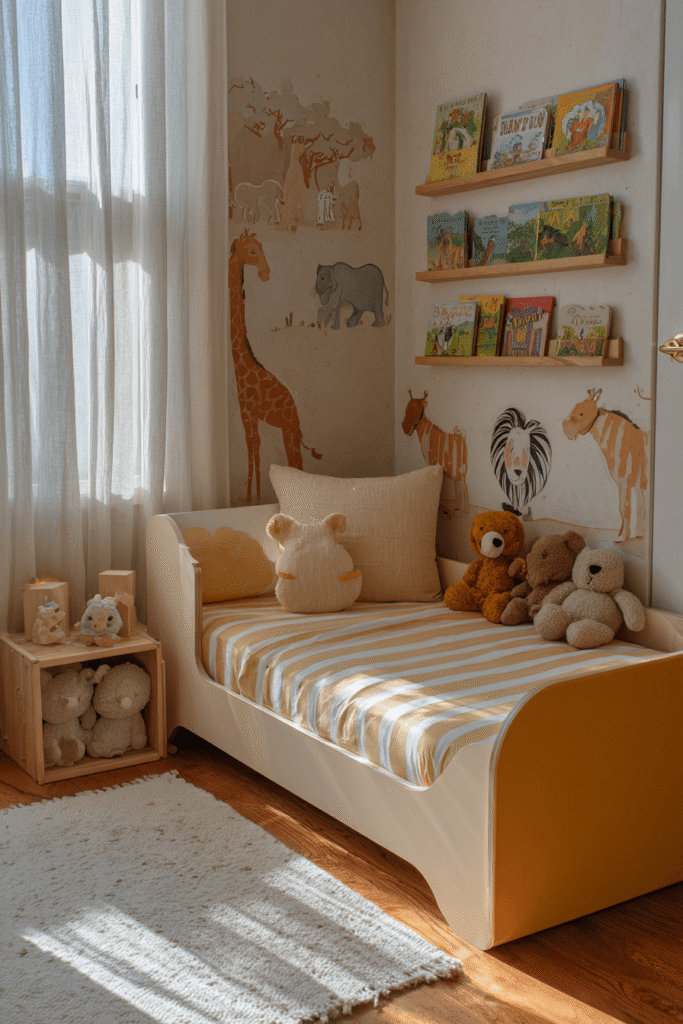
Step into a room that feels like a gentle storybook come to life. This design features a low-to-the-floor toddler bed with safely rounded edges, dressed in soft cotton bedding in pastel yellow and white stripes — a color combination that feels fresh and soothing without being overly stimulating. The focal wall is adorned with hand-painted animal murals in muted earth tones, adding personality and visual storytelling that sparks a toddler’s curiosity without overwhelming the senses. Sheer curtains allow soft, diffused natural light to fill the room, casting a gentle glow over the entire space. A small bookshelf positioned at toddler height keeps board books and plush toys within easy reach, encouraging independence from the very first years of life.
Key Design Tips:
- Choose a floor-level bed frame with rounded edges to eliminate sharp corners and reduce fall height.
- Use pastel tones in bedding rather than bold primaries to maintain a calm, sleep-conducive atmosphere.
- Commission or stencil hand-painted murals in muted earth tones for warmth that won’t fade with age.
- Keep bookshelves at toddler height to encourage self-directed play and literacy habits.
- Install sheer curtains to soften harsh daylight while maintaining a bright, airy feel.
2. Smart Storage Toddler Room with Play Zone
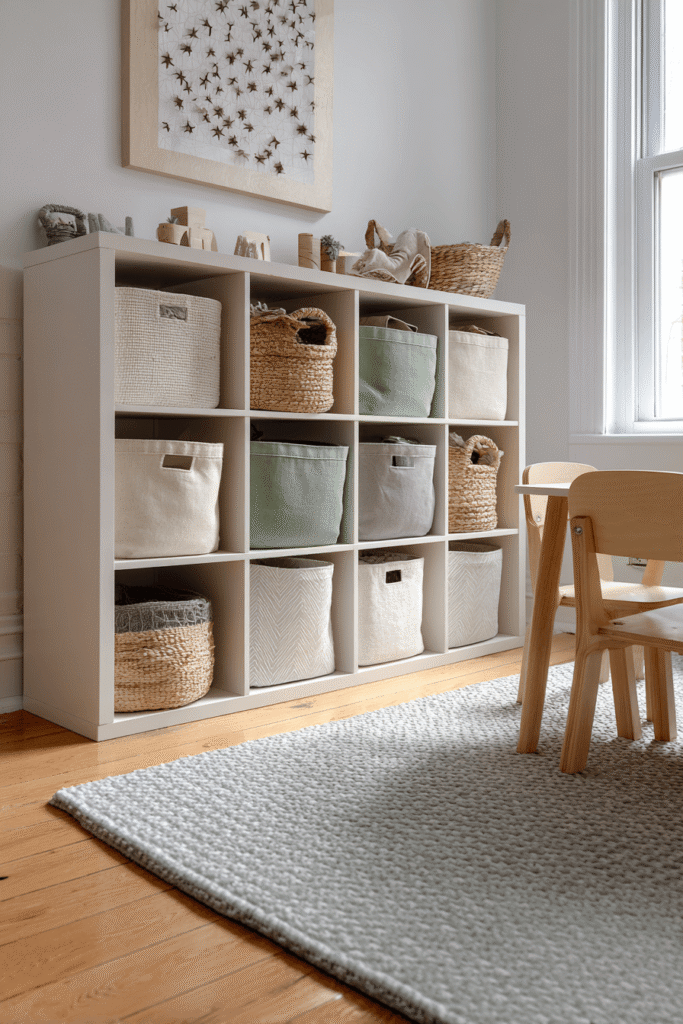
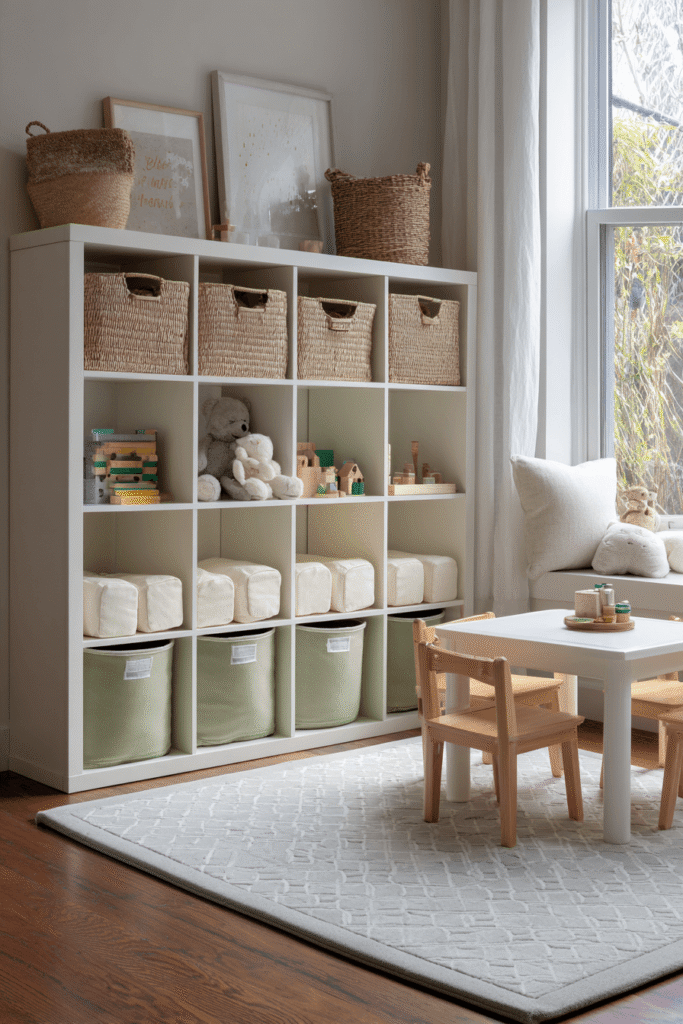
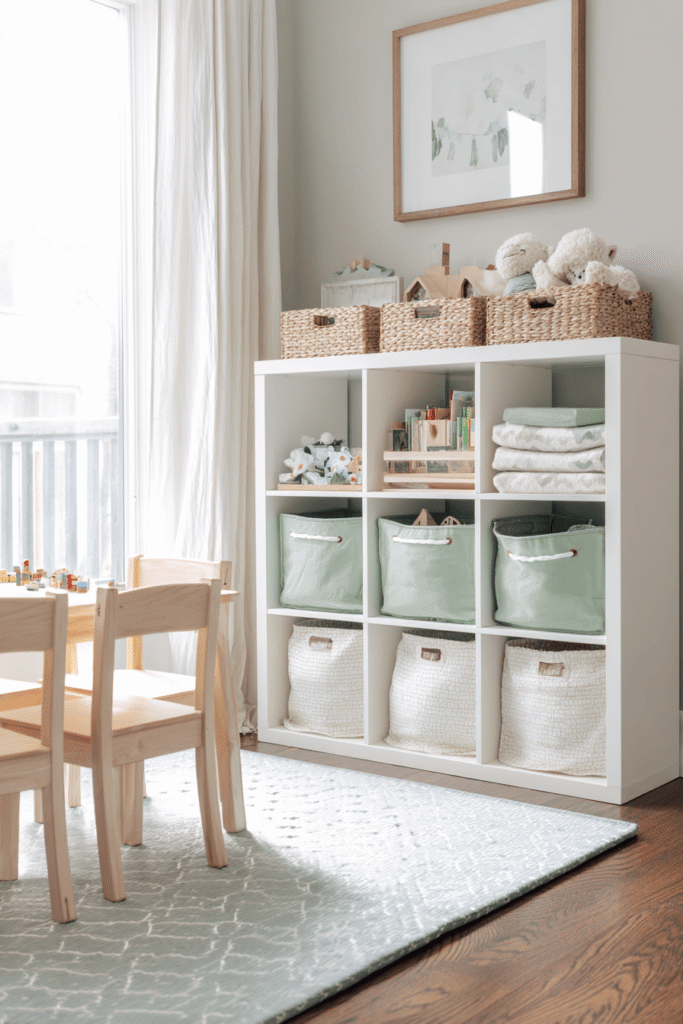
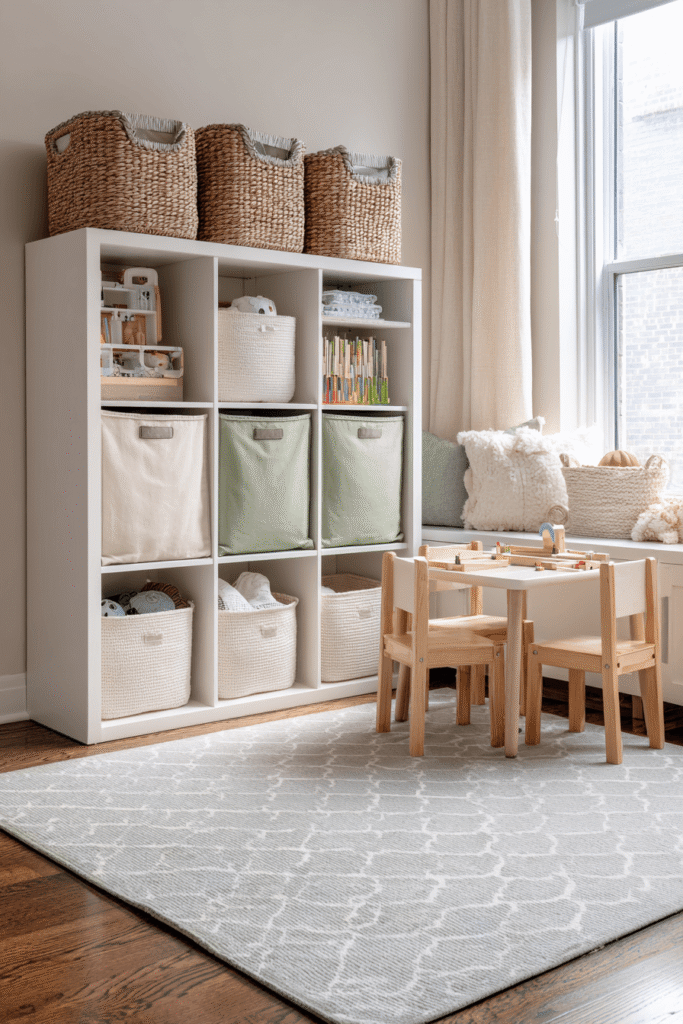
Organization is the unsung hero of any well-functioning toddler room, and this design puts it front and center in the most beautiful way possible. Open lower cubbies and fabric bins in sage green and cream are built into a white wood shelving unit that cleverly doubles as a room divider, creating distinct zones for sleeping, playing, and organizing. The floor is covered in a soft grey foam play mat with subtle geometric patterning — gentle on little knees and easy to clean. A small child-sized table and two miniature chairs sit nearby, perfectly scaled for art projects, snack time, and imaginative play. Woven baskets and cotton bins add natural texture, making storage itself a design feature rather than an afterthought.
Key Design Tips:
- Use open cubbies at floor level so toddlers can access and return toys independently.
- Choose sage green and cream fabric bins for a cohesive, design-forward aesthetic.
- A foam play mat in a neutral tone protects floors and provides safe play space without clashing with the room’s palette.
- Invest in a child-sized table and chair set to create a dedicated activity zone that grows with your toddler.
- Use a shelving unit as a room divider to subtly separate the sleep zone from the play zone.
3. Nature-Themed Gender-Neutral Toddler Bedroom
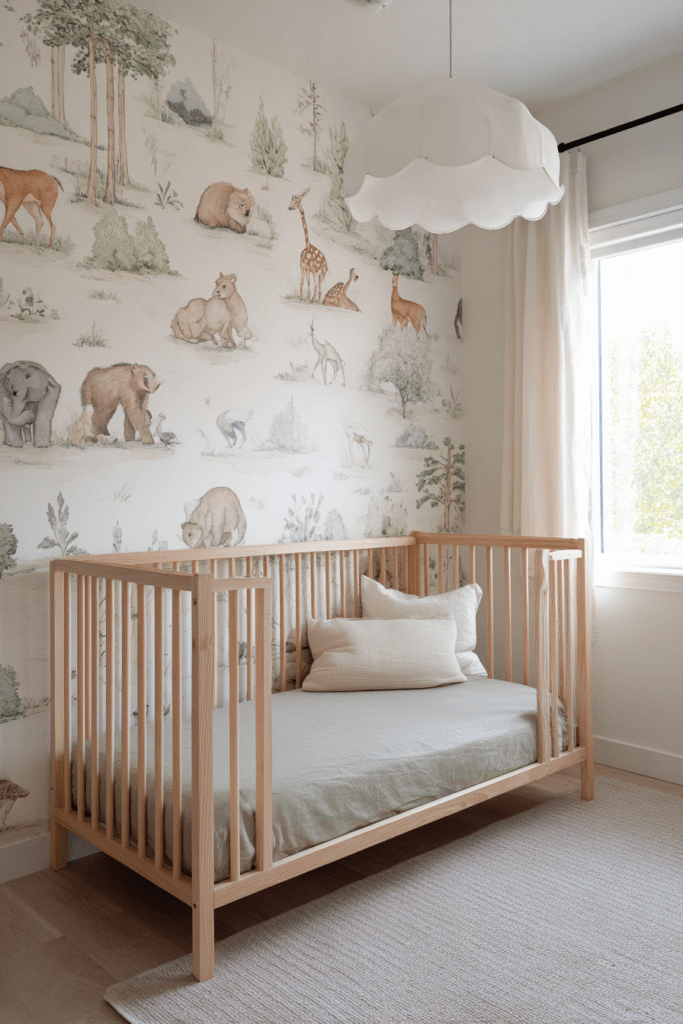
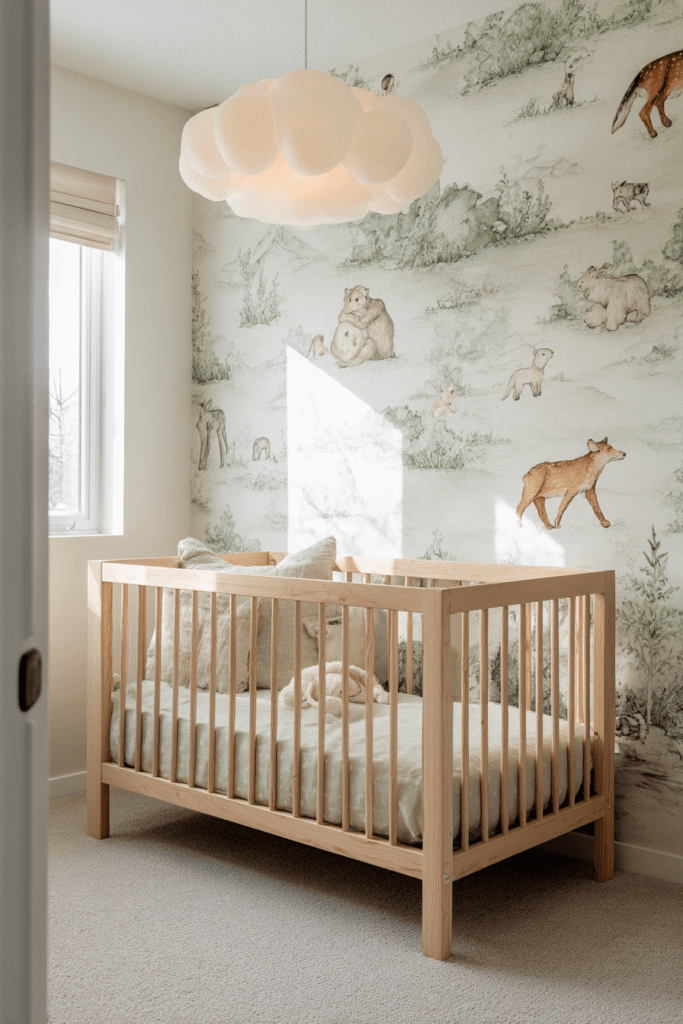

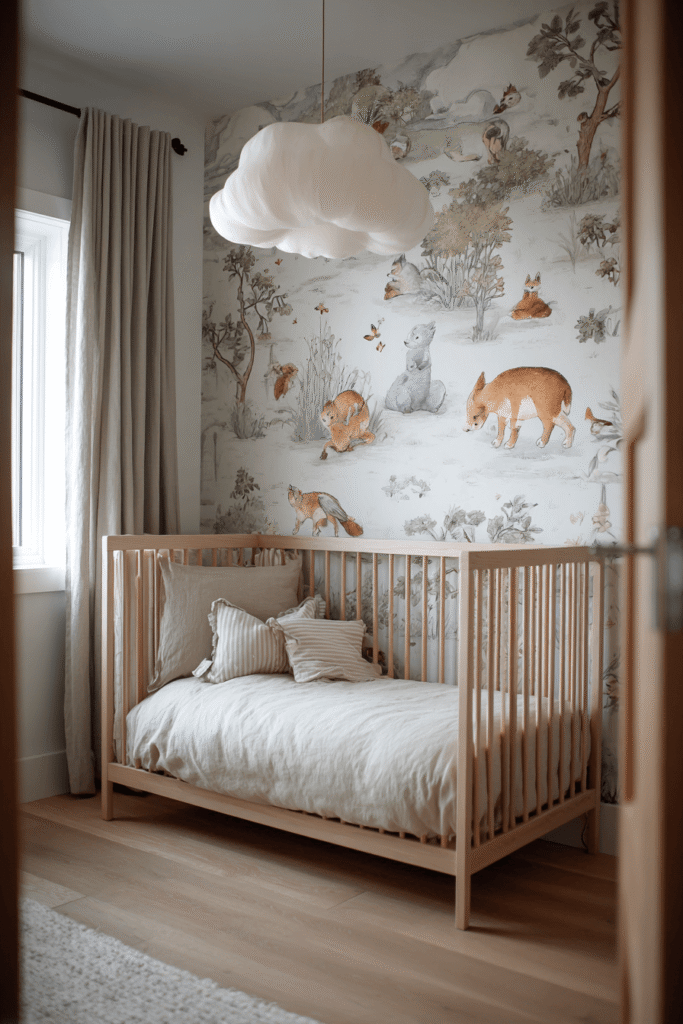
This beautifully balanced design proves that a gender-neutral toddler room can be just as visually rich and emotionally warm as any themed space. Warm white walls provide a clean, serene backdrop while a nature-themed accent wall featuring hand-illustrated forest animals in soft watercolor tones becomes the room’s undeniable focal point. A convertible toddler bed in natural birch wood with integrated safety rails sits centered in the room, dressed in organic cotton bedding in sage and cream — natural, breathable, and beautifully understated. A pendant light with a cloud-shaped shade adds a whimsical finishing touch overhead, while soft morning light filters through the space to reveal every layered texture in the room.
Key Design Tips:
- Opt for a convertible toddler bed in natural birch that transitions as your child grows.
- Use organic cotton bedding in earthy tones for safety, comfort, and eco-consciousness.
- A watercolor-style accent wall adds artistic depth without requiring permanent paint commitment.
- Choose cloud or nature-shaped pendant lights for gentle whimsy without overwhelming the design.
- Stick to a warm white and natural palette to keep the room flexible for years to come.
4. Compact Toddler Room with Vertical Storage and Reading Nook

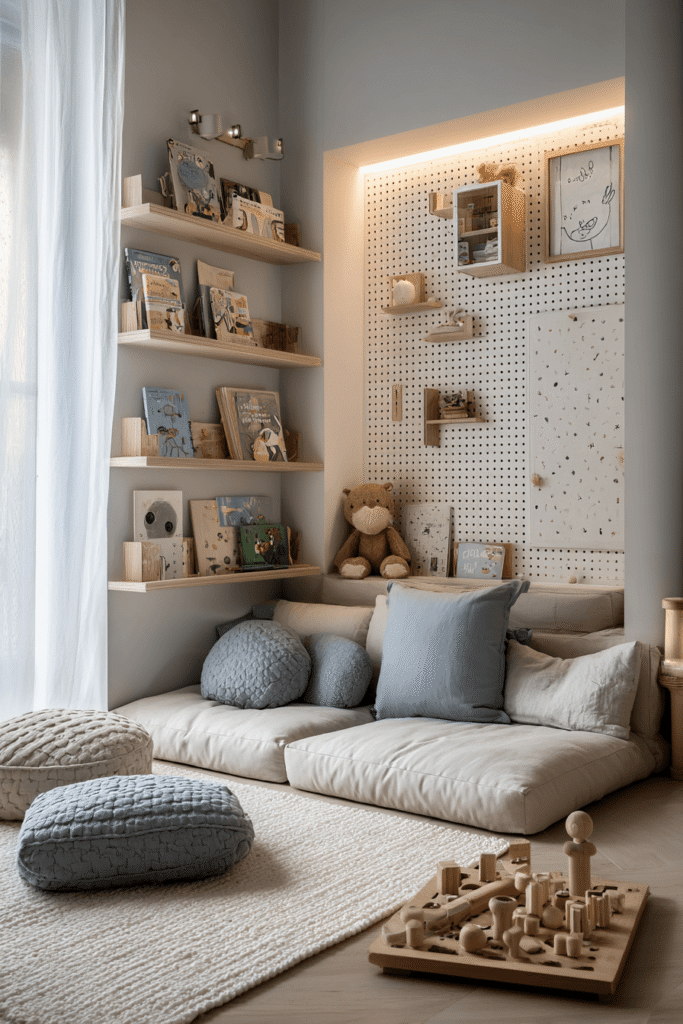
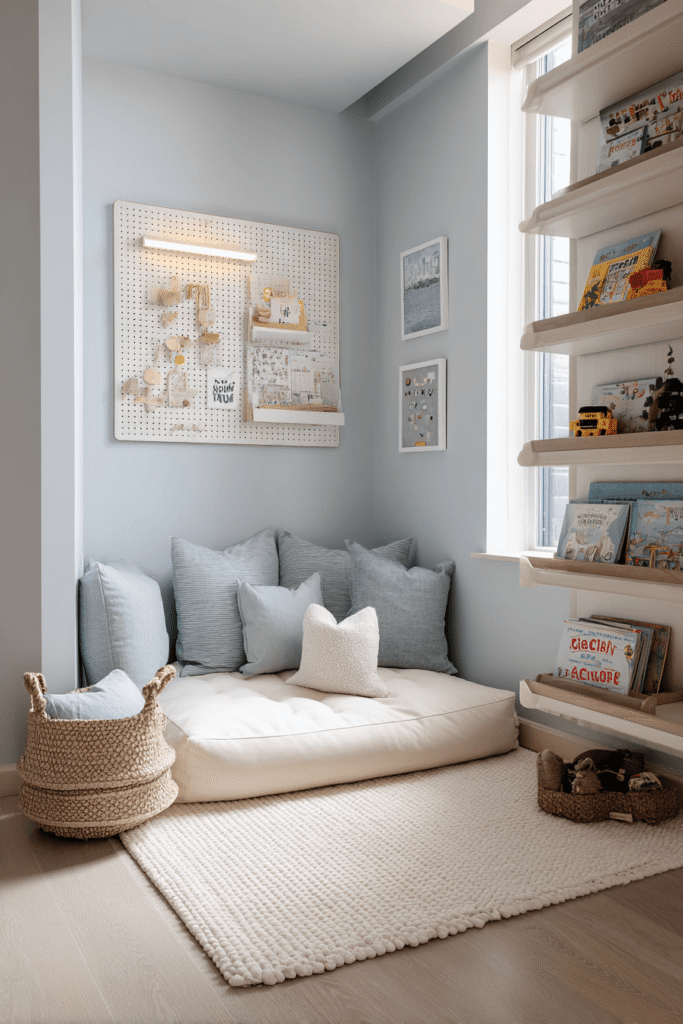
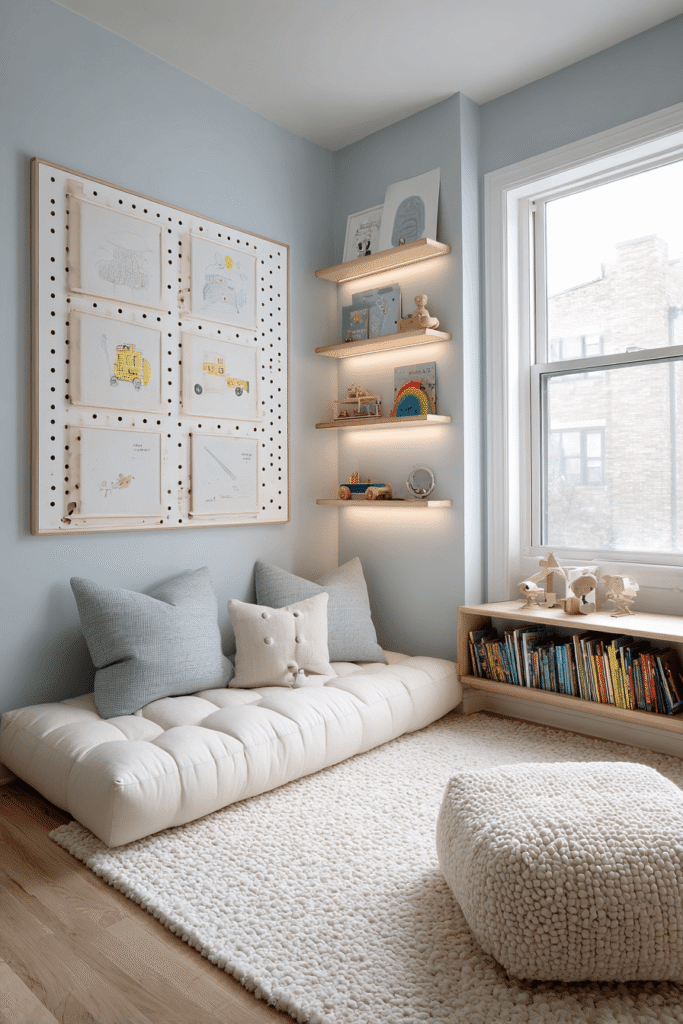
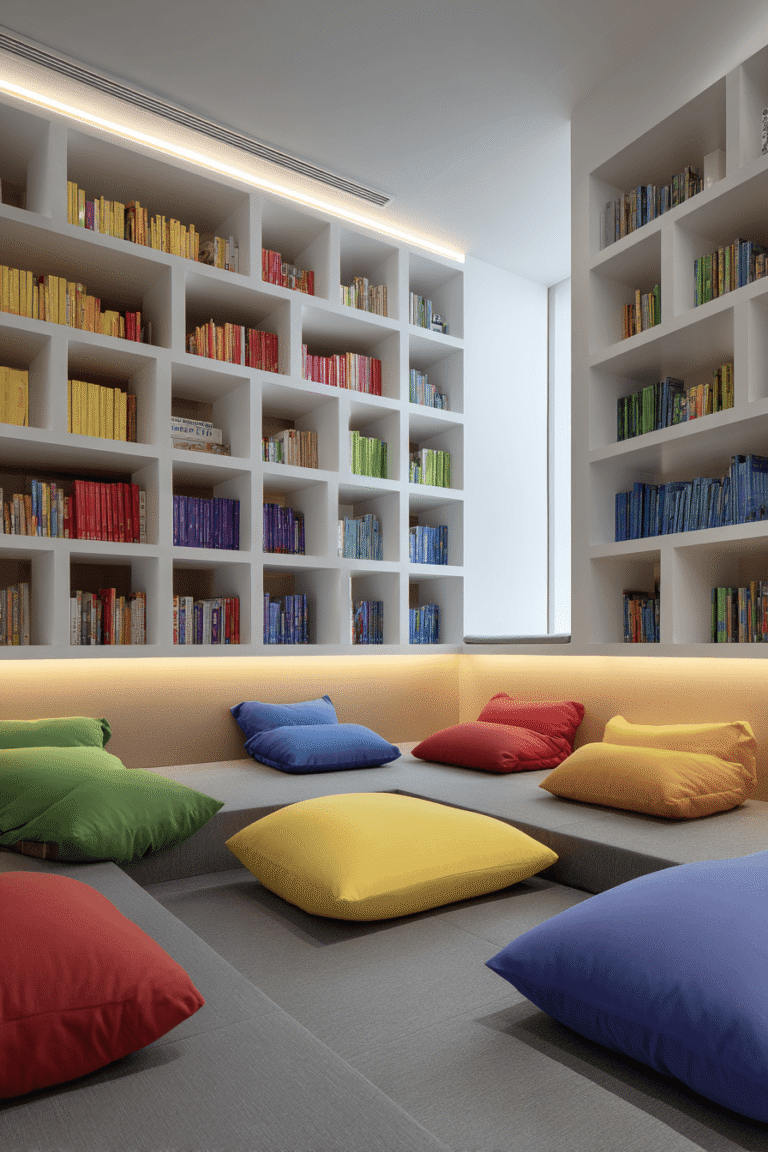
Small rooms demand smart thinking, and this design is a masterclass in making every square foot count. Low-mounted pegboards on the walls hold lightweight toys and art supplies, freeing up floor space while keeping essentials visible and accessible. The room’s soft dusty blue and white color palette with a cream wool rug creates a calm, expansive feeling even in a compact footprint. The true star of this layout is the cozy floor-level reading nook tucked into the corner — a haven of oversized floor cushions bathed in soft LED light above a low bookshelf. This kind of dedicated quiet space nurtures early reading habits and gives toddlers a sense of ownership over their own personal corner.
Key Design Tips:
- Install pegboards at toddler height to keep toys organized and walls visually interesting.
- Use a dusty blue and white palette to make small rooms feel calm and spacious.
- Create a floor-level reading nook with cushions and low lighting to encourage quiet time and literacy.
- A cream wool rug anchors the space and adds warmth without overwhelming a smaller room.
- Prioritize vertical storage solutions to maximize usable floor area for play.
5. Montessori-Inspired Toddler Bedroom with Natural Materials
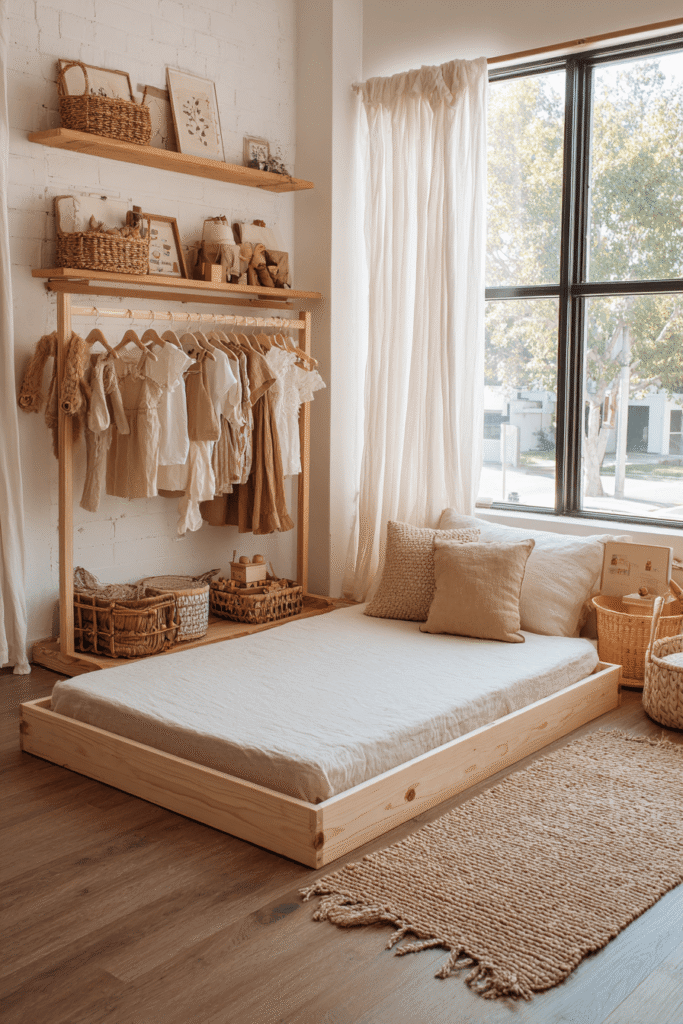
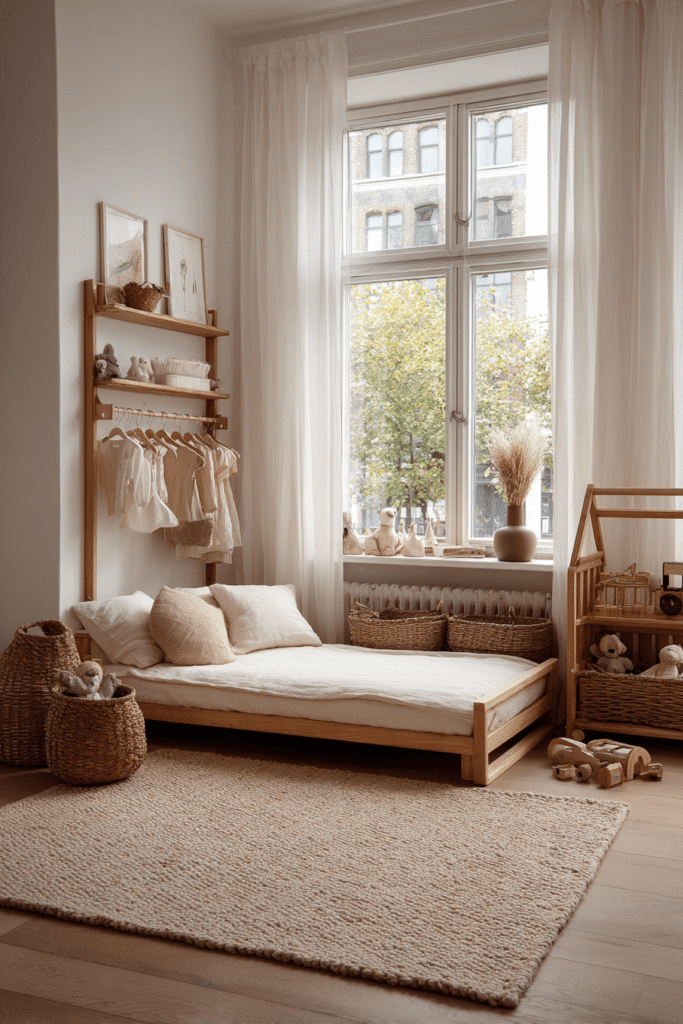
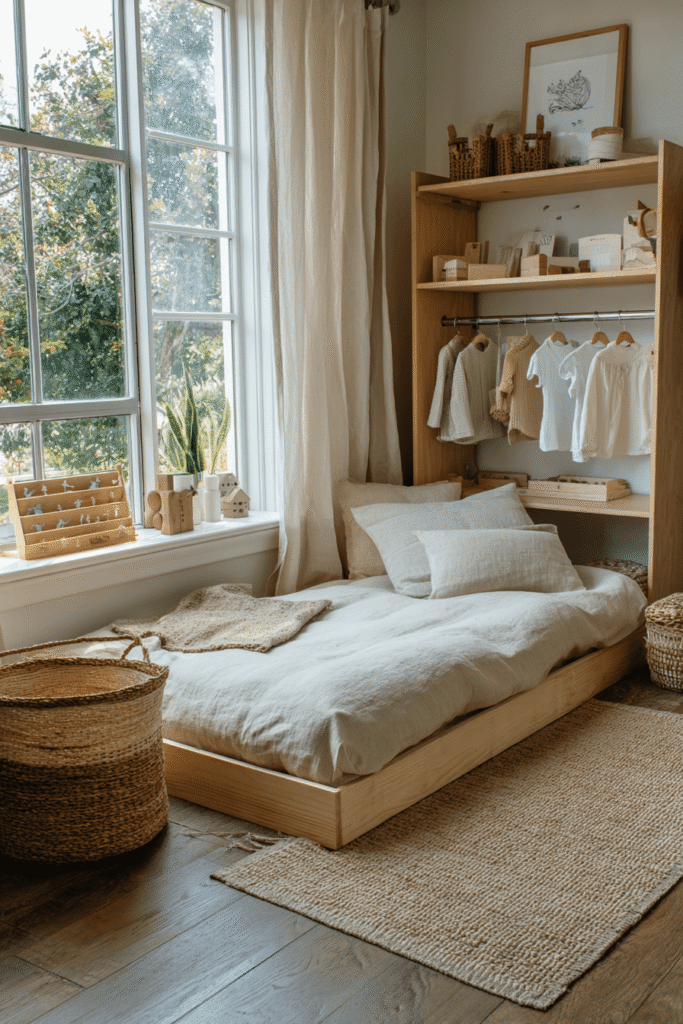
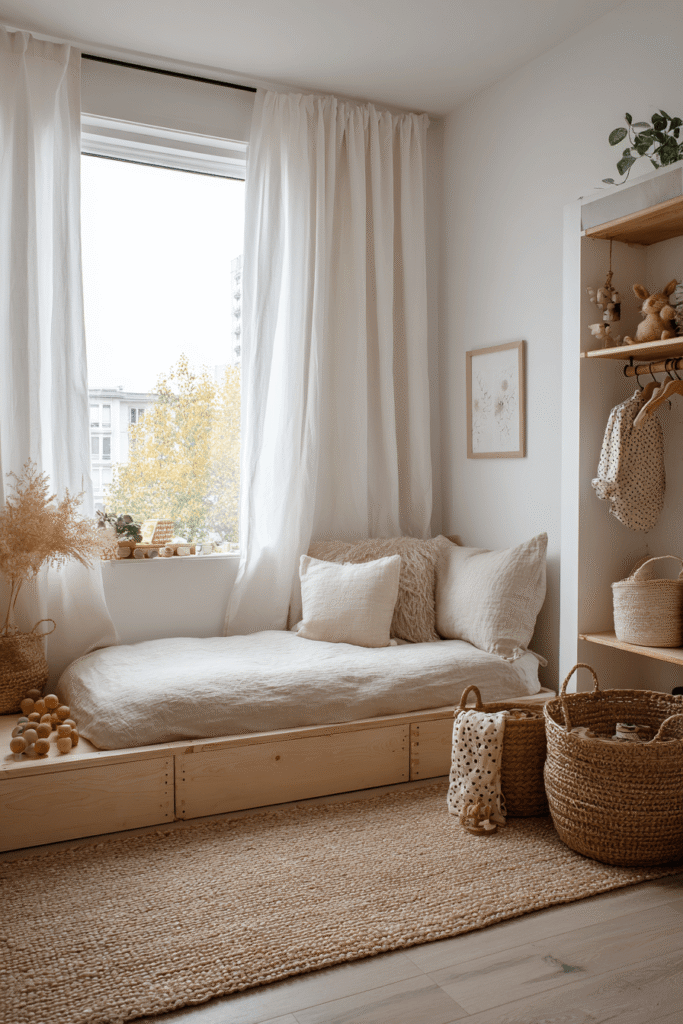
Few design philosophies align as naturally with toddlerhood as Montessori, and this bedroom embodies its principles beautifully. A floor mattress in natural linen on a low-profile oak platform sits at the heart of the room, inviting independent access without the risk of falls. A child-accessible wardrobe with an open lower rail keeps clothing within reach, supporting self-dressing routines that build confidence and autonomy. Every material in the room speaks the language of nature: a jute rug underfoot, wicker toy baskets, and a wooden activity shelf at floor level. Soft natural daylight streams through white linen curtains, bathing the room in the kind of calm, grounded light that encourages focus and quiet exploration.
Key Design Tips:
- A floor bed on a low oak platform supports Montessori independence while keeping sleep safe.
- Use open-rail wardrobes at toddler level to encourage self-dressing and build daily routines.
- Choose natural materials — jute, wicker, and solid wood — over plastic wherever possible.
- Keep the color palette earthy and neutral to maintain a calm, distraction-free environment.
- Use white linen curtains to diffuse natural light softly throughout the day.
6. Sophisticated Primary Color Toddler Room
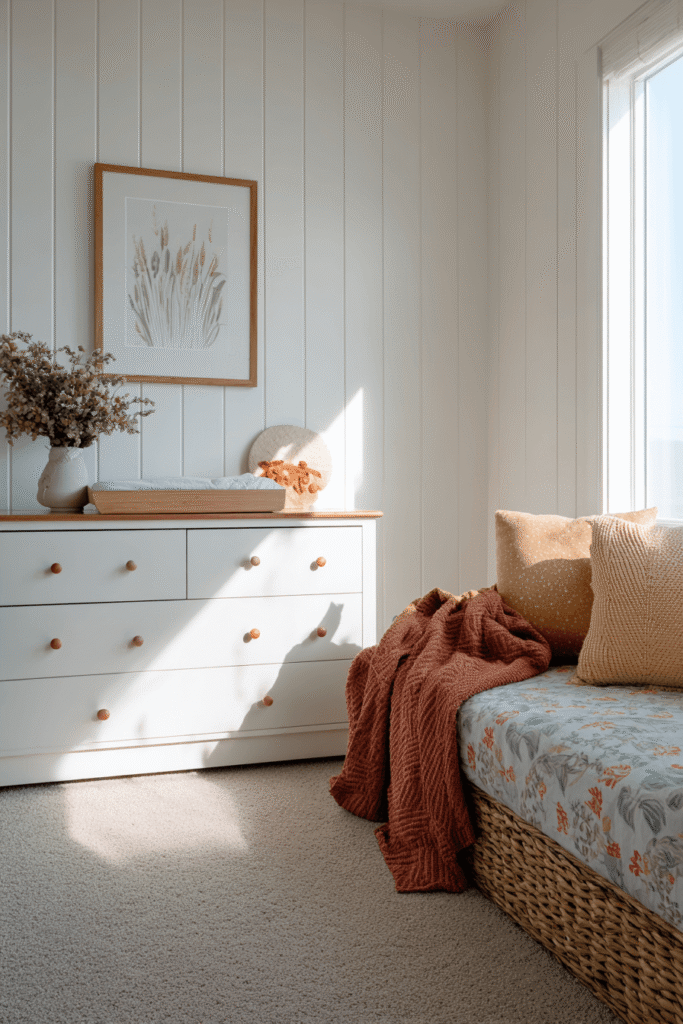
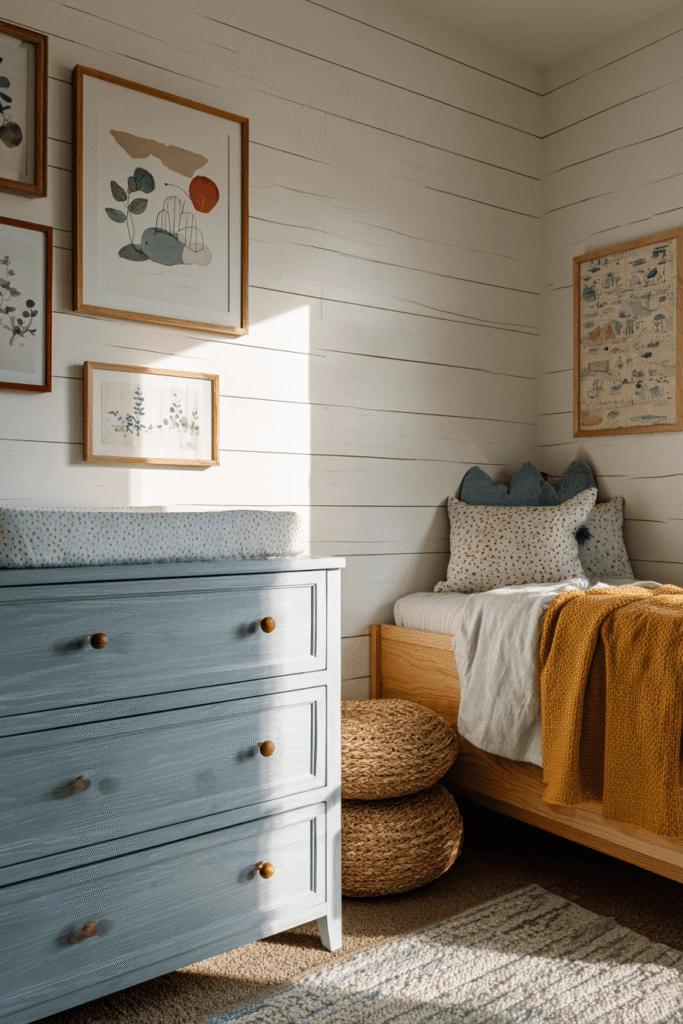

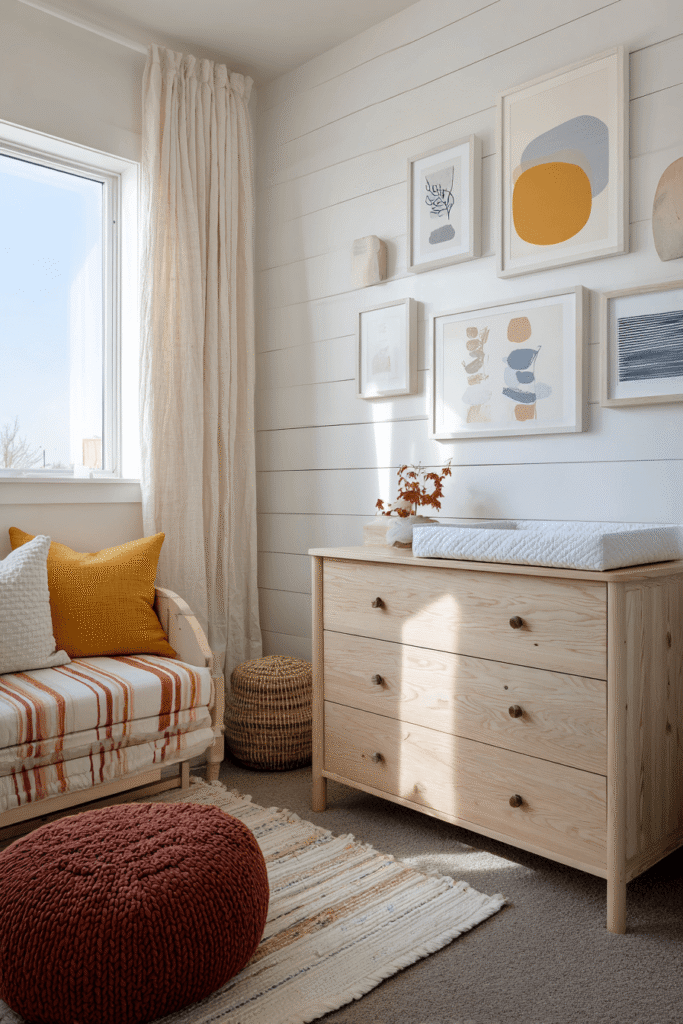
Who says bold color can’t be refined? This design reimagines the classic primary color palette through a sophisticated lens, applying dusty red, soft blue, and warm yellow through bedding, wall art, and textile accents rather than saturating the walls in flat, harsh paint. White shiplap walls provide a timeless, clean backdrop that lets the colorful accents breathe and shine. A low dresser with simple round knobs doubles as a functional changing station, proving that utility and style are not mutually exclusive in a well-designed toddler room. Natural afternoon light streams across woven textures and painted wood grain, bringing out the depth and warmth in every carefully chosen element.
Key Design Tips:
- Apply primary colors through textiles and wall art rather than paint for a more sophisticated result.
- White shiplap walls create texture and depth without competing with colorful accents.
- Use a low dresser with round knobs that doubles as a changing station to maximize furniture functionality.
- Mute primary tones to dusty or chalky versions for a grown-up feel that still delights toddlers.
- Layer woven textiles — rugs, cushions, curtains — to build warmth and tactile interest.
7. Imaginative Play Toddler Room with Indoor Playhouse
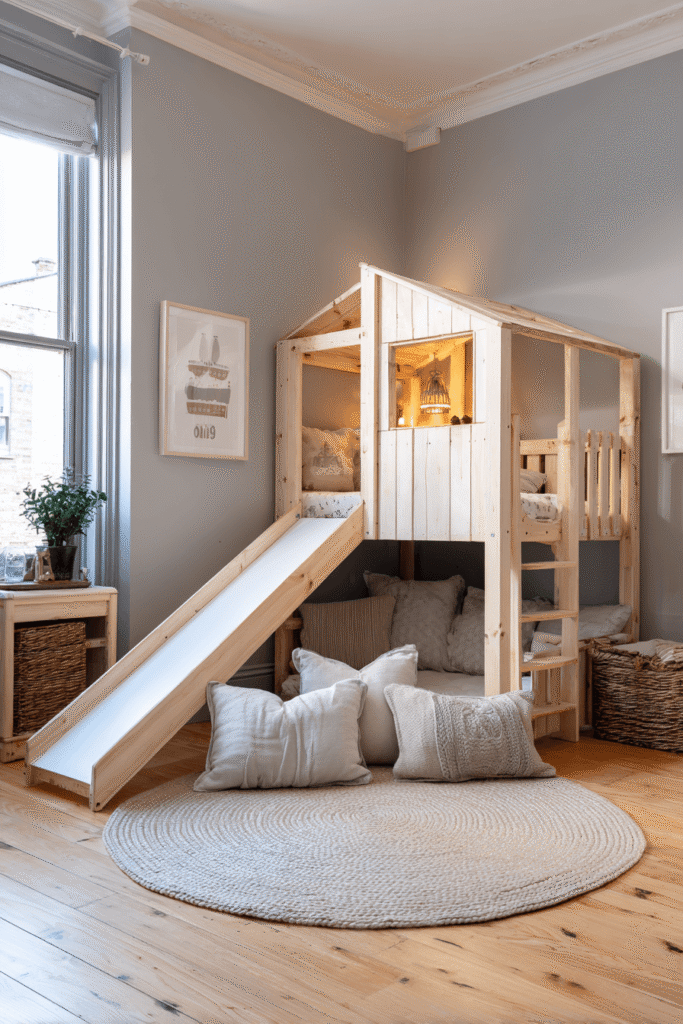
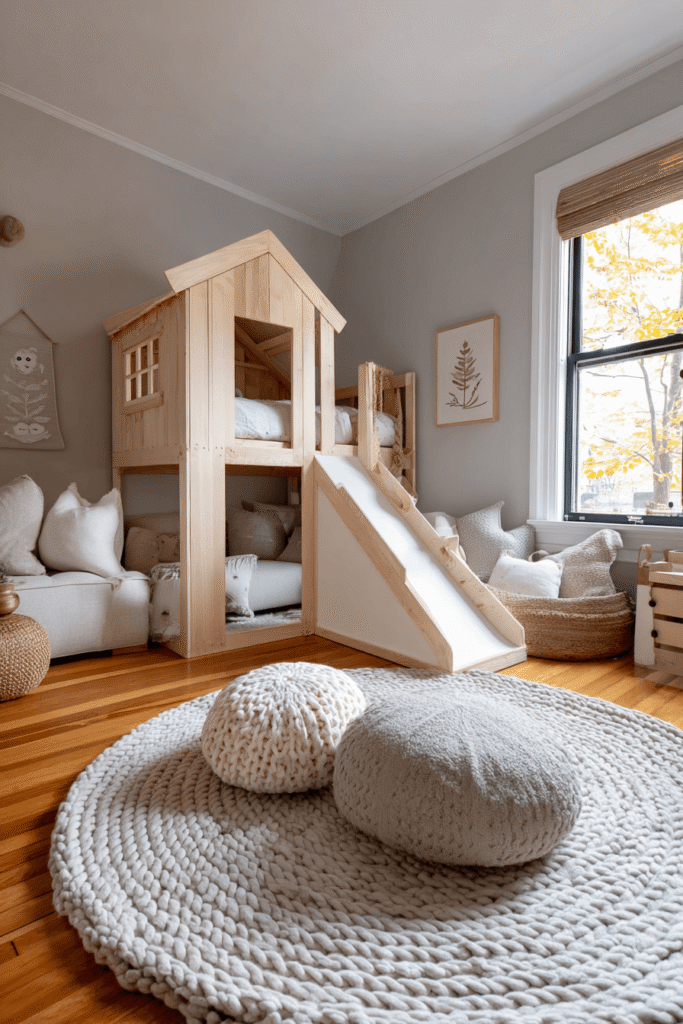
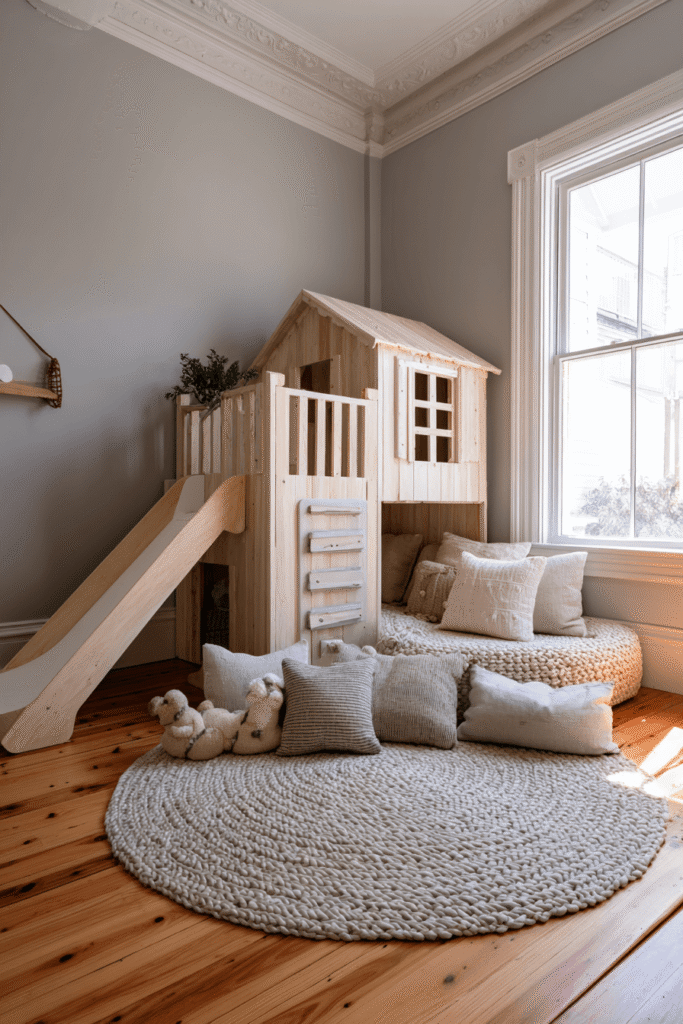
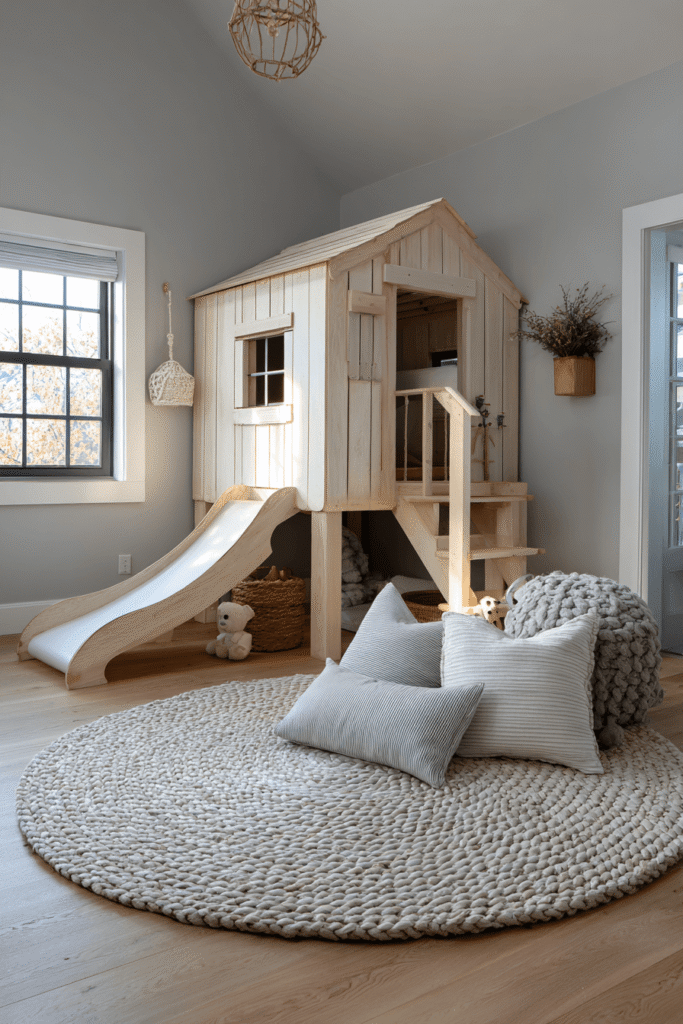
This design dares to go big on imagination without sacrificing the calm, cohesive aesthetic a well-rested toddler needs. A small indoor wooden playhouse structure is seamlessly integrated into one corner of the room, complete with a low slide and safety-gated steps — a dream setup that transforms the bedroom into an adventure zone. The surrounding space maintains its serenity with soft grey walls and natural wood floors, ensuring the playhouse feels like a joyful focal point rather than a chaotic addition. A circular braided cotton rug at the center of the room with scattered cushions creates a cozy gathering space for storytelling, puzzles, or simply daydreaming.
Key Design Tips:
- Incorporate an indoor wooden playhouse with a built-in slide and safety gates for imaginative play.
- Keep surrounding walls in soft grey to balance the energy of an active play structure.
- Use a braided circular rug to anchor the central play area and soften hardwood floors.
- Scatter floor cushions generously to create flexible, child-directed seating arrangements.
- Ensure all structural play elements meet safety certifications before installation.
8. Nursery-to-Toddler Transition Bedroom

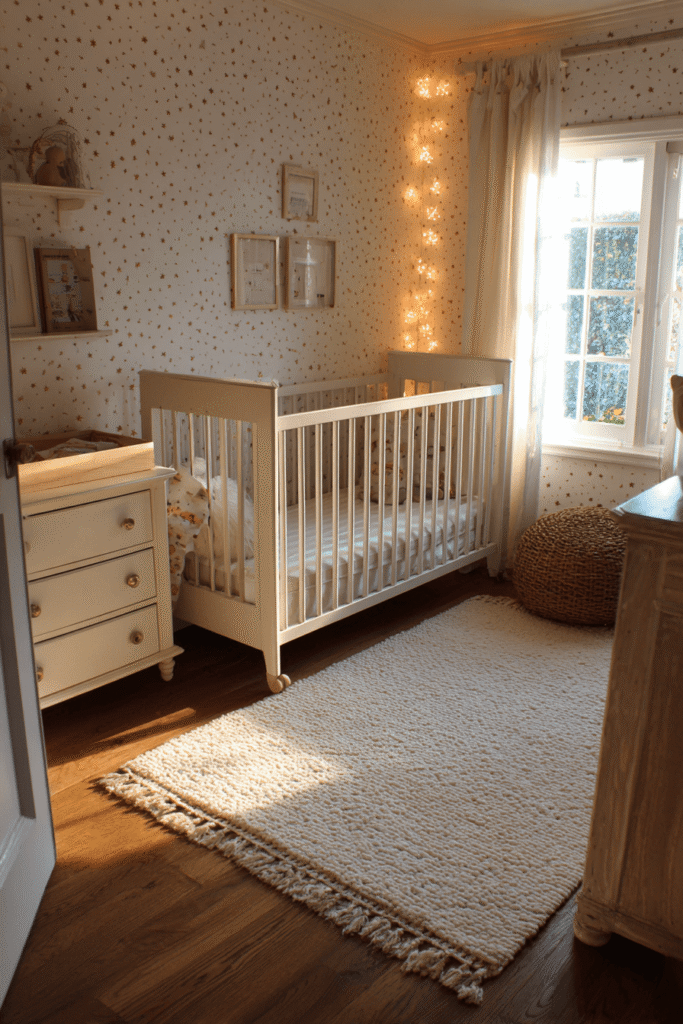

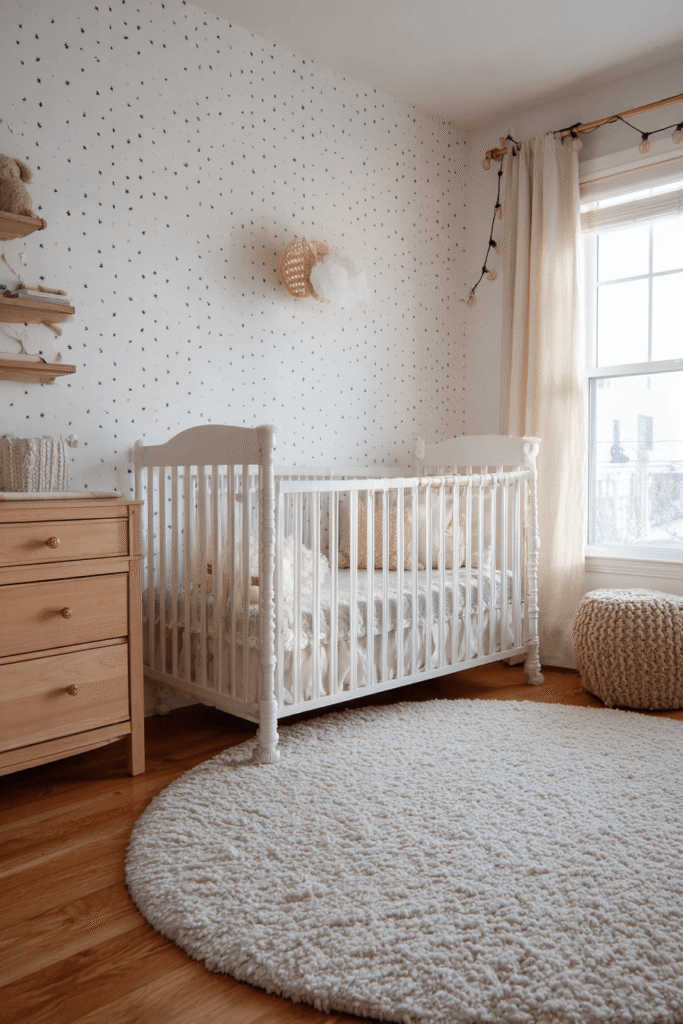
Change doesn’t have to be jarring — this thoughtfully designed room shows how a nursery can evolve gracefully into a toddler’s space without a complete overhaul. A converted crib-to-toddler bed in white spindle wood remains the room’s centerpiece, paired with a matching low dresser and coordinating nightstand for a cohesive, pulled-together look. The walls feature a subtle star pattern wallpaper in soft navy and cream, adding visual interest that feels both classic and child-appropriate. Warm globe string lights above the headboard cast a golden, cozy glow that makes bedtime transitions feel magical rather than anxious — a small but powerful design detail that many parents overlook.
Key Design Tips:
- Choose a convertible crib-to-toddler bed to maintain familiarity during the nursery transition.
- Use star pattern wallpaper in navy and cream for timeless charm that grows with the child.
- Add warm globe string lights near the headboard to ease bedtime anxiety with gentle, comforting light.
- Match the dresser and nightstand to the bed frame for a cohesive, intentional aesthetic.
- Layer a cream wool rug over natural oak floors for warmth and acoustic softness.
9. Dreamy Blush Pink Girl’s Toddler Room with Canopy

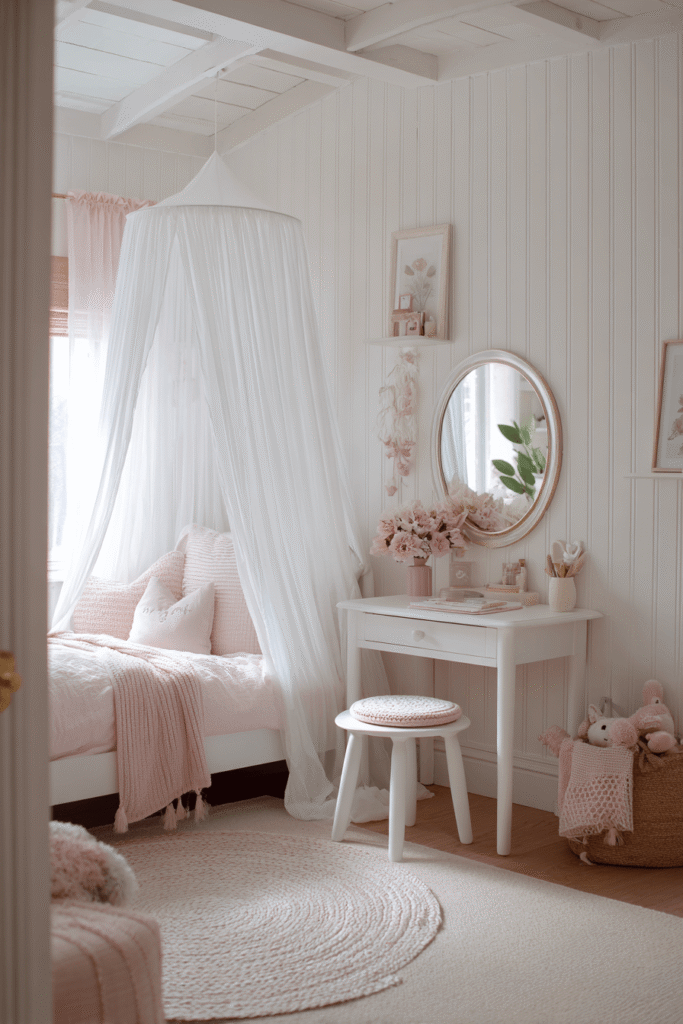

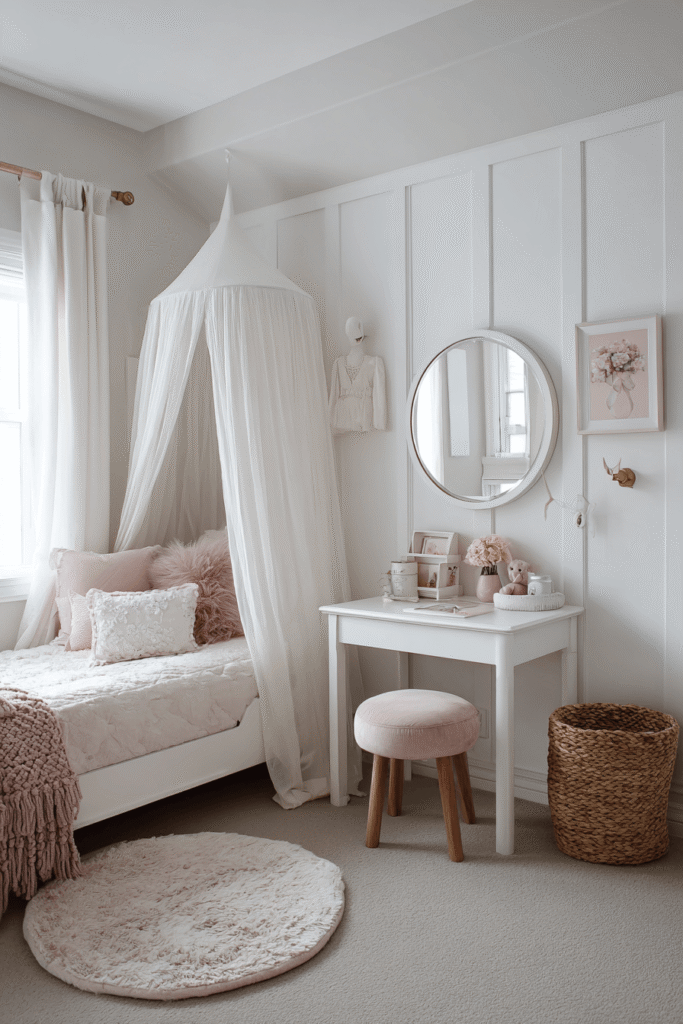
Soft, layered, and utterly enchanting, this girl’s toddler room creates a sense of wonder without leaning into saccharine excess. The room’s blush pink and white palette is grounded by sage green accents that add botanical freshness and prevent the space from feeling overly sweet. A sheer white cotton canopy draped over the toddler bed becomes the room’s romantic focal point — a fairytale touch that delights little ones and photographs beautifully. White beadboard wainscoting on the lower half of the walls adds architectural texture, elevating the room beyond a simple paint job. A small vanity with a rounded mirror and low stool in the corner introduces age-appropriate role play in the most charming possible way.
Key Design Tips:
- Use a sheer canopy over the toddler bed to create a dreamy, intimate sleep sanctuary.
- Balance blush pink with sage green and white to avoid an overwhelming color scheme.
- Install white beadboard wainscoting on the lower walls for architectural detail and easy cleaning.
- A small vanity with a rounded mirror encourages imaginative play in a safe, age-appropriate format.
- Layer textures through cotton, linen, and woven fabrics for a rich, tactile aesthetic.
10. Design-Forward Transport Theme Boy’s Toddler Room
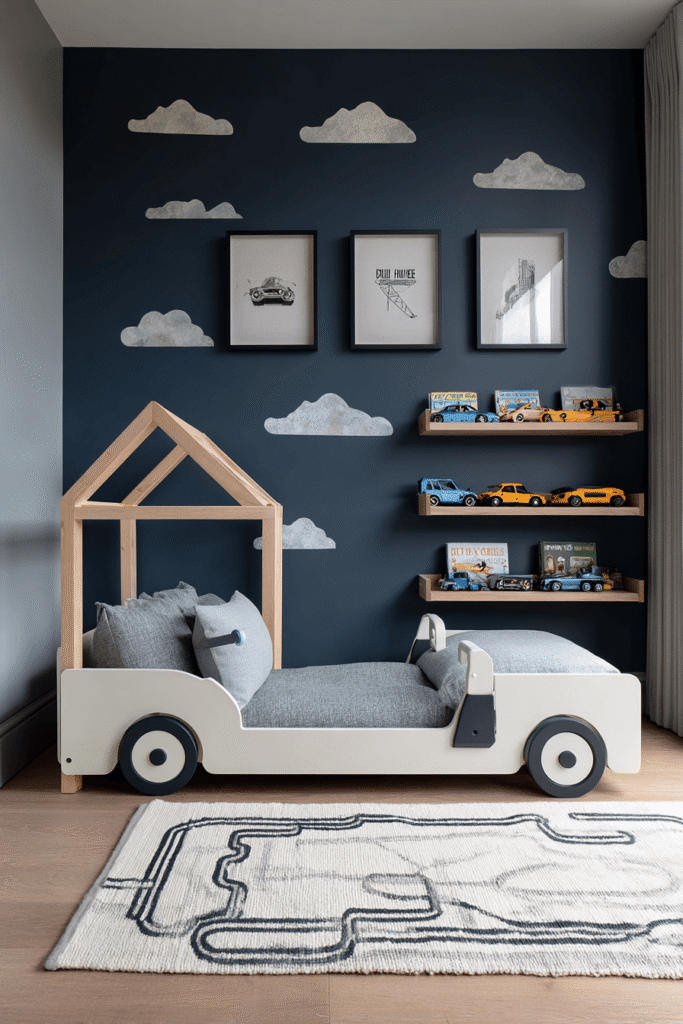
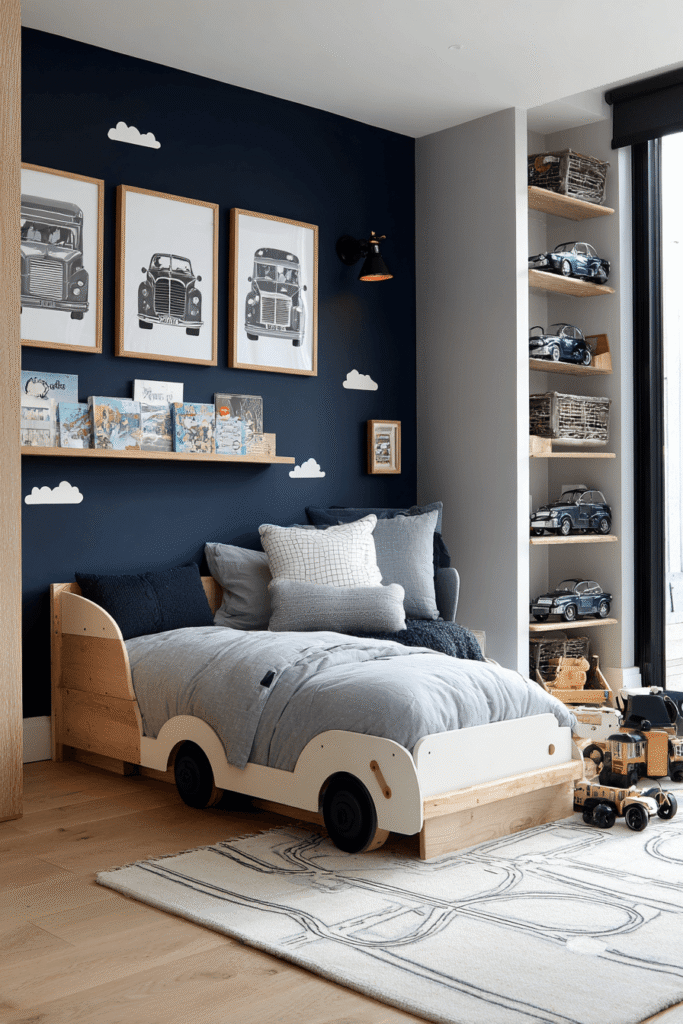
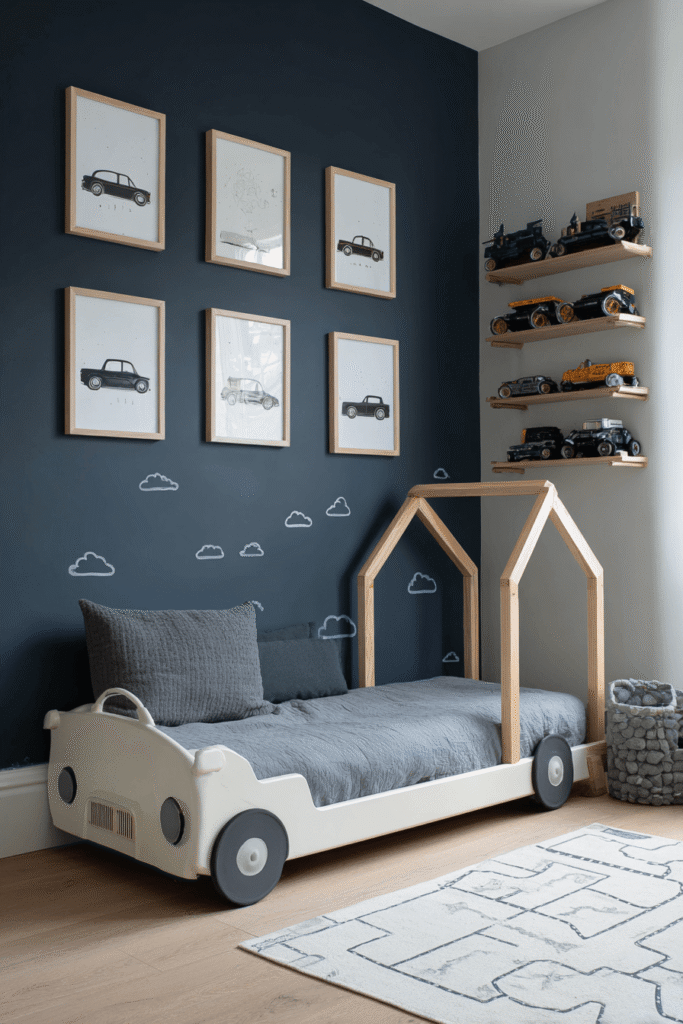

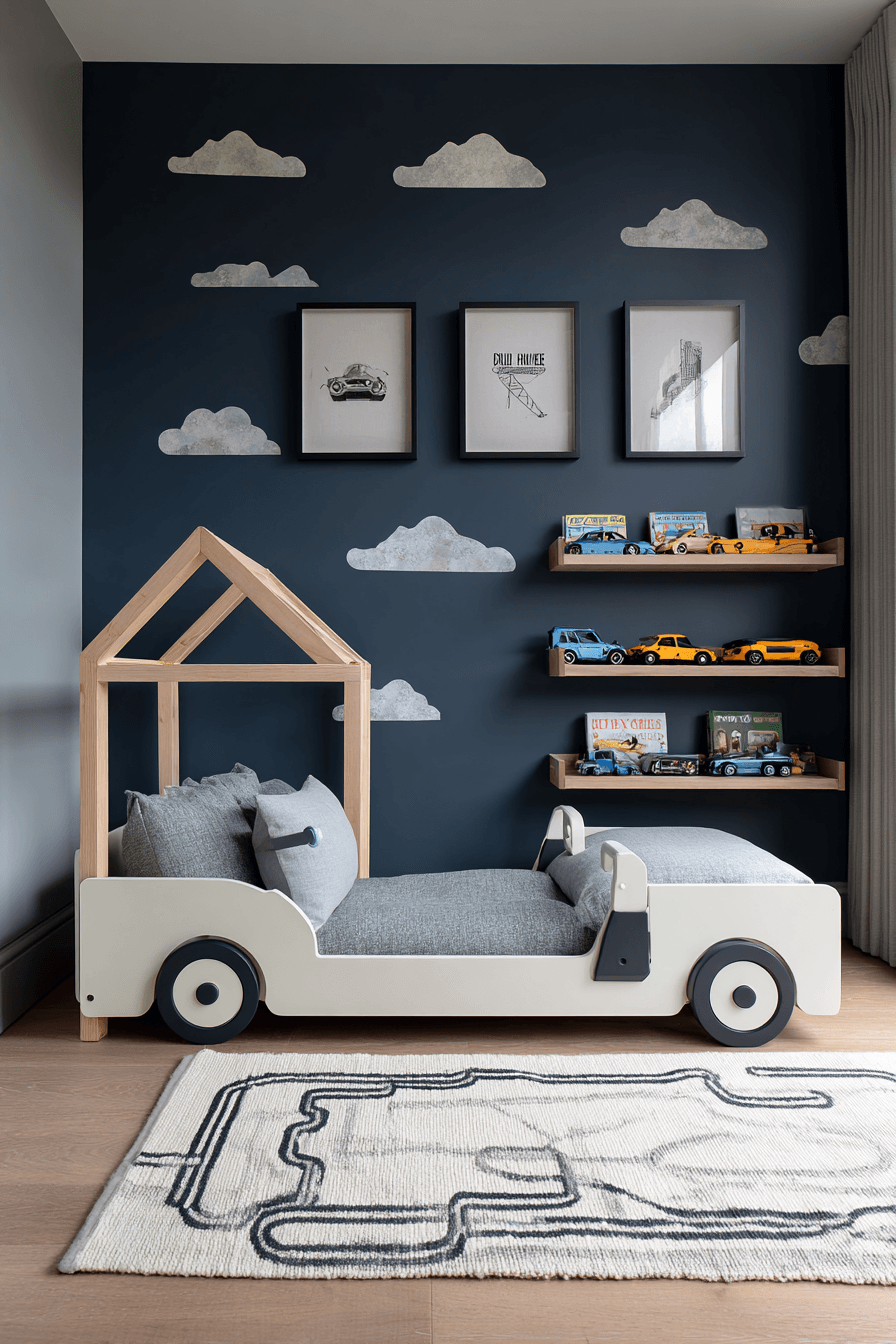
Transport themes are a perennial favorite for boys’ toddler rooms, but this design elevates the concept far beyond novelty store décor. A road map rug in grey and cream and vehicle art prints in simple wooden frames bring the theme to life subtly and stylishly, while a dark navy accent wall with white cloud decals creates a dramatic, design-forward backdrop. The centerpiece is a car-shaped toddler bed frame in white with grey upholstered mattress — playful enough to delight a toddler but refined enough to please even the most design-conscious parent. Low open shelving displays die-cast toy cars and children’s books with the kind of curated intentionality usually reserved for adult interiors.
Key Design Tips:
- Express transport themes through rugs, art prints, and bed frames rather than overwhelming wall decals.
- A navy accent wall adds drama and sophistication to what could otherwise be a flat, one-note theme.
- Use white cloud decals sparingly for whimsy without cluttering the design.
- Display toys and books on low open shelving to encourage self-directed play and tidy habits.
- Combine matte navy, white, and natural wood tones for a palette that feels cohesive and intentional.
Why These Toddler Room Ideas Represent the Best in Child-Centered Design
Each of these ten designs reflects a deep understanding of what makes a toddler room truly exceptional. The best toddler bedroom ideas are never just about aesthetics — they integrate child development principles, safety-first furniture choices, and sensory-appropriate color palettes into a space that works as hard as it looks beautiful. From the Montessori floor bed that nurtures independence, to the convertible crib-to-toddler transition bed that eases emotional change, every concept here prioritizes the child’s experience above all else. Whether you’re exploring small toddler room ideas, gender-neutral toddler rooms, toddler girl room ideas, or toddler boy room ideas, the unifying thread is intentionality: every material, color, and furniture choice serves a purpose. Natural textures like jute, wicker, birch wood, and organic cotton feature prominently because they are safer, more sustainable, and more visually grounded than synthetic alternatives. Smart toddler room storage ideas — from pegboard walls to fabric cubby bins — ensure spaces stay functional as toy collections grow. And thoughtful lighting choices, from sheer curtains that soften daylight to warm globe string lights that ease bedtime, demonstrate how powerfully atmosphere shapes a toddler’s sense of comfort and security. These are modern toddler room ideas built not just for Instagram, but for real family life.
Conclusion
Designing a toddler’s room is an extraordinary opportunity to create a space that nurtures, inspires, and protects a child during one of the most formative periods of their life. The ten designs explored in this article offer a rich spectrum of approaches — from the earthy simplicity of a Montessori-inspired bedroom to the whimsical drama of an indoor playhouse room, from the dreamy femininity of a canopy toddler bed to the refined boldness of a navy transport-themed space. What they all share is a commitment to thoughtful design: safe materials, age-appropriate scale, sensory balance, and genuine beauty. Whether you take one idea wholesale or mix elements from several, the goal remains the same — to give your toddler a room that feels like it was made just for them. Don’t be afraid to experiment, layer textures, and let your child’s personality guide your choices. The most magical toddler rooms are always the ones made with love and intention.