10 Small Gaming Room Ideas for the Ultimate Setup
Whether you’re working with a cramped corner, a converted closet, or a modest spare bedroom, designing a dedicated gaming space is one of the most rewarding home improvement projects you can take on. A well-planned gaming room isn’t just about placing a screen and a chair — it’s about crafting an environment that fuels focus, reflects your personality, and makes every session feel immersive. From RGB-drenched dark dens to clean minimalist sanctuaries, the right design can turn even the tightest square footage into a powerful, functional retreat. This article explores ten distinct small gaming room ideas, each tailored to a different lifestyle, budget, and aesthetic — so whether you’re a casual gamer, a content creator, or a hardcore enthusiast, there’s something here to spark your next setup.
1. The Corner Command Center: L-Shaped Desk with Dual Monitor Glow
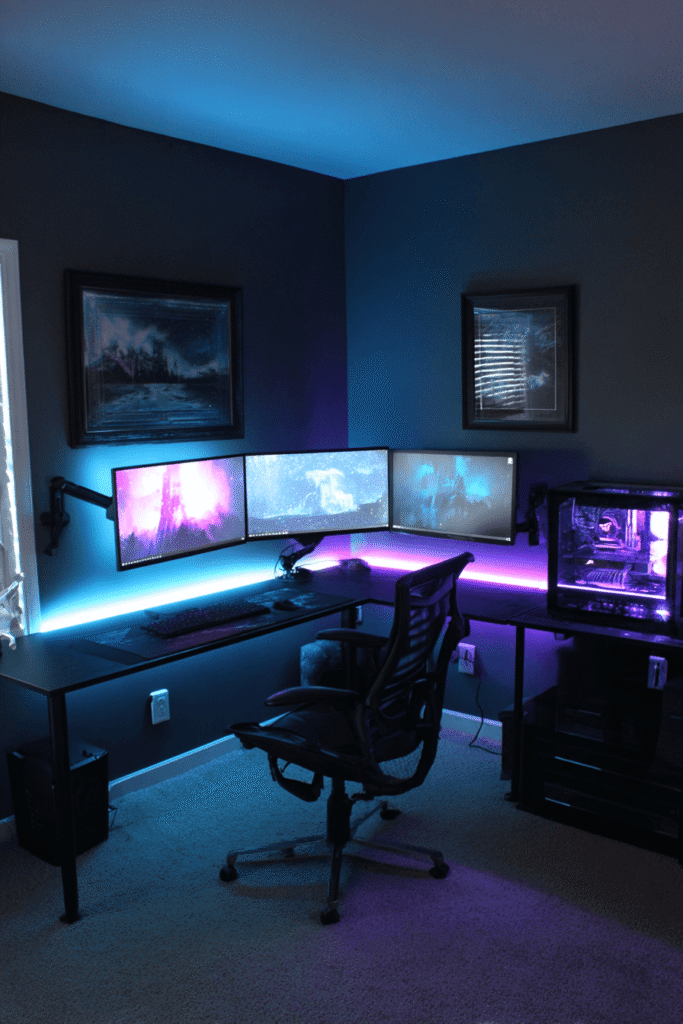
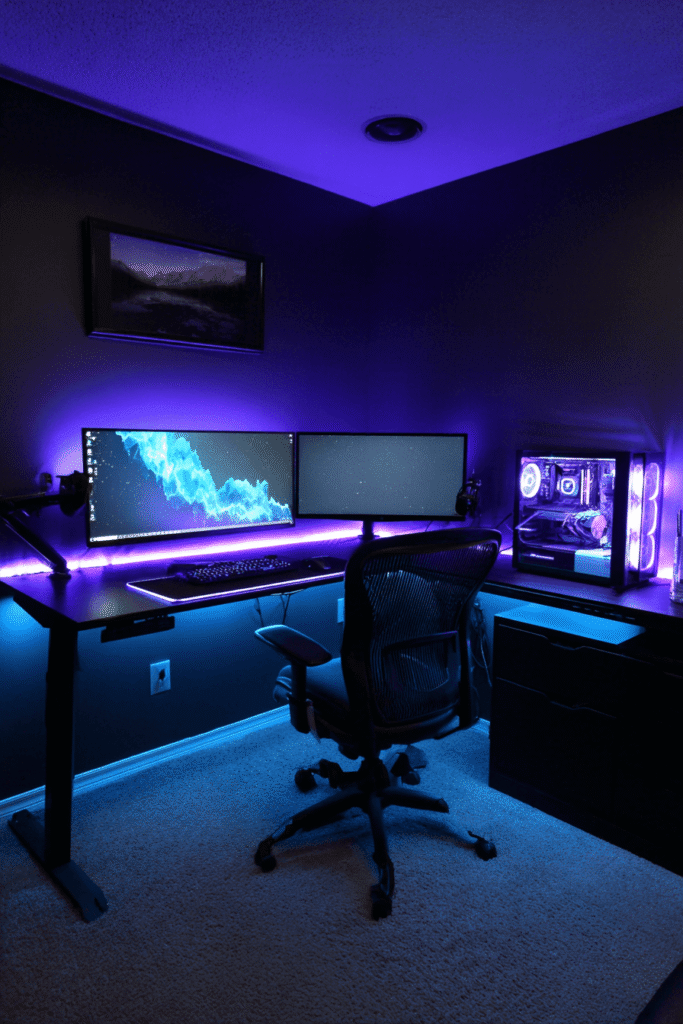
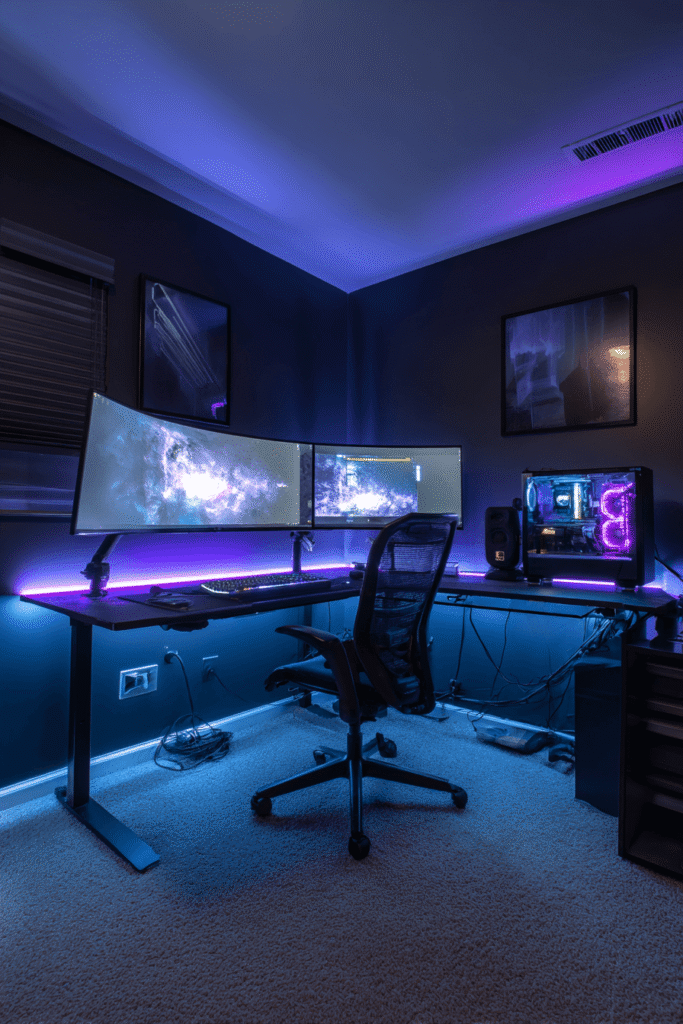
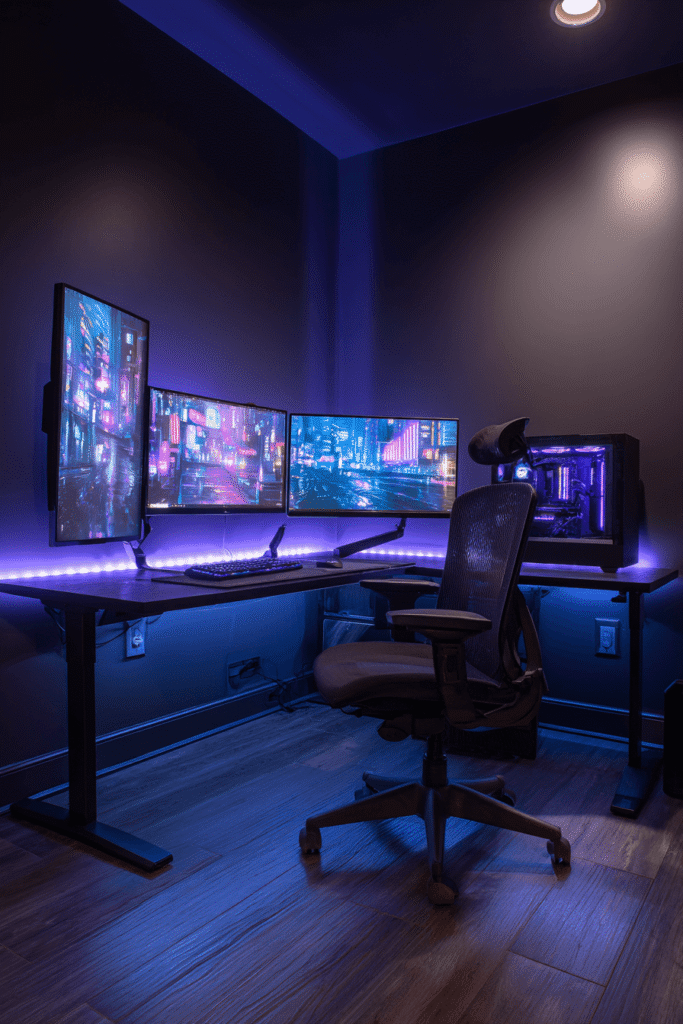
The cornerstone of any serious small gaming room is smart space utilization, and nothing achieves this better than an L-shaped desk tucked into a corner. In a 10×10 foot room, this configuration reclaims floor space while maximizing desk real estate for a dual monitor setup mounted on adjustable arms. Deep charcoal walls absorb light beautifully, creating an ideal contrast for the cool blue and purple RGB LED strips running beneath the desk and behind the monitors. A black mesh ergonomic chair anchors the workstation, while cable management raceways along the desk legs eliminate visual clutter entirely. Wide-angle photography of this setup reveals how intentional layout design can make a compact room feel surprisingly expansive and professional.
Key Design Tips:
- Use an L-shaped desk to maximize corner space in rooms under 120 square feet.
- Mount monitors on adjustable arms to free up desk surface and improve ergonomics.
- Install RGB LED strip lights under the desk for ambient glow without harsh overhead lighting.
- Choose charcoal or dark grey walls to enhance the contrast of glowing peripherals.
- Invest in cable raceways to keep wire management invisible and clean.
2. The Floating Desk Bedroom Conversion with Pegboard Wall
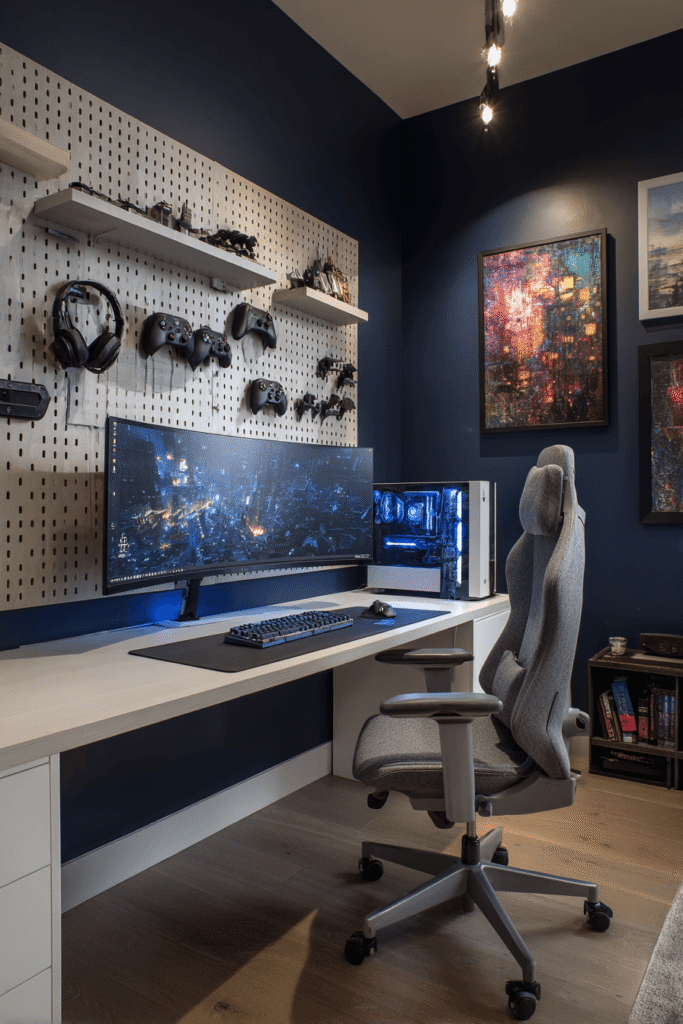
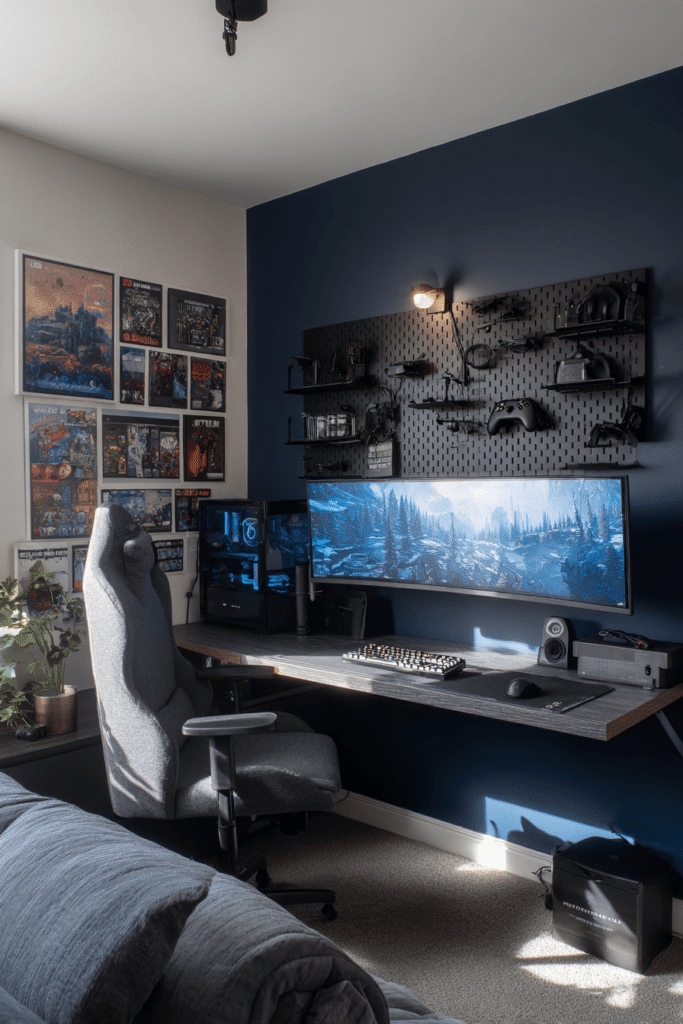
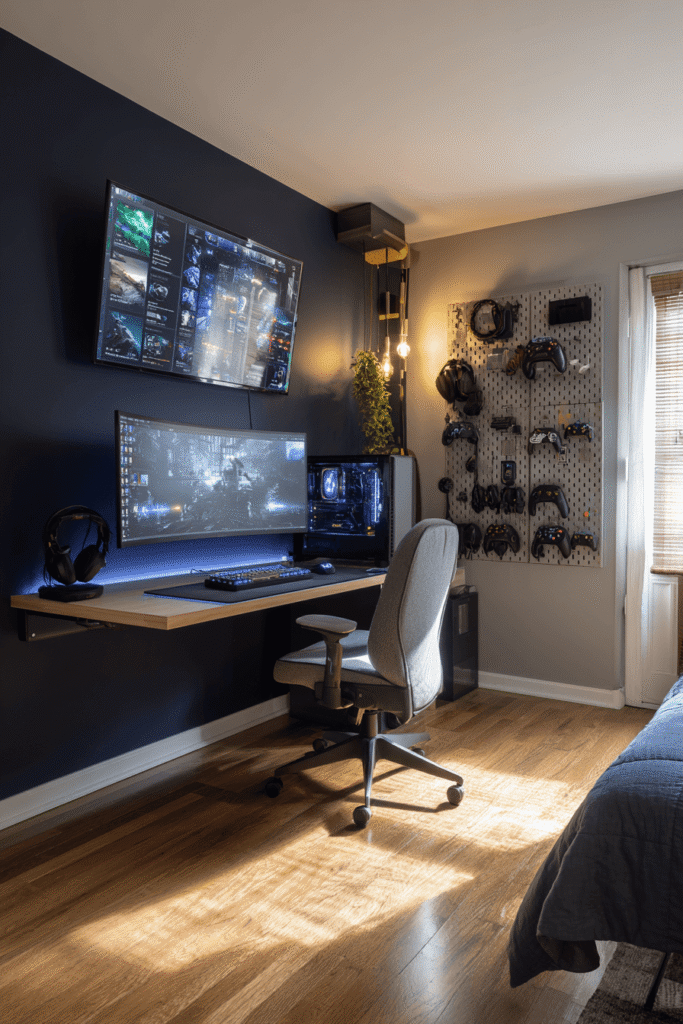
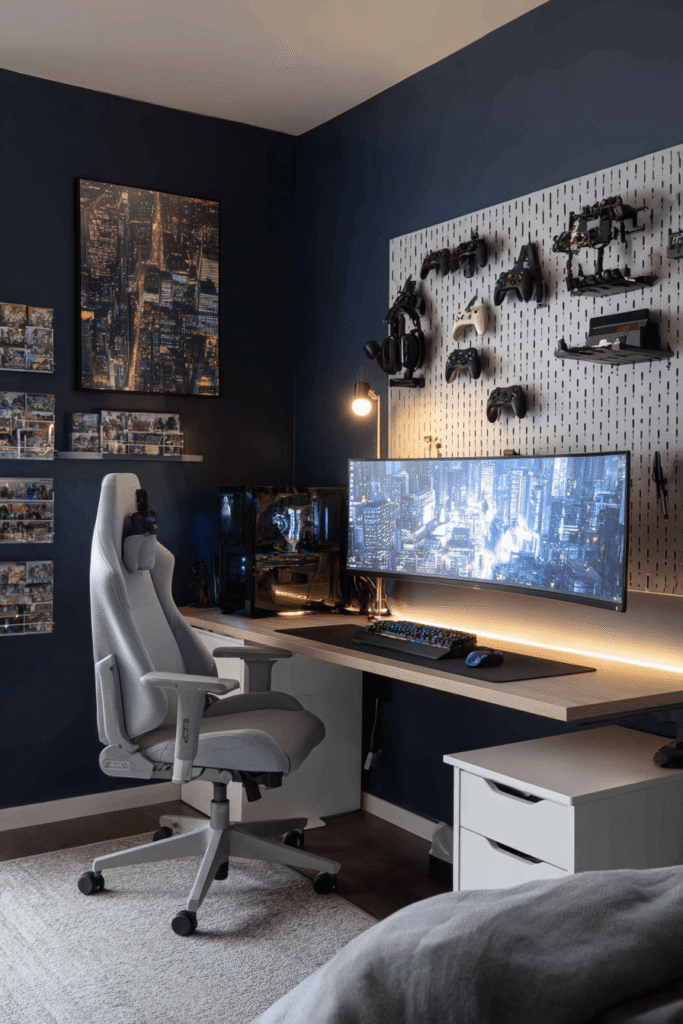
Spare bedrooms are prime real estate for small gaming room conversions, and a wall-mounted floating desk is the most space-efficient approach available. Set at seated height with a single ultrawide curved monitor, this layout feels intentional and editorial. A dark navy blue accent wall behind the setup acts as a dramatic focal point, giving depth to the room without consuming physical space. The star feature here is a open pegboard panel beside the desk — a highly functional organizational system that displays controllers, headsets, and accessories in a clean, accessible grid. A compact gaming chair in grey slides neatly under the desk when not in use, keeping walkways clear. Soft diffused LED ceiling lighting paired with a focused desk lamp creates a workspace that transitions seamlessly between gaming and productivity.
Key Design Tips:
- Float your desk from the wall to eliminate the bulk of traditional desk legs.
- Use a navy or deep jewel-tone accent wall to add drama without painting the entire room.
- Install a pegboard beside your setup for modular, customizable accessory storage.
- Choose a chair that tucks fully under the desk to preserve open floor space.
- Layer ceiling and task lighting to reduce eye strain during long sessions.
3. The Studio Alcove Nook with Layered Shelf Lighting

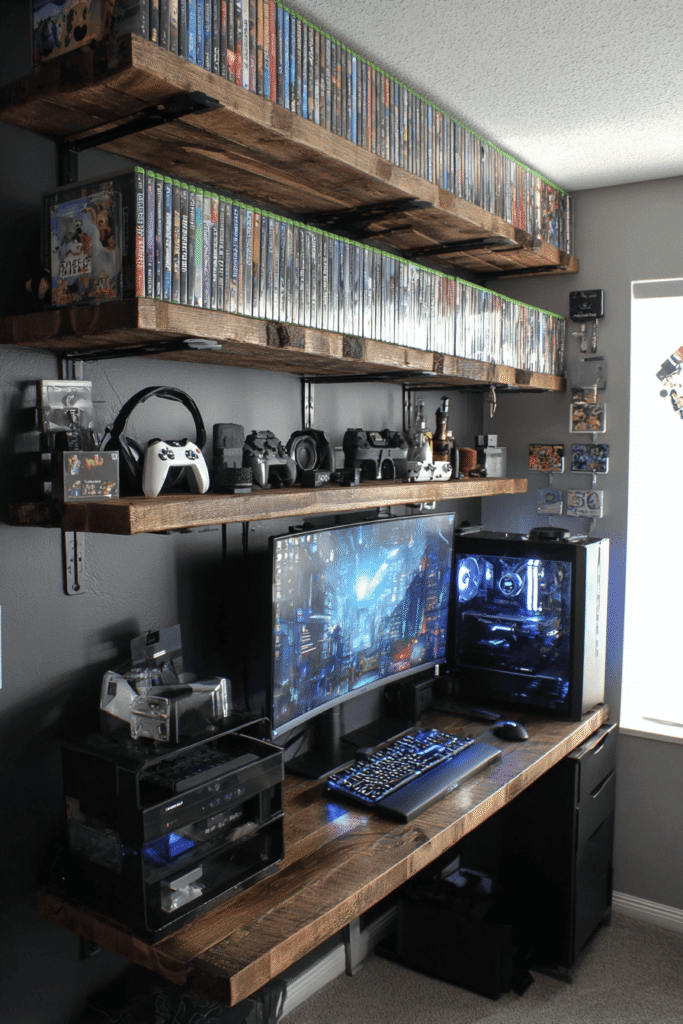
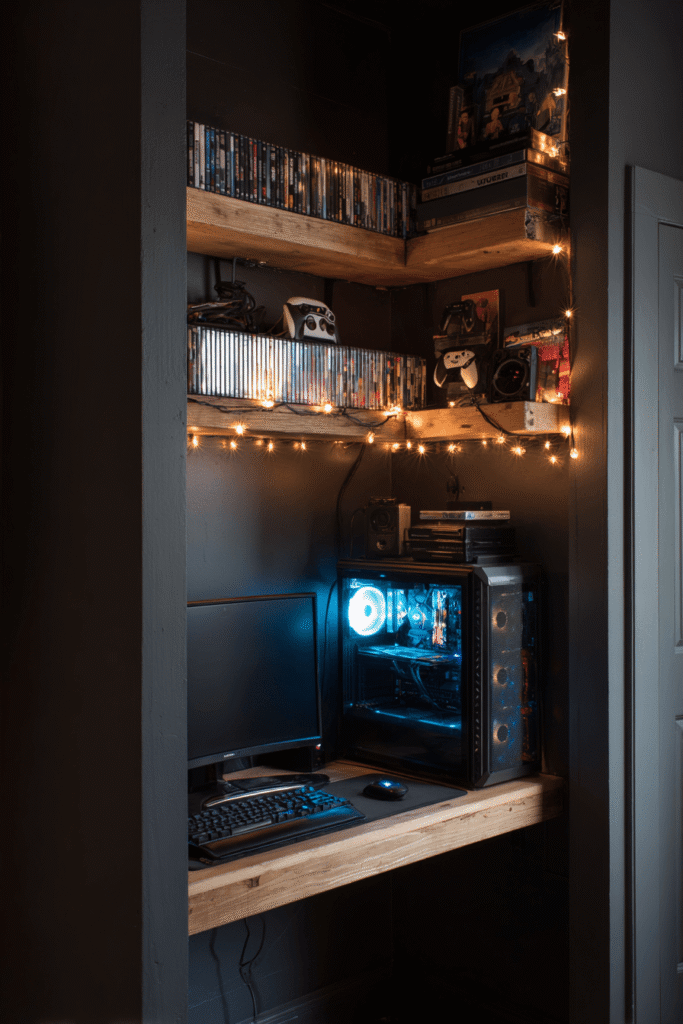
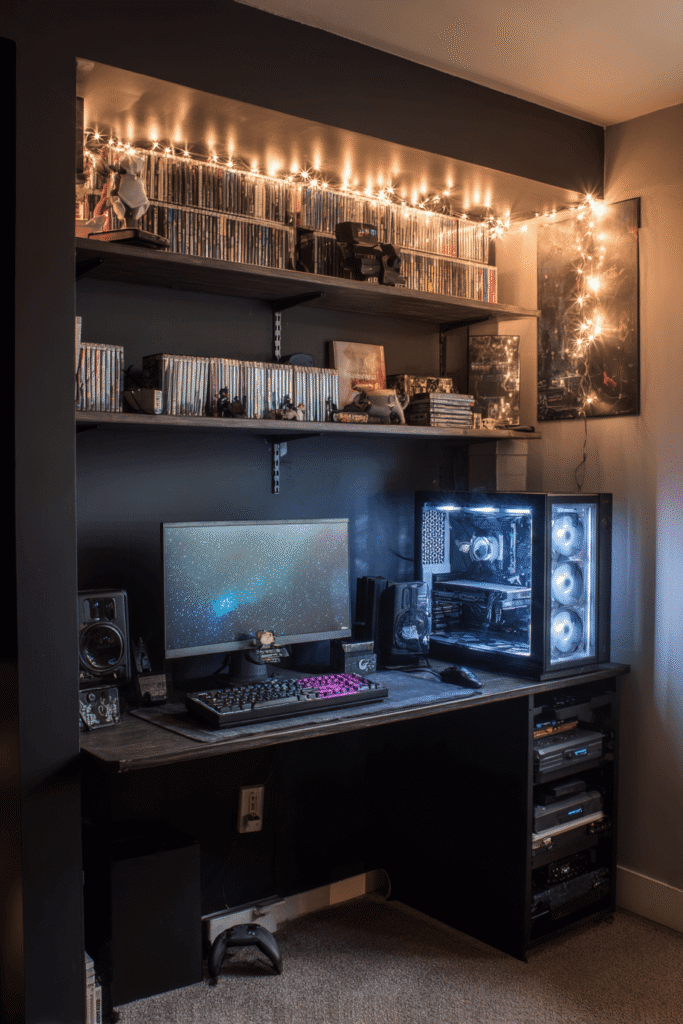
For apartment dwellers, a studio alcove or niche can become an extraordinary compact gaming station with the right built-in treatment. A custom floating shelf system with integrated cable channels and adjustable monitor risers transforms a shallow recess into a fully functional battlestation. The shelves hold a desktop PC tower, peripherals, and a curated collection of game cases — all organized with purpose. Warm Edison bulb strip lights run along the upper shelf edge, creating a cozy contrast against the cool blue underglow emanating from RGB fans visible through a tempered glass PC panel. The surrounding matte black wall ties every element together, making the glowing components pop dramatically. This approach demonstrates that small gaming room design is as much about vertical thinking as it is about floor planning.
Key Design Tips:
- Build or install floating shelf systems into alcoves to create built-in gaming stations.
- Mix warm Edison tone lighting with cool RGB PC lighting for visual depth.
- Use matte black paint on surrounding walls to make glowing elements stand out.
- Integrate cable channels directly into shelf builds to keep surfaces clean.
- Store game cases vertically on open shelves for both access and visual display.
4. The Teen Bedroom Corner with Geometric Accent Wall

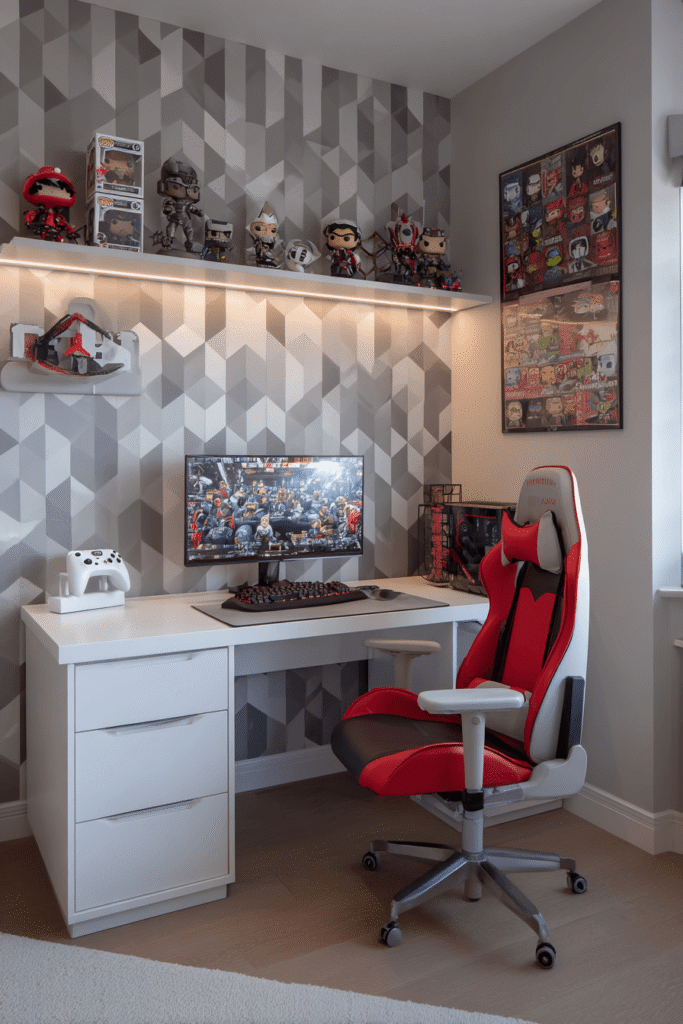
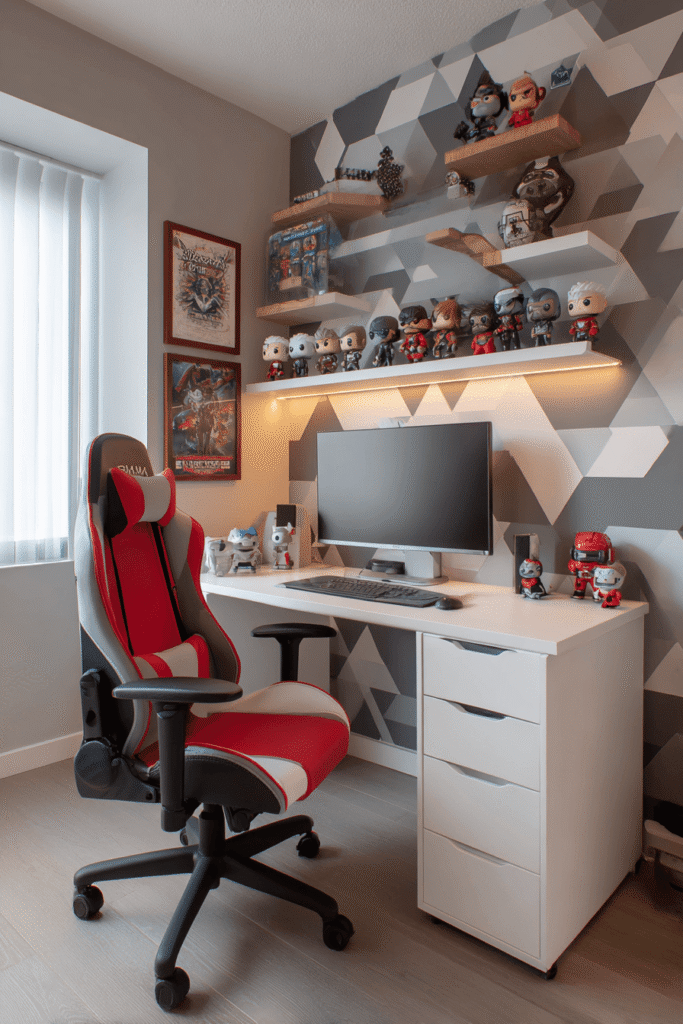

Designing a small gaming room for a teenager requires balancing fun aesthetics with practical functionality. A white laminate desk with rounded edges paired with a red-and-black compact gaming chair brings youthful energy without overwhelming the space. A 27-inch monitor on a matching white stand keeps the scale appropriate for the room’s proportions. The real design statement comes from peel-and-stick geometric wallpaper in grey and white applied to the accent wall — an affordable, renter-friendly solution that adds serious visual interest. A two-drawer pedestal unit slides neatly under the desk for hidden storage. Floating shelves above display Funko Pop figures and gaming memorabilia under warm LED strip lights, giving the room a personality-rich, curated feel that feels authentically teen without being chaotic.
Key Design Tips:
- Use peel-and-stick geometric wallpaper for a bold accent wall without permanent commitment.
- Match desk and monitor stand finishes for a cohesive, intentional look.
- Add floating display shelves above the desk for collectibles and personal memorabilia.
- A pedestal drawer unit beneath the desk provides hidden storage within the existing footprint.
- Warm LED strips on display shelves soften the room’s overall light temperature.
5. The Converted Walk-In Closet Triple Monitor Station
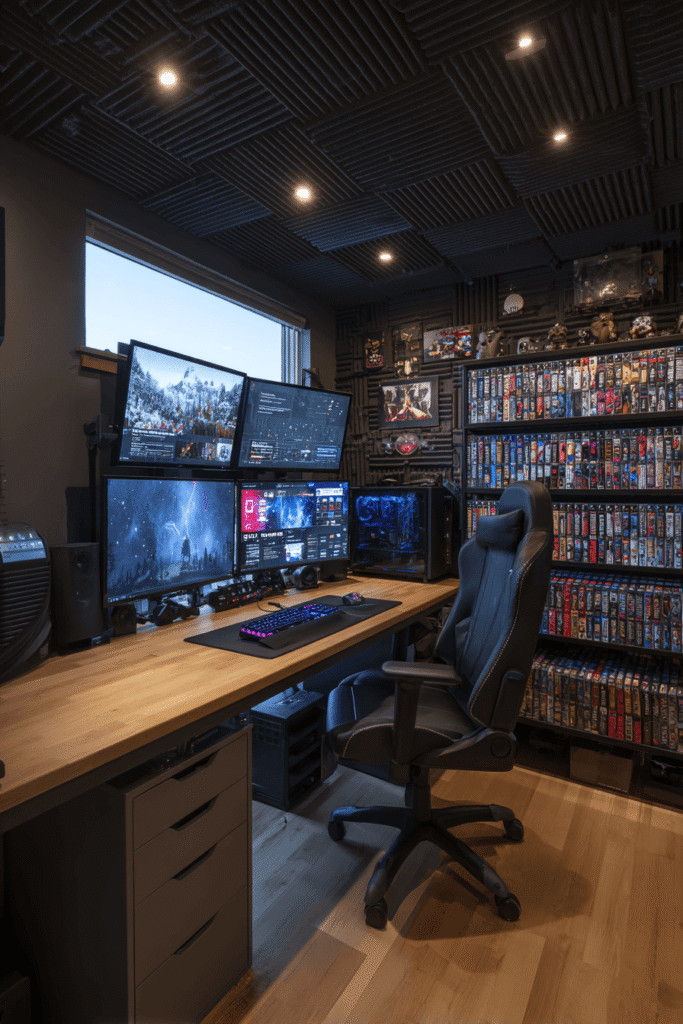
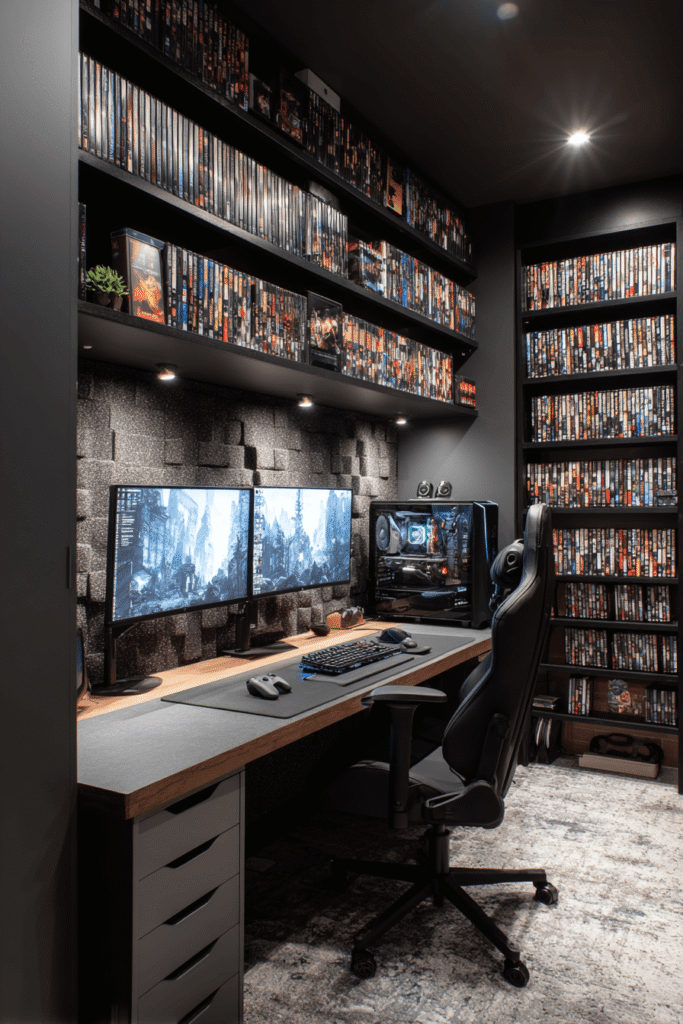

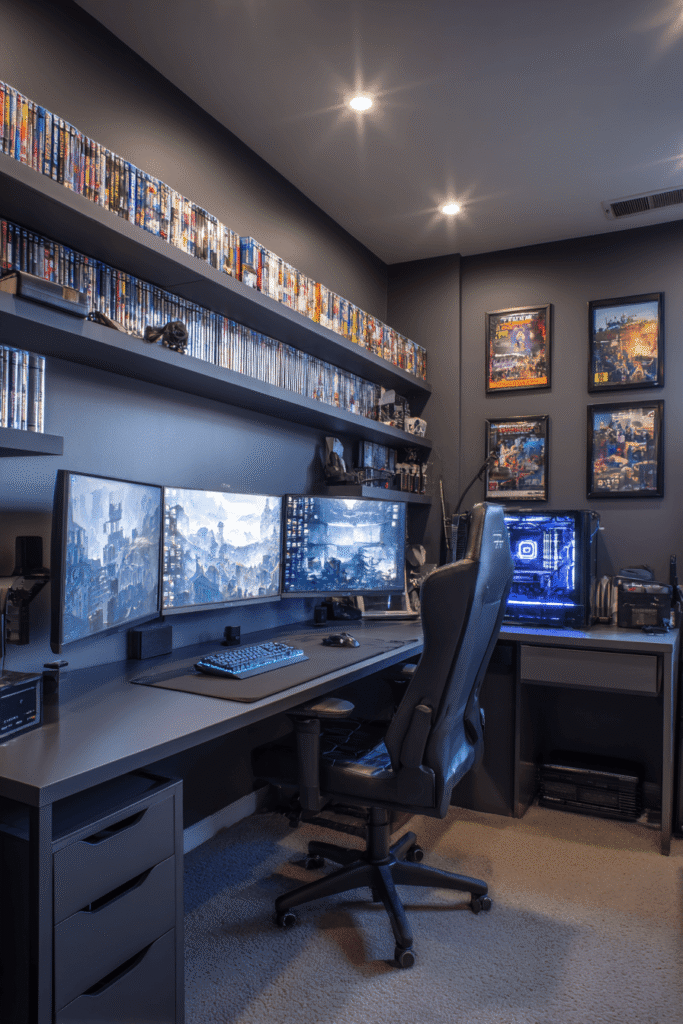
Few small gaming room transformations are as dramatic — or as clever — as converting a walk-in closet into a dedicated gaming station. With the clothing rod removed and replaced by a full-width MDF built-in desk, the space becomes a private, enclosed battlestation. A triple monitor setup sits on an aluminum desk rail system, while the side walls are lined with shallow open shelving holding alphabetically sorted game titles — a detail that’s as functional as it is visually satisfying. Acoustic foam panels in dark grey cover the back wall, providing both sound dampening and a textural aesthetic backdrop. Recessed LED downlights above illuminate the workspace evenly, creating a professional-grade feel in an unexpected location. Closet gaming rooms also offer a unique privacy advantage: simply close the door and the gaming world disappears.
Key Design Tips:
- Remove closet rods and install a full-width built-in desk to maximize the enclosed space.
- Use acoustic foam panels on the back wall for sound control and visual texture.
- Install recessed downlights for even, shadow-free task illumination.
- Aluminum monitor rail systems allow precise positioning across triple-monitor arrays.
- Shallow side shelves keep game libraries organized without consuming desk space.
6. The Minimalist Oak and White Sanctuary
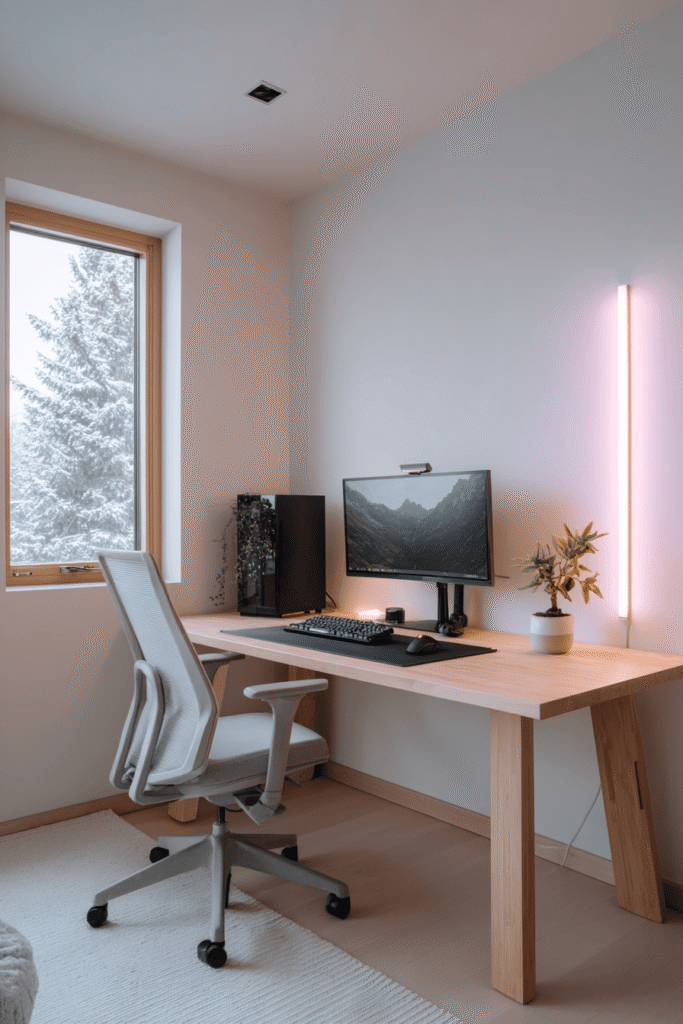
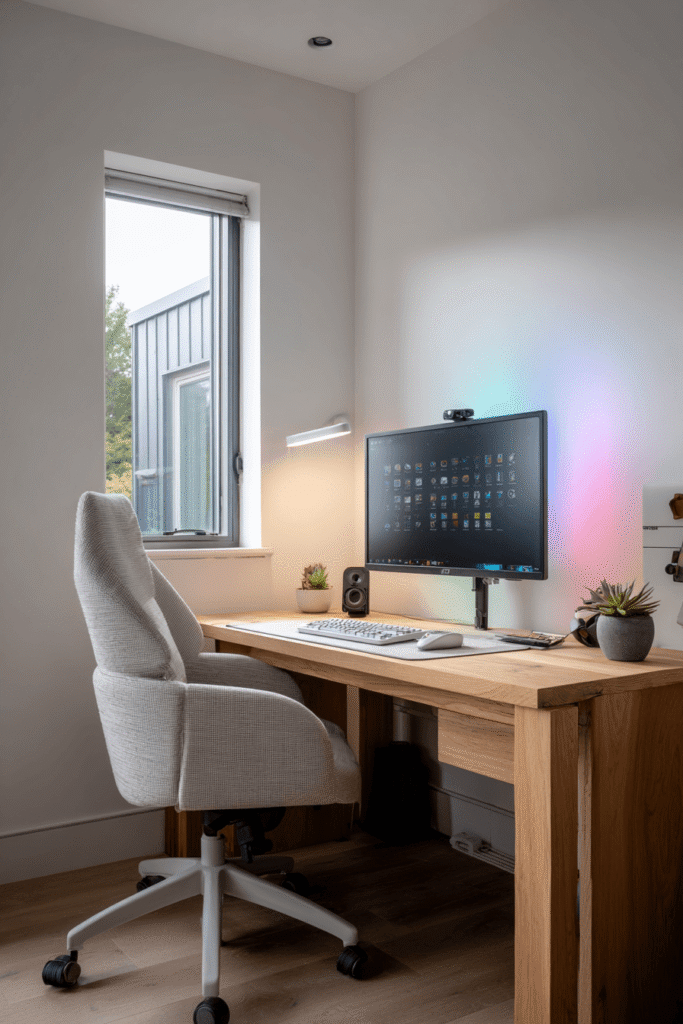
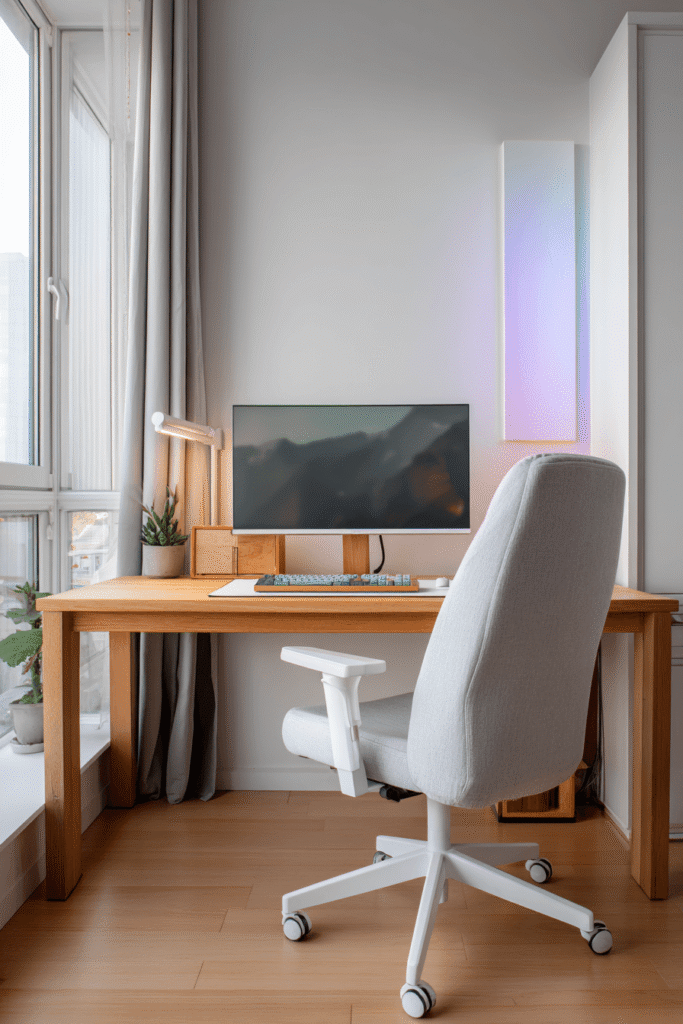
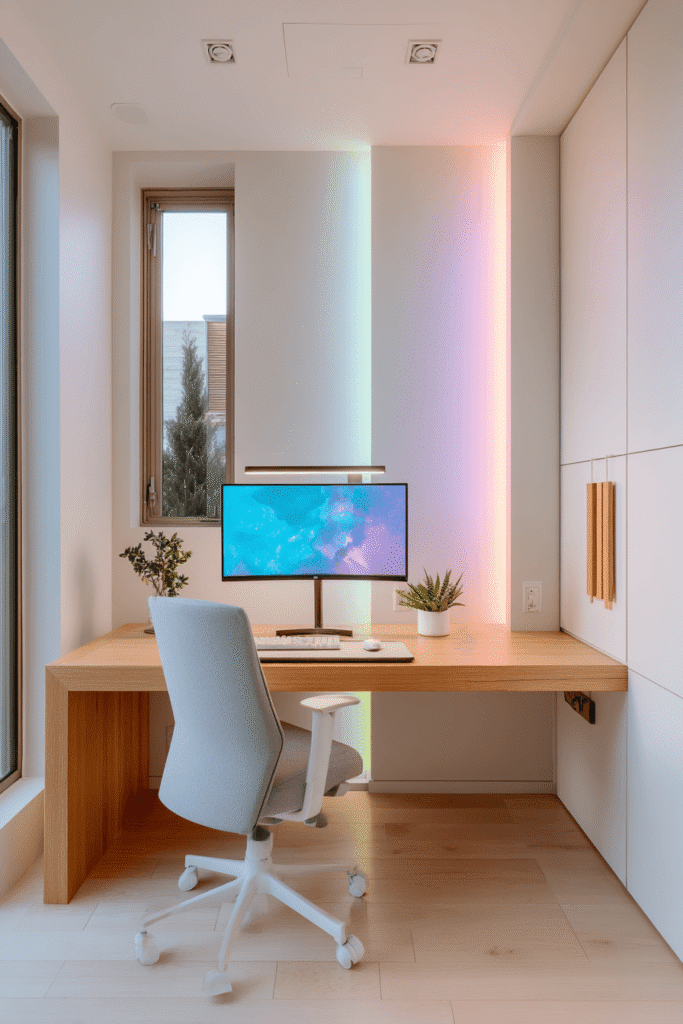
Not every gamer wants a dark, RGB-saturated environment — and the minimalist gaming room is a growing trend for those who prefer calm, clean aesthetics. A natural oak wood desk with straight, Scandinavian-influenced lines supports a single 32-inch monitor on a slim adjustable arm, while a pale grey ergonomic chair with lumbar support keeps the palette soft and neutral. A single vertical RGB light panel on the right wall provides just enough ambient color without dominating the space. Cable organizers in matching oak tone keep the desk surface immaculate. A small potted succulent in the desk corner adds organic warmth. Natural daylight from a single window does most of the illumination work, supplemented by a slim LED desk lamp. This setup proves that small gaming rooms don’t need to be dark to be atmospheric.
Key Design Tips:
- Choose natural wood desk surfaces for warmth in otherwise neutral, minimalist rooms.
- A single large-format RGB light panel delivers ambient color without the complexity of full strip setups.
- Keep desk accessories in tonal harmony with the desk material for visual unity.
- Let natural daylight lead your lighting plan; supplement with a slim directional LED lamp.
- Add one organic element — a plant, a stone, a wood object — to ground the space with life.
7. The Dark Moody Den with Hexagonal Acoustic Panels
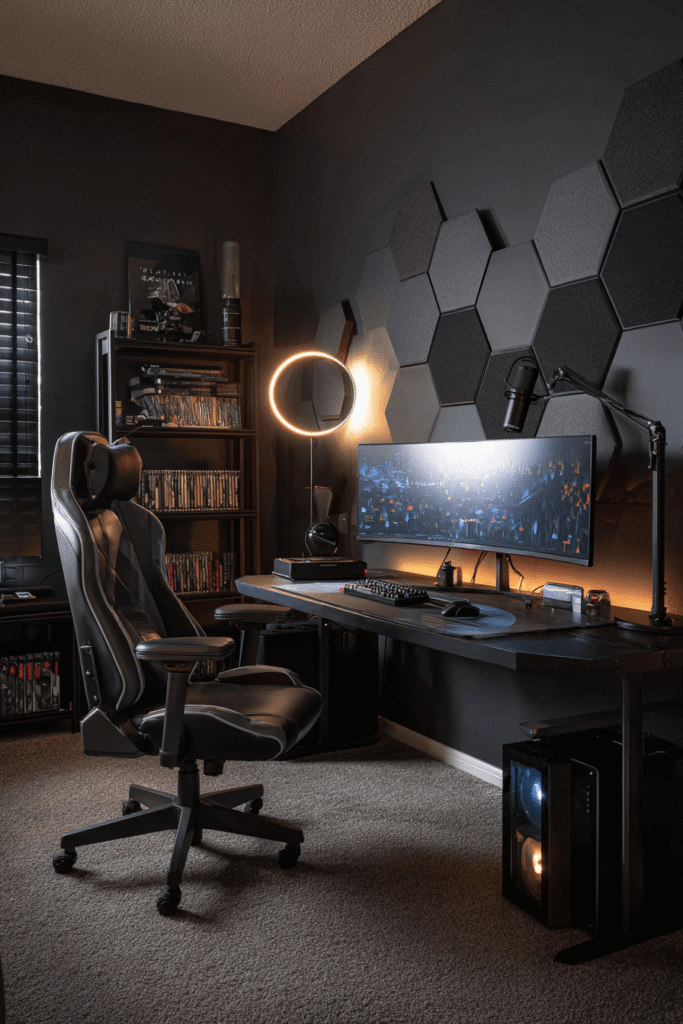
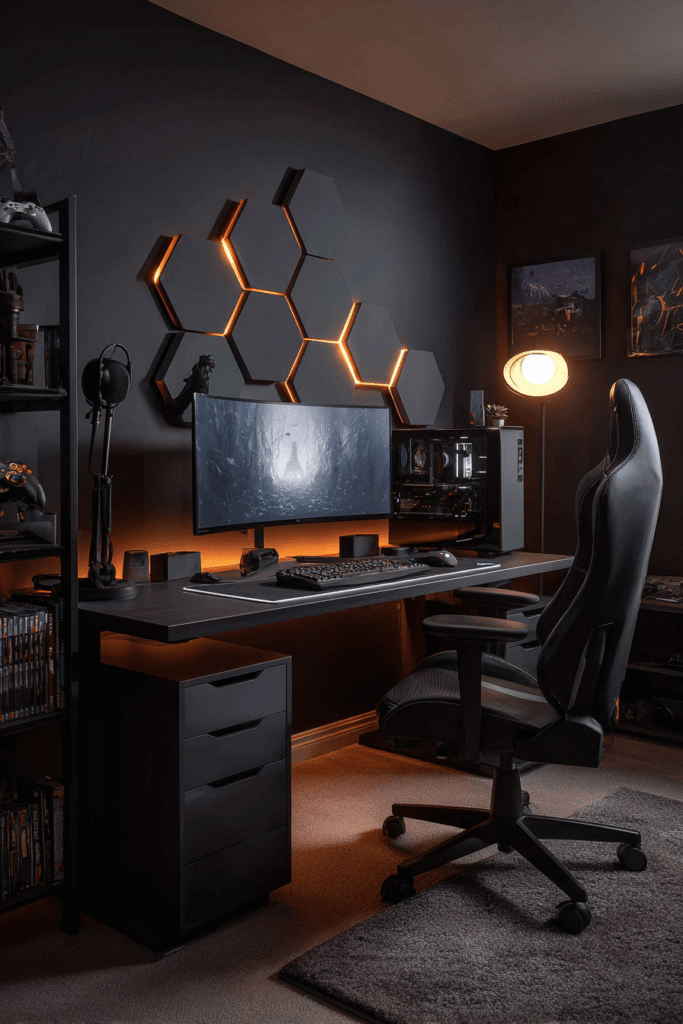
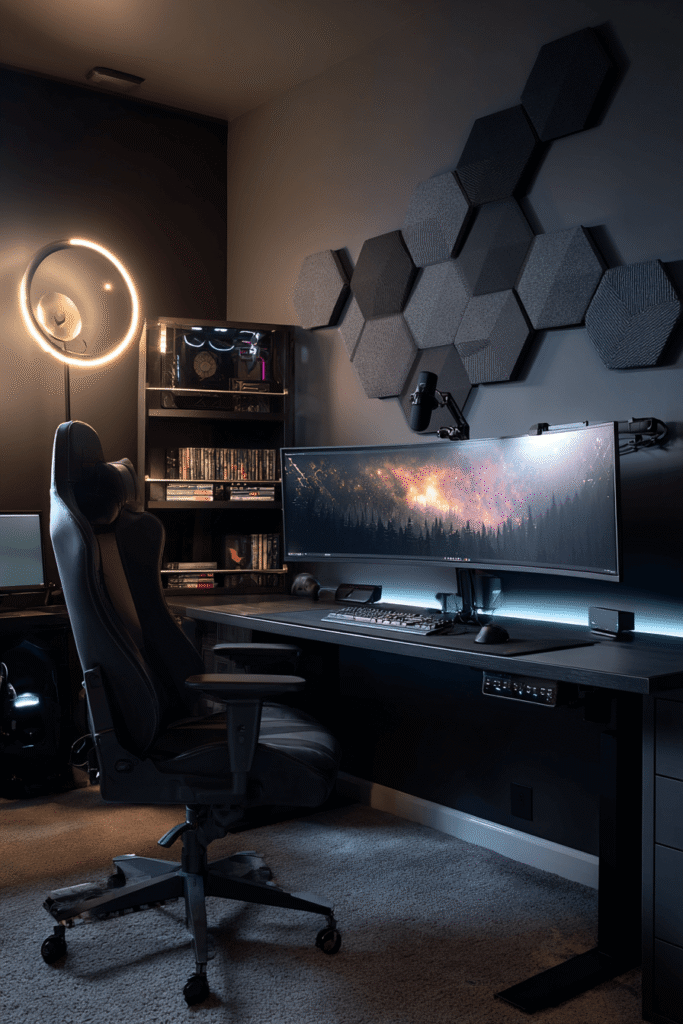
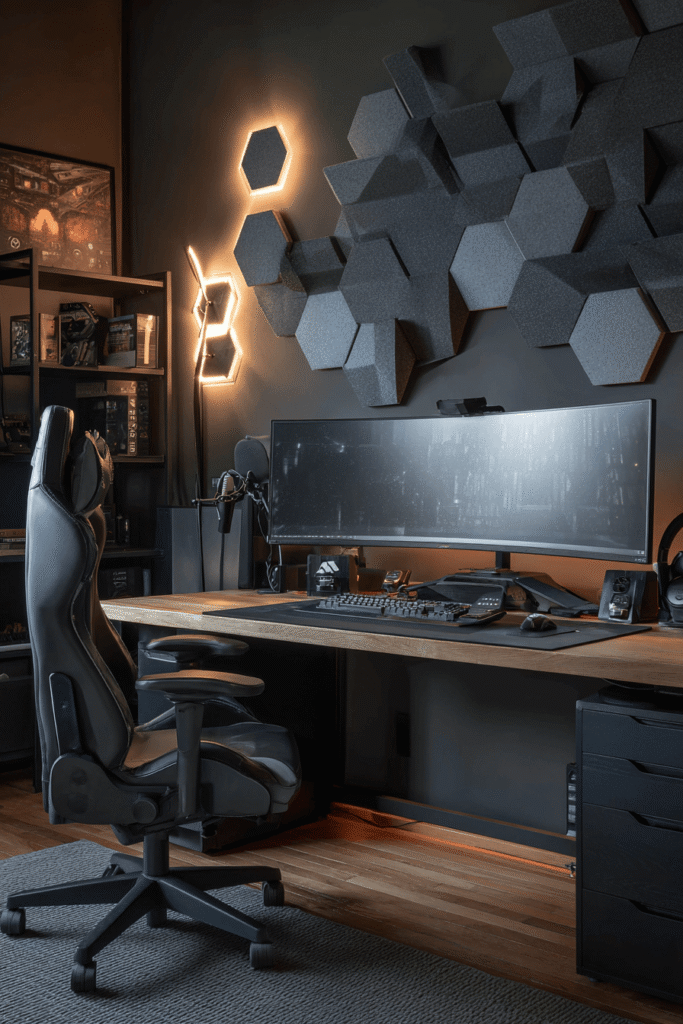
For those who want their gaming room to feel like a professional streaming studio, this dark moody setup delivers on every level. Deep charcoal grey walls and matte black furniture — including a spacious desk with a built-in wireless charging pad — establish an atmosphere of focused intensity. A 34-inch curved ultrawide monitor dominates the sightline, while hexagonal acoustic panels in black and gunmetal grey tile the wall behind the setup in an asymmetric pattern that’s equal parts functional and architectural. An RGB floor lamp positioned behind the gaming chair creates a halo lighting effect that photographs and streams beautifully. A compact black bookshelf holds the game collection, and a streaming microphone arm clamped to the desk edge completes the content creator-ready configuration.
Key Design Tips:
- Hexagonal acoustic panels serve double duty as sound treatment and striking wall art.
- A wireless charging pad built into the desk eliminates peripheral cable clutter.
- Position an RGB floor lamp behind your chair for a dramatic halo effect in streams and photos.
- A 34-inch curved ultrawide monitor reduces the need for a multi-monitor setup in small spaces.
- Matte black furniture finishes absorb light, reinforcing the moody, focused atmosphere.
8. The Dual-Purpose Home Office and Gaming Setup

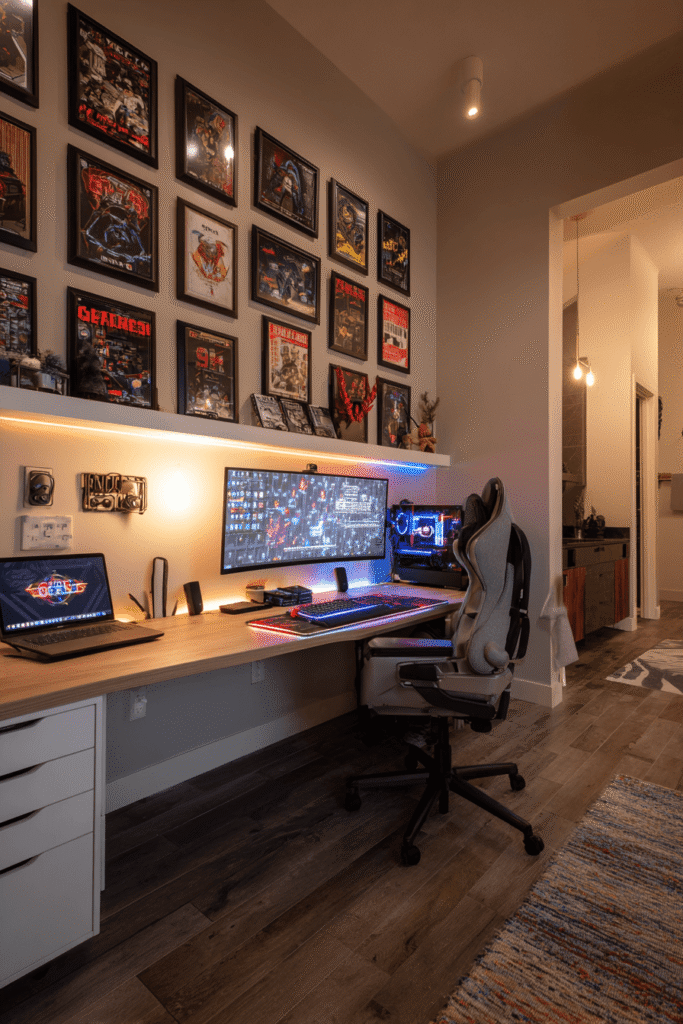
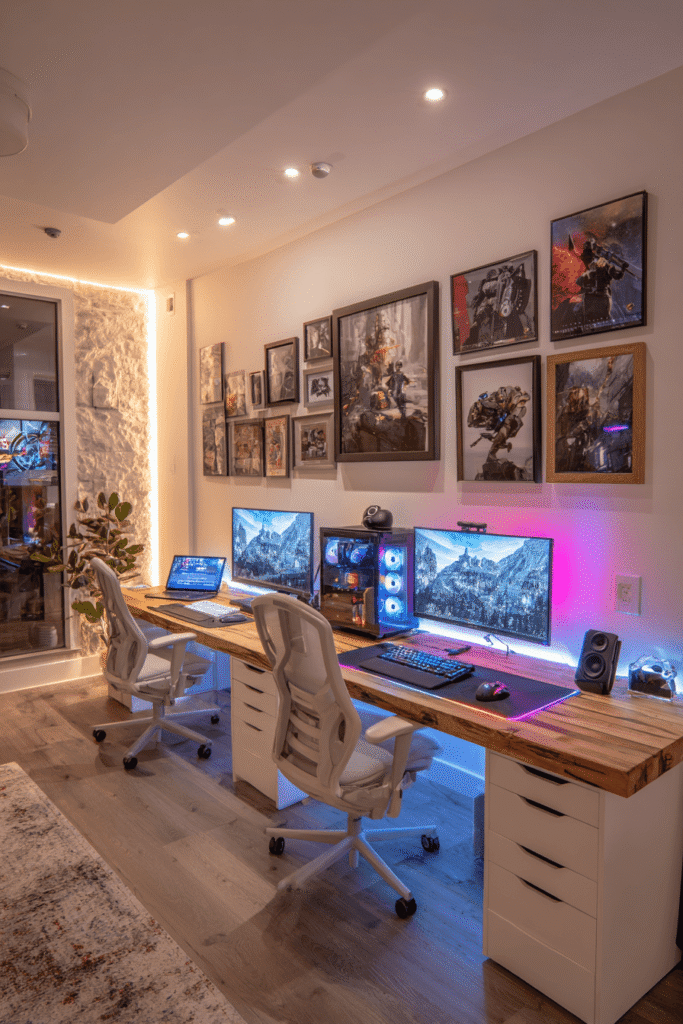
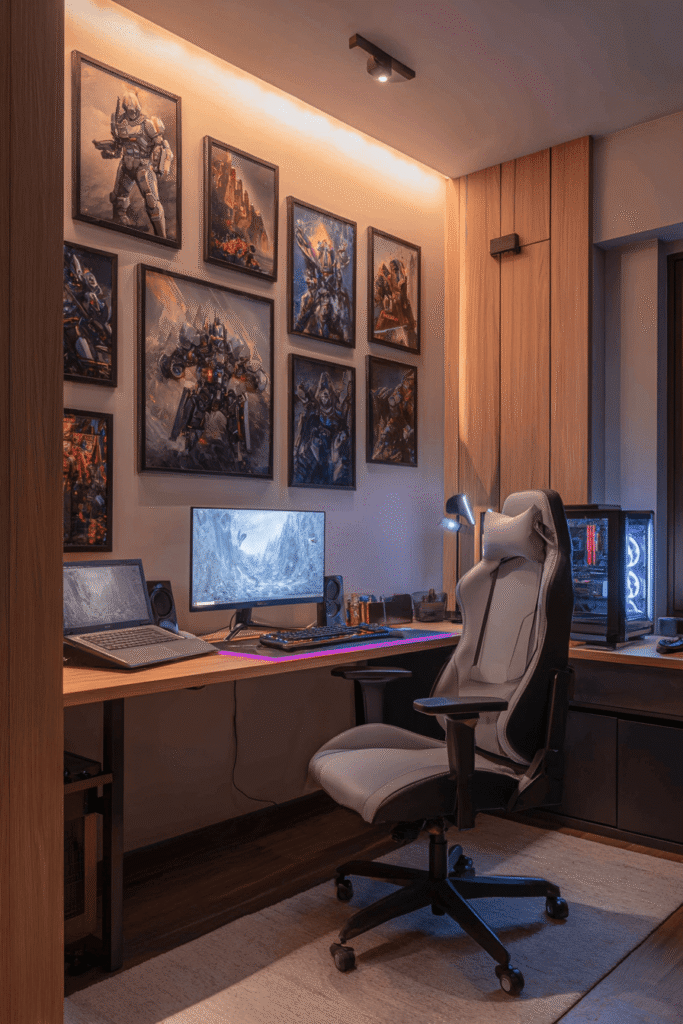
In homes where a dedicated gaming room isn’t feasible, the bifunctional desk concept is a brilliant compromise. A single large desk accommodates a work laptop docking station on the left and a dedicated gaming PC on the right, separated by a slim vertical partition panel. Warm neutral desk accessories on the work side contrast with RGB peripherals and a full-size gaming mousepad on the gaming side — two distinct visual identities sharing one surface. A single ergonomic chair slides between both zones. Gallery-style framed gaming art prints above the desk unify both sides under a shared aesthetic. Soft warm overhead lighting is balanced with cool accent LEDs, keeping the room functional for professional video calls by day and immersive for gaming by night.
Key Design Tips:
- Use a slim vertical partition panel to visually divide dual-function desk zones.
- Maintain distinct accessory aesthetics on each side to reinforce functional separation.
- A gallery wall of framed gaming art unifies a split-function room under one visual theme.
- One ergonomic chair that slides between zones eliminates the need for extra seating.
- Balance warm overhead and cool accent lighting to suit both work and gaming needs.
9. The Budget-Friendly DIY Pegboard Setup
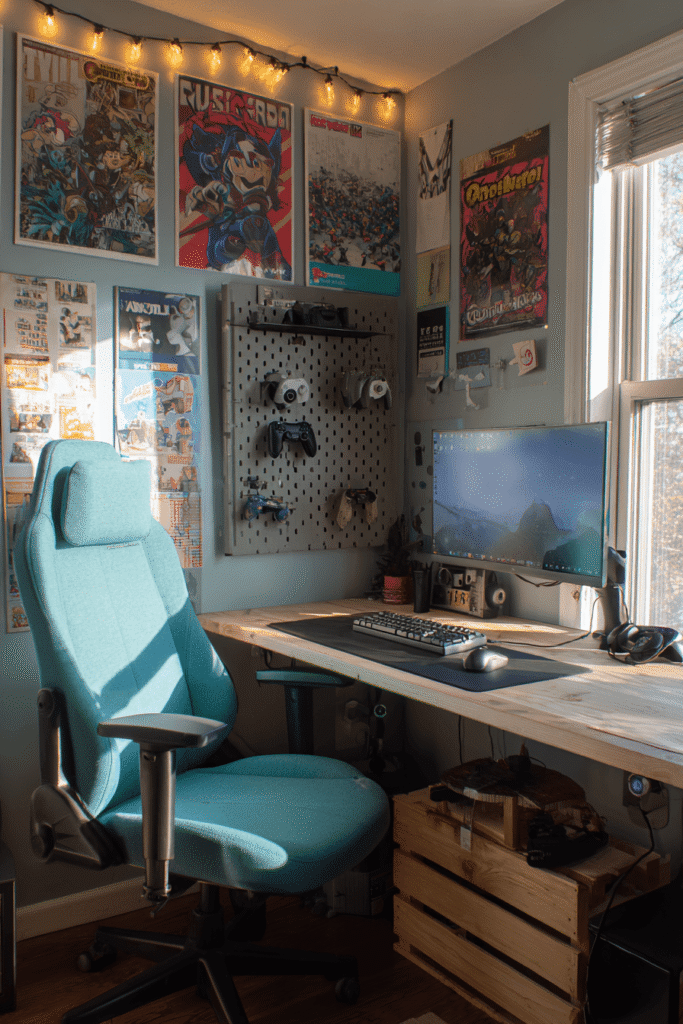
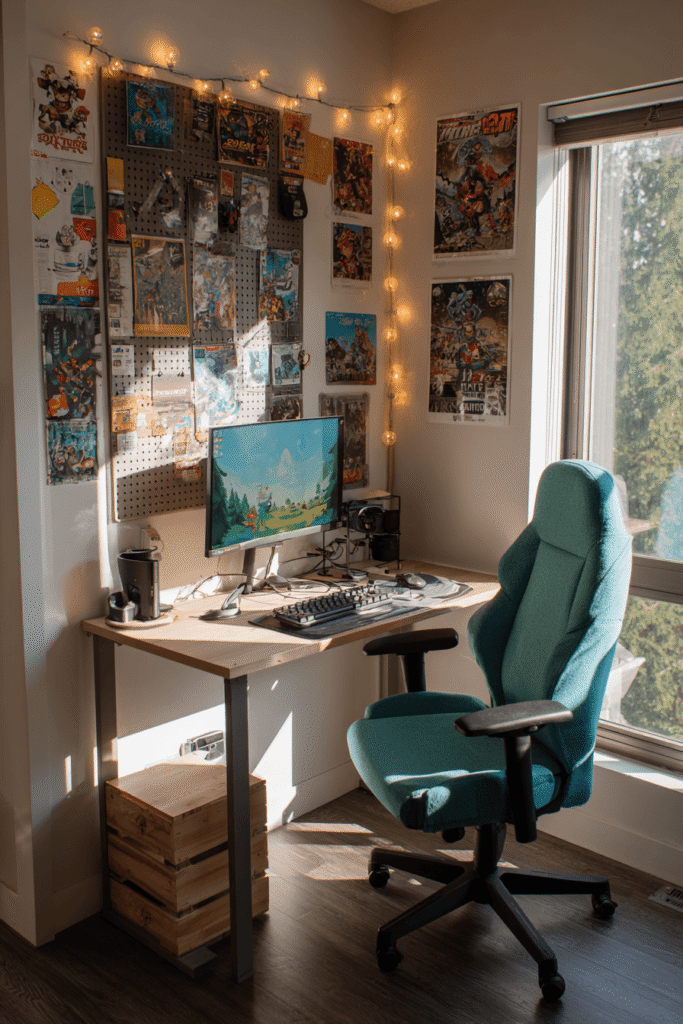


Great small gaming room design doesn’t require a large budget — it requires creativity and intentionality. An IKEA-style modular desk in L-configuration provides generous workspace for minimal investment, while a teal fabric gaming chair adds a pop of personality. A DIY monitor riser built from stacked wooden boards elevates the screen to ergonomic height without spending on a commercial riser. The showpiece of this setup is a matte black pegboard mounted above the desk, holding controllers, earphones, and small organizational bins in a customizable grid. String fairy lights along the top edge of the pegboard add warm, gentle ambiance. Printed poster art arranged in a casual wall collage makes the space feel personal and lived-in. This setup is proof that authenticity and practicality are more compelling than expensive gear.
Key Design Tips:
- IKEA modular desks offer L-configuration options at a fraction of custom desk prices.
- Build a DIY monitor riser from stacked wood boards — cheap, sturdy, and customizable.
- Paint a pegboard matte black before mounting for a more polished, intentional look.
- String fairy lights along pegboard edges for warm, inexpensive ambient lighting.
- A casual poster collage adds personality to bare walls without frames or hanging hardware.
10. The Built-In Cabinet Gaming Alcove

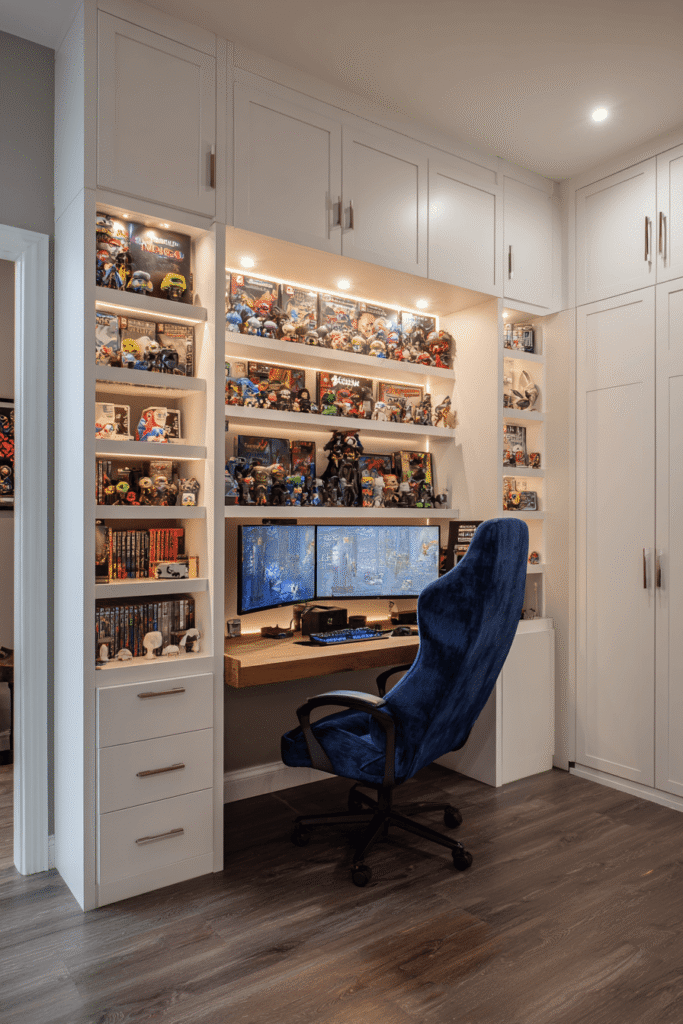

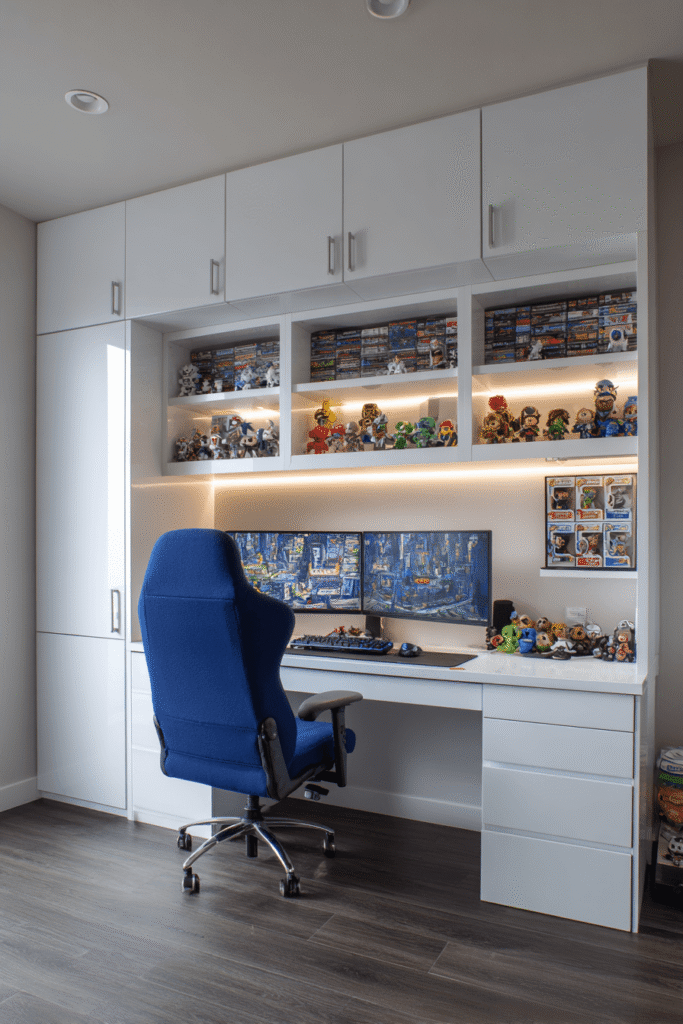
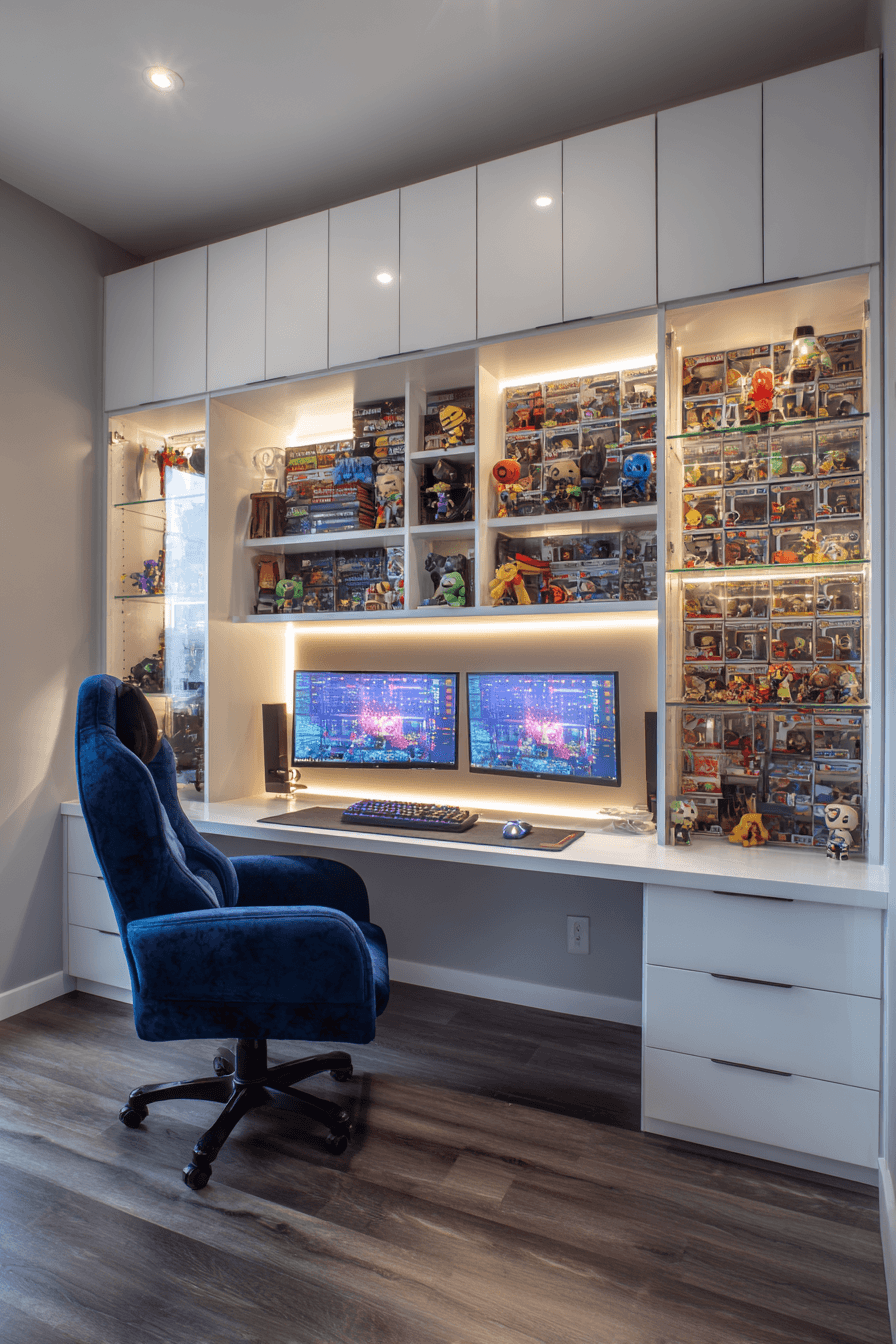
The pinnacle of small gaming room design is custom built-in cabinetry, and this setup in a 9×11 foot room demonstrates exactly why. A central recessed desk alcove flanked by floor-to-ceiling closed storage cabinets in matte white creates a seamless, architectural installation that feels bespoke. Dual monitors and a mechanical keyboard occupy the desk surface, while open interior cabinet sections above the desk are backlit with warm LED strips to display a curated game collection and collectible figures. Dark luxury vinyl plank flooring grounds the white cabinetry with rich contrast. A plush gaming chair in deep blue adds a bold color accent that pops against the neutral backdrop. This setup represents the long-term investment approach — a gaming room that looks like it was always meant to be there.
Key Design Tips:
- Commission or build floor-to-ceiling cabinetry around a central desk alcove for a fully integrated look.
- Use warm LED strip lighting inside open cabinet sections to highlight display items.
- Dark LVP flooring creates grounding contrast against light cabinetry finishes.
- A single bold-colored chair is all you need to introduce personality into a neutral built-in system.
- Closed lower cabinets hide equipment, cables, and storage — keeping the display zones curated.
Why These Small Gaming Room Ideas Work
What unites all ten of these small gaming room ideas is a commitment to intentional design — the understanding that in a compact space, every element must earn its place. Whether you’re drawn to the minimalist gaming setup, the budget gaming room, the dual-purpose office and gaming room, or the built-in gaming alcove, each concept addresses the core challenges of small space gaming: cable management, ergonomic comfort, immersive lighting, and smart storage. The use of RGB lighting ideas for gaming rooms, pegboard wall organization, acoustic panel walls, and floating desk configurations ensures that aesthetic impact doesn’t come at the expense of functionality. These are setups designed for real homes — compact, considered, and deeply personal.
From the converted closet gaming room to the teen bedroom gaming corner, from the studio apartment gaming nook to the dark moody streaming den, the range of approaches here reflects the diversity of the gaming community itself. The best small gaming room isn’t the most expensive one — it’s the one that fits your space, suits your style, and makes you want to sit down and play.
Conclusion
Designing a small gaming room is ultimately an exercise in creative problem-solving. The ten ideas explored in this article show that limited square footage is never a limitation — it’s an opportunity to design with precision and purpose. Start by identifying your primary constraint (budget, space, dual function needs), then choose the design concept that addresses it most directly. Invest in ergonomics first, lighting second, and aesthetics third — in that order. Introduce personal touches through wall art, collectibles, and color, and don’t be afraid to mix styles or build on a budget. Your ideal gaming setup is closer than you think — it just needs a little design thinking to come to life.