10 Aesthetic Sofa Ideas for a Stylish Living Room
The sofa is the undisputed heart of every living room — a piece of furniture that defines not just the function of a space, but its entire soul. Choosing the right sofa aesthetic is one of the most impactful interior design decisions you can make, shaping the atmosphere, color story, and lifestyle feel of your home. Whether you gravitate toward the plush warmth of bouclé, the whisper-quiet restraint of Scandinavian linen, or the dramatic tension of jewel-toned velvet, there is a sofa style waiting to reflect who you are. In this article, we explore ten distinct sofa aesthetics — from coastal breezy to wabi-sabi serene, from mid-century modern to moody maximalist — giving you the visual inspiration, material knowledge, and actionable design tips to curate a living room that feels both intentional and deeply personal.
1. Warm Camel Bouclé Curved Sectional
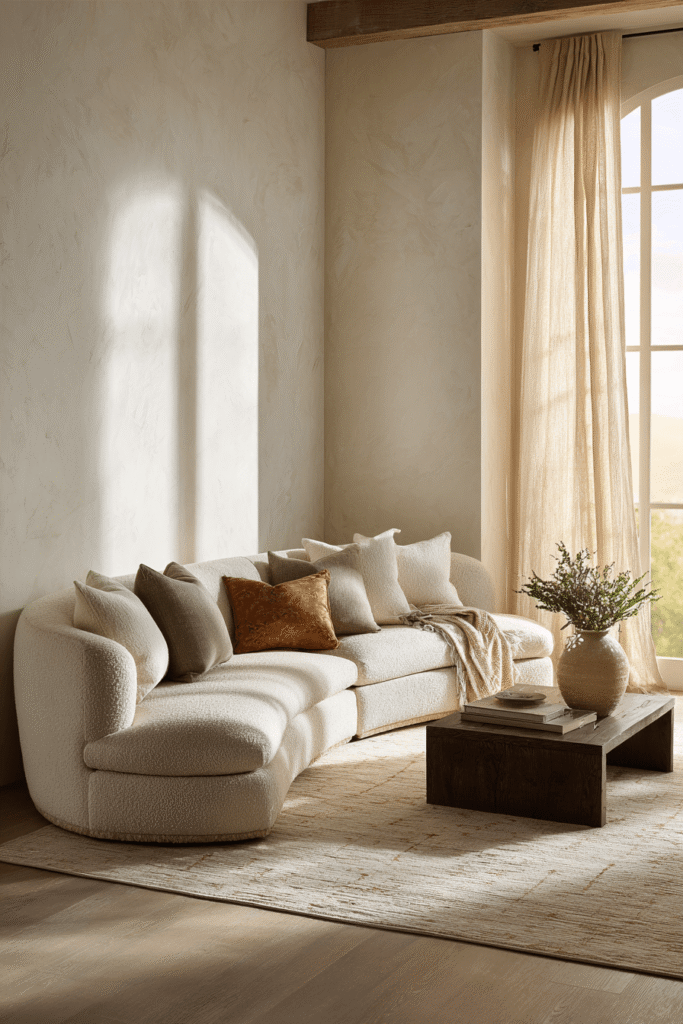
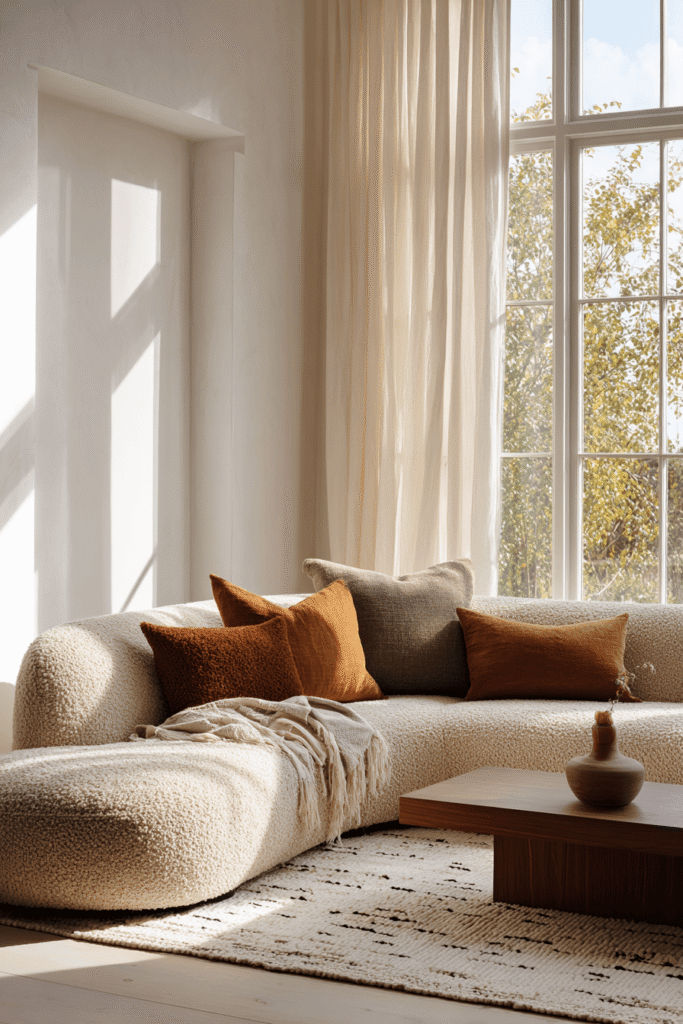
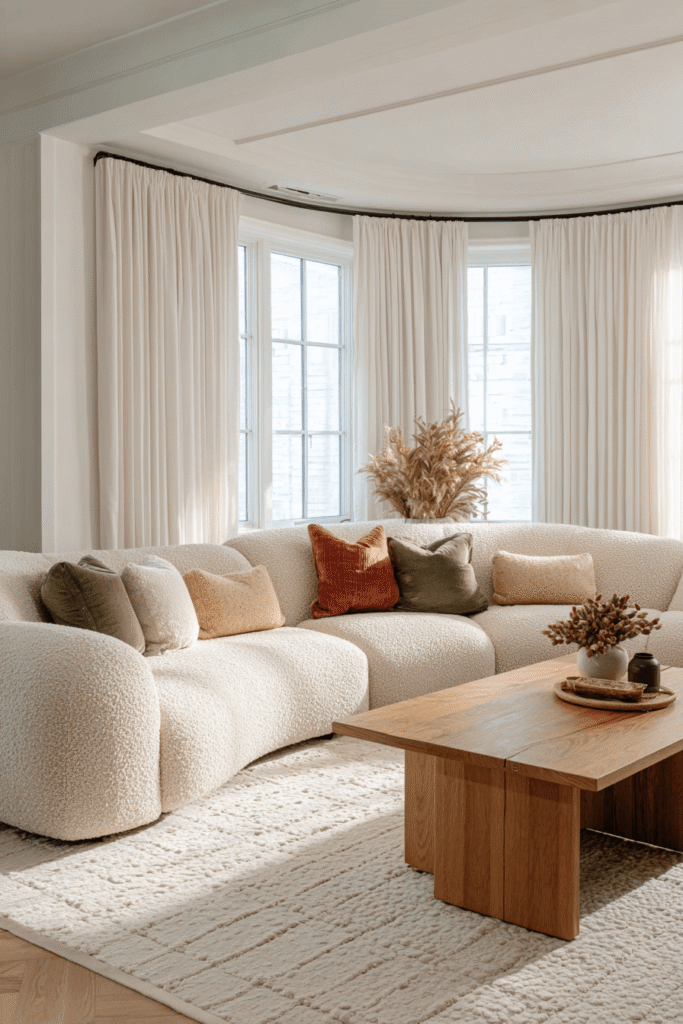
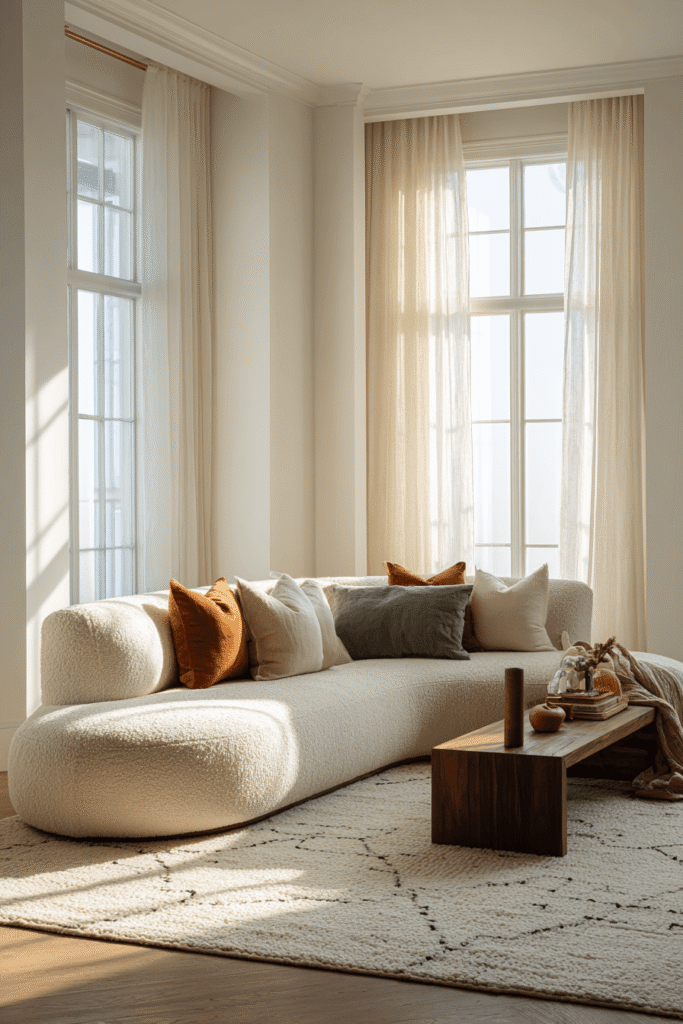
There is something timelessly indulgent about a deep-seated curved sectional sofa in camel bouclé fabric, especially when it commands a soft white plaster wall as its backdrop. The warmth radiates not just from the color — that rich, honeyed camel tone — but from the tactile generosity of the bouclé weave itself, a material that seems to invite you to sink in and stay. Layered throw pillows in ivory, rust, and sage green build a palette that feels earthy yet elevated, like a curated collection rather than a matched set. A low-profile walnut coffee table anchors the arrangement while a textured wool area rug with a subtle geometric pattern grounds the room with quiet sophistication. As soft afternoon light streams through linen curtains, it catches every loop of the bouclé weave, creating gentle shadows that make the entire room feel alive and dimensional.
- Opt for a curved sectional silhouette to soften angular architecture and encourage conversation.
- Layer pillows in three complementary tones — one neutral, one warm accent, one nature-inspired — to avoid a matched, showroom feel.
- Choose linen curtains over sheers to filter natural light while adding textural depth.
- A walnut coffee table pairs beautifully with camel bouclé — the warm wood tones harmonize without competing.
- Keep wall decor minimal to let the sofa’s sculptural form remain the focal point.
2. Minimalist Pale Grey Belgian Linen Sofa

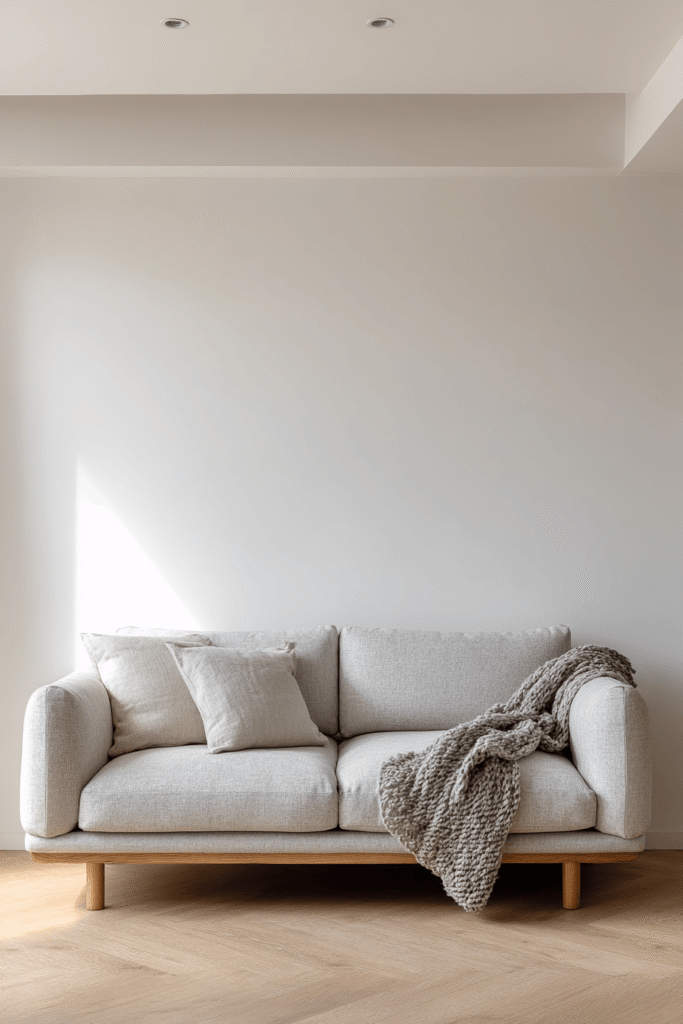
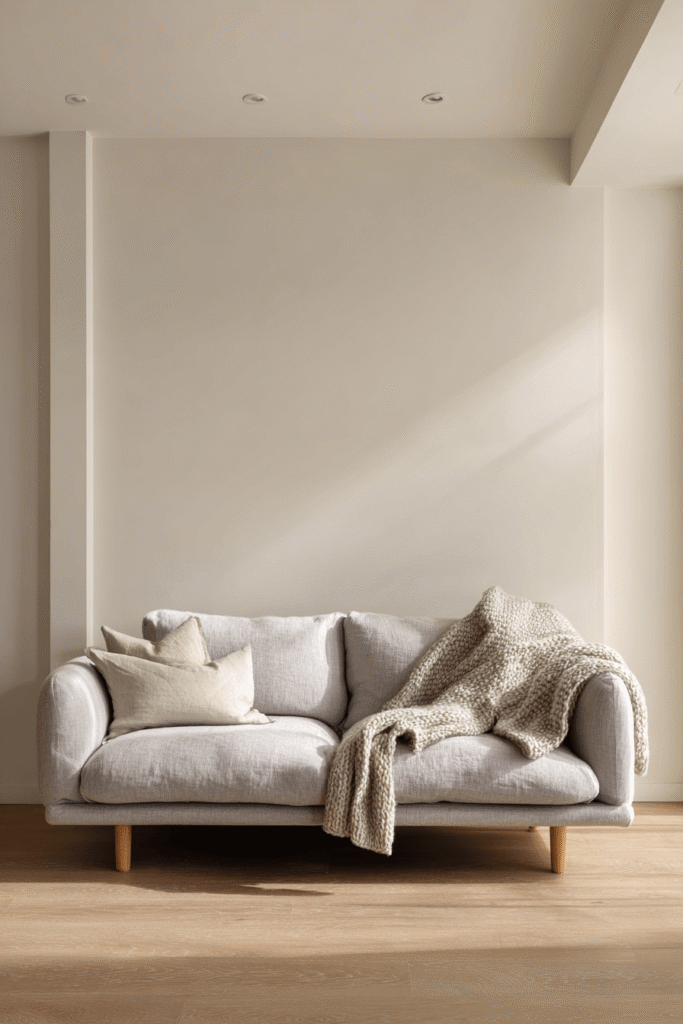
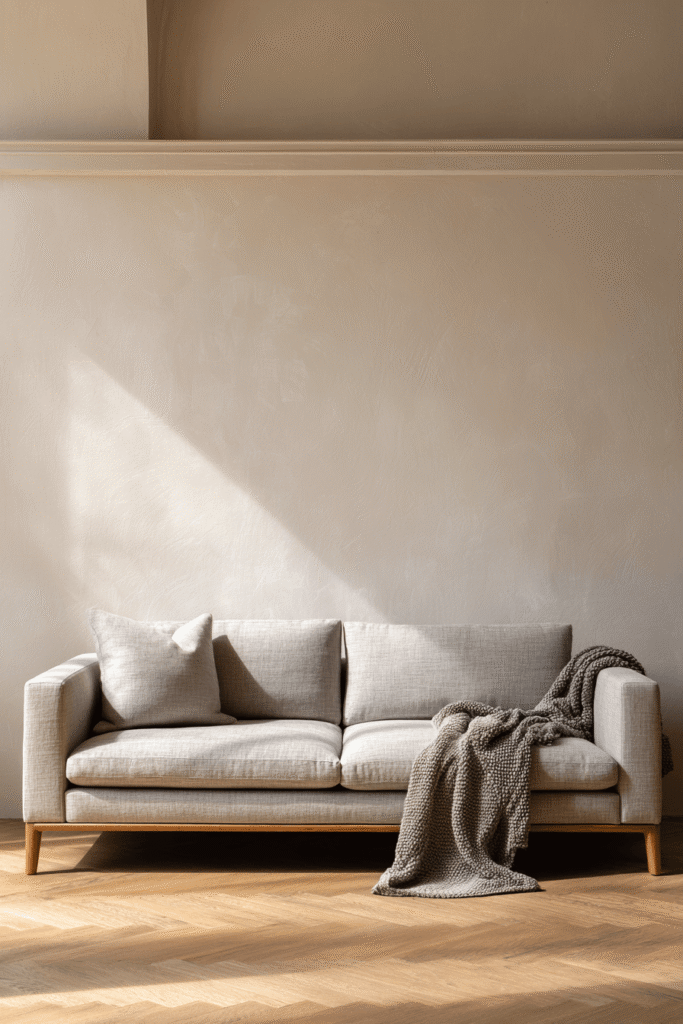
Scandinavian design philosophy has long understood that restraint is its own kind of luxury, and nowhere is this more evident than in a pale grey Belgian linen sofa resting against a warm white wall. The visible weave texture and natural fabric wrinkles are not imperfections — they are the design. Slender solid oak legs lift the sofa off the floor with effortless elegance, creating visual breathing room that keeps the space feeling light and uncluttered. A single oversized knitted throw draped casually over one armrest softens the composition without disrupting its calm geometry. Recessed ceiling lighting draws a subtle shadow line along the wall behind the sofa, giving the room just enough dimension to prevent it from feeling flat. This is an aesthetic built on intentional simplicity, where every element earns its place.
- Choose Belgian linen for its natural, breathable texture and its ability to look better with age.
- Select sofa legs in solid oak or light ash to complement pale neutral upholstery without overpowering it.
- Resist the urge to over-accessorize — one quality throw is more impactful than five decorative pillows.
- Use recessed lighting to create architectural shadow lines that add depth to white or off-white walls.
- Keep the floor plan open around the sofa to maintain the airy, spacious feel central to Scandinavian design.
3. Forest Green Velvet Tuxedo Sofa
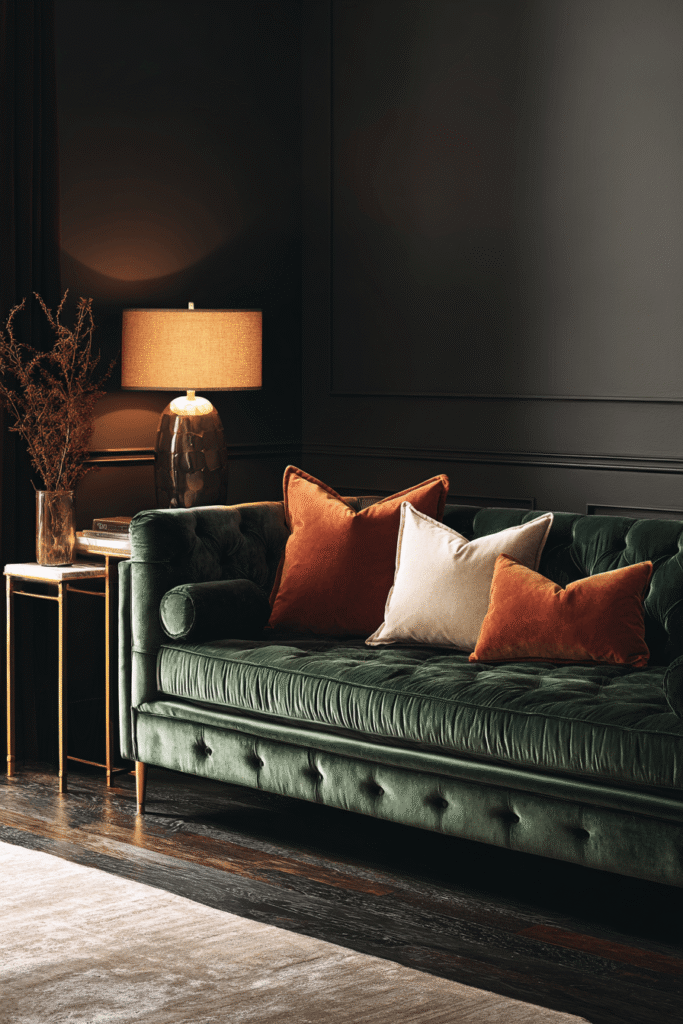
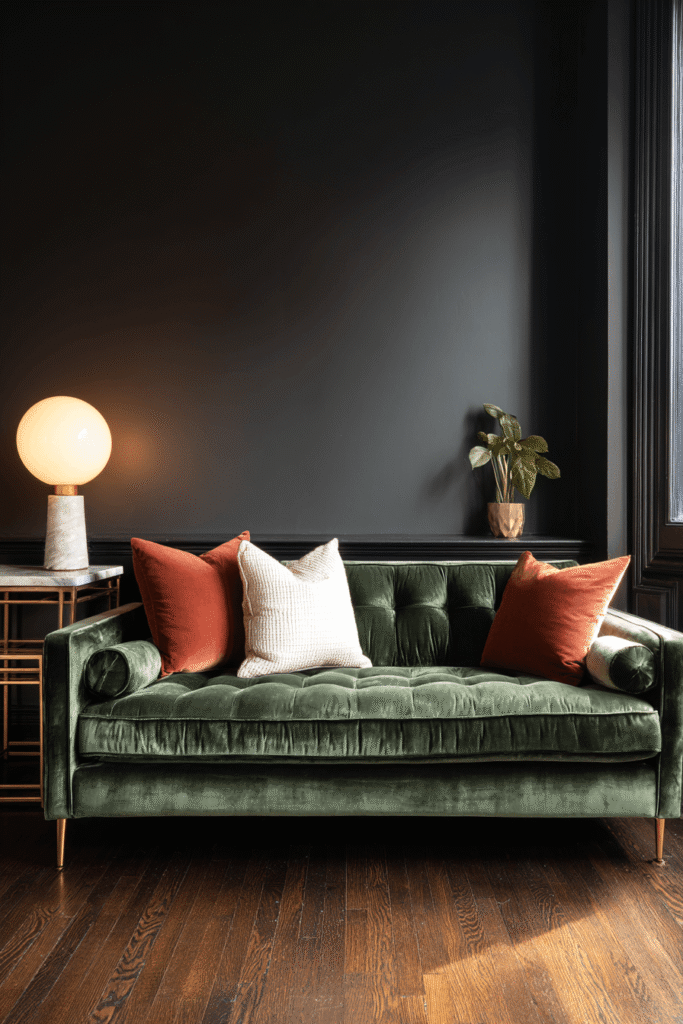
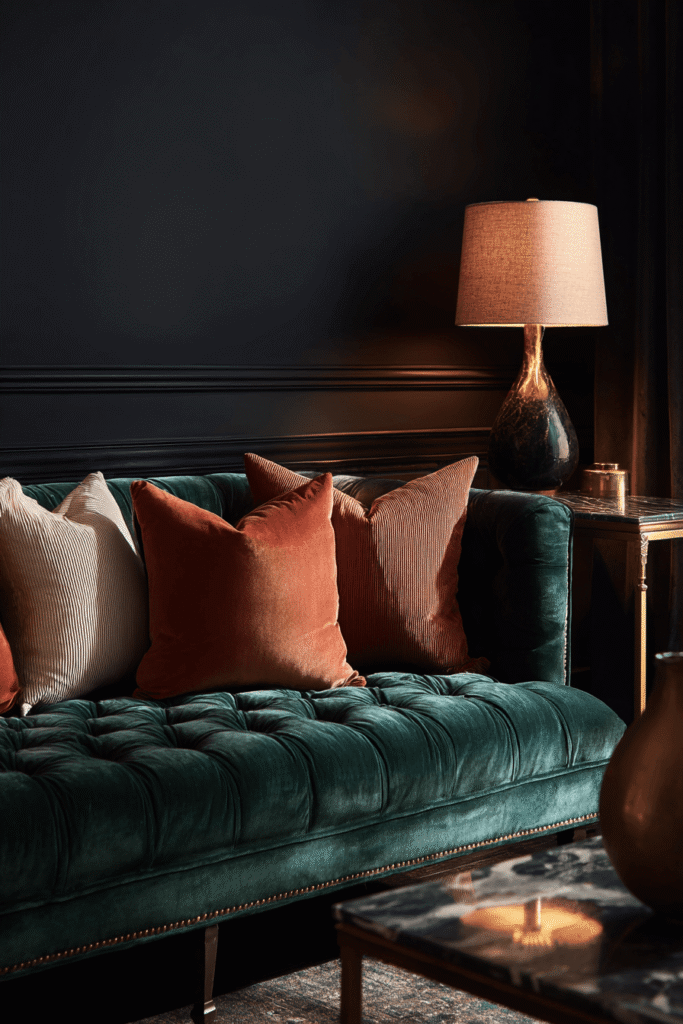
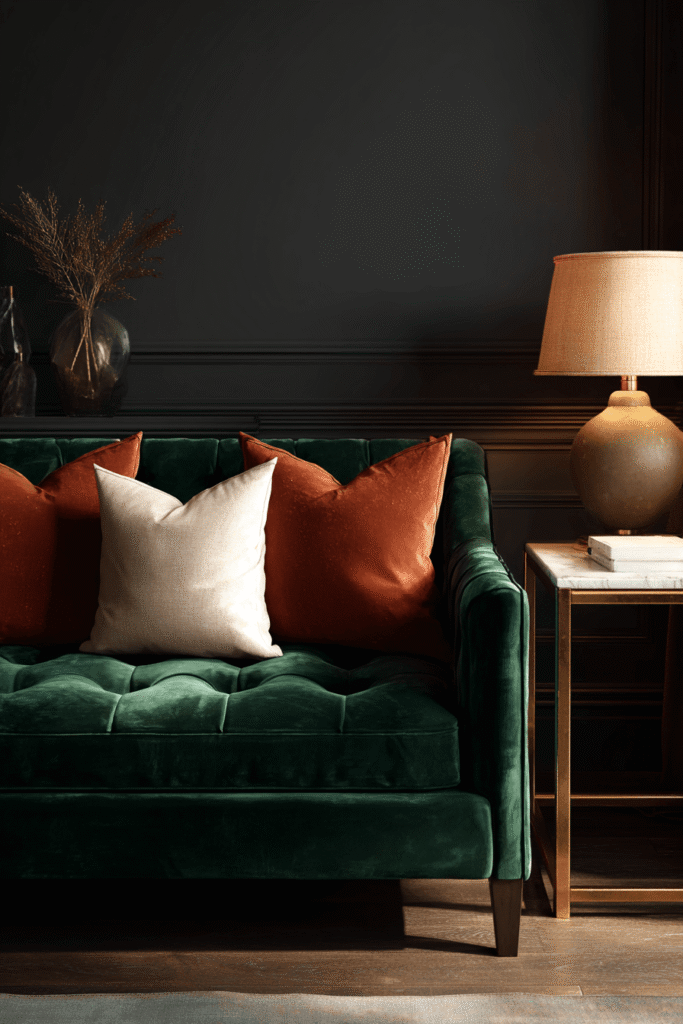
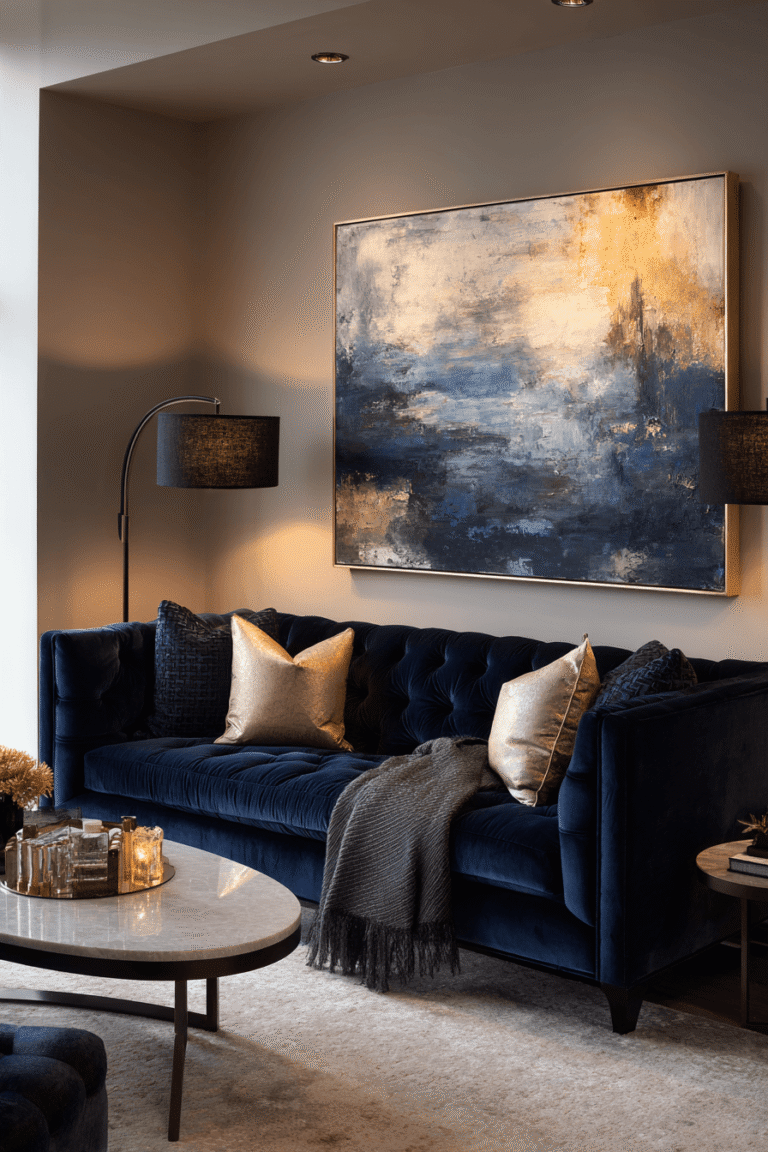
Few design choices communicate confidence quite like a deep forest green velvet tuxedo sofa set against charcoal walls — a pairing that is moody, sophisticated, and completely unforgettable. The tight button-tufted back cushions add formal structure while the polished brass legs introduce a note of glamour that keeps the room from feeling too heavy. Contrasting throw pillows in warm terracotta and ivory linen break the jewel-toned intensity with just enough warmth, while a marble-topped gold-framed side table with a single sculptural lamp casts a golden ambient glow across the velvet surface. This is a room designed to be experienced in the evening — when candlelight and warm artificial light conspire to make every texture richer and every color deeper.
- Commit fully to a dark, moody wall color when working with jewel-toned upholstery — the contrast makes both elements more dramatic.
- Introduce brass or gold hardware in at least two places to unify the metallic story in the room.
- Use terracotta or burnt orange as an accent tone against green velvet for a color-theory-informed complementary palette.
- Opt for sculptural lighting — a table lamp with visible form — rather than purely functional fixtures.
- Velvet benefits from regular brushing in one direction to maintain its rich sheen and prevent permanent crush marks.
4. Bohemian Indigo Cotton Floor-Level Sofa
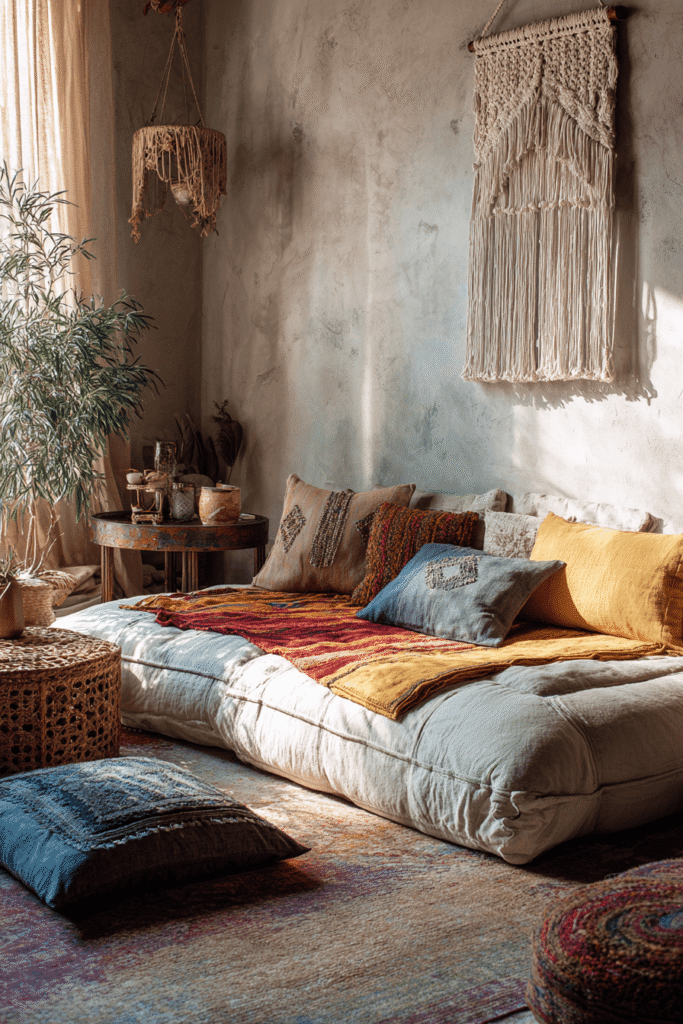
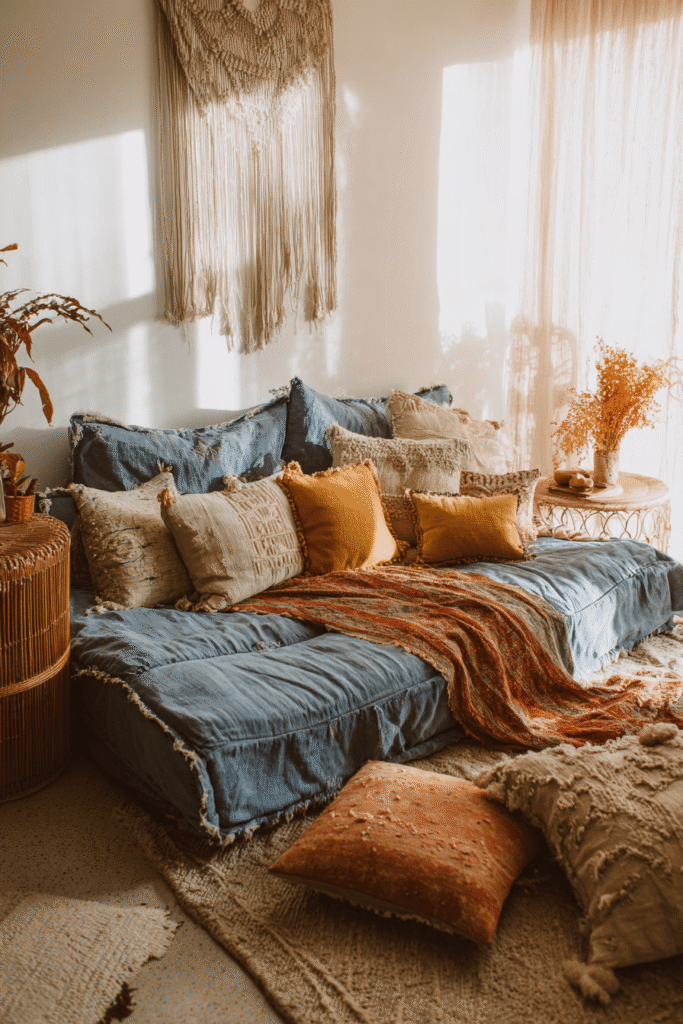
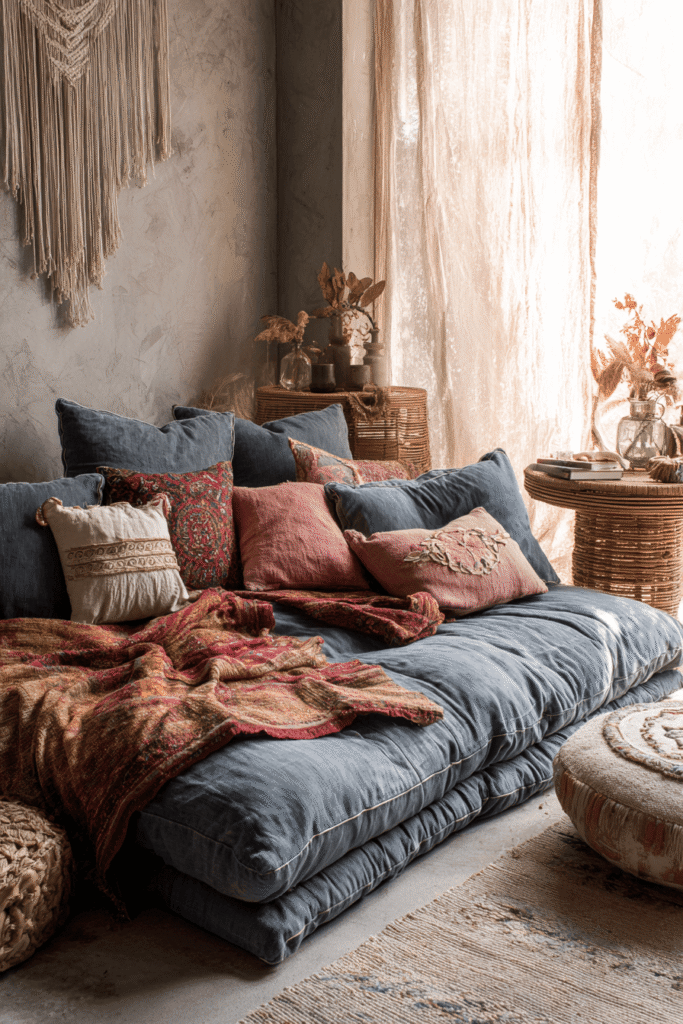
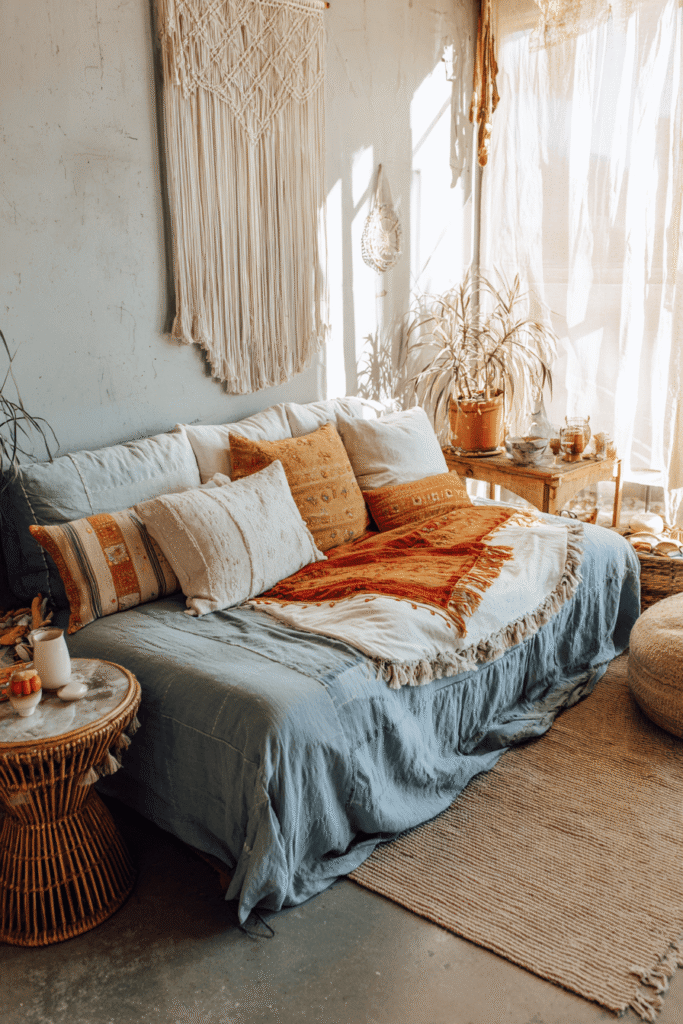
The bohemian sofa aesthetic asks you to abandon conventional furniture heights and reconnect with a more grounded, fluid way of living. An oversized floor-level sofa with removable cushions upholstered in faded indigo cotton — complete with hand-stitched detail — becomes the gathering point for a living room that feels lived-in and lovingly layered. A Moroccan-style blanket in amber and red tones drapes across the cushions while embroidered throw pillows of varying sizes pile with generous abundance. A macramé wall hanging above and a rattan side table nearby complete the global-inspired composition. Warm, diffused natural light from a nearby window softens everything, casting a haze over the textured fabrics that makes the space feel like a sanctuary.
- Choose floor-level or platform-style sofas to create a relaxed, casual energy suited to bohemian and eclectic interiors.
- Layer textiles from different cultural traditions — Moroccan, Indian, or Peruvian — for an authentic, well-traveled feel.
- Use macramé, rattan, and woven wall art to build vertical textural interest above low-profile furniture.
- Indigo and amber are a naturally powerful color pairing rooted in traditional textile cultures worldwide.
- Prioritize removable, washable cushion covers in high-use bohemian spaces to maintain freshness without sacrificing character.
5. Modular Charcoal Grey Performance Fabric Sofa
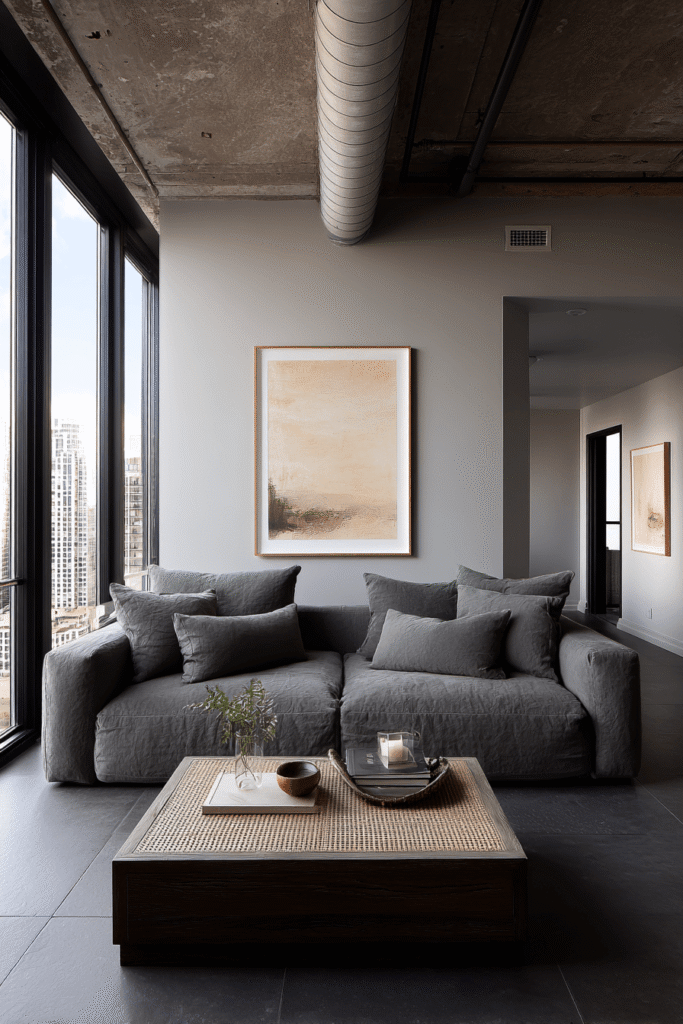
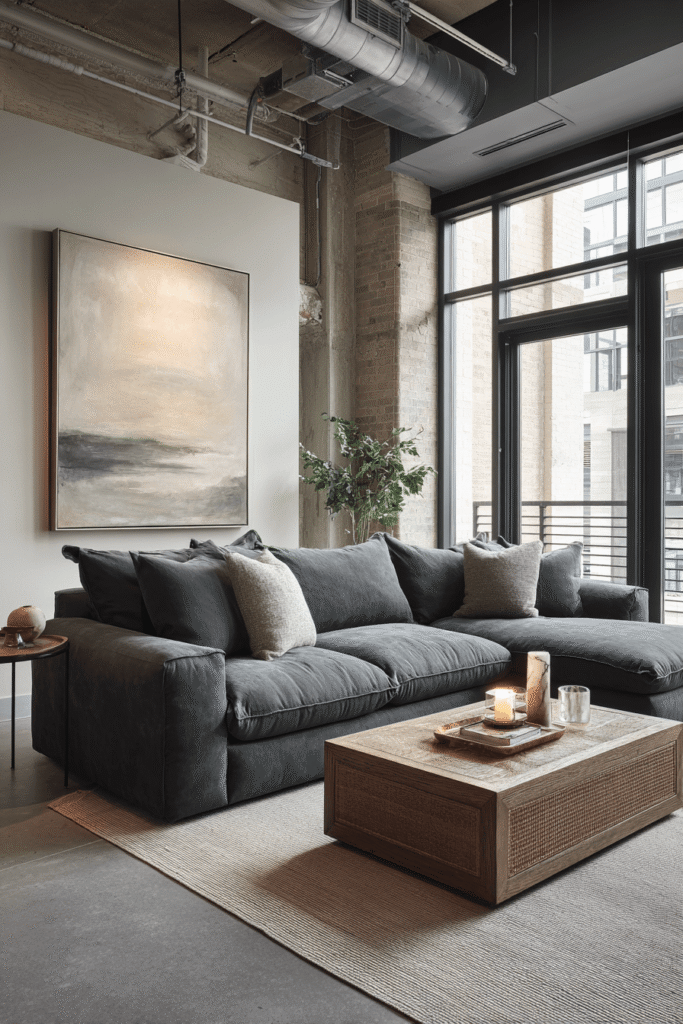
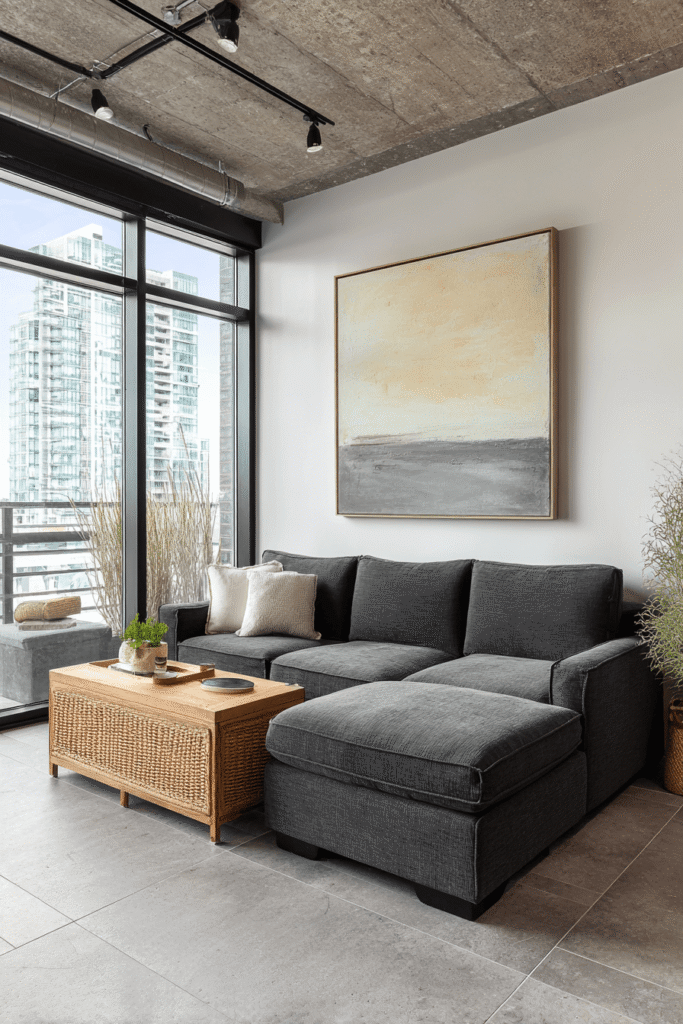
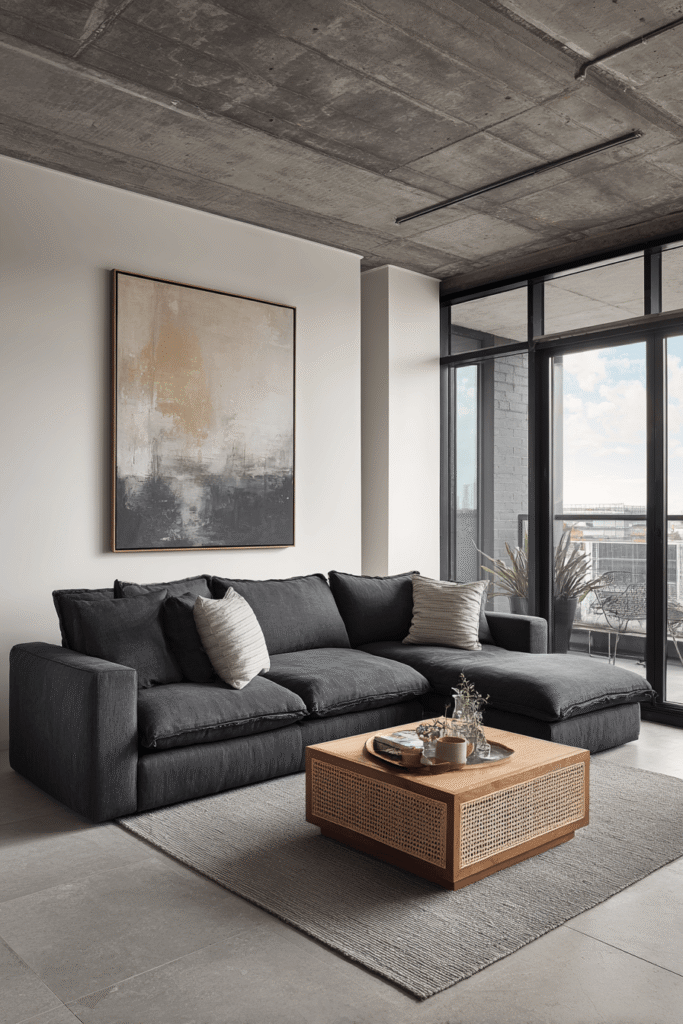
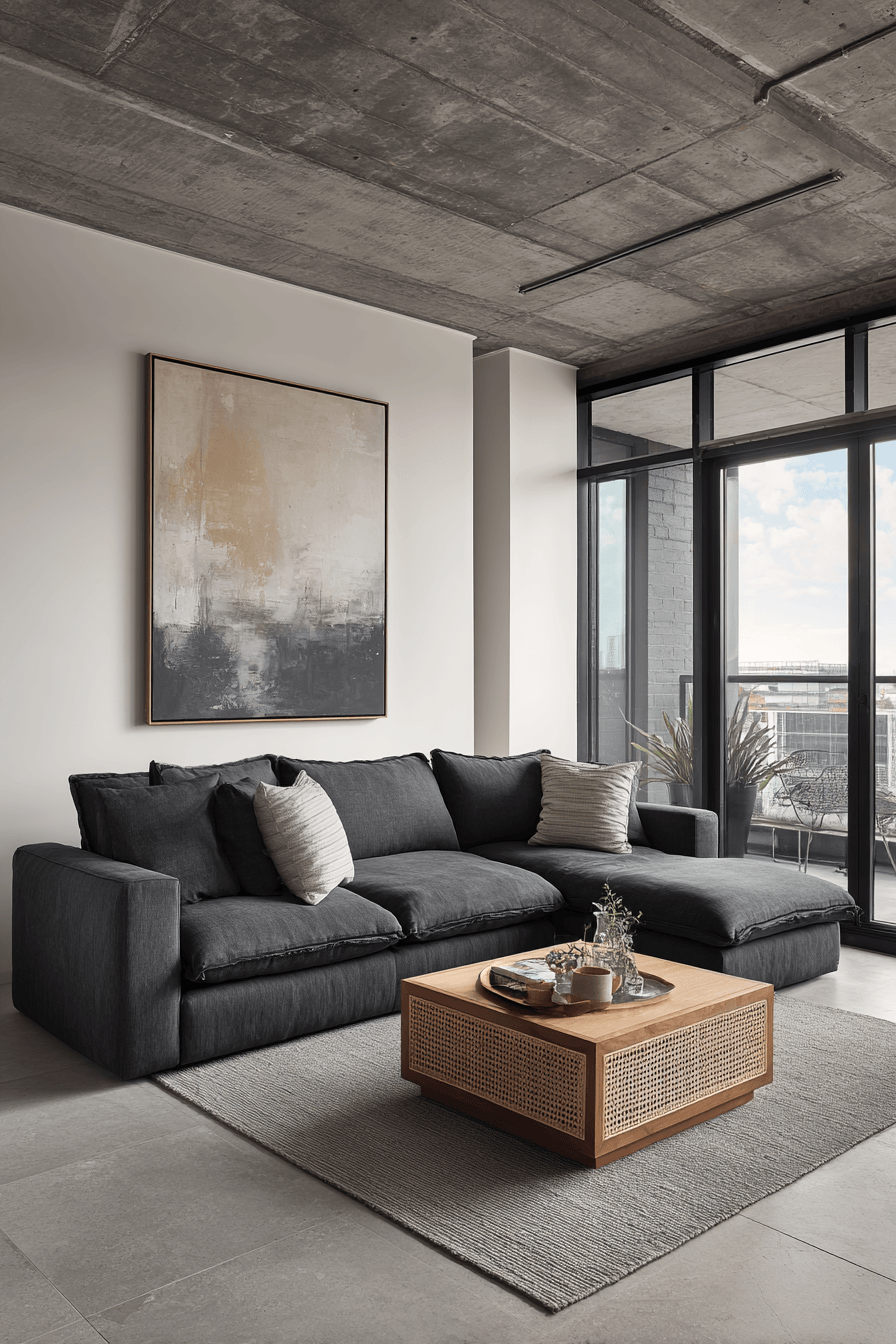
The contemporary modular sofa aesthetic is built for real life — for families, for flexible floor plans, and for the kind of effortless urban sophistication that doesn’t apologize for being practical. A charcoal grey performance fabric sofa with clean straight lines and deep seating becomes the workhorse centerpiece of an open-plan apartment, its crisp geometry echoing the concrete-effect floor tiles and exposed industrial ceiling above. A smoked oak ottoman-style coffee table with woven cane detail adds organic warmth to the urban palette, while a large-format abstract art print in muted tones anchors the wall behind. Floor-to-ceiling windows flood the space with natural daylight, balancing the soft overhead lighting and highlighting the sofa’s precise, architectural silhouette.
- Performance fabrics — such as solution-dyed acrylic or tightly woven polyester blends — offer stain resistance without sacrificing visual sophistication.
- Configure modular sofas to suit your floor plan rather than forcing a fixed layout into an awkward space.
- In industrial-influenced interiors, introduce natural materials like cane, rattan, or wood to prevent the space from feeling cold.
- Choose art in a format that fills the wall proportionally — large-format prints command authority in open-plan spaces.
- Charcoal grey performs well as a neutral anchor across both warm and cool palettes, making it one of the most versatile contemporary sofa colors.
6. Coastal Slipcovered White Cotton Canvas Sofa
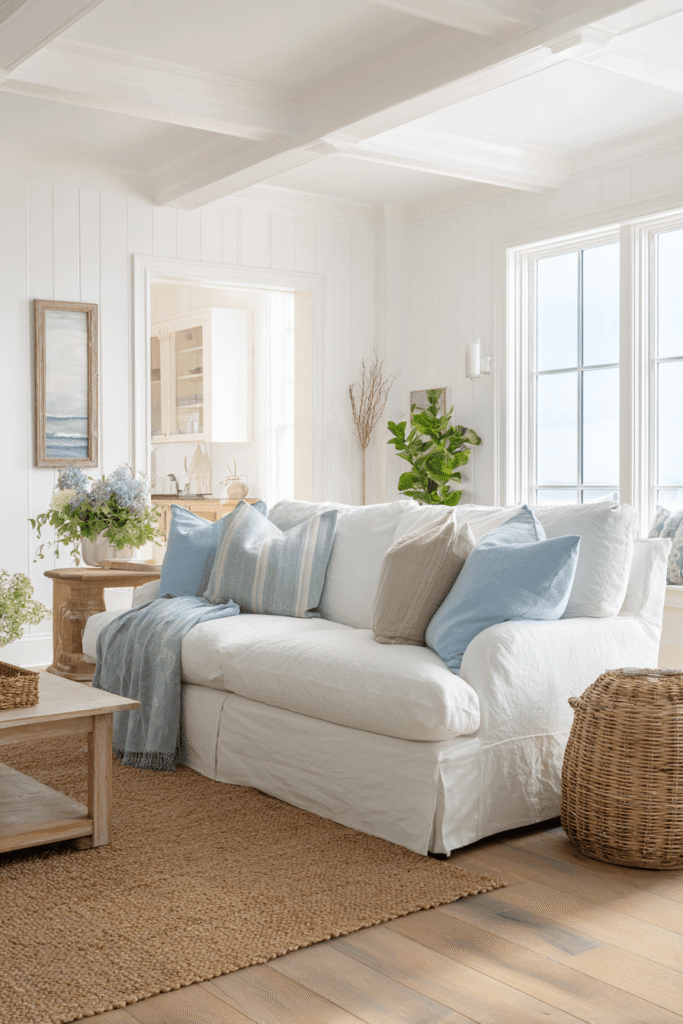


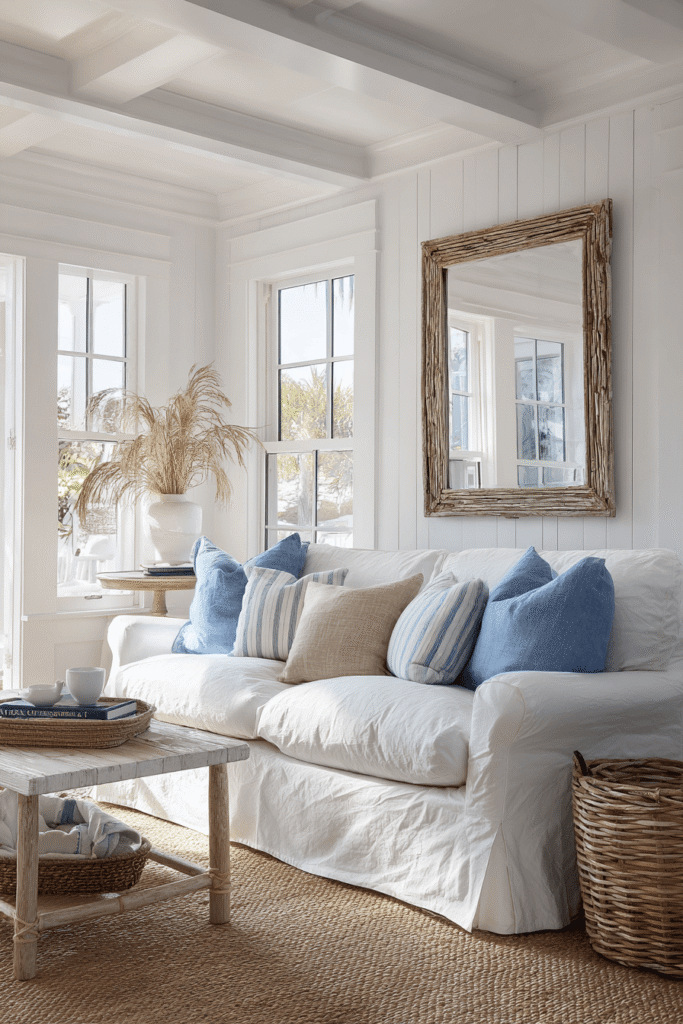
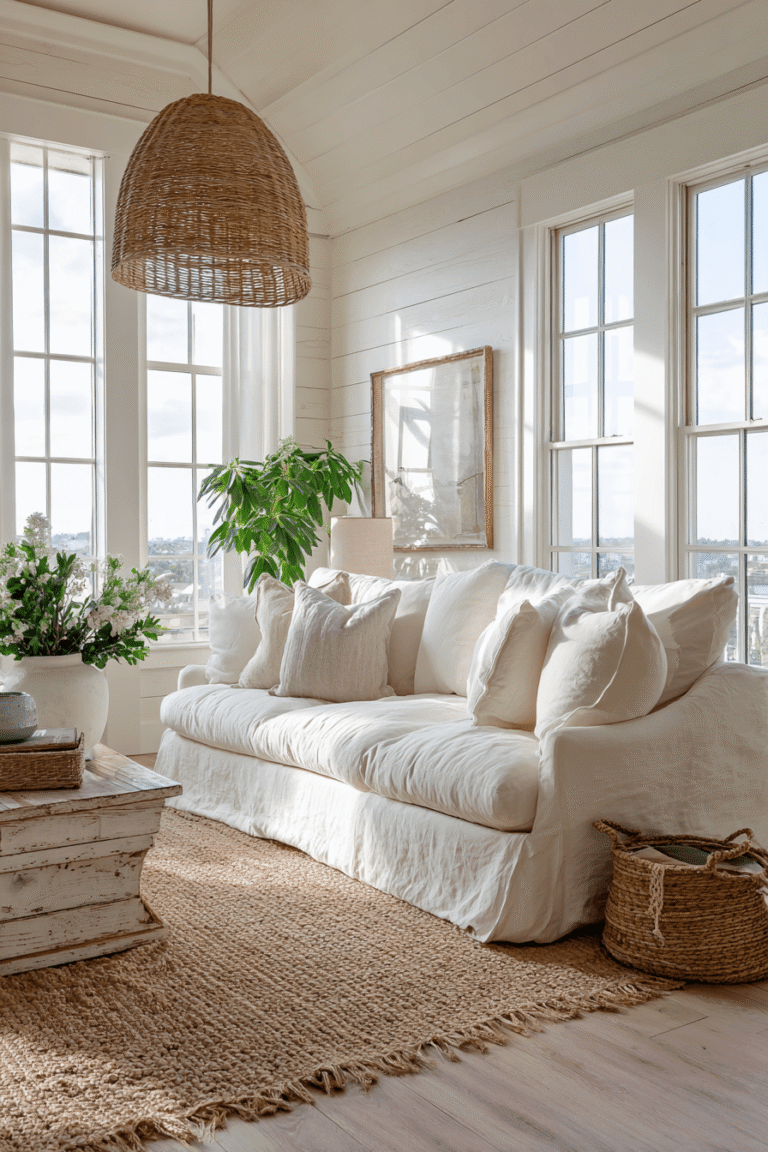
The coastal sofa aesthetic is an exercise in breezy, sun-bleached ease — a visual deep breath for spaces that want to feel permanently on holiday. A slipcovered sofa in washed white cotton canvas with gently rumpled, lived-in texture embodies this spirit completely, its intentional casualness a design choice as deliberate as any polished upholstery option. Blue and sandy beige linen throw pillows extend the coastal palette while a jute rug grounds the seating area in natural, earthy warmth. A driftwood-framed mirror and a low cane accent table flank the sofa, completing a composition that feels collected rather than coordinated. Abundant daylight reflects off white shiplap walls, creating the sun-drenched, relaxed atmosphere of a seaside retreat, wherever you happen to be.
- Slipcovers are a practical and aesthetically appropriate choice for coastal interiors — they’re machine washable and reinforce the casual, unfussy vibe.
- Combine blue, white, and sandy beige in varying proportions for a coastal palette that feels sophisticated rather than kitsch.
- Jute and rattan are ideal natural-fiber accents for coastal aesthetics — they reinforce the connection to organic, beachside materials.
- Shiplap or tongue-and-groove wall paneling painted white is one of the most effective architectural tools for establishing a coastal room character.
- Keep accessories deliberately imperfect and informal — the goal is curated relaxation, not showroom perfection.
7. Mid-Century Modern Mustard Wool Herringbone Sofa
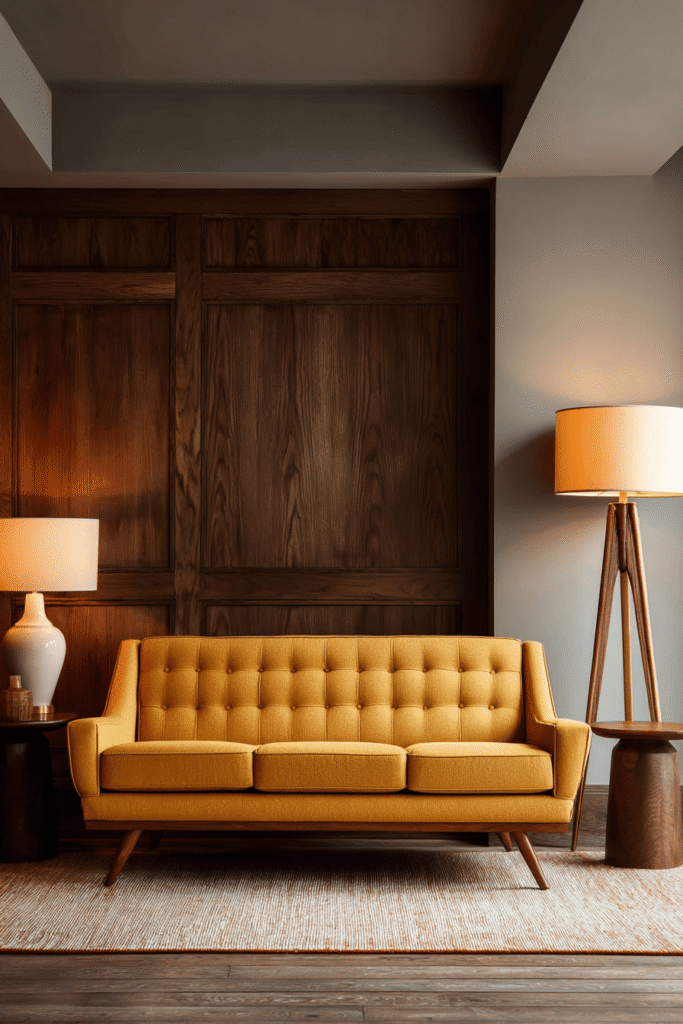
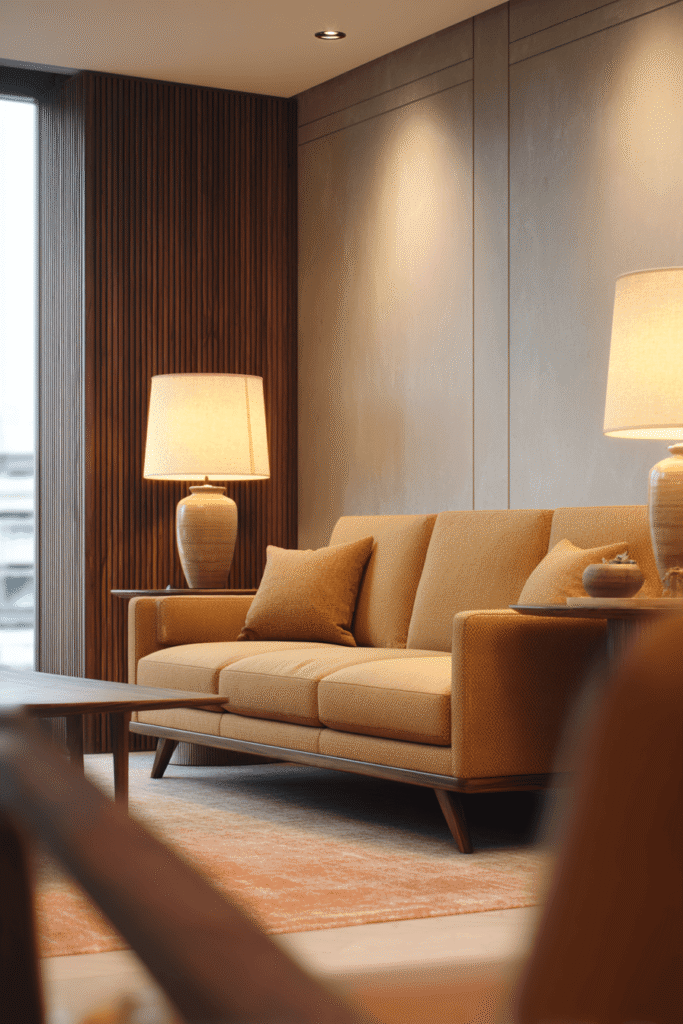
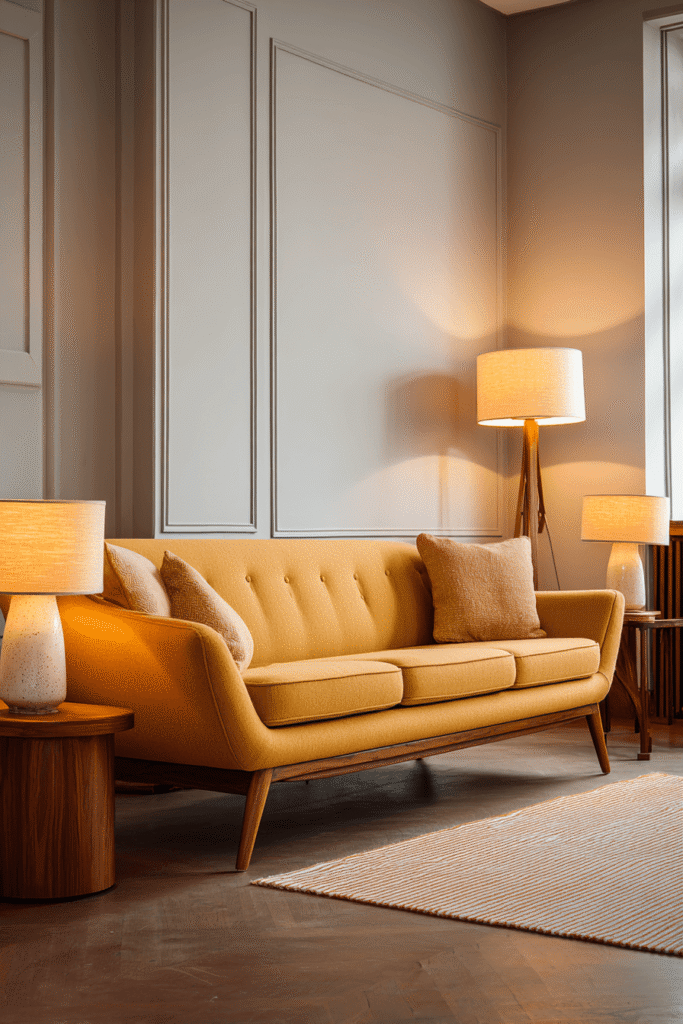
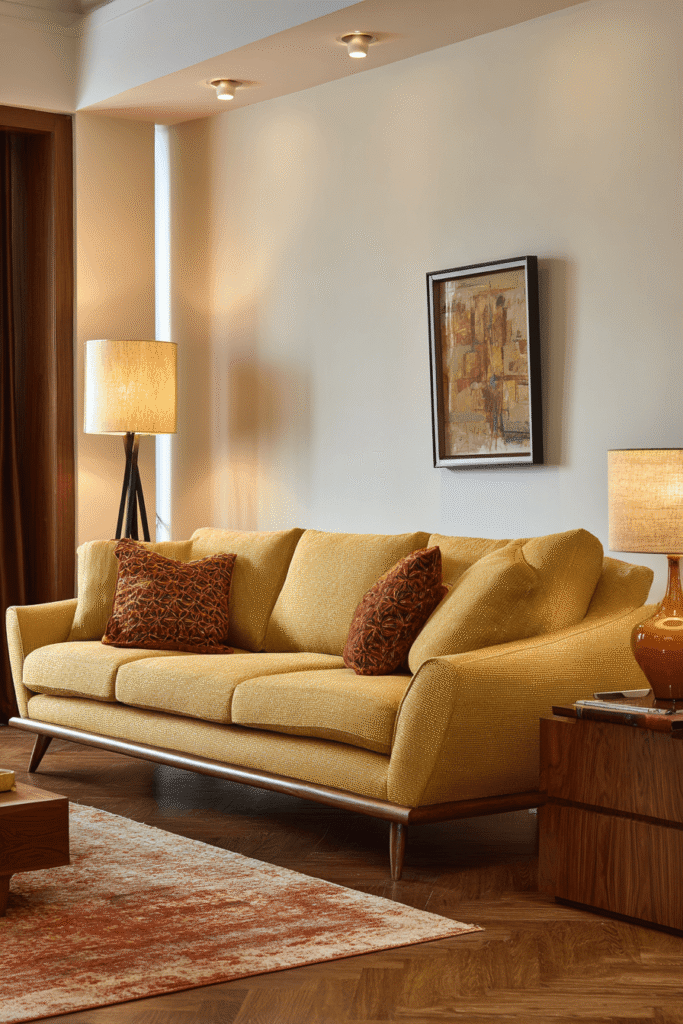
The mid-century modern sofa aesthetic never truly goes out of style — it simply waits patiently to be rediscovered by each new generation of design-forward homeowners. A vintage-inspired three-seat sofa with a solid walnut frame and angled tapered legs upholstered in warm mustard wool with a subtle herringbone weave is the archetype of this enduring style. Matching ceramic table lamps on compact walnut side tables frame the sofa symmetrically, while a low-pile wool rug in rust and cream tones grounds the seating area in layered warmth. Recessed lighting combined with a linen-shade floor lamp creates the layered illumination that mid-century interiors depend on to feel both functional and atmospheric. Every detail — from the walnut grain to the herringbone pattern — speaks of craftsmanship and intention.
- Tapered walnut legs are the single most identifiable mid-century design signal — prioritize them when selecting period-appropriate sofas.
- Mustard yellow is a quintessential mid-century accent color that pairs naturally with walnut, rust, and cream.
- Use symmetrical lamp placement on either side of the sofa to reinforce the balanced, considered aesthetic of mid-century design.
- Herringbone and tweed fabric weaves are authentically period-appropriate choices that also offer excellent durability.
- Layer a statement floor lamp alongside recessed lighting — mid-century rooms should never rely on a single light source.
8. Sculptural Curved Ivory Bouclé Sofa

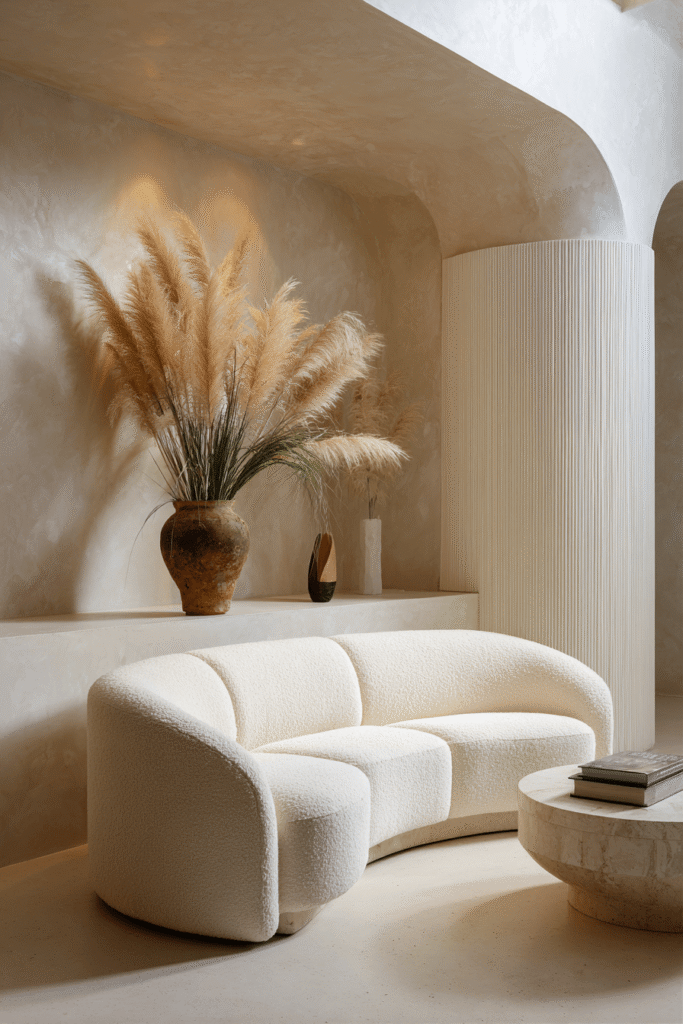
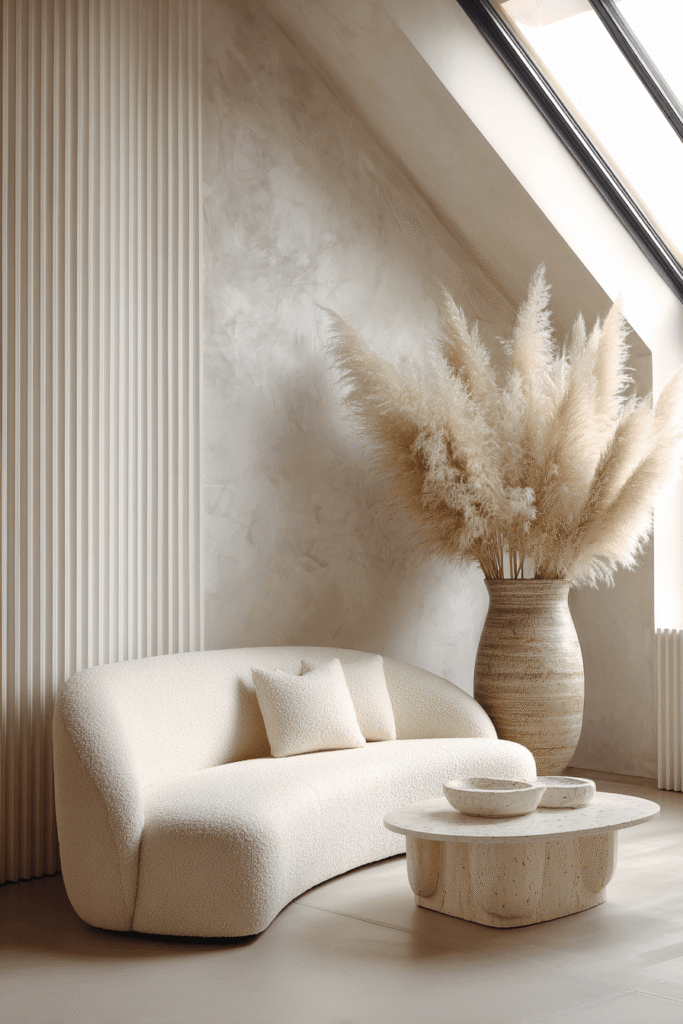
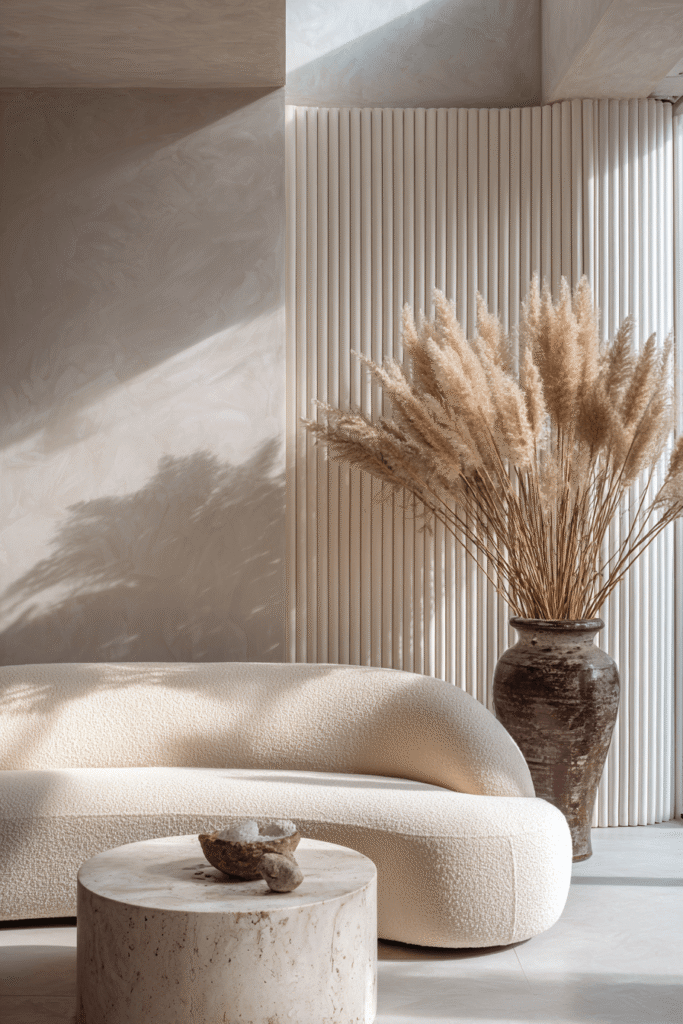
If the camel sectional from our first entry is a warm embrace, the sculptural curved ivory bouclé sofa is a work of art you happen to sit on. Its arched silhouette and soft rounded back make it as much an architectural feature as a piece of furniture, perfectly positioned against a fluted plaster half-wall in warm off-white. A tall dried pampas grass arrangement in a textured ceramic vase adds organic verticality to the composition, while a round low travertine coffee table grounds the arrangement in natural stone luxury. Diffused afternoon light from a skylighted ceiling washes evenly across the bouclé surface, revealing every loop and texture without harsh shadows. This is quiet luxury in its purest residential form.
- Choose sculptural curved-back sofas as the primary architectural statement in rooms with otherwise restrained decor.
- Fluted plaster walls are among the most effective backdrops for organic curved furniture — the linear texture creates visual dialogue with the rounded form.
- Travertine and bouclé share a tonal warmth that makes them natural material partners in contemporary luxury interiors.
- Dried botanicals like pampas grass provide organic movement and height without competing with the sofa’s sculptural presence.
- Skylights and diffused overhead lighting are ideal for bouclé sofas — directional spotlights can create unflattering hotspots on looped fabric surfaces.
9. Cognac Leather Roll-Arm Countryside Sofa

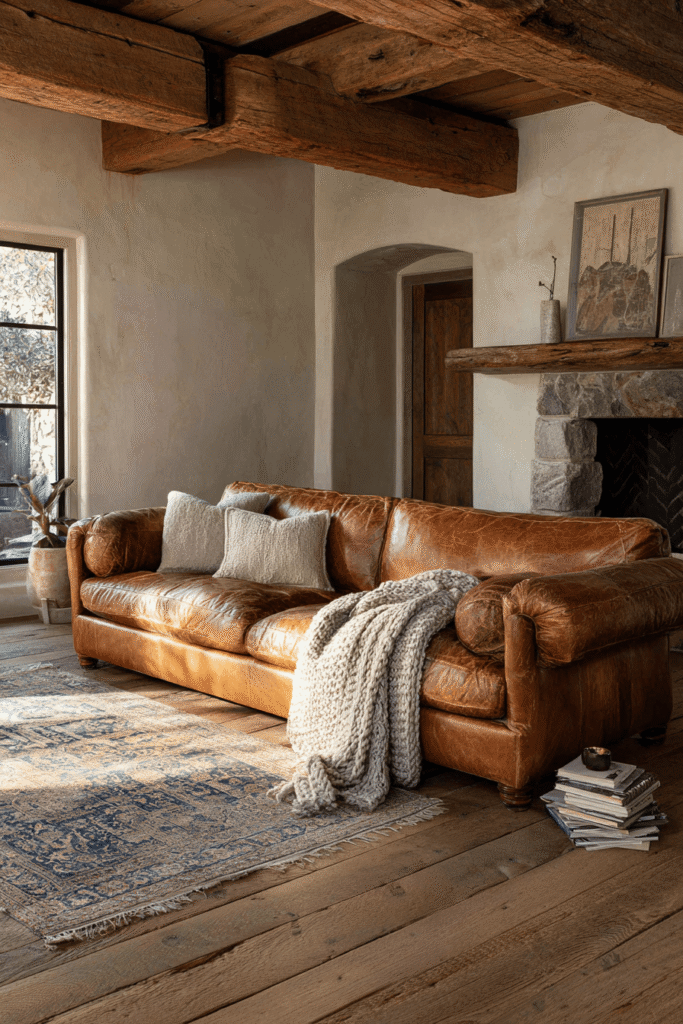
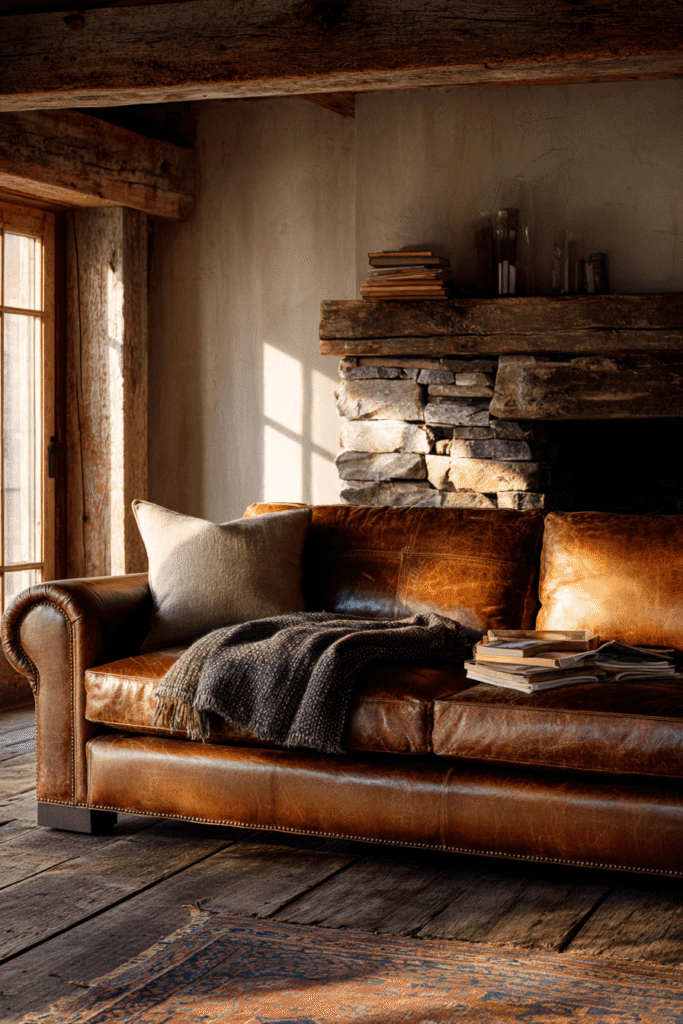
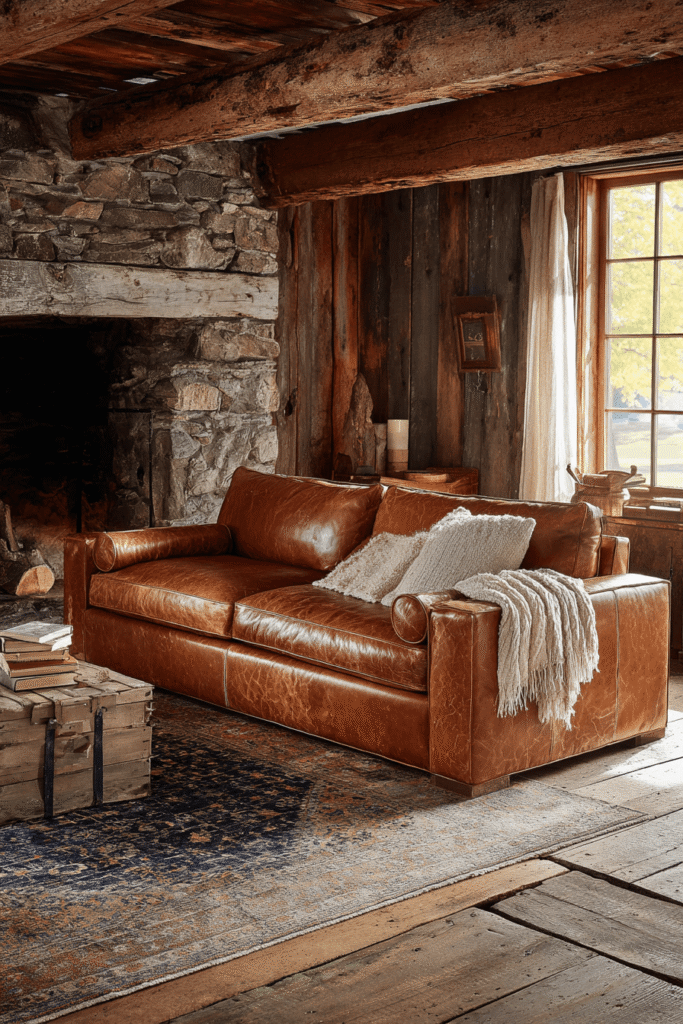
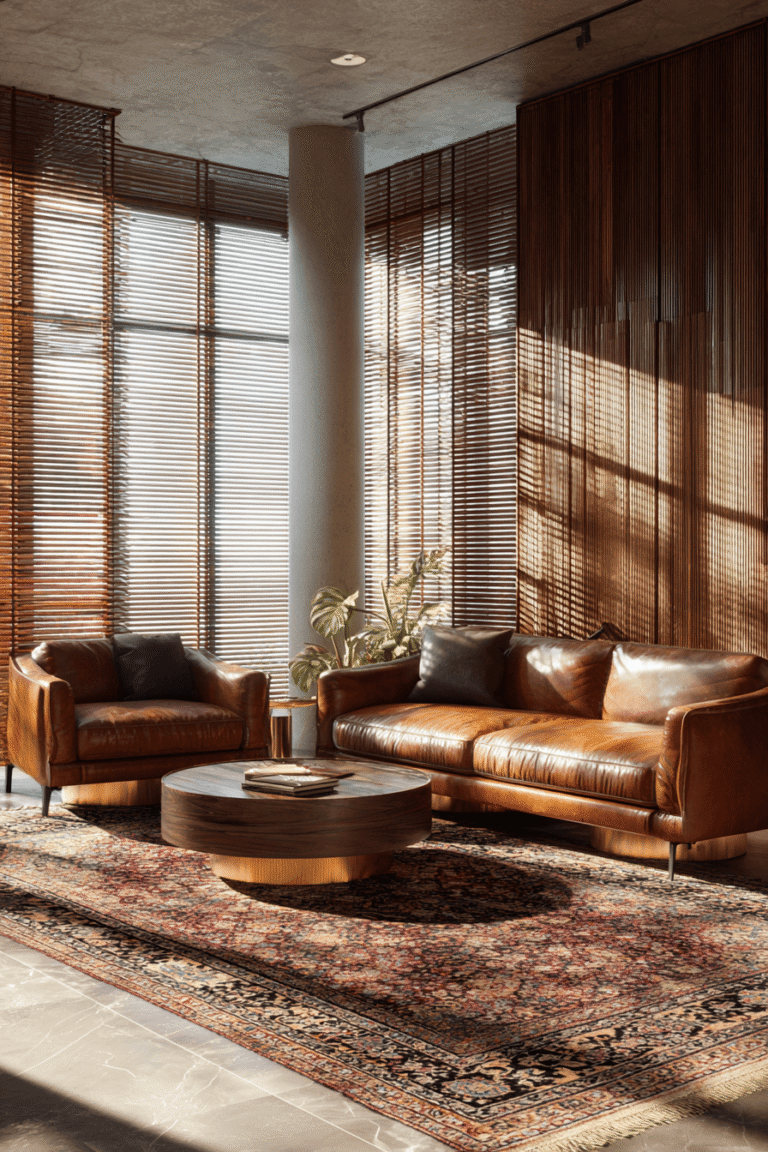
Nothing grounds a room in warmth and history quite like worn cognac leather upholstery — a material that improves visibly with every passing year, deepening in patina and character with use. A generous roll-arm sofa in aged cognac leather, positioned on wide-plank reclaimed oak flooring with a faded Persian-style rug beneath, anchors a countryside living room with an almost ancestral sense of permanence. A rough-hewn wooden beam mantle with a stone fireplace serves as the dramatic backdrop, while a chunky knit throw and a stack of well-read books complete the scene with human warmth. Late afternoon golden light from a side window casts amber tones across the leather surface, making every crease and natural imperfection glow.
- Invest in full-grain or top-grain leather for maximum patina development and longevity — corrected-grain leather will never develop the same character.
- Pair cognac or tan leather with warm wood tones rather than cool-toned materials, which create an uncomfortable visual disconnect.
- A faded Persian or antique-style rug is the ideal textile partner for leather sofas in rustic or countryside-inspired rooms.
- Allow the leather to develop its natural crease patterns — avoid over-conditioning, which can suppress the patina that makes aged leather so appealing.
- Stone fireplaces and raw timber beams are the architectural elements most naturally sympathetic to the cognac leather aesthetic.
10. Wabi-Sabi Natural Linen Low-Seated Sofa
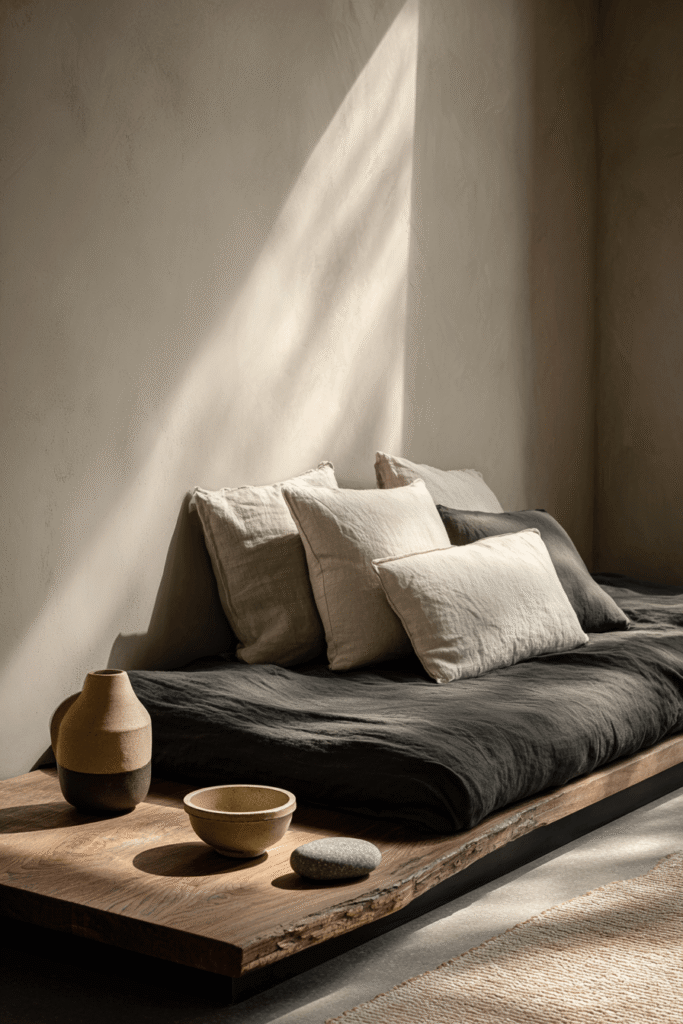
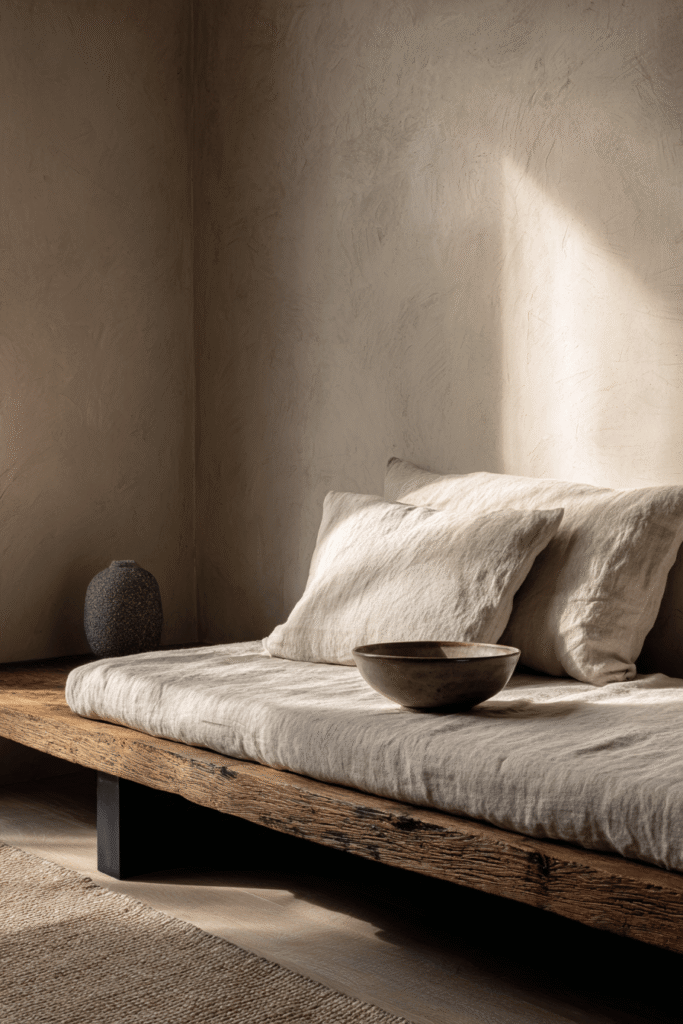
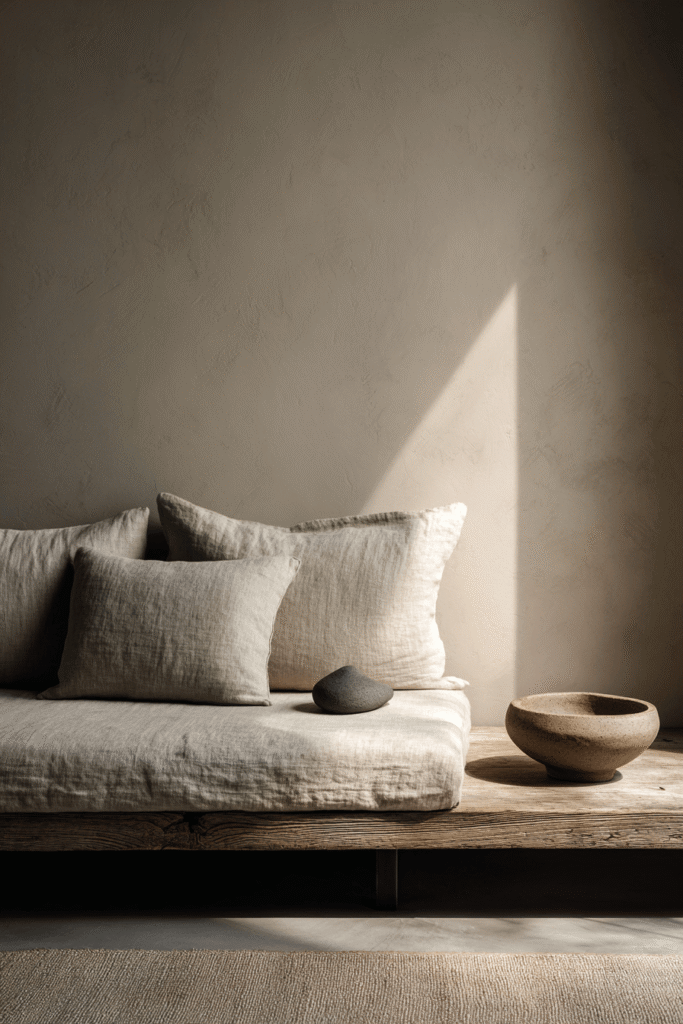

The wabi-sabi sofa aesthetic may be the most philosophically rich on this list — a design approach rooted in the Japanese appreciation for imperfection, impermanence, and quiet beauty. A low-seated sofa with a blackened steel frame and loose cushions covered in undyed natural linen with visible slub texture embodies these principles with complete conviction. A single handmade ceramic bowl and a smooth river stone rest on a raw-edge oak side slab, each object chosen for its meditative presence rather than its decorative function. Earthy clay-toned walls and a flatweave hemp rug complete a composition that asks nothing of you except to be still. Gentle morning diffused light creates soft, unhurried shadows across the linen fabric — and in those shadows, you find the entire philosophy of wabi-sabi made visible.
- Choose undyed or naturally dyed linen in slub or irregular weave for cushion covers — visible textile imperfections are central to the wabi-sabi aesthetic.
- Blackened or oxidized steel frames pair naturally with raw organic materials like oak, stone, and hemp.
- Edit your accessory choices ruthlessly — one handmade ceramic object communicates more than a shelf of decorative items.
- Flatweave hemp or jute rugs are the most authentically wabi-sabi floor covering choices, grounding the space without visual heaviness.
- Morning diffused light is the ideal lighting condition for wabi-sabi interiors — avoid harsh directional lighting that destroys the soft, contemplative atmosphere.
Why These Are the Best Sofa Aesthetics for Modern Living
Each of the sofa styles explored in this article represents a distinct design philosophy, yet they all share one quality: the ability to transform a living room from a functional space into a deeply personal one. The curved bouclé sofa satisfies the contemporary appetite for quiet luxury and tactile comfort. The Belgian linen Scandinavian sofa serves minimalist design enthusiasts who understand that less, done well, is always more. The forest green velvet tuxedo sofa appeals to those who embrace bold interior design, moody color palettes, and the drama of jewel-toned upholstery. For the free-spirited, the bohemian indigo floor sofa captures the essence of eclectic, globally inspired living room decor. Urban dwellers will recognize themselves in the modular performance fabric sofa — a contemporary sofa idea perfectly suited to open-plan apartments and modern family living. The coastal slipcovered sofa delivers relaxed, beach-house interior vibes with practical elegance. Mid-century modern sofa lovers will find their aesthetic home in the mustard herringbone walnut-framed design, a timeless icon of retro-modern style. The sculptural ivory bouclé represents the pinnacle of the current luxury sofa trend — statement furniture that doubles as living room art. Cognac leather sofa enthusiasts will find the roll-arm countryside design the ultimate expression of warmth, heritage, and material authenticity. And for those drawn to Japanese interior design, mindful living, and intentional simplicity, the wabi-sabi linen sofa is a living room philosophy as much as a furniture choice.
Conclusion
A sofa is never just a sofa. It is the decision around which every other living room choice orbits — the anchor of your color palette, the statement of your design identity, and the daily experience of comfort in your home. Whether you are drawn to the plush warmth of bouclé, the quiet authority of Belgian linen, the drama of velvet, or the grounded serenity of natural linen wabi-sabi design, the perfect sofa aesthetic is the one that makes your living room feel unmistakably yours. Use the ideas, material choices, and design tips in this article as your starting point — then trust your instincts, invest in quality, and let your sofa tell the story of how you love to live.