Phone:
(701)814-6992
Physical address:
6296 Donnelly Plaza
Ratkeville, Bahamas.

Phone:
(701)814-6992
Physical address:
6296 Donnelly Plaza
Ratkeville, Bahamas.
A sleeping room is far more than a place to rest — it is the most personal space in any home, a reflection of who you are and how you choose to unwind from the world. Thoughtful interior design transforms a bedroom from a simple functional space into a sanctuary that supports sleep, inspires calm, and expresses individual style with intention. Whether you are drawn to the quiet restraint of Scandinavian minimalism, the moody drama of deep-toned walls, or the tactile warmth of bohemian layering, the right design can profoundly affect your mood, sleep quality, and daily sense of wellbeing. This article explores ten distinct sleeping room concepts — each one a masterclass in balancing aesthetics with livability — offering inspiration for every personality, lifestyle, and space.


There is a timeless elegance to a sleeping room rooted in soft Scandinavian design principles — one where every element earns its place and nothing exists purely for decoration. At the heart of this space sits a low-profile platform bed dressed in Belgian linen bedding with a visibly textured weave in warm ivory tones, a fabric choice that communicates both luxury and ease. Natural oak nightstands flank the bed symmetrically, each holding a simple ceramic lamp that emits a warm golden glow in the evening hours. During the morning, soft diffused light streams through sheer linen curtains, washing the room in a gentle luminescence that highlights the subtle grain variations of the natural wood flooring beneath. The overall effect is one of meditative calm — a space that breathes.

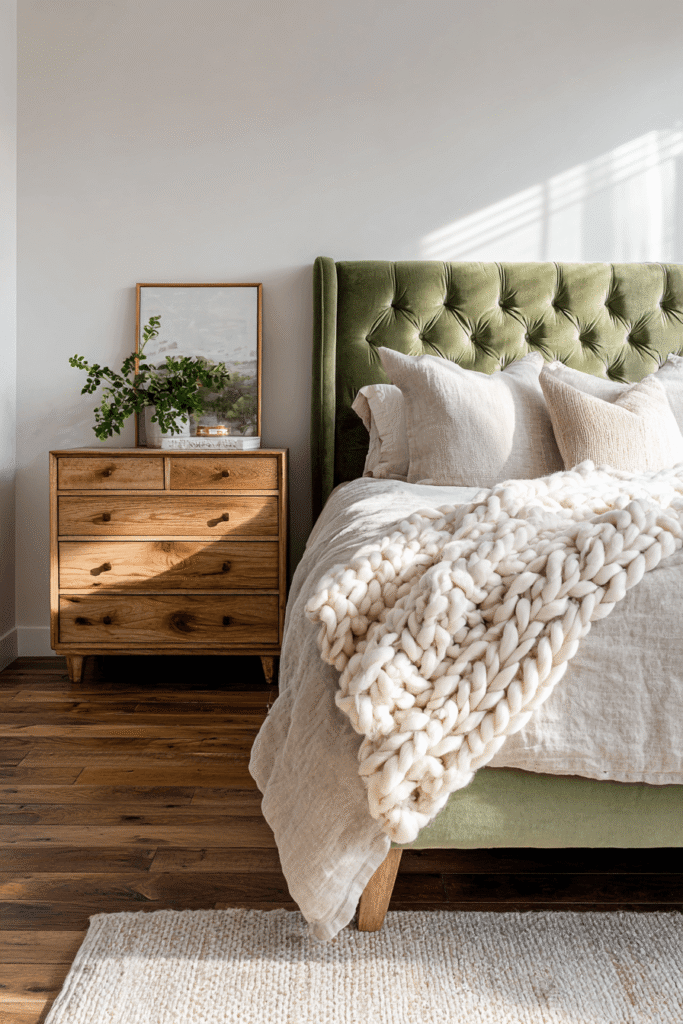


This sleeping room celebrates the art of layering — building warmth and comfort through an accumulation of thoughtfully chosen textures rather than bold color statements. The tufted upholstered headboard in soft sage green velvet serves as the room’s quiet focal point, a color that reads as simultaneously calming and fresh without overpowering the neutral palette surrounding it. Bedding is stacked in warm creams and oatmeal tones, with a chunky hand-knit throw draped casually at the foot of the bed — an invitation to curl up on a cool evening. A low wooden dresser with brass hardware grounds the opposite wall, its warm metal accents picking up the amber tones in the ambient lighting. A small potted plant atop the dresser introduces a living element that softens the composed arrangement with quiet, organic energy.

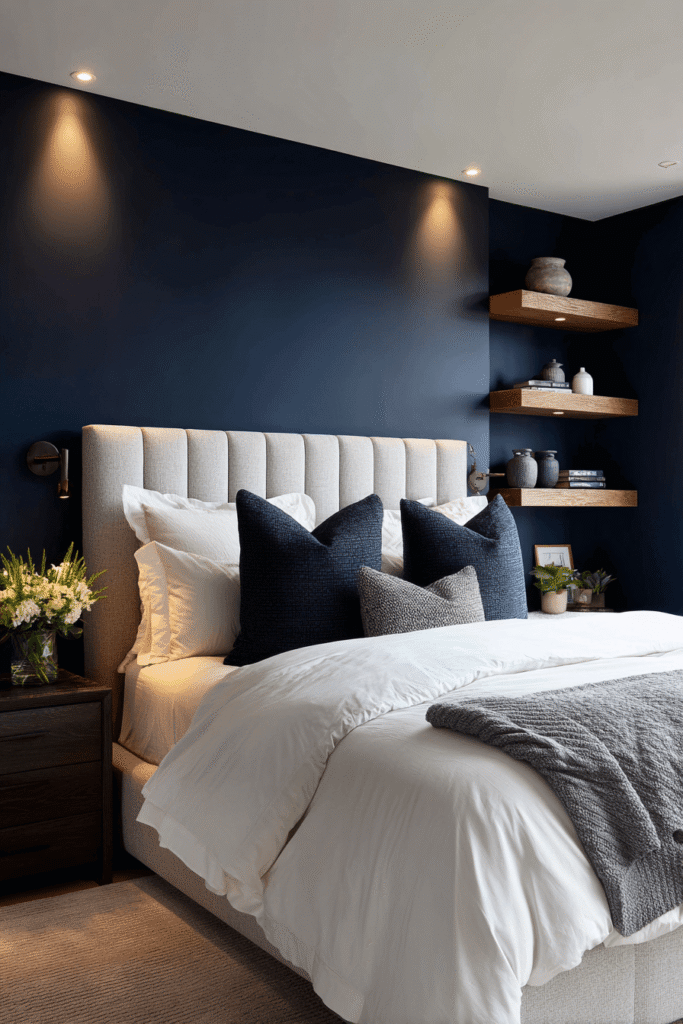


For those who find solace in depth and drama, a sleeping room anchored by deep navy blue walls offers an experience that is both intimate and sophisticated. The darkness of the walls creates a cocoon-like atmosphere, amplified by warm-toned recessed lighting that glows against the rich pigment without washing it out. A king-size bed with a tall padded headboard in charcoal bouclé anchors the room with commanding presence, its looped fabric texture adding quiet visual interest against the dark backdrop. The bedding is deliberately bright — crisp white cotton with textured grey throw pillows — creating a high-contrast composition that keeps the space from feeling heavy. Floating dark walnut shelves on either side display books and ceramic objects with curated restraint, adding personal character without breaking the moody elegance of the design.


True minimalism is not about emptiness — it is about deliberate intention, and this sleeping room embodies that philosophy completely. Oversized windows with no curtains allow unfiltered natural daylight to flood every corner of the space, illuminating a simple platform bed in pale ash wood dressed in nothing more than crisp white percale sheets. The room is nearly bare: a single low bedside table holds a glass of water and a small succulent — objects chosen for function rather than decoration. Polished concrete flooring reflects soft daylight upward, doubling the sense of luminosity and airiness. This is a space for those who find peace in quiet, where the architecture itself becomes the art and the absence of clutter becomes the design statement.


A sleeping room in the bohemian spirit is an unapologetically sensory experience — a celebration of pattern, texture, material, and the beauty of imperfection. The rattan bed frame at the center of this space carries an artisanal warmth, dressed in layers of earthy terracotta, rust, and burnt orange textiles including a patterned kilim blanket and fringed cotton cushions that beg to be touched. Above the headboard, a macramé wall hanging introduces handcrafted texture and a vertical focal point that draws the eye upward. A vintage wooden trunk repurposed as a bedside table holds a brass candleholder and stacked paperbacks — objects with stories of their own. Golden hour light filters through sheer patterned curtains, casting a warm amber glow that makes every material in the room glow with richness.


In compact urban apartments, a sleeping room must work twice as hard — delivering comfort and style while maximizing every square centimeter available. This design solves that challenge with a built-in platform bed featuring integrated under-bed storage drawers in painted white MDF, a seamless solution that eliminates the need for a separate wardrobe or chest. The walls are finished in a soft warm white with subtle plaster texture — a surface treatment that reads as sophisticated without demanding attention. A single narrow window with a Roman blind manages light with clean precision, while slim wall-mounted reading lamps on each side of the bed remove the need for bedside tables entirely. The result is a room that feels efficient, livable, and genuinely beautiful despite — and because of — its constraints.


The dark iron canopy bed at the centre of this master sleeping room is the kind of statement piece that transforms a room entirely — a structural sculpture that commands immediate attention. Lightweight white cotton voile panels drape softly from the iron frame, creating a romantic enclosure that feels both theatrical and intimate. Underfoot, herringbone oak flooring adds warmth and directional energy, its interlocking pattern drawing the eye across the room toward a large abstract canvas in muted earth tones that hangs on the facing wall. Bedside tables in brushed concrete hold glass pendant lights hung from the ceiling above — a pairing of industrial material and delicate form that captures the sophisticated tension running through the entire design.


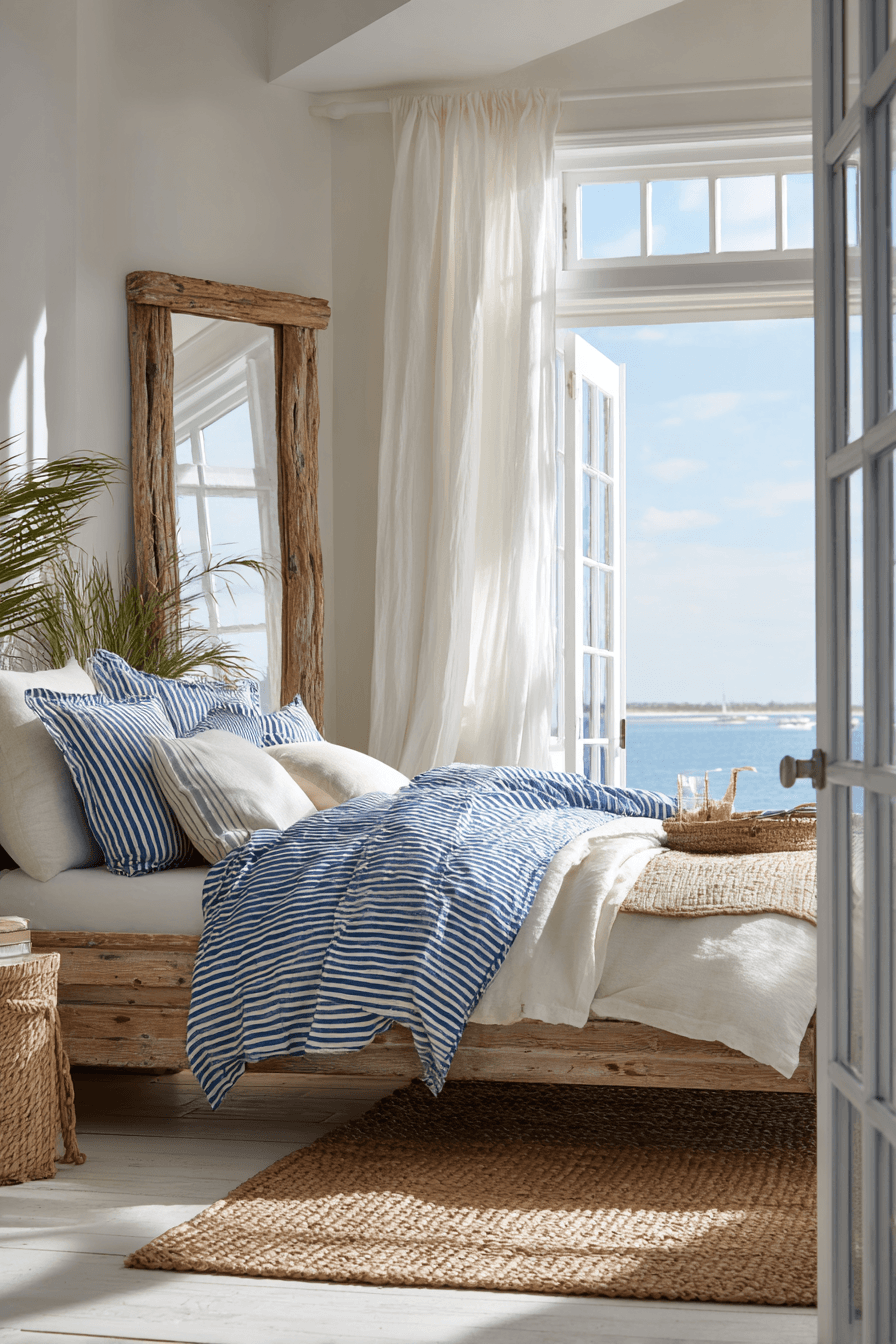
Light, air, and texture define this coastal-inspired sleeping room — a space that captures the unhurried mood of a seaside morning without resorting to cliché nautical decoration. Whitewashed wooden furniture throughout the room carries the sun-bleached quality of driftwood, while a bed dressed in blue and white striped linen connects the space to the palette of sea and sky with quiet elegance. A woven jute rug grounds the bed in natural texture, and a driftwood-style mirror leaning casually against the wall adds a relaxed, unfinished quality that feels intentional rather than incomplete. Sheer white curtains billow near an open window, animating the room with movement and flooding it with the kind of natural light that makes every surface glow.


This sleeping room pays careful homage to the mid-century modern aesthetic — a design language defined by clean lines, warm wood tones, and graphic pattern used with restraint. The walnut wood bed frame with low tapered legs is the archetype of the era, its form simultaneously sculptural and functional. A mustard yellow and white geometric patterned duvet introduces the bold graphic confidence that defines mid-century interiors, while a matching walnut dresser with slim brass drawer pulls reinforces the material language with consistency. Above the dresser, a sunburst mirror is both period-accurate and perpetually stylish — a decorative object that earns its wall space. During late afternoon golden hour, directional light accentuates the wood grain and casts warm shadows that make every surface feel more alive.


A child’s sleeping room should be a place of both function and wonder — a space where organized storage and imaginative play exist side by side in equal measure. This design achieves that balance with a solid pine twin bed featuring a built-in bookshelf headboard, its shelves filled with colorful paperbacks and small toys that are both accessible and neatly contained. Walls painted in soft warm terracotta with a matte finish provide a nurturing, cocoon-like backdrop that feels stimulating without being overwhelming. A low wooden play table near the window encourages creative activity in natural light, while a hand-stitched patchwork quilt in warm reds, oranges, and creams covers the bed with heirloom-quality warmth. Every element in this room is proportioned for a child — safe, reachable, and designed to grow with them.
Each of the ten sleeping room concepts explored in this article represents the best of its respective design philosophy — not by accident, but because each one is built on a foundation of purposeful material selection, balanced spatial composition, and emotional intelligence. The Scandinavian platform bedroom delivers unmatched calm through restraint; the moody navy retreat proves that dark colors can feel expansive rather than oppressive when handled with skill. The bohemian layered bedroom demonstrates that maximalism has its own rigorous logic, while the minimalist light-flooded sanctuary shows how powerful empty space can be when it is genuinely intentional.
From a design standpoint, the best bedroom interior ideas share common DNA: they prioritize natural materials such as oak, linen, jute, and rattan that age beautifully and feel good to the touch; they use lighting as a design tool rather than an afterthought; and they approach bedroom color palettes — whether deep navy, warm terracotta, or crisp white — as emotional decisions rather than purely aesthetic ones. The coastal-inspired bedroom, the mid-century modern sleeping room, and the canopy master bedroom all demonstrate how a single statement piece — a driftwood mirror, a sunburst accent, an iron canopy frame — can anchor an entire design concept with confidence.
For small bedroom designs, the urban compact concept offers a masterclass in space-saving bedroom furniture and integrated storage solutions. For families, the children’s sleeping room balances imaginative design with child-safe bedroom furniture and practical organization. Together, these ten designs cover the full spectrum of modern bedroom aesthetics, from romantic bedroom interiors to contemporary minimalist bedrooms, ensuring that every reader finds a concept that resonates with their own sense of home.
A beautifully designed sleeping room does not require an unlimited budget or a large floor plan — it requires clarity of intention, an understanding of materials, and the courage to commit to a vision. Whether you are drawn to the meditative quiet of Scandinavian simplicity, the sensory richness of bohemian layering, or the bold sophistication of a dark-walled retreat, the principles explored across these ten designs offer a foundation to build upon. Begin with the element that excites you most — a fabric, a color, a furniture form — and let the rest of the room respond. Your sleeping room should feel like the most authentic space in your home, because it is the one designed entirely for you.